REVIEW · MAUI
2 Hour Beginner Group Surf Lessons
Book on Viator →Operated by Goofy Foot Surf School, Inc · Bookable on Viator
You don’t need talent. You need time, technique, and calm coaching. This 2-hour beginner surf lesson in Maui is built for just that, with a small group setup and the kind of feedback that helps you stand sooner rather than later. Plus, it’s in Lahaina, in the area where surfing has deep roots and big cultural meaning.
I also love that the lesson handles the practical stuff for you: all necessary equipment plus reef shoes and rash guards are provided, so you can focus on learning instead of shopping. And the vibe from instructors in the water is consistently positive, with names like Javier, Mario, Austin, and Shane showing up again and again in the stories—patient, funny, and focused on safety.
One consideration: group lessons are for ages 9+, and you’ll need to plan on arriving early (check-in and gear up starts about 30 minutes before your start time). If you have kids under 9, you’ll be guided toward a private lesson instead.
In This Review
- Key Highlights Worth Getting Excited About
- The Point of a 2-Hour Beginner Lesson (and Why This One Works)
- Check-In, Gear-Up, and What to Wear in Maui Heat
- What Happens Once You Hit the Beach: Land Basics to Real Waves
- Small Group Size: Why You Get Better Coaching Here
- Equipment You Don’t Have to Guess About (and Why Reef Shoes Matter)
- The Maui Factor: Waves, Beginner-Friendly Timing, and Safety
- Who This Is Best For (and Who Might Need a Different Setup)
- Price, Value, and What You’re Really Paying For
- Building Your Maui Day Plan Around the Lesson
- Names to Watch For: What Great Instructors Tend to Have in Common
- Should You Book This 2-Hour Beginner Surf Lesson?
- FAQ
- How long is the beginner group surf lesson?
- What should I bring to the lesson?
- Is any surf equipment provided?
- What is the minimum age for the group lesson?
- Where does the lesson start and end?
- Is free cancellation available?
Key Highlights Worth Getting Excited About
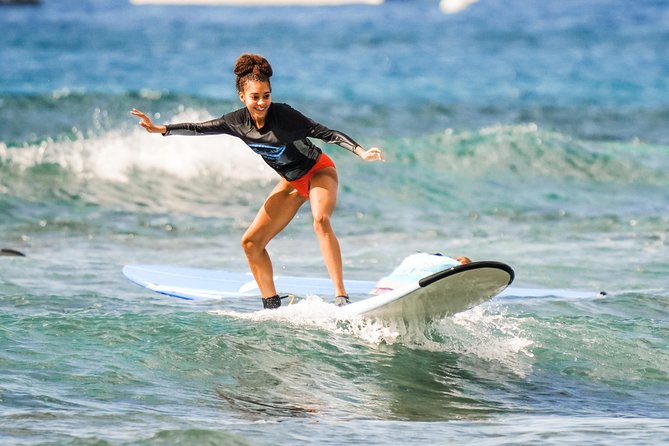
- Small groups (max 5): more chances for hands-on tips and quick corrections
- Provided surf gear and rash guards: you show up in swimwear with less hassle
- Beginner-focused pacing: land basics first, then structured time in the water
- Begins and ends at the same meeting point: less time lost to logistics
- Optional action photos: there’s a photographer if you want keepsakes
The Point of a 2-Hour Beginner Lesson (and Why This One Works)
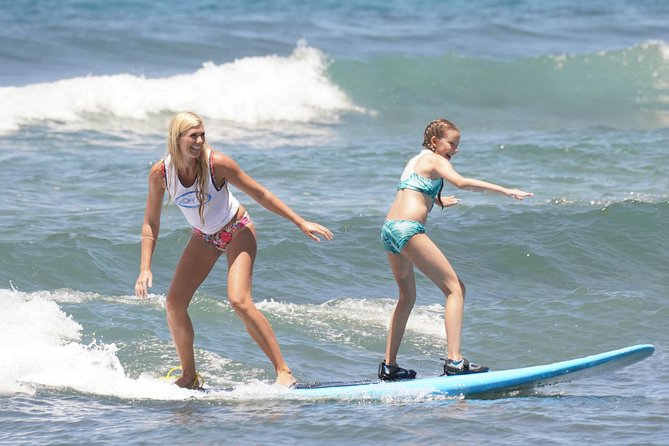
If you’re new to surfing, the hardest part is not the ocean. It’s the timing: where your feet go, when to pop up, how to paddle without burning out, and how to feel safe while everything moves under you.
This lesson is designed around that exact reality. You get a full 2 hours (not a rushed 45-minute demo), and it’s organized so you build from simple basics to actual wave riding. You’ll also be in the water at a level that fits beginners, which matters. When the waves are too big or the pacing is off, first-timers spend the whole time fighting the ocean instead of learning.
And since it’s offered in several lesson times, you can usually fit it into a Maui day without stealing your entire morning or afternoon. That flexibility matters if you’re also juggling beach time, a hike, or an early dinner reservation.
You can also read our reviews of more tours and experiences in Maui


Check-In, Gear-Up, and What to Wear in Maui Heat
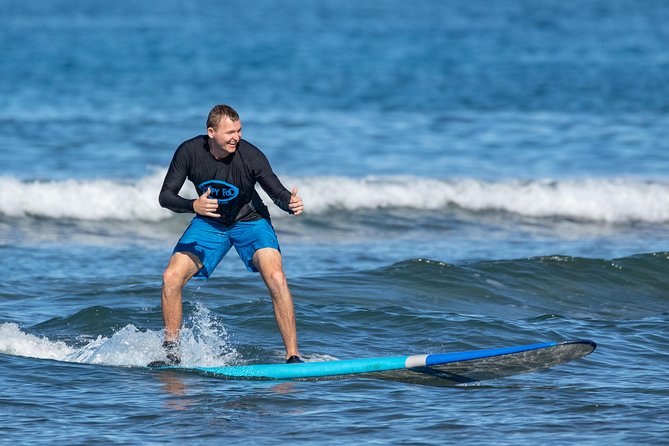
Plan to arrive about 30 minutes early. This isn’t the kind of tour where you roll up at the last second and hope for the best. You’ll want time to check in, get your gear sorted, and get mentally ready.
Dress in your swim attire when you arrive. You’ll also want to bring:
- a water bottle
- sunscreen
- a towel
Rash guards are provided, and so are the surf essentials like your board and other necessary gear. Reef shoes are also supplied, which is a big deal. Even on a beginner-friendly stretch of water, shore details can surprise you. Reef shoes take that stress off the table.
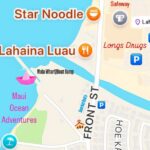
One small planning note from the area: the meeting spot is in Lahaina, and it’s easy to pair with nearby walks and food afterward. One handy clue you’ll see from people who’ve done it before is that the check-in area is close to restaurants and even the Banyan tree area, so the “what do we do after” question is pretty easy.
What Happens Once You Hit the Beach: Land Basics to Real Waves
Most first-time surf lessons fail when they skip the land part or make it too complicated. This format stays simple and practical.
You start with an intro on shore. The goal is to help you understand the mechanics before you’re in water that’s pushing and pulling. Expect instruction on things like:
- how to position yourself on the board
- how to paddle efficiently
- how to time your pop-up
- how to handle wipeouts without panicking
Then you move into the staging area and start surfing in a structured way. You won’t just stand there watching others go. The format is built for repeat tries, so you get enough attempts that your body starts to learn the sequence.
The best lesson moments tend to come from instructors who adjust to your pace. In real examples, instructors like Javier and Mario are described as breaking everything down step by step, then staying encouraging even when a wipeout happens. That matters more than people expect. If you get corrected in a stressful way, you freeze. If you get corrected calmly, you improve.
Small Group Size: Why You Get Better Coaching Here
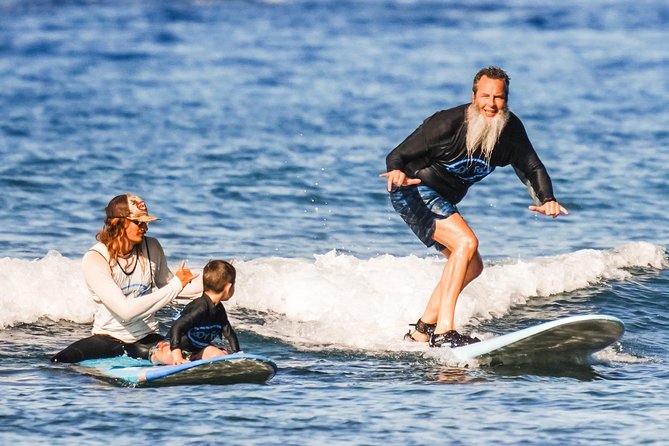
This is a group lesson with a maximum of 5 travelers. That limit is not just a marketing detail. It changes the whole experience.
With only a handful of people, you’re easier to spot from the instructor’s view. You also get more direct attention—feedback in the moment, not just general advice once your wave is already gone. That’s how beginners start seeing progress faster: not by learning more theory, but by fixing one or two things at the right time.
In the teaching style you’ll see described again and again, instructors take a “stay with you” approach. You might hear stories where an instructor remains right nearby as you learn, especially for younger beginners, and then provides guidance while still giving others room to work.
If your goal is to catch waves and stand on a surfboard during your first lesson, this small-group model is one reason why that goal is realistic here.
Equipment You Don’t Have to Guess About (and Why Reef Shoes Matter)
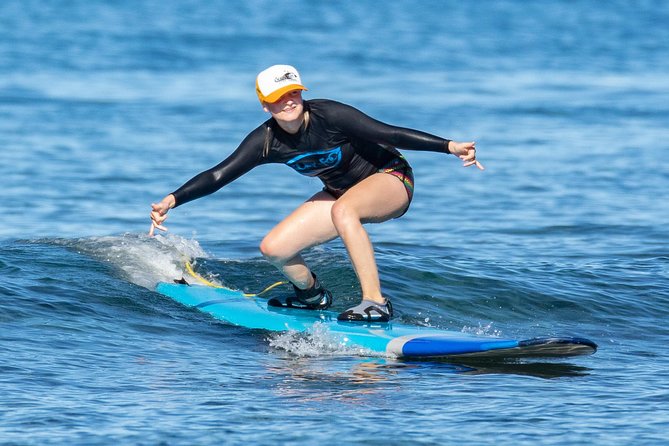
Beginner surf lessons rise or fall on gear. Here, you get the standard essentials, and you don’t have to figure out what you need ahead of time.
You can count on:
- surfboards and other necessary surfing equipment being provided
- reef shoes provided
- rash guards provided
- boards are appropriate for first-time learning
Why reef shoes matter: they’re practical insurance. Maui sand and rock edges are not always uniform, and your feet will be in that zone before you’re fully in “surfing mode.” Reef shoes also help you move around safely while you’re getting set up. When people feel secure on shore, they paddle out with less hesitation.
If you’ve never surfed before, this is one of the easiest ways to reduce friction. You show up in swimwear, add sunscreen and a towel, and you’re ready. That’s a real value—especially when you’re already spending time planning the rest of your Maui trip.
You can also read our reviews of more tours and experiences in Maui





The Maui Factor: Waves, Beginner-Friendly Timing, and Safety
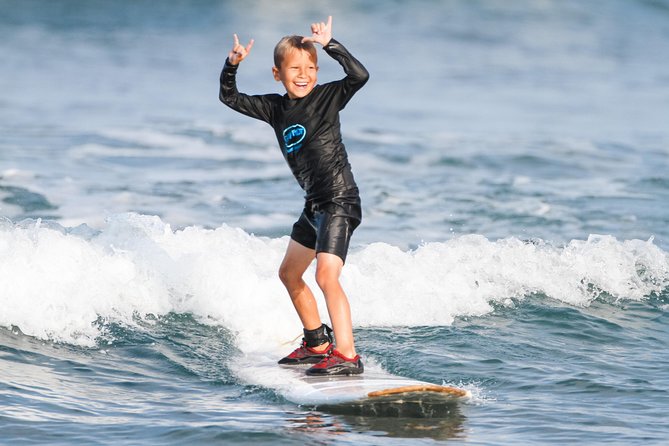
The lesson highlights focus on learning surf in Maui near Lahaina, and that location choice matters for beginners. The area is known for surf culture, and that often lines up with beaches where beginners can learn with more controlled conditions.
Also, since you can choose from different lesson times, you’re not stuck with one schedule that might feel too crowded or not ideal for your comfort level. Some instructors and schools work more smoothly earlier in the day because it’s easier to manage focus and spacing. If you have the choice, early sessions can be a smart pick.
No matter the conditions, safety is part of the teaching. In the feedback you’ll see, instructors are praised for keeping beginners safe and steady, including cases where they watched closely and helped a student feel comfortable returning to shore if needed. That’s not just kindness. It’s part of a good surf coaching system: you learn faster when you’re not constantly worried.
Who This Is Best For (and Who Might Need a Different Setup)
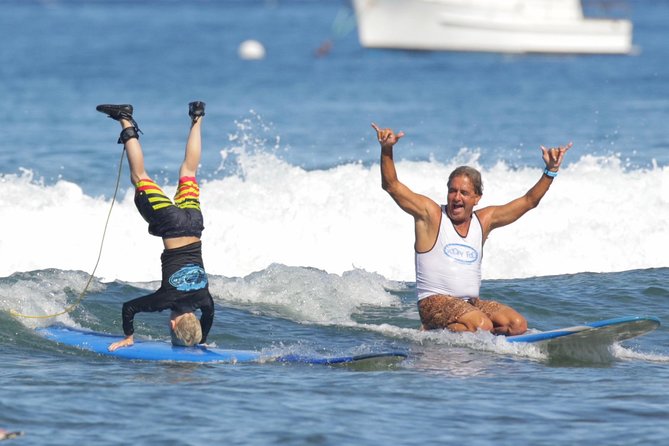
This group lesson is for ages 9+. Anyone under 9 requires a 1-on-1 private lesson instead.
So if you’re:
- an adult beginner who wants a fun, structured first step
- a family with kids 9 and up
- a couple trying something active and social
…this setup is built for you. People also describe this as a highlight because it combines real ocean time with a clear learning path and a team that’s friendly and organized.
If you’re traveling with a very young child, you’ll want to plan for the private option. It’s not just policy. It’s about safety and quality of instruction—making sure each child gets the attention needed.
And if you’re someone who needs a confidence boost: this kind of coaching style tends to help because you’re not left alone to figure things out. You get guidance and encouragement, and you can keep trying until it clicks.
Price, Value, and What You’re Really Paying For
There’s no secret here: you’re paying for a coach who can turn confusion into action. You’re also paying for the gear setup, the time on the water, and the safety structure.
This lesson’s value comes from what’s included:
- equipment and reef shoes provided
- rash guards provided
- a full 2 hours of guided time
- small group size (max 5), which reduces the “wait your turn” feeling
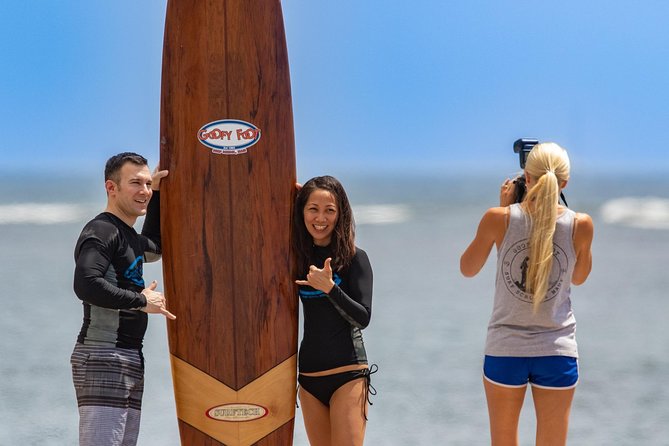
Some people also add optional action photos. If you like having a visual record of your first standing attempts, that can be worth it. One photo-related detail you’ll see mentioned is that a photographer can capture action shots during the lesson, and the added cost is described as reasonable. It’s still optional, so you can decide based on your preferences.
In short: you’re not paying for a quick taste. You’re paying for a real attempt, with support.
Building Your Maui Day Plan Around the Lesson
Because the lesson is about 2 hours long, it fits nicely into a classic Maui rhythm:
- morning surf, then beach time and breakfast
- or afternoon surf, then dinner and sunset strolls
Arrive early for check-in, then aim for an unhurried buffer before you jump into other activities. Learning to surf uses muscles you don’t always expect, and you’ll likely want time afterward to rinse, dry off, and grab food.
A smart tip: take a towel and plan for sunscreen before you arrive. Maui sun is intense, and you’ll be outside longer than you think once you factor in check-in time.
Names to Watch For: What Great Instructors Tend to Have in Common
You’ll hear repeated praise for instructor styles—patient, encouraging, and hands-on without being overbearing.
In different lesson stories, names like Javier, Mario, Austin, Shane, Curran, Fabio, Joe, Hugo, Phillipe, Keith, and Kailani show up. While each person has their own personality, the common thread is clear:
- they explain basics in a way you can follow
- they stay upbeat when you wipe out
- they keep you moving through the process so you don’t lose momentum
If you get one of the instructors known for that style, you’ll likely feel more confident faster. And if you’re nervous, that attitude can make all the difference.
Should You Book This 2-Hour Beginner Surf Lesson?
Book it if you want a first-time surf experience that feels structured, safe, and realistic. This lesson is set up for quick progress through a small group, with gear provided and coaching that focuses on you standing and riding—not just paddling around.
Skip it (or switch to private instruction) if your child is under 9, since group lessons have a strict age requirement. Also be honest with yourself about timing: you need that early arrival for check-in and gear-up, so don’t pack your schedule too tightly.
If you’re looking for one Maui activity that gives you actual ocean skills and a real sense of accomplishment, this one is a strong pick.
FAQ
How long is the beginner group surf lesson?
It’s about 2 hours.
What should I bring to the lesson?
Bring a water bottle, sunscreen, and a towel. Come dressed in your swim attire.
Is any surf equipment provided?
Yes. You’ll have the necessary surfing equipment, reef shoes, and rash guards provided.
What is the minimum age for the group lesson?
Group lessons are for ages 9 and older. Students 8 and younger require a 1-on-1 private lesson.
Where does the lesson start and end?
It starts at Hawaii 30HI-30, Lahaina, HI 96761, USA, and ends back at the same meeting point.
Is free cancellation available?
Yes. You can cancel for a full refund up to 24 hours in advance of the experience start time. If you cancel less than 24 hours before, the amount paid is not refunded.