REVIEW · MAUI
Maui Eco-Raft Tour: Eye-Level Whale or Dolphin Watching – Lahaina
Book on Viator →Operated by Hawaii Ocean Rafting · Bookable on Viator
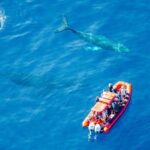
Most whale watches are views from above. This one puts you at eye level on a small zodiac raft, and the onboard hydrophone lets you hear humpback songs while a marine naturalist narrates what you’re seeing. In season (Dec–Apr) you’re chasing migrating humpbacks off Lahaina, while summer months shift to dolphins plus coastal sightseeing.
I also like the small-group feel (max 25) and the way the crew keeps searching until they find active wildlife. The raft stops when whales show up, so you’re not just passing by. One big consideration: this tour isn’t for babies under 3, pregnant people, or anyone with back/neck injuries, and boarding needs decent physical mobility.
In This Review
- Key things I’d circle before you book
- Front Street Check-In: Where the 2.5 Hours Really Starts
- Zodiac Raft, Eye-Level Views: Why This Setup Matters
- Hydrophone Listening: The Part You’ll Remember After the Photos
- Stop 1 and Stop 2: How the Search Works in Practice
- Winter Whales vs Summer Dolphins: Choosing the Right Season for Your Trip
- What to Bring: Sun, Shoes, and the Wet-Ride Reality
- Who This Tour Fits Best (and Who Should Skip It)
- Price and Value: What $85.16 Gets You in the Real World
- The Bottom Line: Should You Book This Maui Eco-Raft Tour?
- FAQ
- When is whale watching available, and when do dolphins replace whales?
- What is the minimum age for this tour?
- Is the tour safe for pregnant people or people with back/neck injuries?
- What’s included on the tour?
- Are whale or dolphin sightings guaranteed?
- Do I have to wear a life jacket?
- What should I bring for sun and weather?
- Where is the meeting point, and how early should I arrive?
- What is the cancellation and weather policy?
Key things I’d circle before you book
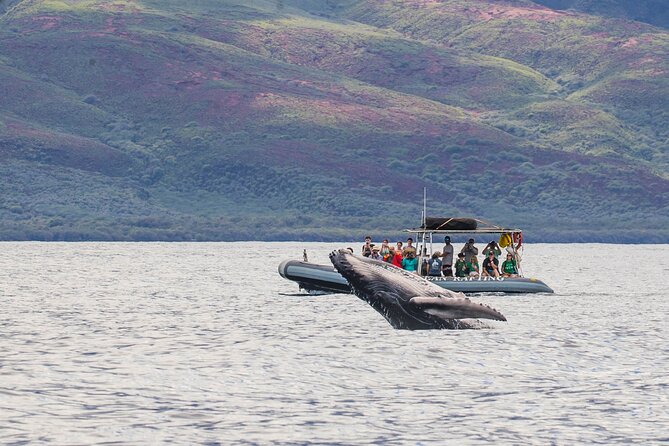
- Eye-level zodiac raft for an unobstructed view of the water surface
- Hydrophone listening so you don’t just spot whales—you hear whale songs in season
- Marine naturalist narration connecting behavior to the Hawaiian ecosystem
- Raft stops at sightings for better viewing and photo moments
- Small group (up to 25) keeps the experience calmer than big-boat tours
- Seasonal options: humpback whales Dec–Apr, or dolphins/coastal sightseeing in summer (snacks included on dolphin tours)
Front Street Check-In: Where the 2.5 Hours Really Starts
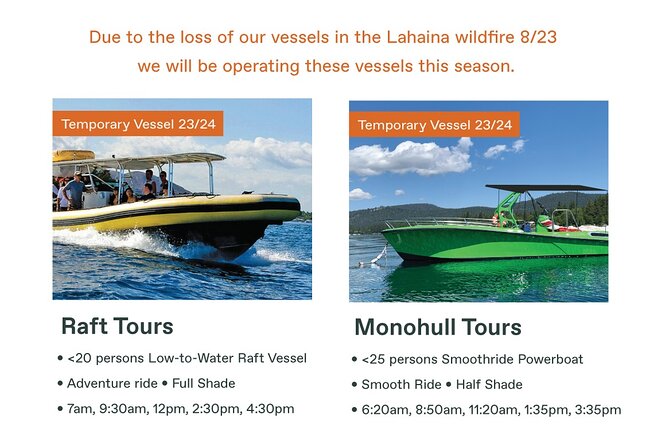
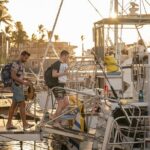
This tour runs out of Lahaina, starting at 1223 Front St. There’s no hotel pickup, so plan on getting yourself there. The boat departs promptly, and you have to arrive 30 minutes before boarding or you’ll miss the tour.
Once you check in, you’ll head to a low-water zodiac-style raft. These smaller boats are built for maneuvering, which matters when you’re trying to stay in the right spot as wildlife surfaces, exhales, and moves. I like that the pacing feels active rather than sit-and-wait.
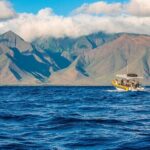
There are two “zones” to your day. You start in the Lahaina area, then you’re out on the water searching farther along Maui’s coast when conditions allow. Regardless of where you cruise, you end back at the meeting point.
You can also read our reviews of more whale watching tours in Maui
Zodiac Raft, Eye-Level Views: Why This Setup Matters
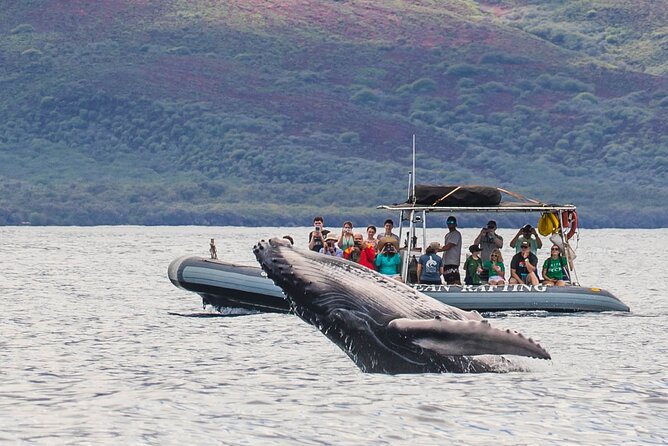
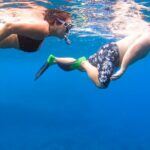
The biggest reason to pick this style of tour is simple: you’re not watching from a high deck or behind railings. You’re close to the water on a raft, and your eyes get level with the action.
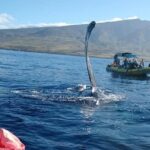
That means when a whale lifts its tail fluke, rolls its body, or surfaces for a breath, you’re more likely to catch the whole moment. And since the crew can reposition quickly, you’re not stuck staring at empty water for long stretches.
A key detail: the raft stops at any sight of a whale. That’s a big deal for photography and for actually watching behavior. Instead of speeding through a sighting, the crew slows down long enough for you to get your bearings and see what’s happening—breach activity, pectoral fin movement, or a quick check-in near the surface.
Now, a reality check: wildlife is wild. Up-close encounters are not guaranteed, and the kind of interactions you see can vary. Still, the combination of an eye-level boat and a crew actively locating whales is exactly what gives this tour its strong reputation.
Hydrophone Listening: The Part You’ll Remember After the Photos
Seeing whales is one thing. Hearing them is a whole other experience.
During the whale season, the tour includes a hydrophone to listen to real whale songs. When the crew puts that into the story, it helps you understand what you’re seeing. You’re not just tracking breath-and-surface cycles—you’re getting a sense of communication and activity happening beneath the surface.
This is also where you’ll notice the difference between a basic wildlife trip and a guided marine outing. The marine naturalist narration helps you connect the dots: why humpbacks surface when they do, what different behaviors can mean, and how the local environment supports migration.
In particular, I’d pay attention if you’re the kind of person who asks questions in real time. The guides on these trips have been praised for staying focused and friendly, including crew members like Captain Jack and first mates such as Jess or Shay, plus other named pairs like Captain Mark with Olivia, or Zach and Jess. Different guides, same theme: they work hard to help you get both sightings and context.
Stop 1 and Stop 2: How the Search Works in Practice
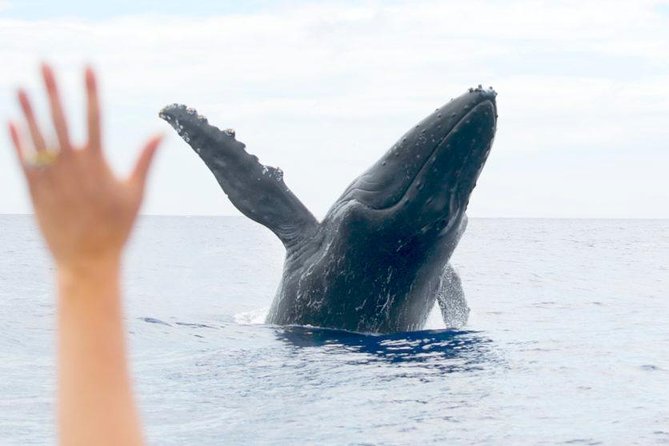
Here’s how the time tends to feel on the water. First, you launch from Lahaina and get into the search pattern. Then, as you head farther along Maui waters, the crew looks for where whales (or dolphins, depending on the season) are actively feeding, traveling, or lingering near the surface.
The itinerary breaks down simply:
- Stop 1: Lahaina is where you begin and where the tour returns to shore.
- Stop 2: Maui is where you spend the main portion searching for wildlife and adjusting your route based on sightings.
When you do spot whales, expect the raft to adjust quickly. You may get a few different “active moments,” rather than one long sighting. That’s normal and part of why small boats can be so effective: the crew can reposition to stay near activity without making the ride feel chaotic.
One more practical note from what people report: weather can change everything. On at least some trips, people ended up rebooked due to conditions and still got an experience with plenty of whale activity. If the day is rough, the crew’s job is to keep you safe while still chasing the best chances.
Winter Whales vs Summer Dolphins: Choosing the Right Season for Your Trip
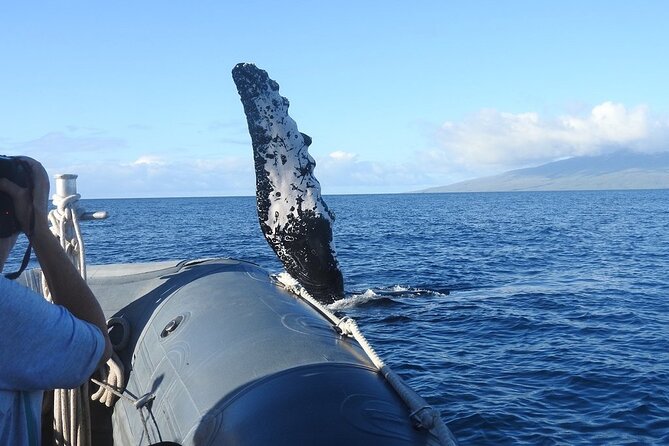
This is a seasonal tour with a clear split:
- Dec to Apr: humpback whale watching at eye level
- Summer months: dolphin watching plus coastal sightseeing
If you’re going in summer, you’ll be on the dolphin option instead. Snacks and beverages are included on the dolphin tour, which is a nice extra when you’re out on the water for around 2 hours 30 minutes.
If you’re going in winter, the whale season is the headline. And this tour’s signature is that you’re paired with the hydrophone and naturalist narration—so even if you’re not a hardcore whale nerd, you still leave with more than a few quick surface sightings.
Keep one thing in mind either way: encounters aren’t guaranteed. The crew tries to find activity, and the boat’s setup helps you catch it, but animals decide where they show up.
You can also read our reviews of more dolphin watching tours in Maui
What to Bring: Sun, Shoes, and the Wet-Ride Reality
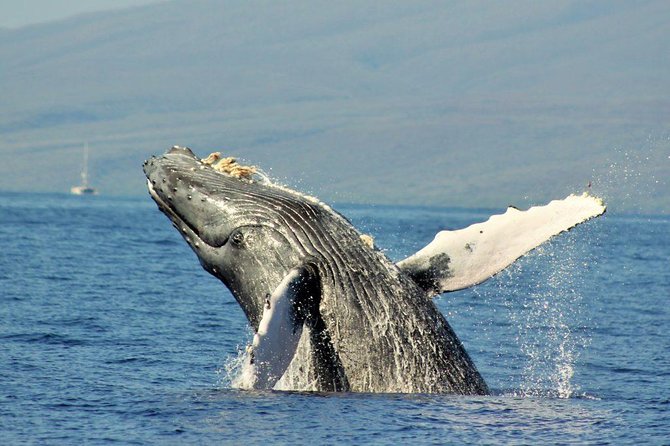
Plan for getting wet. The boat is low in the water, and ocean spray and light rain can happen. This matters for what you pack and wear, especially if you want to stay comfortable for the full ride.
Here’s what’s smart to bring based on how the tour operates:
- Sun protection: a hat and sunglasses are a good idea.
- Reef-safe sunscreen only: the tour allows reef safe rub-on sunscreen and specifically notes that no spray sunscreen is permitted.
- A layer for chilly or rainy days: people have advised bringing a jacket and using the complimentary poncho when weather turns.
- Slip-on shoes: boarding involves footwear handling, and slip-on shoes help.
- If you have food allergies, know the onboard food allergen warning: they cannot guarantee any item is free from common allergens, and cross-contact is possible. If you have severe allergies, bring your needed medication (such as an EpiPen) and consider talking with your clinician first.
Shade varies on the raft, so don’t count on shade to save you.
Who This Tour Fits Best (and Who Should Skip It)
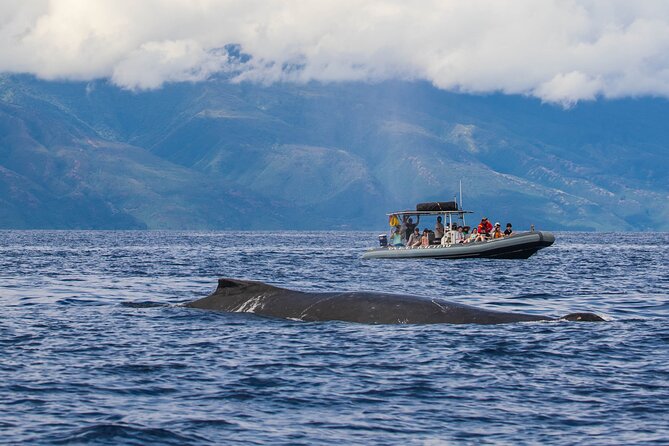
This is a great pick for people who want close, calm wildlife viewing without a big-boat vibe. The small group size (max 25) helps keep the focus on spotting behavior and listening to the naturalist.
You’ll also like it if you:
- want eye-level water viewing
- enjoy guided context, not just sightseeing
- want the special feature of hydrophone whale songs in season
- are traveling with family, as long as everyone meets the age rule
Who should skip?
- Children under 3 (no babies are allowed on the raft)
- Pregnant individuals (not suited for safety reasons)
- Anyone with back/neck injuries
- Anyone who isn’t comfortable with physical mobility for boarding (the boarding location requires it)
If you’re on the fence because of health or mobility, it’s worth taking seriously—small boats can feel safe and controlled, but boarding and movement still require some physical ability.
Price and Value: What $85.16 Gets You in the Real World
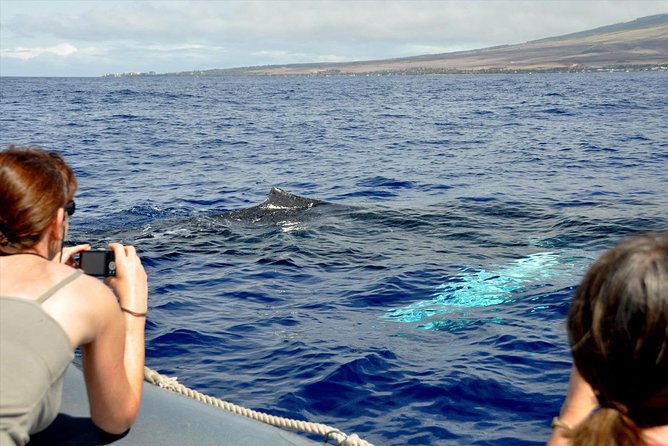
At about $85.16 per person for roughly 2.5 hours, this tour isn’t trying to be the cheapest option. But value comes from what’s included and how it’s delivered.
You’re paying for:
- a small zodiac raft built for close viewing
- a marine naturalist on board
- hydrophone listening during whale season
- life jackets provided for emergencies (even though they’re not required to be worn)
- snacks and beverages only on the dolphin option
The best value signal here is quality control by design. A max-25 group and an eye-level boat reduce the “traffic jam” feeling you sometimes get on larger vessels. And the crew’s focus on stopping when whales appear turns the time into a series of meaningful moments, not just a long cruise.
Also, the tour runs seasonally and is weather-dependent. When conditions are poor, you may be offered a different date or a full refund, which is fair for an experience that depends on seeing wildlife.
The Bottom Line: Should You Book This Maui Eco-Raft Tour?
If your goal is real whale watching from eye level, with the hydrophone and a naturalist explaining what’s happening, I think this is an easy yes for most people.
Book it if you:
- are visiting Dec–Apr and want humpback whale songs plus close viewing
- are going in summer and want dolphins + coastal sightseeing, with snacks included
- prefer a small-group outing (max 25) over bigger-boat chaos
Skip or reconsider if you:
- don’t meet the age requirement (under 3 isn’t allowed)
- are pregnant or have back/neck concerns
- have limited mobility for boarding
- aren’t okay with the idea that you might get a lot of waiting for wildlife, even with a strong search crew (encounters aren’t guaranteed)
One more practical tip: arrive early, wear reef-safe sunscreen you can apply as a rub-on, and dress for getting wet. Do those things, and you’ll maximize your odds of a memorable Maui ocean day.
FAQ
When is whale watching available, and when do dolphins replace whales?
Whale watching runs from December to April. During summer months, the tour shifts to dolphin watching and coastal sightseeing.
What is the minimum age for this tour?
Guests must be three years old or older. Children under 3 are not permitted.
Is the tour safe for pregnant people or people with back/neck injuries?
No. The tour is not suited for pregnant individuals and is also not recommended for those with back/neck injuries.
What’s included on the tour?
You’ll get marine naturalist narration and a hydrophone to listen to whale songs in season. Life jackets are provided for emergencies. If you book the dolphin option, snacks and beverages are included.
Are whale or dolphin sightings guaranteed?
No. Whales or dolphins are based on option selected, and encounters vary in the wild. Up-close wildlife encounters are not guaranteed.
Do I have to wear a life jacket?
Life jackets are provided, but they are not required to be worn during the tour (they’re for emergencies).
What should I bring for sun and weather?
Plan to get wet. Bring sun protection like a hat and sunglasses, and use reef safe rub-on sunscreen only. No spray sunscreen is permitted.
Where is the meeting point, and how early should I arrive?
Meet at 1223 Front St, Lahaina, HI 96761. The tour leaves promptly, so you should arrive 30 minutes prior to boarding.
What is the cancellation and weather policy?
You can cancel for a full refund if you cancel at least 24 hours in advance. The experience requires good weather, and if it’s canceled due to poor weather, you’ll be offered a different date or a full refund.
If you tell me your travel month and how many people are in your group, I can help you pick the best season option (whales vs dolphins) and what to prioritize when packing.