REVIEW · MAUI
VIP (12 Guests ONLY) Ultimate Whale Watch
Book on Viator →Operated by Ultimate Whale Watch & Snorkel · Bookable on Viator
Rafts put you close to Maui’s whales. This VIP (12 guests max) outing runs from Lahaina Harbor on low-to-the-water coast-guard style rafts, built for quick positioning and big views—so you spend more time watching and less time waiting. You also get live education from an onboard marine naturalist, plus a hydrophone setup to hear whale sounds underwater.
What I like most is how the boat design supports front-row watching: with fewer seats and a raft that doesn’t block the sightline, you can track behavior as it happens. I also like the extra layer of whale communication, especially when you can listen to whale songs on the hydrophone and connect what you hear to what you’re seeing.
One thing to consider: a raft ride can be bumpy and you might get wet, depending on wind and spray. If you’re prone to seasickness, this is the part to think through before you go.
In This Review
- 6 Quick Reasons This Whale Watch Feels Like the Best Seat in the House
- Why a 12-Guest Raft Tour Works for Whale Watching
- Starting at Lahaina Harbor: What the First Stretch Feels Like
- Onboard Marine Naturalist Talks and Hydrophone Whale Songs
- The Two-Hour Itinerary: How the Whale Watching Usually Plays Out
- What “Guaranteed Sightings” Means for Your Planning (Dec–Apr)
- Ride Comfort, Rain Spray, and Photo Tips That Actually Help
- Price and Value: Is $125 Worth It on Maui?
- Who This VIP Whale Watch Fits Best
- Should You Book This Whale Watch?
- FAQ
- How many people are on this whale watch?
- Where does the tour start and end?
- How long is the VIP whale watch?
- Is there a whale sighting guarantee?
- Is the tour conducted in English?
- Are service animals allowed?
- Who can’t participate?
- What happens if weather is bad?
6 Quick Reasons This Whale Watch Feels Like the Best Seat in the House
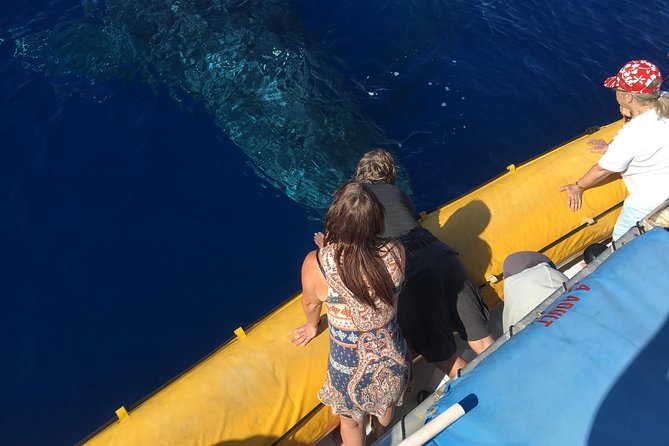
- 12-guest max keeps the vibe intimate and makes it easier for the crew to position the raft
- Low-to-the-water raft style means more direct views and close encounters
- Onboard marine naturalist talks add context to what you’re seeing out in the water
- Hydrophone whale songs turn a sighting into a full-on experience of communication
- Dec–Apr sightings are guaranteed with a go-again option if you don’t spot whales
- A fast search pattern helps when you’re dealing with a wide ocean area and moving whales
Why a 12-Guest Raft Tour Works for Whale Watching
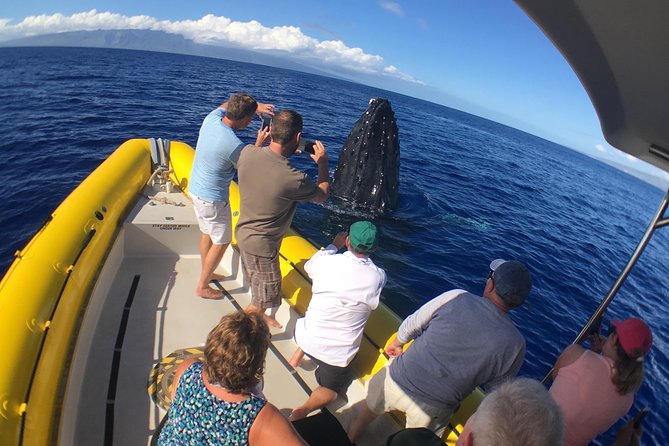
Humpbacks aren’t always in the exact same spot, so the best whale watches are the ones that can get moving fast and stop precisely when something’s happening. This tour uses small-capacity raft-style vessels that sit low and move efficiently, so you tend to get that closer, more natural-feeling view.
The VIP limit matters too. With only 12 people, you’re not fighting for sightlines through crowds, and the crew can focus on finding activity—not just keeping a schedule. One review described how the captain seemed to go straight after real behavior, not just a quick pass.
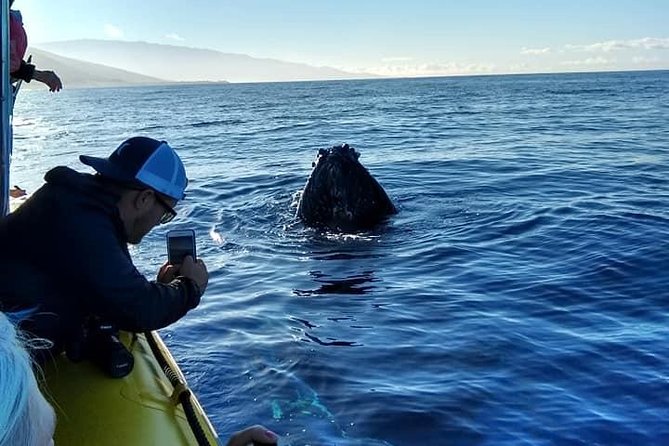
There’s also a nice practical angle: raft boats can deliver a lot of visual access because there’s less structure in your way than on higher-sided boats. That’s huge when whales breach, fin slap, or surface right near the raft.
You can also read our reviews of more tours and experiences in Maui



Starting at Lahaina Harbor: What the First Stretch Feels Like
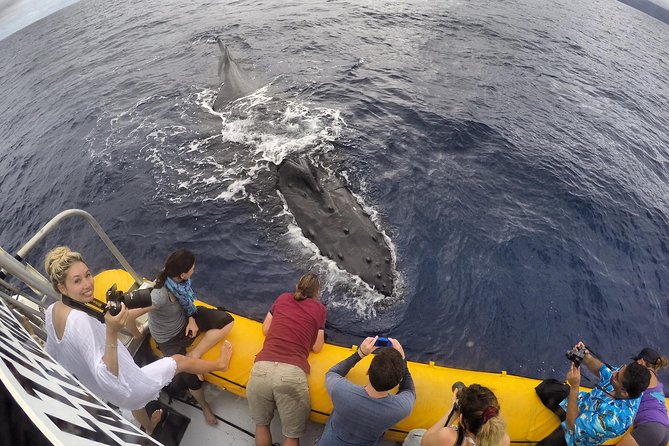
The tour meets at 1229 Front St, Lahaina, HI 96761, and you return to that same area at the end. That’s a straightforward setup for a Maui day: you can plan your morning or afternoon around a clean start and finish without a long mystery.
Once you’re checked in, the “what happens next” is simple: you’re out on the water, and the crew begins searching for active whales. In the best moments, you can feel the difference between cruising and hunting—when the raft slows and lines up, it usually means something is close.
A lot of the value here is front-loading the experience. Because this is a shorter, roughly 2-hour outing, you’re not burning hours just getting to the general whale area. Reviews also mention smooth departures on at least some trips, which helps when you’re already on Maui time.
Onboard Marine Naturalist Talks and Hydrophone Whale Songs
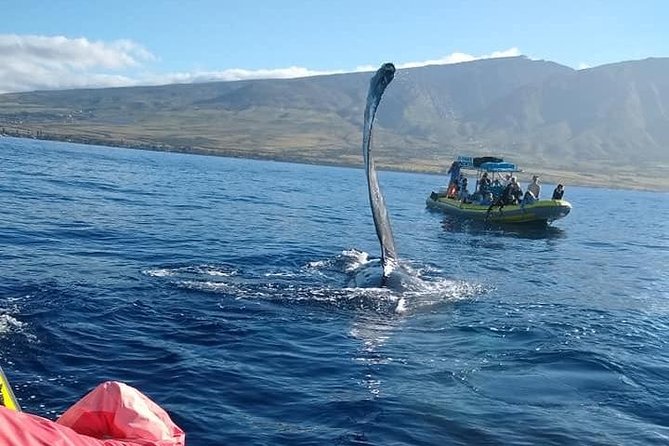
This tour isn’t just sighting-based. You get educational talks from an onboard marine naturalist, and you can also listen to whale songs through a hydrophone. That matters because whale watching can feel magical, but a little context turns it into real understanding.
When the hydrophone is in use, you’re getting the audio side of the encounter. Hearing whale sounds while you’re watching behavior can make the whole scene feel more “alive,” especially when whales are close enough for you to notice their patterns—surface breaks, pauses, and repeated activity.
The crew also tends to run a lot of real-time Q&A. In multiple reviews, people singled out guides by name—like John and Casie, Emma and Pat, and Jeremiah and Sarah—because they explained what was happening without making it a lecture. If you like asking questions, this is a strong format.
The Two-Hour Itinerary: How the Whale Watching Usually Plays Out
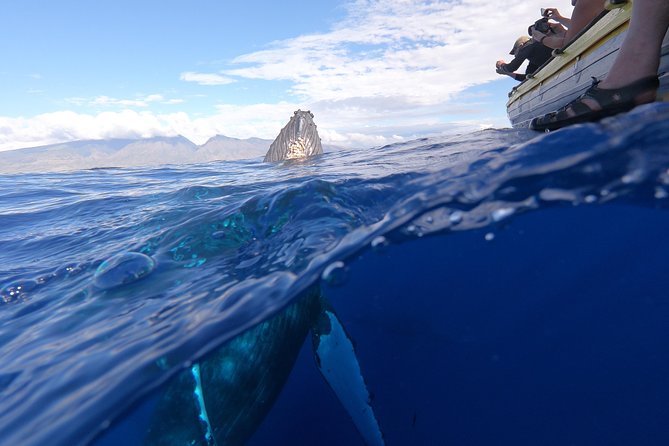
There isn’t a long, complicated schedule here. Instead, you’re on a focused loop: search, locate activity, watch closely, and enjoy educational stops while staying flexible as whales move.
Here’s the pattern you can expect:
- Cruise out and scan for activity. The crew looks for signs of active whales rather than just distant sightings.
- Get into position for close viewing. Because the raft rides low, you can watch whales with less obstruction and more “part of the scene” feeling.
- Listen to whale sounds. The hydrophone helps you connect audio and visuals.
- Watch behavior, not just a single breach. Reviews mention repeated breaches, fin slaps, mother-and-calf interactions, and even competitive behavior among males.
- Return to Lahaina. The experience ends back at the meeting point.
You’ll likely see humpbacks during the season where sightings are guaranteed. In reviews, people call out dramatic moments like whales swimming under the boat, whales posing close by, and extended stretches of activity. One review used the term whale jail for when the whales are all around you and you have to stay in place to avoid interfering—basically the crew’s way of saying, stay put, because this is good.
The occasional tradeoff: because you’re watching wild animals, you might have a quieter stretch before the “wow.” On one trip late in the season, it took time to find them, but the payoff was still described as worth it.
What “Guaranteed Sightings” Means for Your Planning (Dec–Apr)
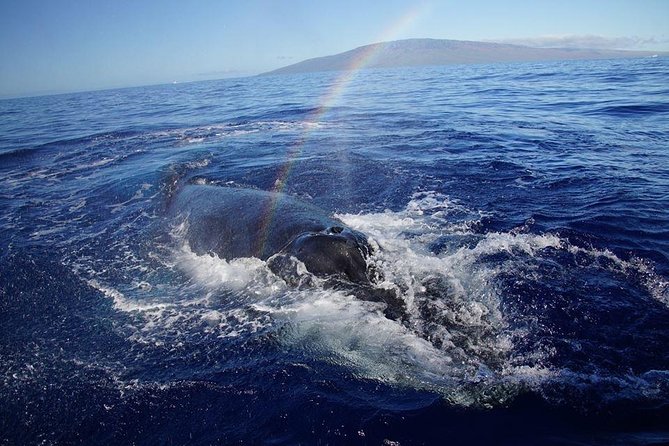
This is the big selling point for planning your Maui schedule. During December–April, whale sightings are guaranteed. If you don’t see whales on your trip, you’re told you can go again for free.
That changes the way you should think about risk. If you’re traveling in peak whale months and you care about actually seeing whales (not just hoping), this is one of the more reassuring policies in the category. You’re booking a short outing with a built-in safety net.
Also, the guarantee period aligns with what you’ll likely want to target for humpbacks. Even when a day is windy or visibility is tricky, the crew still has incentive to keep searching until you get your moment.
You can also read our reviews of more whale watching tours in Maui




Ride Comfort, Rain Spray, and Photo Tips That Actually Help
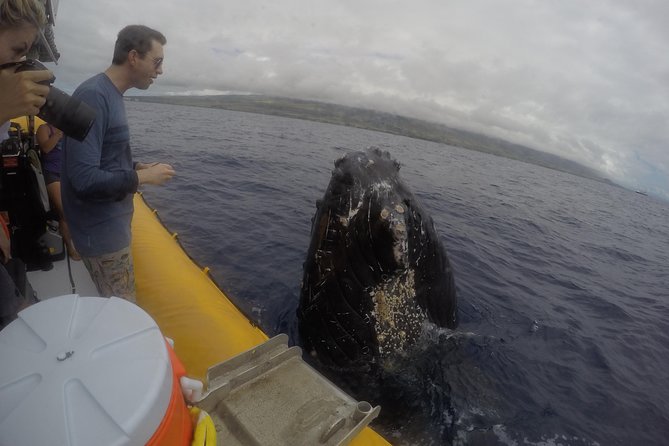
Rafts are fun, but they’re not luxury cruisers. Expect a bumpy ride at times. One review flat-out said it’s not the kind of boat they’d recommend for someone who gets seasick. If you’re sensitive, plan accordingly.
You should also plan for some spray. Some people reported getting wet at times and suggested bringing a jacket. Others said they returned dry, so it’s weather-dependent—but bringing a light waterproof layer is a smart hedge.
For photos, the raft setup is a plus. Because you’re closer to the surface and the boat has a lower profile, you often get opportunities for sharper whale shots than you would from a higher boat where the whale keeps breaking the same line-of-sight over and over.
Practical tip: bring your camera and keep it accessible. The tour description stresses this, and the feedback backs it up—when whales breach repeatedly, you don’t want your gear buried.
Price and Value: Is $125 Worth It on Maui?
At $125 per person for about 2 hours, this isn’t a budget activity. But it can be good value if whales are a top priority for your trip.
Here’s why I think the math can work:
- Small group size (max 12) usually means more quality viewing per seat.
- A close-up vessel design tends to create more “real encounter” moments.
- The hydrophone and marine naturalist help you get more than just a set of photos.
- The Dec–Apr guarantee adds financial risk protection compared with tours that simply promise a search.
If you’re the kind of person who wants whales to feel personal—like you’re watching from a vantage point where you can see details of behavior—this style tends to deliver. Reviews frequently echo the same theme: people liked being close, watching whales interact, and feeling like they had front-row access.
On the other hand, if your priority is absolute comfort, or if you hate any chance of bumpy water, then the raft format might not match your idea of value. In that case, you’d want to compare boat types before booking.
Who This VIP Whale Watch Fits Best
This experience fits best if you:
- Want close encounters rather than distant sightings
- Like the mix of education plus real-time whale watching
- Prefer a small group where everyone can see
- Are visiting Maui in Dec–Apr and want the guarantee peace of mind
It’s less ideal if:
- You’re pregnant (the tour states they cannot take pregnant guests)
- You’re traveling with kids under 3 years old
- You’re strongly prone to seasickness and want a smooth ride
One more practical detail: service animals are allowed, and the meeting point is near public transportation. So it’s easier to plan around if you’re not renting a car.
Should You Book This Whale Watch?
Yes—if whales are a must-do for your Maui trip and you’re traveling during December–April. The small group format, raft-style closeness, onboard nature talks, and hydrophone whale songs combine into an experience that feels purposeful, not just scenic.
Book it with a couple realistic expectations: the raft can be bumpy, you may get spray, and wildlife behavior is never on a timer. But if you’re okay with that tradeoff, this is the kind of tour that turns a good day into a memorable one—especially because the sighting guarantee gives you a strong safety net.
If you’re unsure, I’d choose based on your tolerance for motion. If you can handle waves, this is one of the better ways to watch humpbacks in Maui without feeling crowded or far away.
FAQ
How many people are on this whale watch?
The tour is limited to a maximum of 12 travelers.
Where does the tour start and end?
It starts at 1229 Front St, Lahaina, HI 96761, and it ends back at the same meeting point.
How long is the VIP whale watch?
It lasts about 2 hours.
Is there a whale sighting guarantee?
Yes. During December–April, whale sightings are guaranteed. If you don’t see whales, you can go again for free.
Is the tour conducted in English?
Yes, the tour is offered in English.
Are service animals allowed?
Yes, service animals are allowed.
Who can’t participate?
The tour says it is unable to take guests who are pregnant, and it also says there are no children under 3 years old.
What happens if weather is bad?
The experience requires good weather. If it’s canceled due to poor weather, you’ll be offered a different date or a full refund.