REVIEW · MAUI
Beginner Scuba Dive in Lahaina: Swimming Required
Book on Viator →Operated by Banyan Tree Divers Maui · Bookable on Viator
A swimming test in paradise? That is the trade-off for a great beginner scuba session. I like the small group (max 8) that keeps you getting hands-on help, and I like that you get full scuba equipment so you can focus on learning instead of shopping. One big consideration: swimming independently in the ocean is required, and skipping it can mean you’re removed without a refund.
The Kaanapali-area shore setup makes this a smart first try, with shallow-water practice before you go down with your instructor. You may spot sea turtles, eels, and schools of tropical fish, and in some cases even bigger surprises like an eagle ray or sharks. If you have asthma or sinus issues, this isn’t the best match.
You’ll also need to be on top of the rules: a medical statement where you must answer NO to every question (or get doctor clearance) plus a strict 18-hour wait before flying or going up to high altitude. It is worth it if you’re ready for the water part and the paperwork part.
In This Review
- Key Takeaways Before You Go
- Why Kaanapali-Style Shore Conditions Work for First-Timers
- Kahekili Beach Park: Where the Day Starts and How It Feels
- Skills, Shallow Water Practice, and What You Actually Do
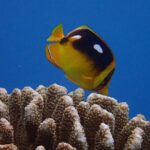
- What You Might See: Turtles, Eels, Rays, and Schools of Fish
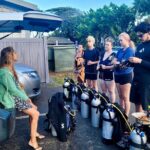
- Equipment Included, Snacks Provided, and Small Touches That Help
- Price and Value: Is $229 Worth It?
- Swimming Is Required: The Real Make-or-Break Detail
- The Medical Statement and the 18-Hour Rule (Don’t Skip This)
- Medical statement
- 18-hour wait after your underwater sessions
- Small-Group Coaching: Why the Instructors Get Repeated Praise
- Who This Fits (and Who Should Rethink It)
- Should You Book This First Scuba Experience in Maui?
- FAQ
- How long is the beginner scuba session?
- Where does the tour start, and where does it end?
- What swimming ability do I need?
- Is scuba equipment included?
- Do I need to complete a medical form?
- Is the experience okay for asthma or sinus conditions?
- Do I need to wait before flying or going to high altitude?
Key Takeaways Before You Go
- Max 8 people means more attention from your instructor when you’re learning breathing control and buoyancy.
- Shore-based setup at Kahekili Beach Park helps keep conditions manageable for first-timers.
- Scuba gear is included, so you only need to show up ready to swim.
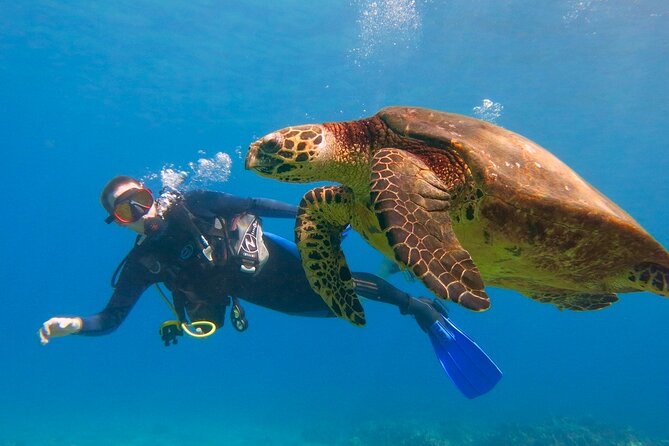
- Marine life is a real target: turtles, eels, tropical fish, and sometimes larger creatures show up.
- Plan around the rules: the medical form and the 18-hour no-fly/no-high-altitude window matter.
Why Kaanapali-Style Shore Conditions Work for First-Timers
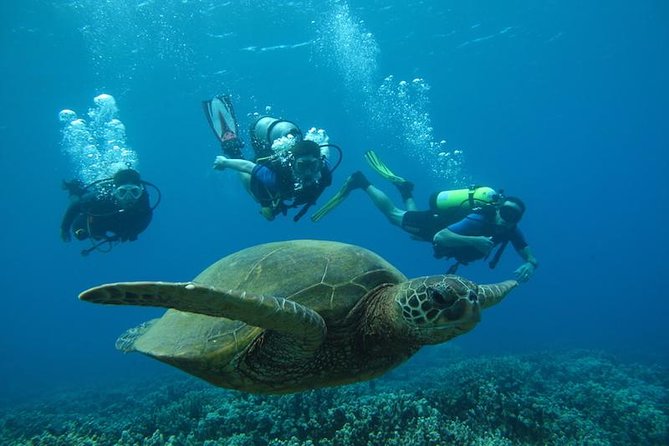
This is a beginner-friendly way to try scuba in Maui without the big “unknown” feeling of a boat trip and a distant site. The concept is simple: you train from shore in Kaanapali-area waters, where conditions are described as reliable year-round, then you practice key skills close to the surface.
What makes this practical is your sequence. You do a few basics in shallow water first, so you’re not guessing underwater how your gear should feel or how breathing stays steady. Then, you get that first real underwater look with a guide controlling the pace.
If you’re comfortable in open water, you’ll likely love how fast it clicks. A bunch of first-timers mention how quickly they got used to the breathing rhythm once they had coaching. And if you’re the type who likes clear instruction, instructors like Simon, Shane, Kevin, and Jen get praised for staying patient and calm while you learn.
You can also read our reviews of more scuba diving tours in Maui
Kahekili Beach Park: Where the Day Starts and How It Feels
Your meetup point is Kahekili Beach Park, at 65 Kai Ala Dr, Lahaina. It runs about 2 hours total, and it ends back near the start, so the day doesn’t get stretched across the whole island.
This matters more than it sounds. Short days help you keep energy up for something physically new. And it also helps if you’re juggling Maui plans like sunset dinners, whale-watching earlier, or a rental-car schedule.
You can also plan for what to bring because the tour lists what’s not included. Bottled water isn’t included, and the company encourages reusable bottles to cut down on plastic waste. If you’ve ever been on a beach activity where you show up thirsty and underpacked, you’ll appreciate the reminder.
Skills, Shallow Water Practice, and What You Actually Do
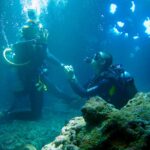
Here’s the heart of the experience: before you go down, you learn the mechanics. Expect to go through basic scuba skills in shallow water under your instructor’s guidance, then continue into an underwater segment as you feel ready.
A few helpful clues come from how people talk about the pacing. Some first-timers note the first underwater segment feels close to snorkeling because the goal is getting gear and breathing comfortable while you’re around a small reef area. Then the second segment is where you tend to see the most interesting marine life from farther out in the water.
If you’re nervous, you’ll want to lean into the instructor’s step-by-step approach. Multiple people specifically praise instructors for making the process feel safe and understandable—people like Simon and Shane get singled out for making first-time divers feel relaxed. Others, like Kevin, are praised for being thorough and confident in the pre-water talk, which is exactly what you want when your brain is busy trying to stay calm.
What You Might See: Turtles, Eels, Rays, and Schools of Fish
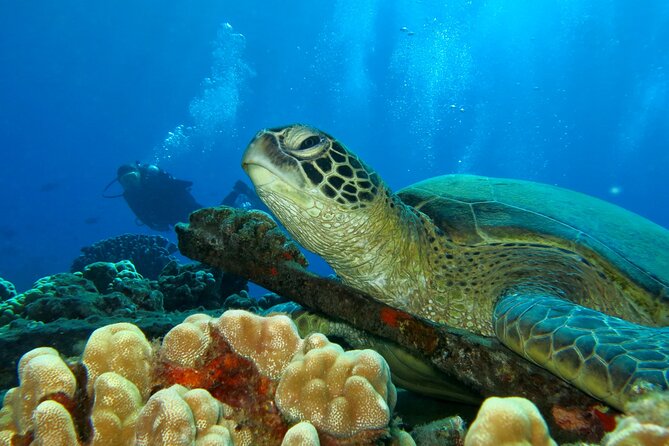
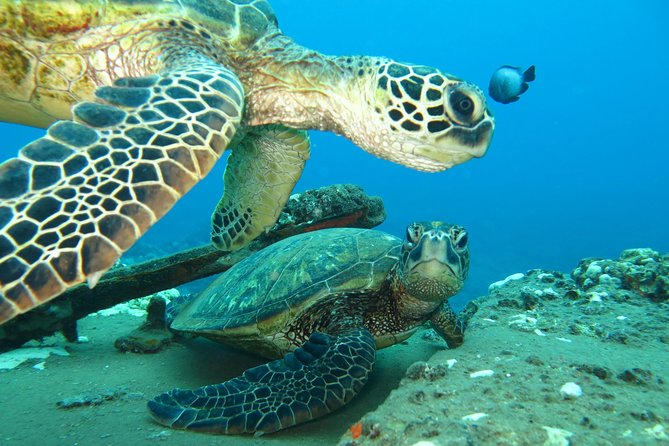
This is one of the big reasons people book. Under the guidance of your instructor, you’re aiming to observe local wildlife close enough to watch behaviors—not just quick glances.
Common sightings you should hope for include:
- Sea turtles
- Eels
- Large schools of tropical fish
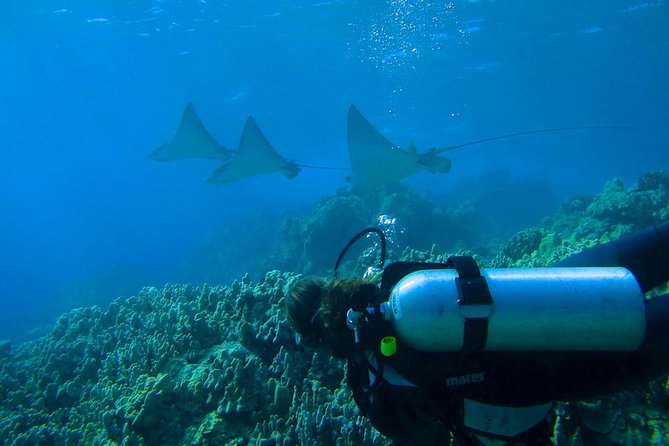
And then there are the “bonus surprises” that show up in real stories. Some people report an eagle ray gliding nearby, sea stars and other reef life in the mix, and in one case even sharks during the day. Another person mentioned hearing whale sounds, which is a great reminder that Maui’s ocean scene isn’t only visual.
The takeaway: don’t treat wildlife as guaranteed. Treat it as a strong possibility, because the area you’re training in is full of life and your guide is actively looking for opportunities while you’re focused on skills.
Equipment Included, Snacks Provided, and Small Touches That Help
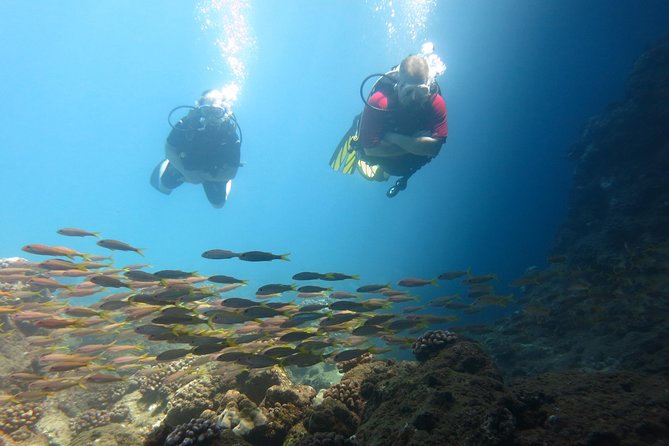
The tour includes use of scuba equipment, which is a practical win. For a first try, you don’t want the added stress of figuring out fit, adjustments, and how everything works at the last minute.
You also get snacks: fig bars for a post-water sugar boost. That sounds minor, but after you’ve been active in salt air, it can make a difference in how you feel when the adrenaline wears off.
If you want good value from the day, show up fed and hydrated. Water isn’t included, and you’ll burn energy swimming and learning. Bring your reusable water bottle, and consider packing a light snack before you meet—something easy on an active stomach.


Price and Value: Is $229 Worth It?
At $229 per person, this isn’t a bargain-basement activity. But for an introductory scuba session, the price can make sense because you’re paying for three things that often cost extra when you piece them together yourself:
- Full scuba gear included
- A professional guide focused on safety and skills
- A small group limited to 8 people, which usually means more help when you need it
Also, the refund-removal rules around medical clearance and swimming ability mean they’re doing active risk management. That costs money. It also helps explain why people consistently report feeling safe and supported.
If you compare this to “DIY” attempts, you get real instruction. And the reviews back that up with repeated praise for patient teaching—especially from instructors such as Simon, Shane, Kevin, and Jen. People also mention photo-taking during the session. Not every experience offers that kind of attention, and those moments turn “a try” into a memory.
One more value point: the operator offers an upgrade to a private course for less comfortable swimmers. That signals they want you to learn without being pushed past your comfort level. If you’re unsure you’ll handle independent swimming, that private option could be the smarter way to spend money instead of risking the day getting cut short.
Swimming Is Required: The Real Make-or-Break Detail
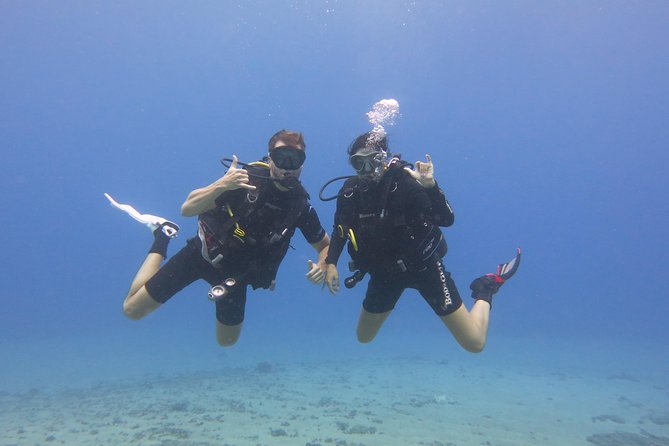
This is not a casual pool test. The experience requires that you can swim comfortably in the ocean and that you can swim independently in deep ocean conditions. You’re also told you must meet the swim requirement; if you book and can’t swim, you forfeit participation and the refund.
This is the biggest decision point in the whole tour, so be honest with yourself. If you’re a strong swimmer but still get anxious about waves, you might still do well if you’re willing to train with the guide and follow every instruction. If you’re not confident in open-water swimming, look hard at the private-course upgrade or choose a different activity.
You’ll also want moderate physical fitness. There’s a stated requirement that you can carry a minimum of 30 pounds for a short distance. That likely covers gear or personal items during setup.
And if you’re managing breathing or sinus issues, the tour isn’t recommended for asthma or sinus conditions. Saltwater conditions, exertion, and pressure changes can be an issue, so don’t gamble with your health.
The Medical Statement and the 18-Hour Rule (Don’t Skip This)
Two rules can make or break your day:
Medical statement
Before scuba training, you fill out an important medical statement. You must be able to answer NO to each question. Any YES requires clearance from your doctor. If you can’t secure clearance when needed, you lose the ability to dive and the right to a refund.
If you’re unsure about any condition, contact the operator ahead of time for the medical form, rather than trying to interpret it the night before.
18-hour wait after your underwater sessions
After your scuba training, you must wait 18 hours before flying, ziplining, or ascending to Haleakala. The rule also includes not going to elevations 1,000 feet or more.
Think of this as non-negotiable physics and safety protocol. The point is to let your body adjust and avoid pressure-related risks. If your Maui itinerary includes a flight the same day or a high-altitude trip right after, plan a buffer day or change the order.
Small-Group Coaching: Why the Instructors Get Repeated Praise
One reason this activity earns consistent 5-star reactions is the teaching style people report. In many stories, instructors are described as calm, patient, and good at explaining things clearly while you’re learning something that feels slightly unnatural at first.
Specific names come up again and again:
- Simon: praised for making first-timers comfortable
- Shane: praised for patience and safe pacing, especially with nervous beginners
- Kevin: praised as excellent, thorough, and confidence-building
- Jen and Caitlin: praised for kindness and comfort in the water
- Chelsea, Michael: praised for ease, instruction quality, and helping students manage nerves
You’ll also notice a theme: the best moments are often when you feel in control. People mention getting up to speed fast with gear use, and some say learning basics made the rest of their Maui trip better because they understood what to watch for underwater.
If you like an active instructor who stays close and attentive, the max 8-person group is a strong signal you’ll get that.
Who This Fits (and Who Should Rethink It)
This beginner scuba session is a great match if:
- You’re comfortable swimming independently in the ocean
- You want a guided first experience with gear provided
- You like wildlife viewing with a good instructor guiding you
- You want a short, focused ~2-hour activity that doesn’t take over your day
- You’re ready to follow the medical form and the 18-hour wait rule
It might not be the best match if:
- Open-water swimming is your weak spot
- You can’t realistically meet the medical-statement requirement
- You have asthma or sinus conditions
- You don’t want to plan around an 18-hour restriction after the activity
Also, note the minimum age is 10, and there are requirements related to physical carry. If you’re bringing a teen or child, make sure they genuinely meet the swim and fitness expectations—no wishful thinking.
Should You Book This First Scuba Experience in Maui?
Book it if you want a structured first try with real coaching, included equipment, and a high chance of seeing marine life like turtles and eels, plus the small-group attention that makes learning smoother. The $229 price becomes easier to justify when you factor in instruction time, gear, and safety-focused rules that keep the experience controlled.
Skip it—or choose a different activity—if your ocean confidence is shaky. This one is not built for “I’ll figure it out in the water.” The swimming requirement is the gate.
If you do book, plan your day so you’re not forced into last-minute high-altitude moves. Give yourself the full 18 hours afterward for flying or Haleakala. That’s the boring part that lets you enjoy the exciting part.
FAQ
How long is the beginner scuba session?
It runs about 2 hours total.
Where does the tour start, and where does it end?
It starts at Kahekili Beach Park, 65 Kai Ala Dr, Lahaina, HI 96761 and ends back at the same meeting point.
What swimming ability do I need?
You must be able to swim comfortably in the ocean and swim independently as part of the experience. Swimming in the ocean is required, and failure to meet the swim requirement means you forfeit participation.
Is scuba equipment included?
Yes. The tour includes use of scuba equipment.
Do I need to complete a medical form?
Yes. You must fill out a medical statement and be able to answer NO to each question. If you answer YES to any question, you need clearance from your doctor.
Is the experience okay for asthma or sinus conditions?
It is not recommended for guests with asthma or sinus conditions.
Do I need to wait before flying or going to high altitude?
Yes. You must wait 18 hours before flying, ziplining, or ascending to 1,000 feet or more (including Haleakala plans).