REVIEW · HONOLULU
Oahu: Waikiki Beginner Private Surf Lesson- Female Guide
Book on GetYourGuide →Operated by Hawaii Adventours · Bookable on GetYourGuide
A Duke statue is the cue to start. This Waikiki private surf lesson for beginners turns legendary waves into a calm, coached first experience. I love the one-on-one format and the way the lesson begins with 20–30 minutes of land instruction, so you’re not guessing once you hit the water. One real consideration: you must be able to swim, and you’ll be spending time in ocean conditions right away.
What makes it especially good for first-timers is the stress-free setup—just you and your instructor, plus the basics made simple. Reviews specifically highlight the female guide (often referenced as Ali/Ally) for being patient, clear, and quick to adjust when someone hesitates or doesn’t get it instantly. The main drawback is straightforward: you’ll want a little extra skin protection and comfort, because you should plan to wear swimwear and you’ll be working with a board on your stomach/torso.
In This Review
- Key things to know before you try Waikiki surfing
- Meeting Duke Kahanamoku and getting your Waikiki surf day rolling
- The 20–30 minutes on sand that actually saves your first session
- Paddling out together: how the first wave lesson feels
- Why a female private guide changes the beginner experience
- What’s included, and what you’ll need to plan for
- Safety and fit: the swim skill and the age limits that matter
- Timing in real life: what 1.5 hours means on Waikiki
- The optional drone photos/videos add value if you like proof
- Price and value: is $125 per person fair for a beginner private lesson?
- Who this Waikiki beginner surf lesson is best for
- Should you book this Waikiki private surf lesson?
- FAQ
- Do I need surfing experience before booking?
- How long is the surf lesson?
- Where do I meet for the lesson?
- What’s included in the price?
- Do I need to know how to swim?
- What should I bring?
- Is the lesson suitable for children?
- Is it wheelchair accessible?
- Can I buy drone photos or video?
- What’s the cancellation policy?
- How much does it cost?
Key things to know before you try Waikiki surfing
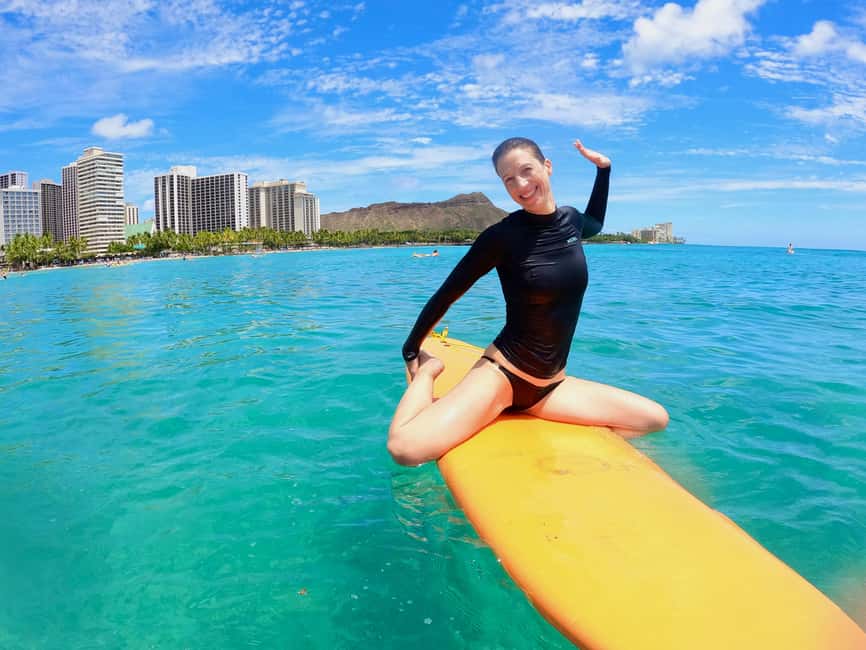
- Private, one-on-one coaching means you get corrected quickly, not later.
- Land practice first (20–30 minutes) helps you stand, read the water, and stay safe.
- Meet at the Duke Kahanamoku statue so you can orient fast on Waikiki Beach.
- You’ll paddle out together to catch your first waves—no prior surfing needed.
- Bring your own comfort layer like a T-shirt/rashguard idea (not included) to protect your body from the board.
- Optional drone photos/videos can help you remember the session, if the photographer is available.
Meeting Duke Kahanamoku and getting your Waikiki surf day rolling
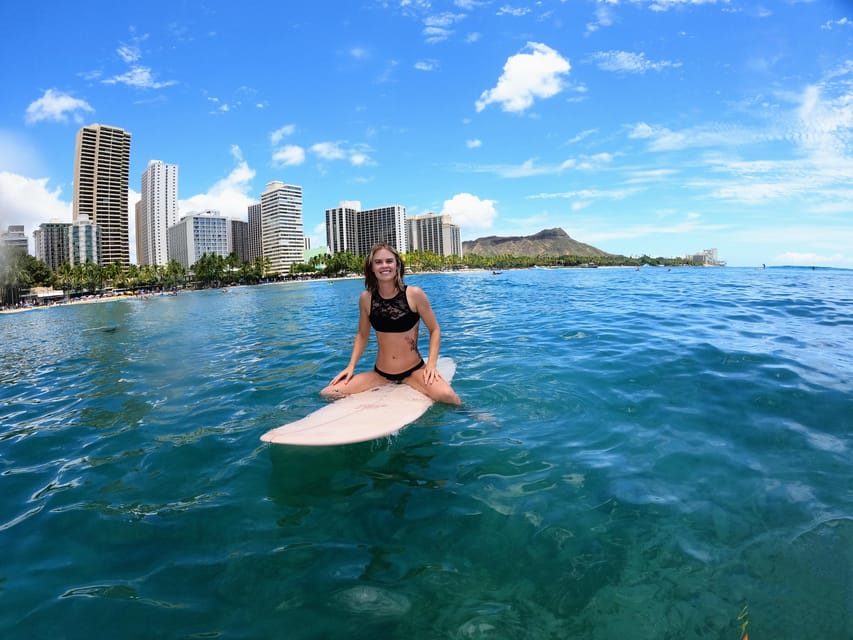
You start at Waikīkī Beach at Duke Kahanamoku’s statue—easy to find, and very Waikiki. It’s a smart meeting point for a beginner lesson because you can orient yourself visually before you walk into the sand-and-water reality of surfing.
You’ll come wearing only what you plan to swim with. That matters because Waikiki is a quick day: there’s not a lot of time for wardrobe changes. So think in terms of swim-ready, board-ready, and sun-ready from the moment you arrive.
At the start, you’ll get set up with a surfboard rental and your instructor will brief you so you understand what happens next. This is one of those “small detail, big payoff” moments. When you know the flow of the lesson early, you stay relaxed when your turn comes.
You can also read our reviews of more guided tours in Honolulu



The 20–30 minutes on sand that actually saves your first session
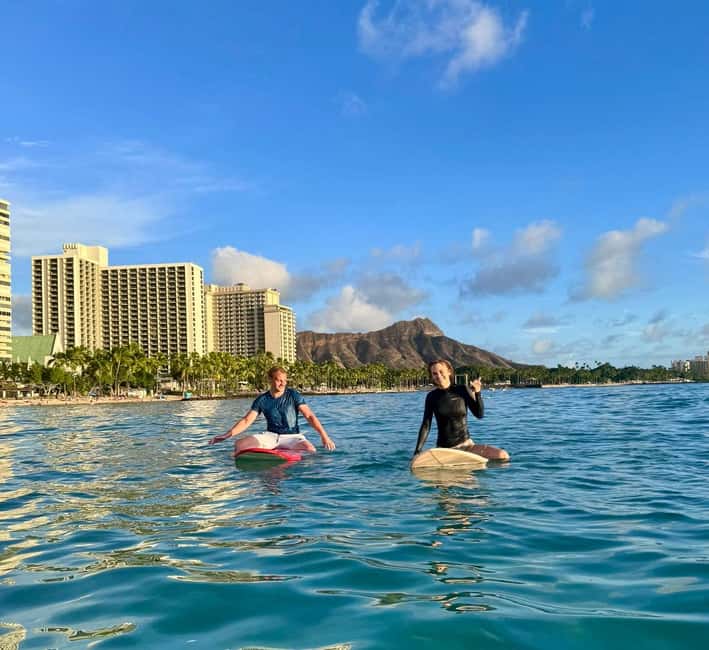
Here’s what I like most about this lesson design: it starts with shore instruction on the sand before you ever paddle out. The lesson includes a land-based crash course (about 20–30 minutes) focused on the fundamentals that usually confuse beginners.
Expect to work on:
- how to stand up safely and efficiently
- how to read the waves (at least the basic cues)
- safety precautions—the stuff that keeps the ocean from feeling scary
On paper, “land instruction” sounds like a warm-up. In practice, it prevents a common beginner problem: people try to surf as if the ocean will automatically cooperate with their timing. Learning the sequence on dry sand helps your body understand where it needs to go, so your first attempts in the water feel more like execution than guessing.
And because this is private, your instructor can tailor the steps to you. That’s especially valuable if you’re the type who freezes when you don’t get it the first time. The feedback you’re given back up this approach: the guide is repeatedly described as patient and supportive.
Paddling out together: how the first wave lesson feels
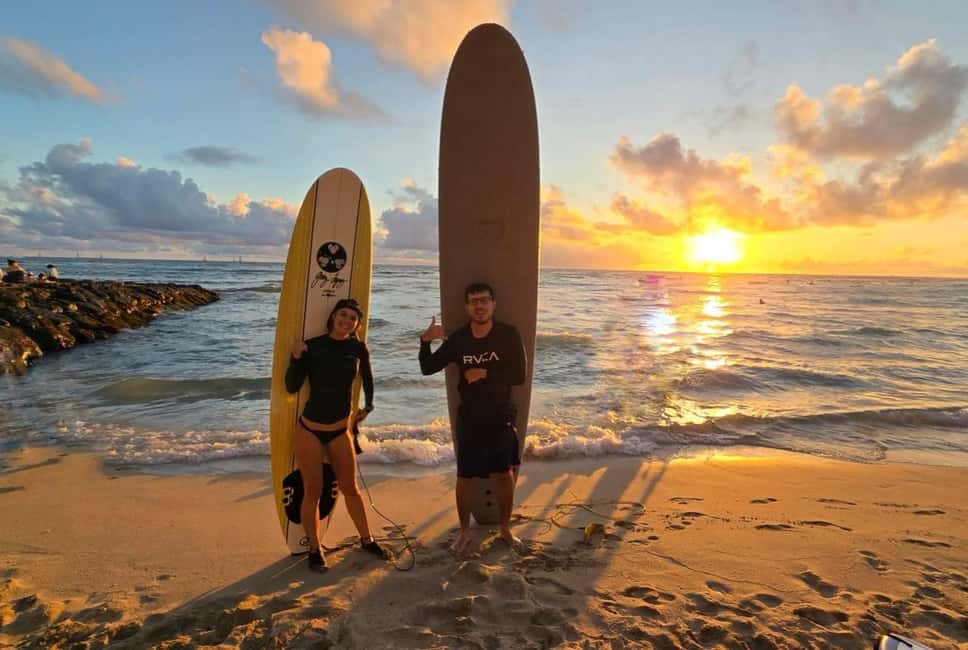
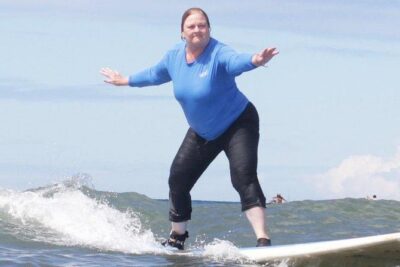
After the shore basics, you paddle out together into the ocean waters to catch your first waves. The key point for you is that it’s not “go figure it out.” Your instructor is with you for the transition from sand drills to real waves.
The surfing portion is about 75 minutes. That time is long enough to get multiple tries, not just a single attempt where you never really learn anything. You’ll be working on the motion and timing that the land lesson introduced—just now with real water movement.
This is also where the swim requirement becomes real. The activity clearly states that you must know how to swim. If you’re confident in open water swimming, you’ll have a much calmer experience. If you’re still building confidence in the water, this might not be your easiest first surf step.
What helps is the private format: you can ask questions as you go, and the instructor can spot what’s happening with your posture and attempt rhythm.
Why a female private guide changes the beginner experience
The instructor is female, and the class is private (one-on-one). That combo is more than a marketing detail. It tends to reduce the “performing” pressure that beginners sometimes feel in group settings.
In the reviews, the instructor is praised for taking time, being clear, and staying unbothered when someone doesn’t instantly get the technique. One parent’s story stands out: their daughter was hesitant at first, and the instructor made sure she felt comfortable and safe, then worked with her to maximize her time on the board. Another review highlights that the guide never got frustrated when it took a moment to understand.
If you’re worried about being embarrassed, this kind of coaching style matters. It turns the session into a learning loop: try, adjust, try again—without a tense atmosphere.
Also, the class is described as stress-free. That matches the overall structure: shore basics first, then paddling out together, then riding with ongoing attention.
What’s included, and what you’ll need to plan for
Included:
- Instructor
- Lesson
- Surfboard
- Leash
That’s a solid set for a first-timer. The leash is a big deal for safety and control, and you don’t want to be hunting for one on your own.
Not included (so you should bring these):
- Swimwear
- Rashguard or T-shirt-style protection (hint below)
- Change of clothes
- Towel
- Sunscreen
- Water
Here’s the practical part: Waikiki sun is no joke, and ocean boards can be rough on skin. The activity specifically recommends a T-shirt or rashguard to protect your stomach from the board. If you skip that and you’re sensitive to rubbing, you’ll spend the lesson thinking about discomfort instead of learning.
My “do this now” checklist:
- Wear or pack sunscreen
- Bring water (staying hydrated helps you focus)
- Consider a rashguard or a T-shirt for board contact comfort
- Plan for a change of clothes after (even if it’s just dry shorts and a tee)
You can also read our reviews of more private tours in Honolulu




Safety and fit: the swim skill and the age limits that matter
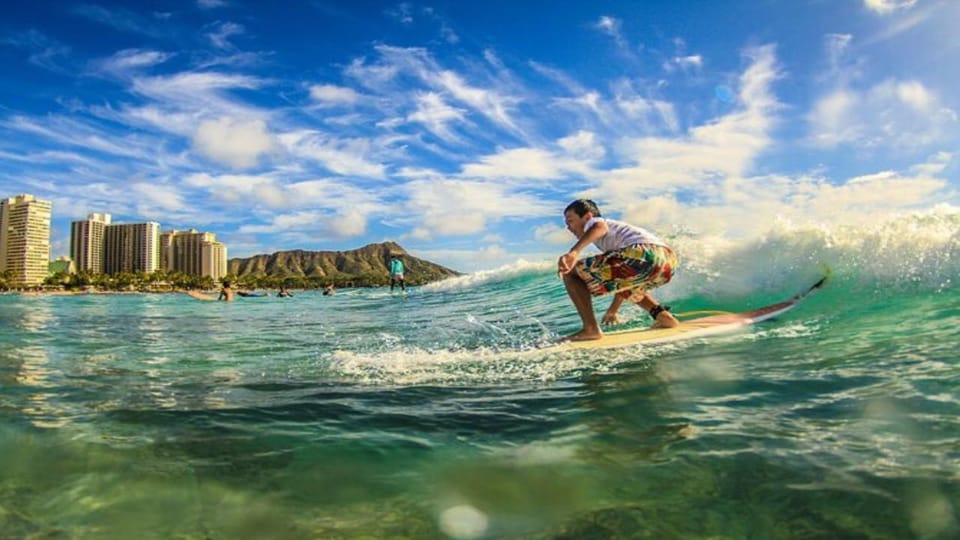
This isn’t an activity for kids under 9 years old, and it’s not suitable for wheelchair users. That’s not just paperwork—it’s about the physical demands of swimming, paddling, and balancing on a board.
For you, the single most important suitability factor is the swim ability requirement. You’ll paddle out together, but you’re still responsible for staying afloat and managing ocean movement.
If you can swim comfortably, you’ll likely enjoy the lesson much more. If you’re nervous in open water, you may want to build swim comfort first (or choose a different water activity that doesn’t require open-water paddling).
Also, since the lesson includes safety precautions in the sand instruction, you should pay close attention there. Beginners often treat “safety rules” like background noise; with surfing, those rules shape what you can do next.
Timing in real life: what 1.5 hours means on Waikiki
The full duration is 1.5 hours. Inside that time, you’ll have the shore instruction (about 20–30 minutes) and the surf time (about 75 minutes), plus setup and the move from sand to ocean.
For planning your day, treat this as a committed block. Waikiki is busy and parking can be a hassle, but you also don’t want to show up late and miss part of the land warm-up. With surfing, the first steps matter—and skipping them makes the water portion feel harder than it should.
A good strategy: schedule something flexible after the lesson. You’ll likely want time to rinse off and change, and you may be tired in a normal way (legs, core, and shoulders).
The optional drone photos/videos add value if you like proof
You have the option to purchase drone footage of your surf session, including both photos and videos. The note to you is important: you should speak with your instructor in advance to confirm photographer availability.
That’s helpful because it means the plan can be adjusted based on conditions. If you care about saving the memory—especially for a first successful ride—this option can be worth considering. It’s also easier to judge your progress later when you can see what your body did compared to what you were trying to do.
Price and value: is $125 per person fair for a beginner private lesson?
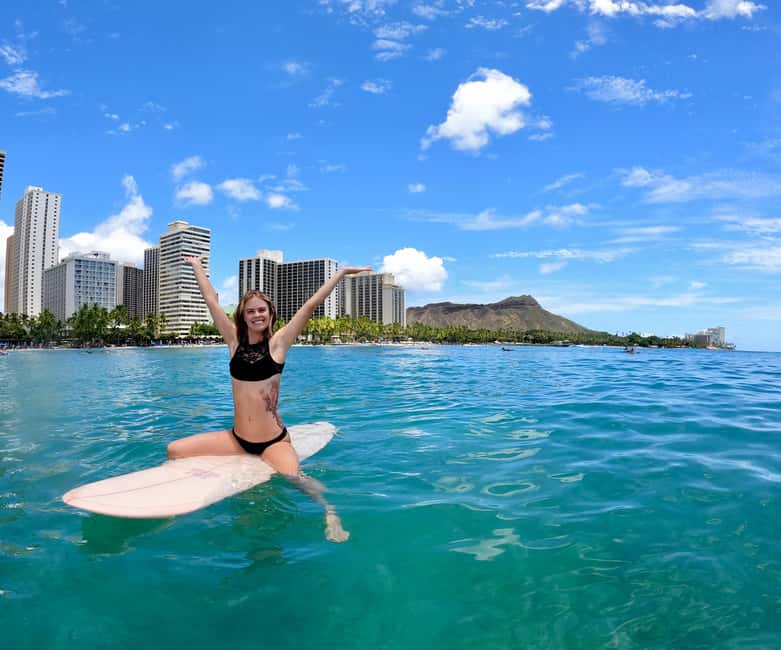
At $125 per person for a private beginner session, the value comes from two places: time and attention.
You’re paying for:
- a private instructor (not a rotating group)
- board rental and leash
- a structured lesson that starts with land coaching
- enough time to actually try more than once during the ocean portion
In other words, you’re not just buying access to waves. You’re buying a guided learning path plus gear.
If you were taking a group class, you’d likely wait longer for corrections. If you were self-learning, you’d lose time to confusion and safety questions. This format reduces those costs—especially if you want your first surf attempt to feel controlled and safe rather than chaotic.
Who this Waikiki beginner surf lesson is best for
This lesson fits best when you want beginner support with real structure.
Great match if:
- you’re a true beginner and want instructions that start on land
- you value patient coaching and a calm vibe
- you want one-on-one attention in the water
- you can swim and feel comfortable in the ocean environment
It may not be the best match if:
- you don’t swim confidently
- you’re traveling with accessibility needs (wheelchair users aren’t suitable)
- you’re looking for a purely scenic beach stop rather than an active lesson
It’s also a good option for teens and families who want someone to help them through a hesitant first session. The repeated success stories in the feedback back up that the guide can work with a nervous learner without rushing them.
Should you book this Waikiki private surf lesson?
If you’re choosing between “watching surfing” and “learning surfing,” book this—especially if you care about getting coached instead of figuring it out alone. The combination of one-on-one attention, land instruction before paddling out, and a guide described as patient and supportive is exactly what beginners need to build confidence fast.
Just be honest about your swim comfort, and come prepared with sunscreen plus board-friendly clothing like a rashguard or T-shirt. If you do those two things, this is one of the most straightforward ways to experience Waikiki surfing as a real beginner—on purpose, with safety in mind, and with guidance that doesn’t disappear once you’re in the water.
FAQ
Do I need surfing experience before booking?
No. This is set up for beginners, and you’ll learn the basics starting with instruction on the sand before you paddle out.
How long is the surf lesson?
The total duration is about 1.5 hours. The surf portion is about 75 minutes, and there’s also shore instruction.
Where do I meet for the lesson?
Meet at the Duke Kahanamoku statue on Waikiki Beach.
What’s included in the price?
The price includes the instructor, the lesson, a surfboard rental, and a leash.
Do I need to know how to swim?
Yes. You must know how to swim, since you’ll paddle out together into the ocean.
What should I bring?
Bring swimwear, sunscreen, and (it’s recommended) a T-shirt or rashguard for stomach protection from the board. The activity doesn’t provide a towel, water, or a change of clothes.
Is the lesson suitable for children?
It’s not suitable for children under 9 years old.
Is it wheelchair accessible?
No, it’s not suitable for wheelchair users.
Can I buy drone photos or video?
Yes, there’s an option to purchase drone footage (photos and videos). You should speak with your instructor in advance to confirm photographer availability.
What’s the cancellation policy?
You can cancel up to 24 hours in advance for a full refund.
How much does it cost?
It costs $125 per person.