REVIEW · HONOLULU
Pearl Harbor with USS Arizona and Hawaiian Kingdom History Tour
Book on Viator →Operated by Go Tours Hawaii · Bookable on Viator
Pearl Harbor hits harder with context. This tour pairs the USS Arizona Memorial with Honolulu’s Hawaiian Kingdom era and modern government stops, all backed by full narration and admission that’s included.
I like the convenience of a Waikiki hotel pickup/drop-off and round-trip air-conditioned transport. I also like that your USS Arizona ticket and Pearl Harbor admission costs are covered, so you’re not hunting for extra fees mid-day.
The one watch-out: Pearl Harbor is a strict, time-sensitive place—if you’re traveling with lots of bags or you hate waiting, you’ll want to plan with extra patience.
In This Review
- Key things to know before you go
- The value of bundling Pearl Harbor with Hawaiian Kingdom-era Honolulu
- From Waikiki to Pearl Harbor: plan around rules, not luck
- USS Arizona Memorial: how the film and boat ride set the tone
- Visitor Center and the Road to War Exhibit: the part that fills in the gaps
- Downtown Honolulu’s monarchy thread: Iolani Palace and the Kamehameha Statue
- Iolani Palace: the only royal palace in the U.S.
- King Kamehameha Statue: unity in bronze
- Hawaii State Capitol: where modern governance meets Hawaiian symbolism
- Mission Houses Museum and Kawaiahao Church: older Honolulu layers you can feel
- Mission Houses Museum: three homes, one cultural shift
- Kawaiahao Church: coral stone and koa inside
- Narration and guiding style: what makes the day feel worth it
- Timing and the reality of waiting at Pearl Harbor
- Price check: why $57 often feels like a bargain
- Who this tour is best for
- Should you book the Pearl Harbor and Hawaiian Kingdom History Tour?
- FAQ
- How long is the tour?
- What is the price per person?
- Does the tour include pickup and drop-off?
- Where do I meet if I’m going to Pearl Harbor?
- Is USS Arizona admission included?
- Are entrance fees included for the sites?
- Is the tour narrated?
- How big is the group?
- Is there any money you need to bring?
- What should I know about cancellations?
- FAQ
- Is the tour suitable if I’m not very active?
- What if I’m worried about bags at the memorial?
Key things to know before you go
- USS Arizona Memorial is the main event: you’ll watch a short film, then take a Navy-operated boat before reaching the memorial built over the submerged battleship.
- The visitor center adds the story: the Road to War Exhibit uses artifacts, photos from the attack, interviews, and personal items to connect events to outcomes.
- You’ll see more than WWII: the route covers monarchy-era Honolulu landmarks like Iolani Palace and the King Kamehameha Statue, plus government and mission-era sites.
- Hotel pickup is the whole point: you meet in Waikiki and ride together—this matters because Pearl Harbor rules don’t allow meeting there or handing out tickets on-site.
- Expect a brisk, packed schedule: the stops are worth it, but it’s not a slow museum day.
The value of bundling Pearl Harbor with Hawaiian Kingdom-era Honolulu
This is a smart first-timer mix. You start with the emotional core of Oahu’s history—Pearl Harbor—then you pivot to the Honolulu that shaped Hawaii before and after Western contact, through monarchy, missions, and into modern state government.
On paper, it’s about 5 hours. In real life, that means you’re spending most of the daylight with a guided route rather than independently navigating buses, parking, and ticket counters. If your goal is to get a lot of meaning out of a single day, this layout fits.
And the price is hard to argue with: $57 per person, and the USS Arizona ticket and entrance fees are included. You’re paying for guidance and logistics as much as for the sites themselves.
You can also read our reviews of more historical tours in Honolulu
From Waikiki to Pearl Harbor: plan around rules, not luck
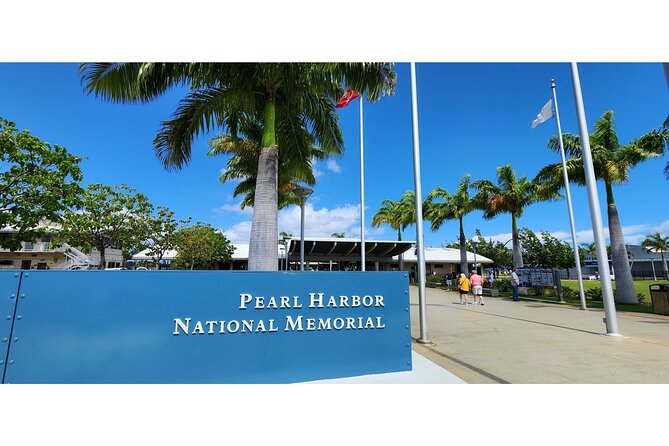
You don’t meet at Pearl Harbor. Pearl Harbor regulations mean the tour can’t meet you there or hand out tickets on-site, so your day starts with pickup in Waikiki and a ride together to the Pearl Harbor area.
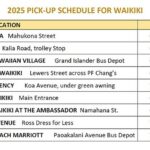
Pickup is offered at multiple hotels in Waikiki. The schedule shows an early set of pickups around 7:30–8:00 AM, plus a later pickup block around 10:30–11:00 AM. So you should think of this as two separate day starts, not one universal departure time.
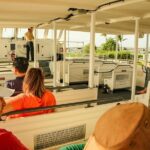
The ride is listed as air-conditioned, and the group stays small—up to 24 travelers. That small size usually helps with getting everyone organized at stops. Still, Pearl Harbor security and boarding are not “small.” You’ll want to stay alert and follow instructions fast.
One more practical note: the memorial area has restrictions on what you can bring in. Bag rules and storage can become a real stress point if you show up with more than you need. Keep your day pack light, and bring only what you truly need for the memorial visit and photos.
USS Arizona Memorial: how the film and boat ride set the tone
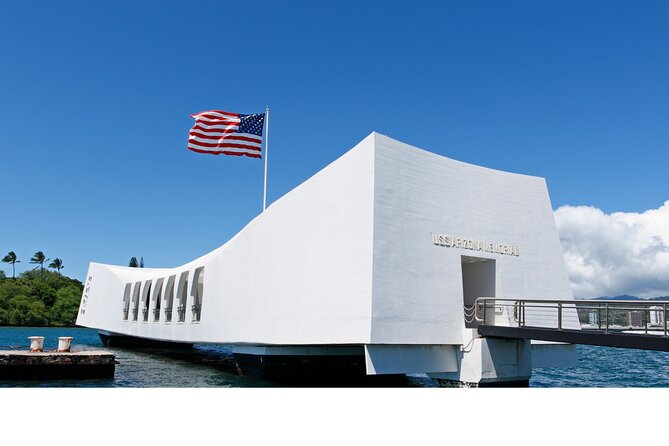
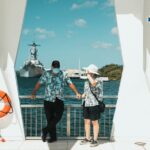
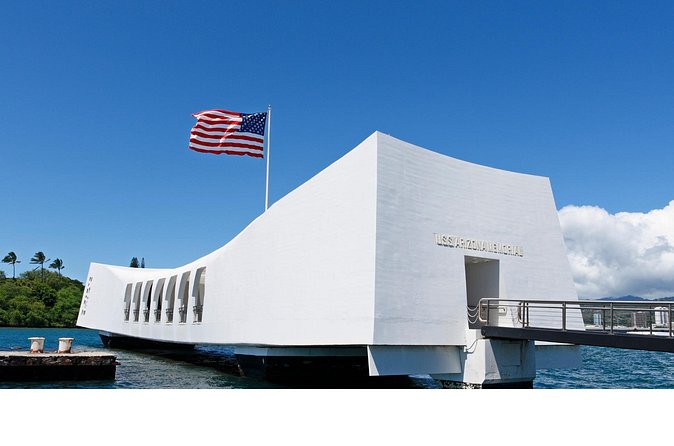
Your first major stop is the USS Arizona Memorial, and the sequence matters. You start with an immersive film that frames what happened on December 7, 1941, and why the day changed everything afterward.
Then you transfer to a Navy-operated vessel for the boat ride. This is not just a means to an end—it’s part of how the memorial experience lands. Even if you’ve seen pictures before, the water-to-memorial transition makes the location feel real in a way that words can’t.
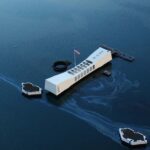
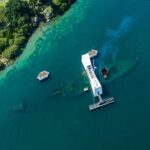
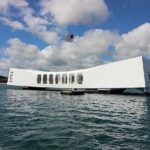
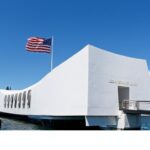
The memorial itself sits directly over the submerged battleship USS Arizona. The design is simple, but the effect is heavy. Plan on using your time for quiet reading and reflection, not constant sightseeing. One of the best things about this stop is how much it slows your brain down and forces you to pay attention to what you’re actually looking at.
Your ticketed time here is about 1 hour 30 minutes. That usually gives enough room to:
- Watch the film without rushing
- Get on/off the boat calmly
- Spend time at the memorial itself rather than sprinting through
If you’re the kind of visitor who likes to take photos, do it early or during natural pauses. The memorial deserves a respectful pace, not frantic clicking.
Visitor Center and the Road to War Exhibit: the part that fills in the gaps
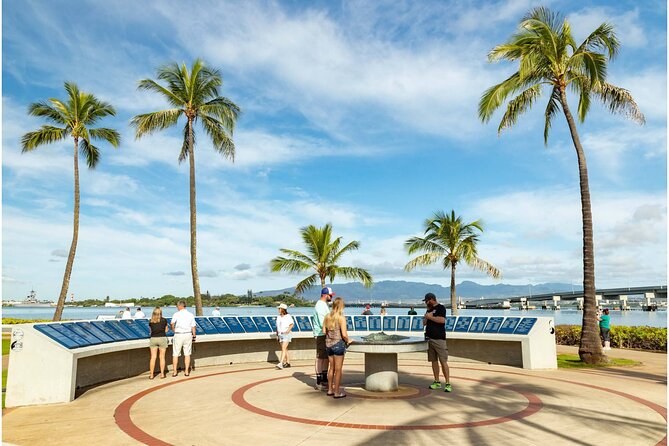
Right after Arizona, you head to the Pearl Harbor Historic Sites Visitor Center for about 1 hour. If Arizona gives you the emotional anchor, the visitor center gives you the cause-and-effect.
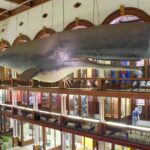
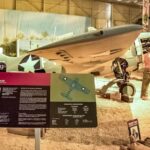
This is where the Road to War Exhibit comes in. It uses historical artifacts, photographs from the attack, live interviews, and personal mementos. The result is a clearer chain from events on that day to the broader shift in Hawaii and the world.
Interactive displays and multimedia can make the content feel more immediate than you might expect from a museum setting. And because the time block is only about an hour, it works best if you choose a focus. You don’t need to read everything cover-to-cover. Instead, pick what you care about most—ships, decisions, people, or aftermath—and let the exhibit support that theme.
Practical tip: if you’re sensitive to crowds or noise, give yourself a minute or two to settle. The story is intense, and it’s easier to absorb when you’re not trying to process while moving fast.
Downtown Honolulu’s monarchy thread: Iolani Palace and the Kamehameha Statue
After Pearl Harbor, the tour turns toward Honolulu’s royal and political landmarks, which is exactly where a first trip often needs help. WWII is only one layer. Hawaii’s history is bigger—and the route makes that clear without turning into a history lecture.


Iolani Palace: the only royal palace in the U.S.
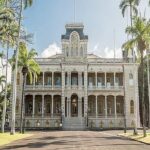
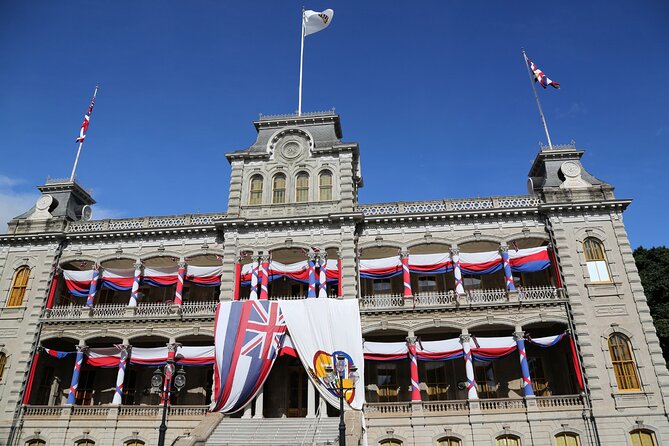
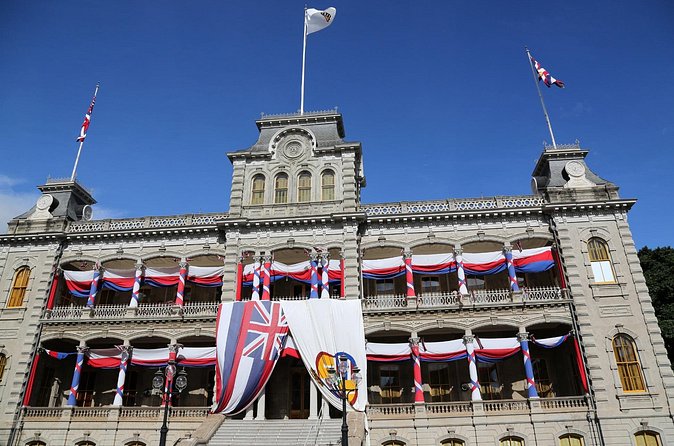
The tour includes a stop at Iolani Palace, widely known as the only royal palace in the United States. It was built in 1882 during the reign of King David Kalakaua and served as the official residence of Hawaiian monarchs until the overthrow of the Hawaiian Kingdom in 1893.
Architecturally, it’s a standout. It blends elements of European and Hawaiian styles, and today it functions as a museum with tours for visitors. Even if you don’t go deep inside, the building is worth seeing because it’s a physical reminder that Hawaiian political life had its own structure, formality, and symbolism before annexation.
One thing to keep in mind: with day tours, your interior time can be limited by timing and group flow. So if your priority is a full palace museum experience, you might later want to add a separate time slot on your own.
King Kamehameha Statue: unity in bronze
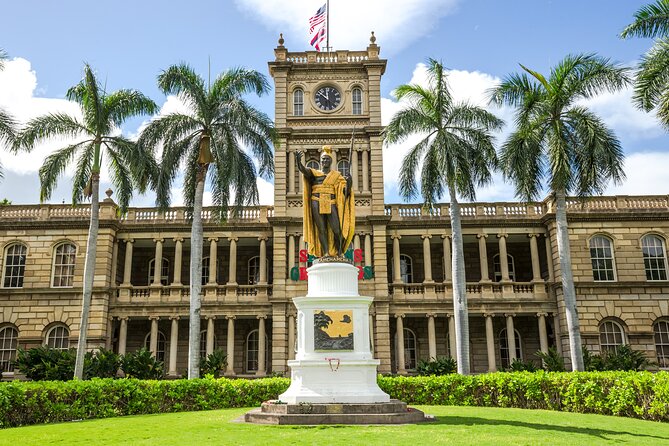
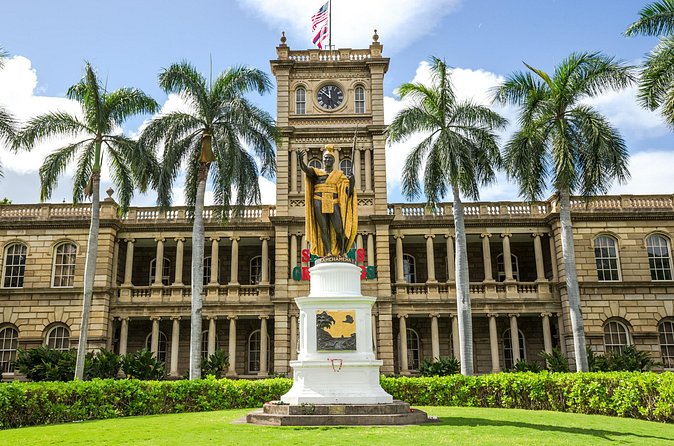
Next, you’ll see the King Kamehameha Statue, a monumental bronze sculpture in Honolulu. It shows King Kamehameha I, with a spear in his left hand and his right hand extended in a peace gesture. The scale is real: it’s about 18 feet tall and weighs over 15,000 pounds.
The statue was commissioned in 1878 by King David Kalakaua and sculpted by Thomas Ridgeway Gould. That date matters because it sits in the late kingdom period, when Hawaiians were actively shaping how they wanted the world to see them.
Photo tip: if the light is harsh, step back and catch the statue from an angle that includes some of the surrounding plaza space. Up close, it’s impressive; in context, it’s more meaningful.
Hawaii State Capitol: where modern governance meets Hawaiian symbolism
Your route also includes the Hawaii State Capitol in downtown Honolulu. This building is less about old royal drama and more about modern state power—and it’s still designed to carry meaning.
The Capitol was completed in 1969 and designed by John Carl Warnecke. The design is volcano-inspired: two legislative chambers resemble lava flows, and the central rotunda is designed around a symbolism of the eye of a hurricane. The grounds add a calm touch, too, with an open-air courtyard featuring native Hawaiian plants and a reflecting pool.
This is a good stop if you like architecture and design that tries to express identity rather than copy elsewhere. It’s also a relief stop if the day has been heavy—courtyard time gives your brain a reset between emotional stops.
Mission Houses Museum and Kawaiahao Church: older Honolulu layers you can feel
Not all history here is war and politics. The tour also hits places tied to early 19th-century community life and spirituality.
Mission Houses Museum: three homes, one cultural shift
The Mission Houses Museum is a historic complex made of three restored buildings:
- Frame House (1821)
- Chamberlain House (1831)
- Printing Office (1841)
These were homes of American Protestant missionaries who arrived in Hawaii in the early 19th century. The exhibits include period furnishings, artifacts, and documents, and the focus is on missionary daily life, cultural exchanges, and how Western influence affected Hawaiian society.
This is the kind of stop that benefits from a guided interpretation. Western contact is complicated—some changes came with education and new systems, and others came with disruption and power imbalance. In a short day tour, you won’t solve that history, but you’ll at least get the human scale of it.
Kawaiahao Church: coral stone and koa inside
The tour also includes Kawaiahao Church, established in 1820. The building is notable for its coral block construction and towering steeple, which makes it an easy landmark to spot from parts of town.
Inside, you’ll find elegant koa wood furnishings and a serene setting for worship. Kawaiahao Church remains tied to Hawaiian royalty in its history, and it continues as a religious and cultural center.
Practical note: churches are living spaces. If you visit while services or practices are happening, keep your voice low and follow any signage from staff.
Narration and guiding style: what makes the day feel worth it
A key part of the experience is that it’s fully narrated. That matters because the route spans very different time periods. Without narration, it would be a list of stops. With it, it becomes a story about Hawaii’s political evolution alongside global events.
From guide names seen on the operation side of this tour, I’ve heard strong praise for instructors like Robert, Bob, Kanoe, Rockie, and Lani. The common theme in that feedback is that guides bring local context and keep things organized, including explaining what’s allowed and what to do at Pearl Harbor.
That’s not a small detail. At Pearl Harbor, you’re dealing with rules, boarding steps, and bag restrictions. If your guide keeps the group coordinated and tells you what to expect, your day feels smooth even if the crowds are not.
Still, not every experience runs perfectly. A few accounts describe issues like unclear meeting instructions, the guide being hard to find at a stop, and confusion around ticketing or standby entry. Those are exactly the kinds of problems you can reduce by doing two things:
- Pay attention when your guide gives the meeting time and location for the return to the bus
- Keep your essentials accessible and don’t rely on rummaging through a large bag after security or storage
Timing and the reality of waiting at Pearl Harbor
This is the big operational variable. Pearl Harbor involves a film, a boat ride, and then time at the memorial. The schedule is set, but the environment is not fully under anyone’s control.
Some people report long waits for boat boarding because capacity can be limited and boarding can happen in waves. The lesson isn’t that the tour is unreliable—it’s that Pearl Harbor is always busy.
So how do you handle it? You build slack into your day mindset. Don’t plan a separate activity right after your tour ends. If you’re also trying to add extra things at Pearl Harbor, you may need a longer window than you think, because your time at the memorial and visitor center may stretch with the line.
Price check: why $57 often feels like a bargain
Let’s talk value in plain terms. You’re paying $57, and you’re getting:
- Hotel pickup/drop-off from Waikiki
- Air-conditioned transportation
- A fully narrated guided route
- USS Arizona admission included
- Entrance fees included for the key sites
If you tried to do this on your own, you’d likely pay separately for Pearl Harbor-related entry and then still have to solve transportation and timing. Even if you find cheap rideshare options, you’re paying in your time and stress level.
That said, this is not a private charter with unlimited stop time. A couple of reports mention that some stops felt more like drop-offs than deep tours, especially when it came to palace time. If you’re the kind of traveler who wants a guided walkthrough inside every building, you might feel slightly shorted by a route format.
But for most people wanting a structured first visit that links war history to Honolulu’s other eras, the price tends to make sense.
Who this tour is best for
This tour fits best if you:
- Want a first visit that connects Pearl Harbor to the Hawaiian Kingdom and later political eras
- Like guided context rather than trying to piece together meaning solo
- Appreciate a route that includes both WWII memorial space and downtown Honolulu architecture and museums
It may feel less ideal if you:
- Need lots of free time inside every stop
- Get anxious with boarding lines, security rules, and bag restrictions
- Want a slower, museum-first pace rather than a scheduled route
Families often like it because it hits big, unforgettable anchors in a single day. Teens and adults who need historical framing also benefit, because the narration helps the sites make sense quickly.
Should you book the Pearl Harbor and Hawaiian Kingdom History Tour?
If you want a solid, guided day with USS Arizona, the visitor center, and multiple downtown Honolulu landmarks, I think this is a good booking. The included USS Arizona ticket and covered admission costs are a real advantage, and the Waikiki pickup saves you a lot of headache.
My main advice is practical: be ready for Pearl Harbor rules. Travel with minimal baggage, listen closely at the briefing moments, and confirm where the group meets to return to the bus. If you do that, the day’s emotional core and historical sweep usually add up to exactly what you came for.
FAQ
How long is the tour?
It runs about 5 hours (approx.), including travel time between stops.
What is the price per person?
The price is $57.00 per person.
Does the tour include pickup and drop-off?
Yes. It includes Waikiki hotel pick-up & drop-off in an air-conditioned vehicle, with multiple Waikiki pickup locations listed.
Where do I meet if I’m going to Pearl Harbor?
You meet in Waikiki. The tour policy says they cannot meet you at Pearl Harbor or hand out tickets there.
Is USS Arizona admission included?
Yes. The USS Arizona ticket is included.
Are entrance fees included for the sites?
Yes. Entrance fees are included, so you do not need to budget extra for them.
Is the tour narrated?
Yes, it’s a fully narrated tour, offered in English.
How big is the group?
The tour has a maximum of 24 travelers.
Is there any money you need to bring?
You should bring money for souvenirs and memorial gift shops. Gratuities are not included.
What should I know about cancellations?
Free cancellation is available up to 24 hours in advance for a full refund. Weather issues may also trigger a different date offer or a full refund.
FAQ
Is the tour suitable if I’m not very active?
It’s listed for travelers with a moderate physical fitness level, so you should be comfortable with walking and time spent outdoors.
What if I’m worried about bags at the memorial?
The tour data notes Pearl Harbor rules are strict, and you may encounter restrictions. Plan to travel with only what you truly need and be ready to follow instructions about storage on-site.