REVIEW · MAUI
From Maalaea: Whale Watching Catamaran Cruise with Drinks
Book on GetYourGuide →Operated by Makena Coast Charters · Bookable on GetYourGuide
Whale songs, right from the water. This Maalaea catamaran cruise pairs front-row whale viewing with underwater hydrophones so you can hear humpbacks sing as they surface. I like that the cruise is built for comfort and clarity, with a marine biologist guiding what you’re seeing, plus West Maui scenery sliding past your deck. One thing to plan for: this is time on the ocean, so motion sickness is a real consideration for some people.
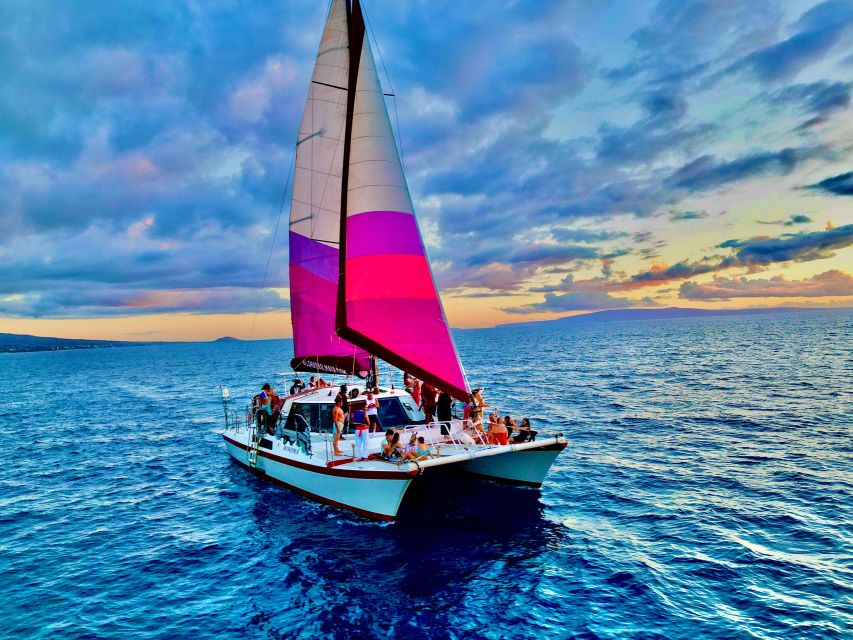
What I like most is the small-boat feel on the charming Hawaiian catamaran Winona, where you can lounge while the crew helps you focus on whale behavior. I also like the simple refreshment setup: ice-cold juice, soft drinks, and water onboard, with 2 adult beverages for guests 21+.
A possible drawback is that this tour isn’t wheelchair accessible, and the route depends on where the whales are. So if you’re the type who hates uncertainty, bring patience—and a plan for a light meal before you go.
In This Review
- Key things to know before you go
- Onboard Winona: Why Small-Boat Whale Watching Feels Close
- Hydrophones and the Marine Biologist Talk: What You’ll Learn Beyond Sightings
- The Maalaea Pier Start: Meeting Point, Check-In, and What to Bring
- Stop 2 in Maalaea: Safety Briefing and Welcome Refreshments
- The 1.5-Hour Whale Watching Stretch: Where the Action Happens
- Drinks and Comfort: How the Included Perks Actually Help
- Price and Value: Is $69 Worth It?
- Who This Cruise Suits Best (And Who Should Think Twice)
- Should You Book This Maalaea Whale Watching Cruise?
- FAQ
- How long is the Maalaea whale watching cruise?
- What drinks are included on board?
- Do you have hydrophones to hear whale songs?
- Where exactly do I meet for the tour?
- What should I bring for the cruise?
- Should I eat before the cruise?
- Is the tour wheelchair accessible?
- Is there a cancellation window?
Key things to know before you go
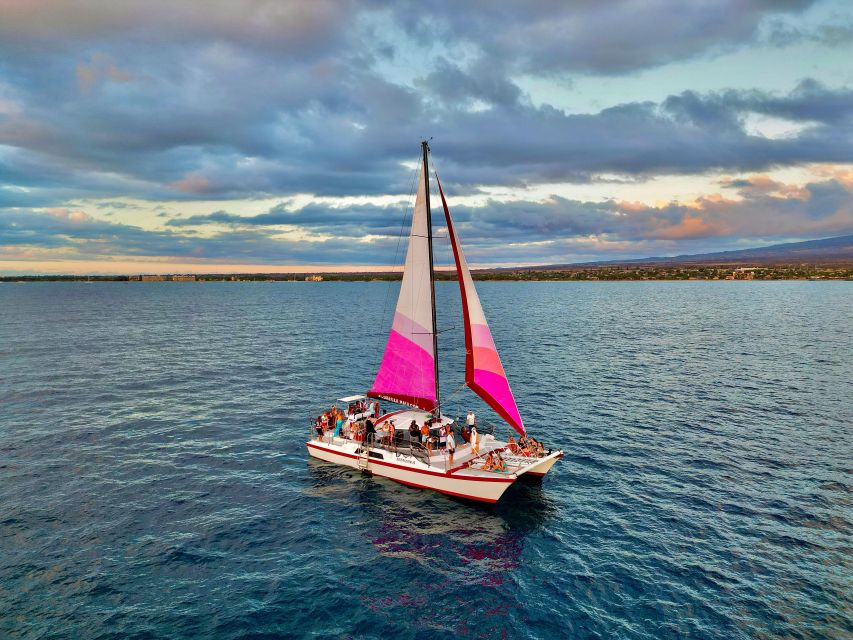
- Small catamaran energy: you’re on Winona, not a huge ship, which keeps the experience feeling close-up.
- Hydrophones for real whale songs: you’ll get the chance to hear their calls through underwater equipment.
- Marine biologist guided insights: you won’t just spot whales; you’ll learn how humpbacks use this habitat.
- Comfort basics included: soft drinks, juice, water, plus island-style music and onboard restrooms.
- Prime season is Dec–Mar: humpbacks migrate to Maui waters to breed and give birth during these months.
Onboard Winona: Why Small-Boat Whale Watching Feels Close
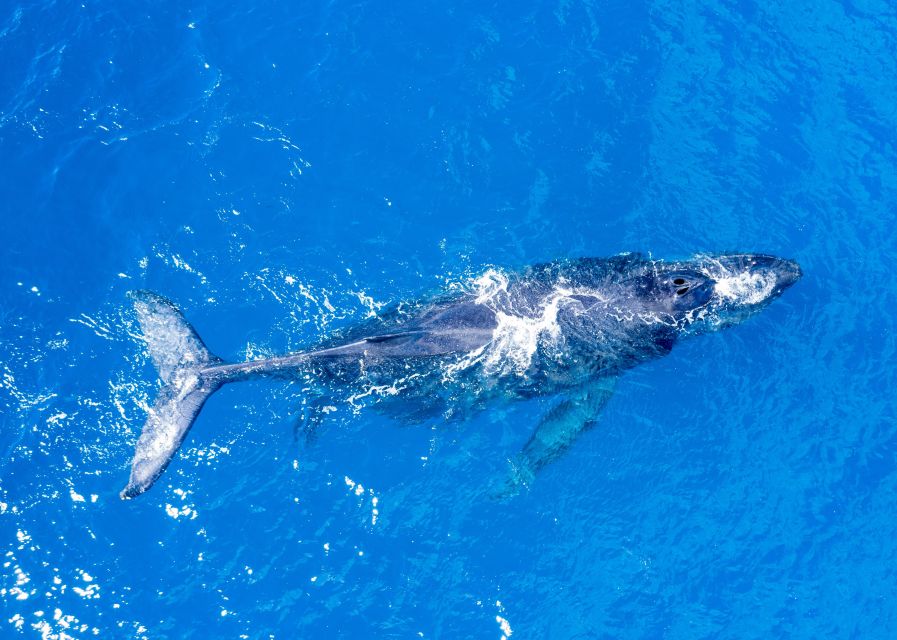
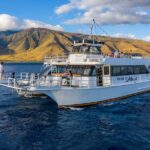
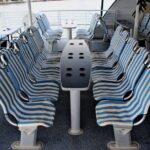
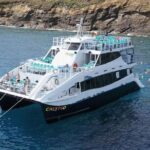
This cruise runs from Maalaea, and it starts the right way: you board the small catamaran Winona with a crew that keeps things easy to follow. The boat gives you multiple spots to watch—on the decks or from the main floor—so you don’t have to stare out one cramped window.
Because it’s a smaller platform, the “search” stage and the “watch” stage both feel more personal. You’re not just waiting in the dark for a distant spray; you’re actively looking as the crew positions the boat for sightings.
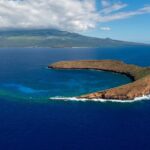
You’ll also get scenery while you watch. West Maui’s mountains come into view, with Molokai and Lanai sitting off in the distance, so even a slow stretch on the water feels like part of the experience—not dead time.
You can also read our reviews of more boat tours in Maui
Hydrophones and the Marine Biologist Talk: What You’ll Learn Beyond Sightings
Seeing a humpback is exciting. Knowing why it’s doing what it’s doing is even better, and this tour is built around that idea. You’ll hear from a marine biologist who explains humpback behavior and biology while you’re on the water.
One of the most memorable extras here is the use of underwater hydrophones. Instead of just guessing that you heard something, you get guidance on the whales’ soulful songs through the equipment. It makes the viewing feel more three-dimensional: sight above the surface, sound under it.
The tour also frames humpbacks in their annual migration story. Each year from December through March, humpbacks travel from chilly Alaska to warmer Maui waters to breed and give birth. That means you’re not watching a random animal—you’re watching a species in a specific life-stage and habitat cycle.
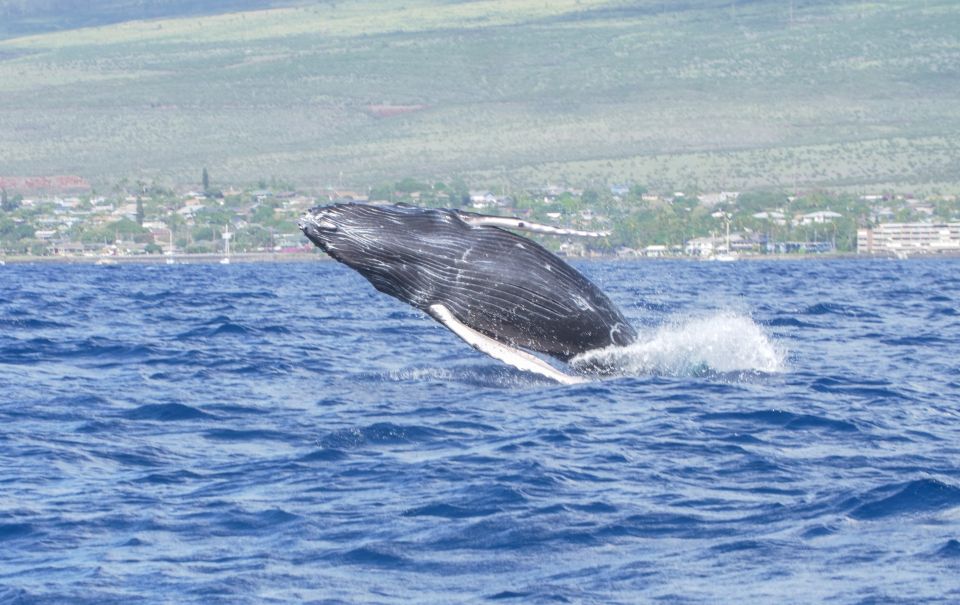
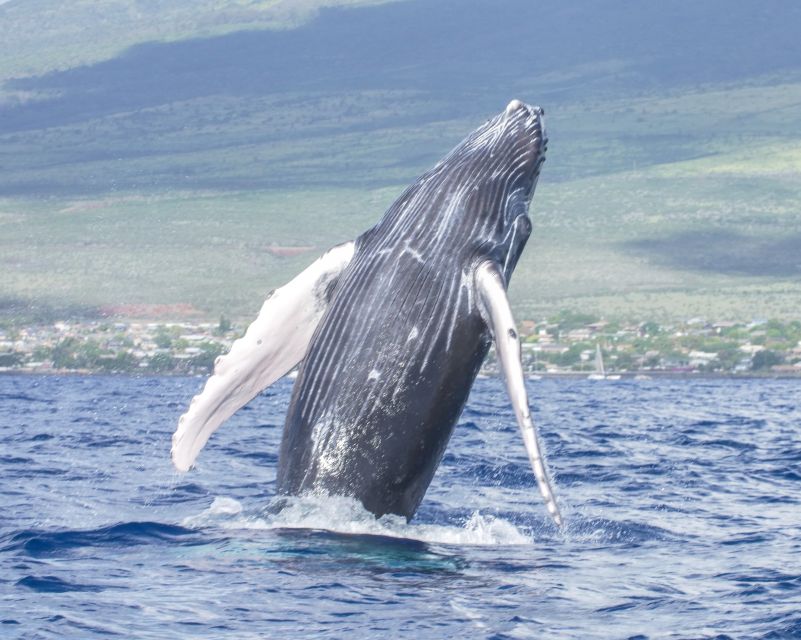
And that context helps you interpret what you see: breaching, splashing, and surfacing behavior all start to make more sense when you’ve heard the “why” behind it.
The Maalaea Pier Start: Meeting Point, Check-In, and What to Bring
Plan to show up with a little extra time. Your meeting point is 233 Maalaea Rd, in front of the US Coast Guard building. The pier is to your left, and you’ll walk onto it, then keep going to the very end.
For check-in, look for the A-Frame sign for Makena Coast Charters near the end of the pier, then find your sail catamaran, Winona.
Before you even think about whales, set yourself up for comfort. Bring a hat, towel, and sunscreen—sun can be strong even when the air feels mild. If you’re prone to seasickness, pack motion sickness prevention and take it seriously. The tour advice is to eat a very light breakfast or skip breakfast and to drink plenty of water. That combination can make a real difference once the boat is moving.
Stop 2 in Maalaea: Safety Briefing and Welcome Refreshments
After you meet the crew, you’ll head into the first part of the experience: a boat cruise plus a safety briefing and welcome refreshments for about 30 minutes.
This stop is useful even if you already know the basics of boat tours. The safety briefing is your chance to learn where to go, how to handle the deck, and what the crew wants you to do if seas get a little choppy. It also sets the tone—so you’re ready to focus on whale spotting when the longer viewing window begins.
Refreshments at this stage are practical: you’ll have ice-cold soft drinks, juice, and water while you settle in. There’s also island-style music onboard, which helps the whole thing feel like a Maui outing rather than a sterile sightseeing bus.
One small comfort win: the boat has two restrooms, so you don’t have to worry about timing your trip around bathroom availability.
The 1.5-Hour Whale Watching Stretch: Where the Action Happens
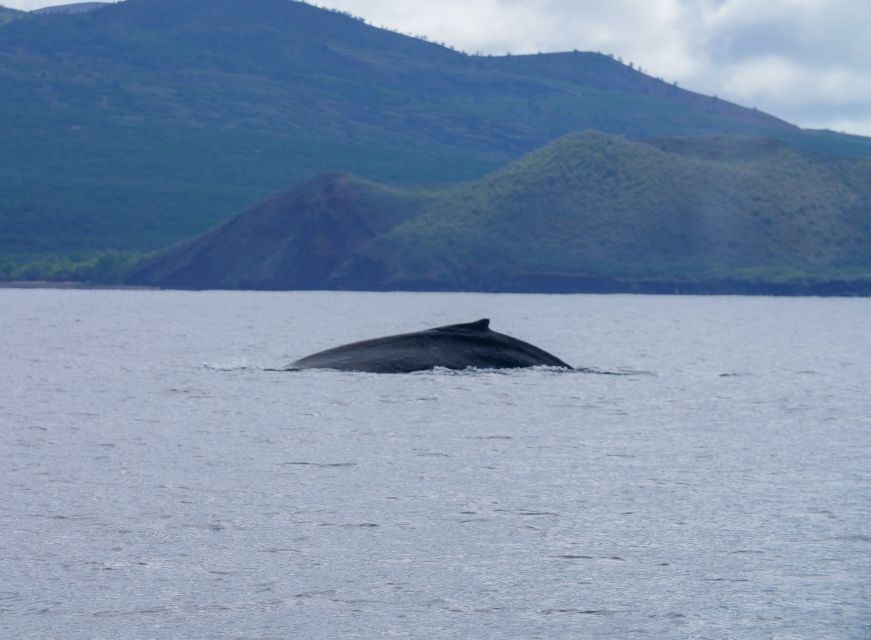
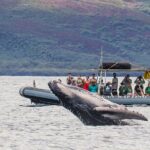
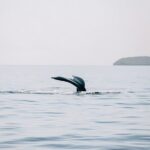
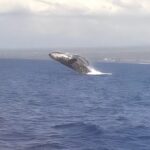
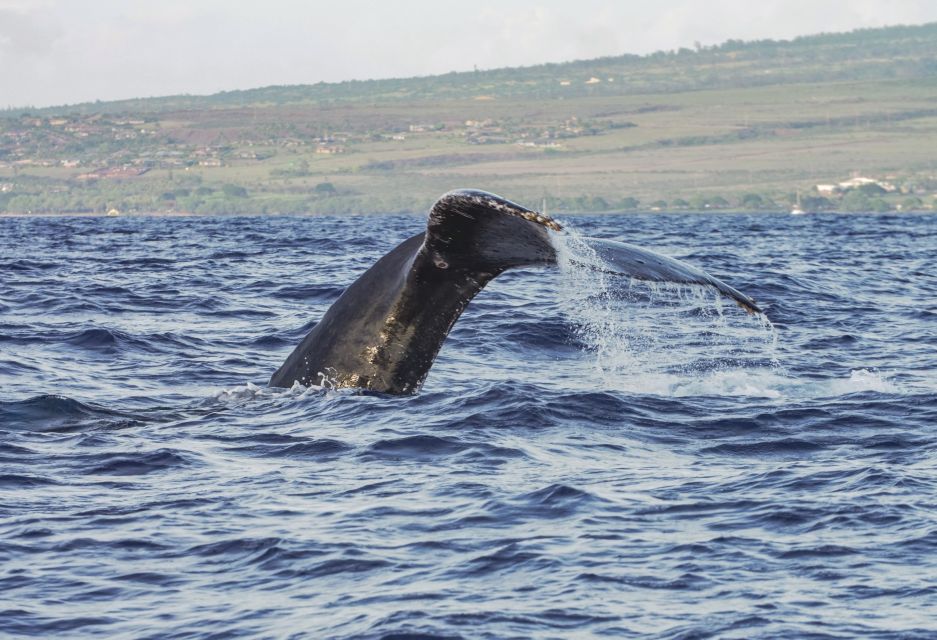
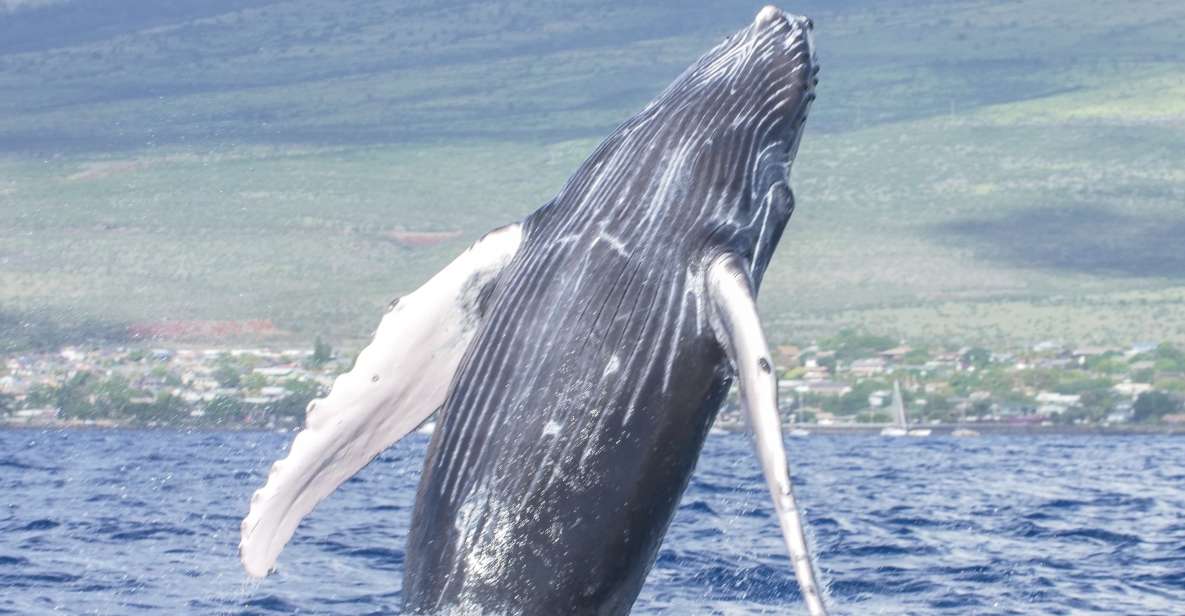
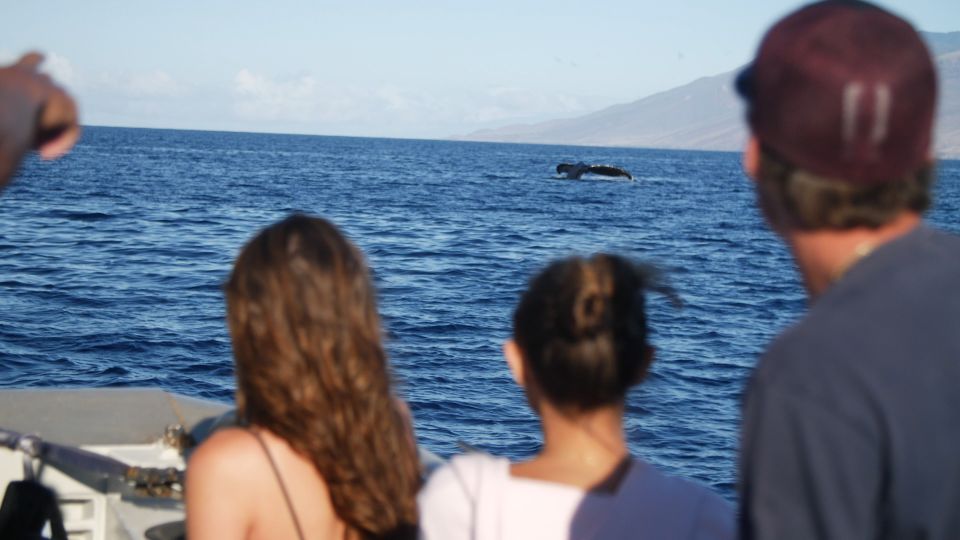
The main event is your 1.5-hour whale watching window, where the crew guides you as they look for humpbacks. This is the part where the “front-row seat” promise becomes real, because the crew aims to get you close enough for natural behavior—watching whales play, breach, and interact with the water around them.
You’ll also be listening during this time. Between the sightings and the marine biologist’s explanations, the hydrophones can add a new layer to what you’re experiencing. It’s one of those details that doesn’t sound like a big deal until you’re actually there, and then it clicks: you’re hearing the whales, not just seeing them.
The viewing also comes with practical scenery benefits. As you watch off West Maui, the view tends to stay interesting even when whales aren’t constantly breaching. You’re still tracking movement on the water and taking in the mountains and the islands off in the distance.
And if you’re hoping for a “perfect whale show,” set expectations realistically. This is wildlife watching, so sightings depend on conditions and where the animals are at that moment. The value is that the crew has the skills and focus to find opportunities when they’re available.
You can also read our reviews of more sailing experiences in Maui

Drinks and Comfort: How the Included Perks Actually Help
This cruise keeps the onboard essentials covered. You get ice-cold soft drinks, juice, and water, which is a big deal in Hawaii where hydration and cooling matter.
For adults, there’s also an age perk: guests 21+ can have 2 adult beverages. It’s a nice add-on that keeps the tour feeling festive without turning it into a party cruise. The drinks are part of the “comfort bundle,” not the whole purpose of the trip.
Restrooms are included, and having two makes a difference. Long tours can feel stressful if you’re wondering where you can quickly step off to reset. Here, the availability keeps the whale watching portion smoother.
Even little extras matter for a 2-hour outing. The cruise includes island-style music, and the onboard experience has enough thoughtful touches that it doesn’t feel like you’re paying just for a view from the railing.
Price and Value: Is $69 Worth It?
At about $69 per person for a 2-hour cruise, this isn’t the cheapest way to watch whales—but it also isn’t priced like a luxury charter. What makes it feel like solid value is what’s included with your ticket.
You’re paying for more than boat time:
- a live marine biologist talk
- underwater hydrophones for whale songs
- ice-cold drinks (and water)
- island-style music
- restrooms onboard
- a small-boat setup on Winona
If you’ve ever done “spot whales only” tours, you know how empty it can feel when sightings are brief. Here, you get education and sound cues that make the time useful even when the ocean is quiet. That’s the hidden value: you leave feeling like you understood what you were seeing, not just that you looked out at the water.
Also, the schedule is compact. A 2-hour trip is easier to fit into a Maui day than half-day excursions, and that matters when you’re planning beach time, dinners, and driving around the island.
Who This Cruise Suits Best (And Who Should Think Twice)
This is a strong choice if you want hands-on guidance while you watch humpbacks. If you like marine animals but don’t want to guess what you’re looking at, the marine biologist-led portion is a key reason to book.
It also works well for couples, families with young kids, and groups of friends. There’s a family-friendly detail: infants and kids ages 0–5 come for free, which can make the overall cost easier to swallow for families.
The motion factor is the main reason to think twice. The tour notes that some people may get seasick, and the advice to eat lightly (or not at all) plus drink water suggests they expect variable conditions. If you’re very prone to motion sickness, consider planning around that.
And if you use a wheelchair, note that the tour is not suitable for wheelchair users. The boat and access details aren’t laid out for mobility needs in the provided info, so it’s best to choose a different option if accessibility is essential.
Should You Book This Maalaea Whale Watching Cruise?
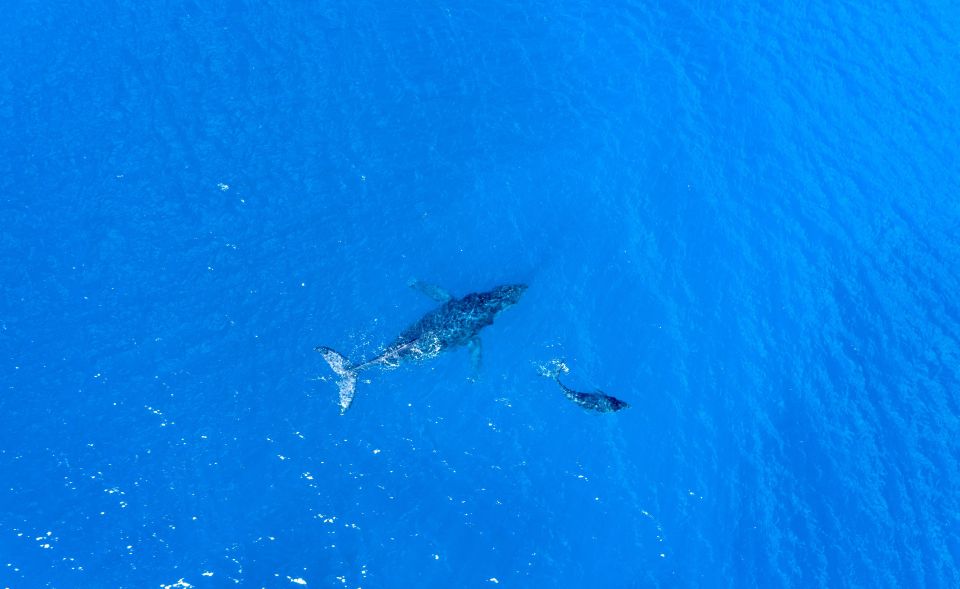
If your goal is a focused, comfortable whale experience with more than just “look and hope,” I’d book it. The combination of a small catamaran (Winona), a live marine biologist talk, and hydrophones for whale songs turns a simple sightseeing trip into a guided wildlife lesson.
Book especially if you’re traveling during December through March, when humpbacks are migrating to Maui waters to breed and give birth. That seasonal timing supports the odds of meaningful sightings and gives context to what you’ll learn.
I’d skip it only if motion sickness is a major risk for you despite prevention, or if wheelchair accessibility is required. Otherwise, this is a well-rounded way to spend a couple of hours in Maalaea—watching, learning, and staying comfortable enough to actually enjoy the ride.
FAQ
How long is the Maalaea whale watching cruise?
The tour duration is 2 hours, and starting times vary based on availability.
What drinks are included on board?
You get ice-cold soft drinks, juice, and water included. Guests who are 21+ can have 2 adult beverages.
Do you have hydrophones to hear whale songs?
Yes. The cruise includes underwater hydrophones so you can hear whale songs.
Where exactly do I meet for the tour?
Meet at 233 Maalaea Rd. You’ll be in front of the US Coast Guard building; the pier is to your left. Walk onto the pier, go to the very end, and look for the Makena Coast Charters A-Frame sign for check-in.
What should I bring for the cruise?
Bring a hat, towel, and sunscreen. If you’re concerned about seasickness, bring motion sickness prevention too.
Should I eat before the cruise?
The guidance is to eat a very light breakfast or no breakfast at all, then drink plenty of water.
Is the tour wheelchair accessible?
No. The tour is not suitable for wheelchair users.
Is there a cancellation window?
Yes. You can cancel up to 24 hours in advance for a full refund.
If you want, tell me your travel month and whether anyone in your group gets seasick, and I’ll help you judge how to time it and prep for comfort.