REVIEW · MAUI
Haleakala Crater Hiking Experience
Book on Viator →Operated by Hike Maui · Bookable on Viator
Haleakala makes you slow down fast. This guided crater hike in Maui pairs real altitude time with local nature and culture, so you get more than just pretty photos.
I love the small-group feel and the way the guides pace you for a moderate climb through stark crater terrain. I also like that you get lunch and snacks during the day, which matters when you’re working at elevation.
One possible drawback: the hike is split into sections rather than one long continuous trek, so if you want zero breaks and maximum time on the trail, you may wish it ran longer.
In This Review
- Key highlights you’ll care about
- Why the Haleakala crater hike feels different above 8,000 feet
- The hike basics: 7 hours, about 4 miles, and real altitude work
- Stop 1: the crater floor view and the 8,000-foot snack pause
- Stop 2: toward 10,000 feet, cinder cones, and that quiet crater feeling
- Both sides of Haleakala: why it’s worth doing as a guided hike
- Guides you’ll actually remember: Marko, Joel, and the support team
- Lunch and snacks at elevation: small thing, big difference
- Stop-free time and photo moments: make the most of the camera window
- Price and value: what $208.38 buys you on Haleakala
- Who should book this hike (and who might want a different option)
- Should you book this Haleakala crater hiking experience?
- FAQ
- Where does the hike start?
- What time does the tour begin?
- How long is the experience?
- Is hotel pickup included?
- What’s included in the price?
- What’s the minimum age to join?
- How fit do you need to be?
- Does the tour run in bad weather?
- How big are the groups?
Key highlights you’ll care about
- 8,000-foot acclimation stop with snacks and big crater-floor views
- Target distance and pacing: about a 4-mile route for a moderately difficult day
- Endangered species and sacred context that turns scenery into a story
- Both sides of the crater for a more rounded Haleakala look
- Photos get support from the guides, including help with Instagram-style shots
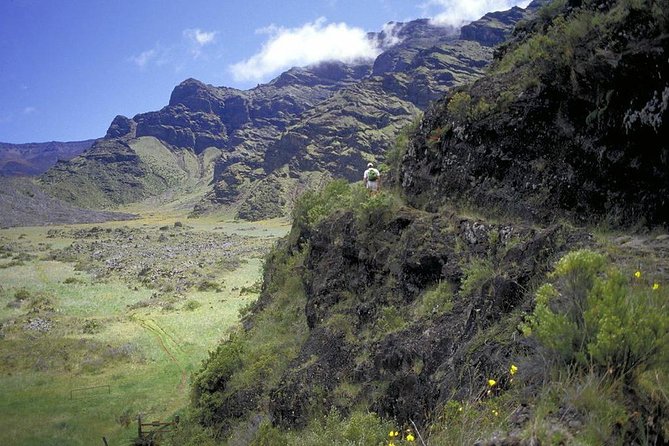
- Stark, lunar-style geology plus cinder crunch underfoot near the top
Why the Haleakala crater hike feels different above 8,000 feet
Haleakala doesn’t just look dramatic from viewpoints. On this hike, you spend real time walking into the crater world, where wind and altitude change how everything feels. One minute you’re on lava-strewn ground, the next you’re near cinder cones, and the whole place has that quiet, watchful mood.
There’s also a strong “why it matters” layer. This crater and the surrounding park area are tied to Hawaiian sacred belief, and it’s home to many endangered species. You might spot birds like nene geese or petrels, and you’ll likely pass flowering silverswords rooted in rocky ground.
You should also know what makes the day work: you’ll be climbing into higher zones (around 10,000 feet) while your guide keeps an eye on safety and timing. That’s a big part of the value—especially if you don’t hike often.
You can also read our reviews of more hiking tours in Maui

The hike basics: 7 hours, about 4 miles, and real altitude work
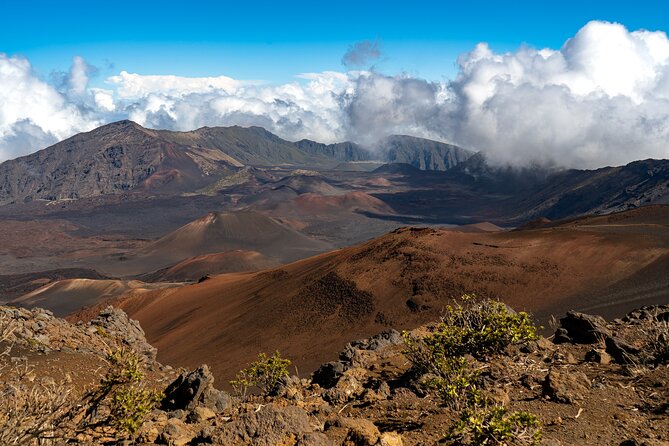
You’re looking at roughly a 7-hour outing, starting at 8:30 am. The route is about 4 miles (6.2 km) through crater terrain, and it’s described as moderately difficult—so this is not a stroll, but it’s also not a technical climb.
The key detail is that you get an acclimation stop early, around 8,000 feet. That isn’t just a photo moment. It’s your body’s first checkpoint, plus you get a snack break with views down into the crater floor.
Dress for all kinds of crater weather. Maui’s crater can swing fast: cool air at elevation, wind that cuts through, and ground that can stay rough and dusty. I’d treat it like a hike where layers matter more than fashion—bring a warm layer and something wind-resistant.
Stop 1: the crater floor view and the 8,000-foot snack pause
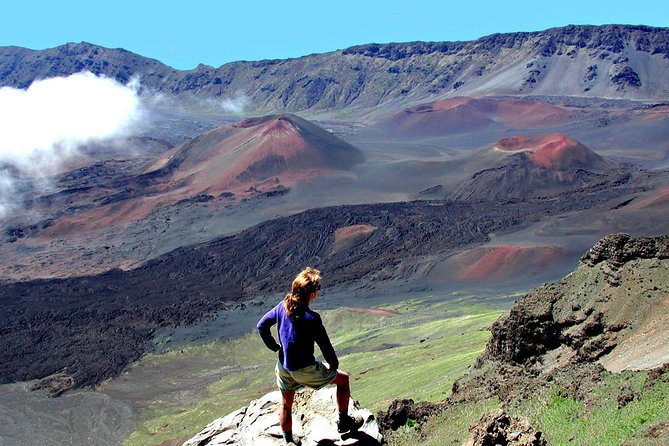
The day begins at the Maui Park n’ Ride in Kahului, and you’ll head up into the crater area with your guide. Before you push higher, you’ll pause around 8,000 feet on a thin, lava-strewn trail.
This is one of the smartest parts of the day. That early altitude pause helps you settle in before the real push toward higher ground near 10,000 feet. It also sets the tone: you’re already in a lunar landscape, with open views and a sense that the mountain is watching back.
You’ll enjoy hearty snacks during this stop. In practice, that means you can keep hiking without that late-day hunger crash that makes altitude feel harder than it already is. If you’re the type who tends to go light on breakfast, this stop saves you.
Stop 2: toward 10,000 feet, cinder cones, and that quiet crater feeling
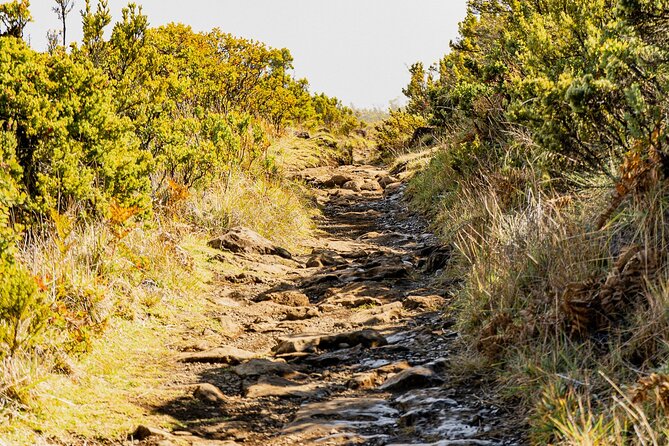
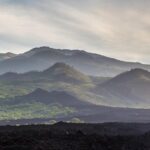
After the first acclimation point, the hike continues upward toward the summit zone around 10,000 feet. This is where you start seeing cinder cones bursting from the Earth, with multihued beauty that looks almost unreal against the darker ground.
The guide talk here is part of the experience. You’ll learn about the mountain’s history and ecology, and you’ll get context for what you’re seeing—rare plants, endangered birds, and the mix of geological forces that built the crater.
A detail I’d plan for mentally: the crater has a mystical silence that’s often only broken by wind. Then there’s the ground underfoot—cinder crunching as you step. It’s not just scenery. It’s a whole sensory shift that makes the hike feel like you’re inside the volcano, not just looking at it.
Both sides of Haleakala: why it’s worth doing as a guided hike
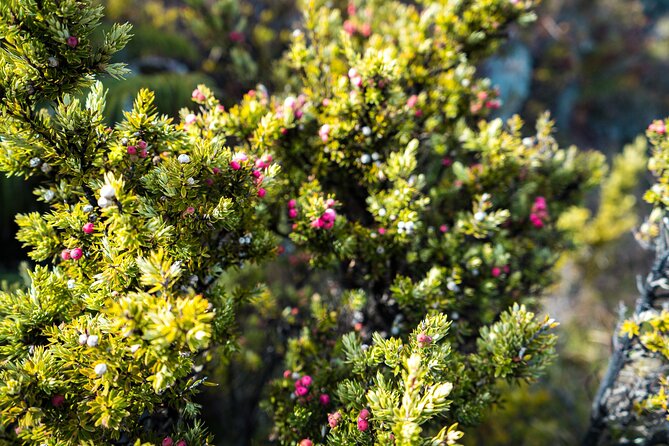
Some Haleakala experiences focus on one viewpoint. This one aims for a rounded crater look by hiking into both sides. That matters because crater terrain isn’t uniform—one section might feel more exposed and stony, while another gives you different sightlines across the crater.
Going guided also changes how you move. Your leader is there for pacing and safety, and they can keep the group together at elevation. In small groups, you’re less likely to get left behind or to spend half your time waiting.
The “both sides” approach also helps you connect the dots. You see how the crater’s features relate, and the stories about ecology and sacred significance feel less like trivia and more like a map for what you’re walking through.




Guides you’ll actually remember: Marko, Joel, and the support team

The guides are a standout strength of this tour. Names that come up in the experience include Marko and Joel, and the feedback around them is consistent: friendly, engaging, and genuinely focused on helping you understand what you’re seeing.
Marko stands out as entertaining and informative, with enough patience that the challenging parts still feel manageable. Joel is noted for helping with photography—specifically taking great shots that people can use for social media.
Another plus: you may work with guides in training, and the main leaders keep that support organized. Practically, that means you get real attention on the trail, not just a lecture from the parking lot.
If you care about learning—about Hawaiian culture, local flora and fauna, or even how to pronounce Hawaiian words—you’ll appreciate the way the guides weave it in.
Lunch and snacks at elevation: small thing, big difference
It’s easy to underestimate food on an 8,000–10,000-foot day. Your energy matters more than usual because altitude can make exertion feel heavier.
This hike includes lunch and snacks, and those breaks are timed to keep you fueled before the hardest sections. You get hearty snacks early at the acclimation point, then lunch later in the day when you’ll likely be ready to recharge.
In a day like this, I’d rather have included calories than spend time hunting for snacks at high elevation. It’s one of the simplest ways the tour adds value.
Stop-free time and photo moments: make the most of the camera window
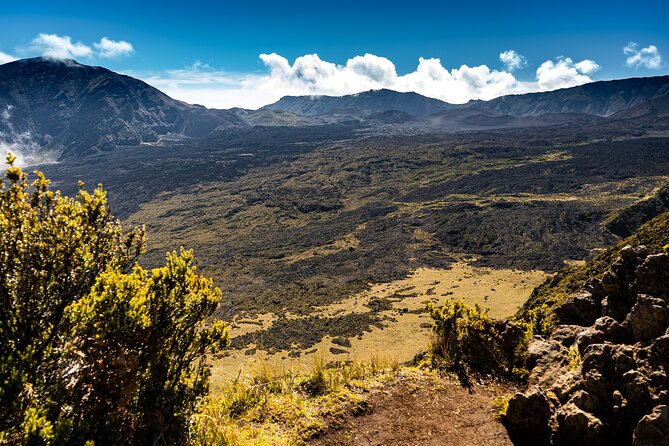
You will have multiple moments where the scenery demands a pause. If you love photography, this hike gives you lots of angles: crater floor views, cinder cone visuals, and that wide-open top-of-crater feeling.
One thing I’d keep realistic: the hike is timed, and you’re moving uphill. So bring a plan for quick shooting rather than expecting marathon photo sessions at every step.
Also, don’t forget that wind can matter. If it’s gusty, you may want to keep your lens hood handy and secure your phone/camera strap. Small practical habits make a big difference when you’re dealing with cold air and uneven ground.
Price and value: what $208.38 buys you on Haleakala
At $208.38 per person, this isn’t the cheapest way to experience Haleakala. But for a guided crater hike, it has solid value.
Here’s what you’re paying for, based on the day’s structure:
- A local guide leading a moderately difficult crater hike
- Lunch and snacks included (huge for a long, high-altitude day)
- A small group size that supports pacing and attention
- Transport connected to the start point in Kahului, plus return to the meeting point at the end
The trade-off is that there’s no hotel pickup. So you either need to get yourself to the Kahului Park n’ Ride or plan your day around that location.
If you want the crater experience with safety support, story-rich guidance, and food already handled, the price starts to make sense fast.
Who should book this hike (and who might want a different option)
This tour fits best if you:
- Have moderate hiking fitness and can handle uphill on uneven ground
- Want local ecology, endangered species context, and Hawaiian cultural framing
- Prefer a small group over a bigger bus-and-wait day
- Like guided photo help and structured pacing at elevation
You might rethink it if you want something with a longer, uninterrupted trail time. One concern that comes up is that the hike feels like two sections rather than one continuous trek. If you’re chasing maximum minutes on a single long path, you may find yourself wishing the timing leaned more toward that.
Also, if you rarely hike, consider doing a little prep beforehand. The pace can feel fairly steady, and the acclimation stop helps, but you still need to be comfortable walking uphill.
Should you book this Haleakala crater hiking experience?
I’d book this if you want Haleakala to feel like a guided journey, not a quick look from the edge. The combination of small-group attention, included lunch and snacks, and guides like Marko or Joel (who focus on both information and practical help) makes the day feel well put together.
I’d skip or compare if you’re tightly set on a longer, single uninterrupted hike or you’re not confident with moderately difficult walking. If the idea of altitude is new to you, the early acclimation stop is a real comfort, but your body still needs to meet you halfway.
If your dream day is crater views plus meaning plus safety support, this is a strong match.
FAQ
Where does the hike start?
The tour starts at the Kahului Park and Ride in Kahului, HI 96732.
What time does the tour begin?
The start time is 8:30 am.
How long is the experience?
It lasts about 7 hours.
Is hotel pickup included?
No. Hotel pickup and drop-off are not included.
What’s included in the price?
You get a local guide, plus lunch and snacks.
What’s the minimum age to join?
The minimum age is 8 years.
How fit do you need to be?
You should have a moderate physical fitness level, since the hike is described as moderately difficult.
Does the tour run in bad weather?
It operates in all weather conditions, but if it’s canceled due to poor weather, you’ll be offered a different date or a full refund.
How big are the groups?
The booking allows a maximum of 9 passengers, and the activity has a maximum of 11 travelers.