REVIEW · MAUI
Hula Lesson on Maui (Basics)
Book on Viator →Operated by Oni Foundation Inc - Wonderful World of Aloha Cultural Activity Center · Bookable on Viator
Hula basics feel personal fast. This beginner lesson at Oni Foundation Inc turns stereotypes into real understanding: you learn hula legends and terms before you move, then practice the basic motions with an English guide. I love that it works for kids and adults, and I love that you get to put everything together into a short dance routine. The only drawback to plan around is time, because one hour is just enough for a solid start, not total mastery.
You’ll meet at the Wonderful World of Aloha Cultural Activity Center at Queen Ka’ahumanu Center (275 W Kaahumanu Ave, Kahului) and settle in for a one-hour class. If instructor Kalai is teaching your session, expect clear coaching and an upbeat environment that makes it easier to pick up new steps, even if you think you are not a dancer. You’ll be using bare feet, so wear clothes you can comfortably move in and bring a little extra patience with the learning curve.
In This Review
- Key points to know before you go
- Meet at Queen Ka’ahumanu Center and Step Into the Lesson Space
- What the One-Hour Class Teaches: Legends, Terms, and Basics
- The Movements: How You Practice Hula Without Past Training
- From Footwork to a Short Routine
- Instructor and Learning Style: Why This Feels Friendly and Structured
- Price and Value: $25 for Culture You Can Do With Your Body
- Best Time to Go and How to Fit It Into Maui Days
- Who This Hula Lesson Suits (and Who Might Want More)
- Should You Book This Hula Lesson on Maui?
- FAQ
- Where is the hula lesson meeting point?
- What time does the class start, and how long does it last?
- Is hula experience required?
- What is included in the $25 price?
- Are meals included?
- What languages are offered?
- Can I cancel for a full refund?
Key points to know before you go
- All-ages and truly beginner-friendly: you can join with no dance background.
- Culture first: legends and terminology come before step practice.
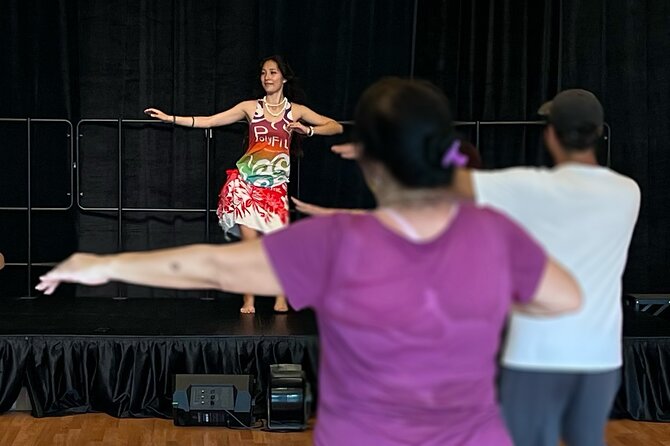
- You learn full routines, not just arm waving: you practice movements and then combine them into a couple dance sections.
- Small class size: capped at 25 people, which helps the lesson stay interactive.
- English instruction: clear guidance for an easier first-time experience.
- Bare feet on Maui time: plan for movement without shoes during the class, and note that meals are not included.
Meet at Queen Ka’ahumanu Center and Step Into the Lesson Space
This hula lesson starts at the Oni Foundation Inc – Wonderful World of Aloha Cultural Activity Center, right at 275 W Kaahumanu Ave, Kahului. The class location is part of the Queen Ka’ahumanu Center area, so it tends to feel convenient if you are already spending time around Kahului. You start at 11:00 am, and the experience ends back at the same meeting point, so you are not juggling transfers or time drift.
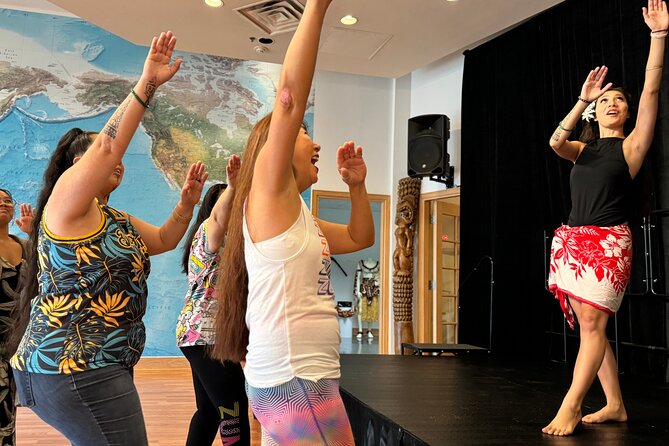
The vibe here is more studio than show. You are not watching from the sidelines for an entire hour. Instead, the setting is set up for hands-on learning, and that matters because hula is physical and story-based. One of the best parts of the format is that you get a chance to connect the meaning to the motion while you are still learning the basics.
If you arrive a touch early, you can also take in the center’s displays at your own pace. People have pointed out that the museum-like costume displays are attractive without feeling overwhelming. Even a quick look before class can make the lesson feel less like a generic activity and more like you are stepping into the culture around the dance.
You can also read our reviews of more tours and experiences in Maui



What the One-Hour Class Teaches: Legends, Terms, and Basics
The core of the experience is simple: you learn hula through guidance, practice, and then a short performance-style wrap-up. The lesson is built around history and legends, hula terminology, and the basic movements that make hula read clearly even when you are a first-timer.
What I like about this structure for your vacation is that it avoids the common trap of treating hula like just a tourist-friendly pose. When you are taught terms and meaning first, the steps make more sense immediately. Your hands and feet stop being random motions and start behaving like communication. That shift is what turns a fun class into something you can remember.
Expect instruction to be paced for mixed ability levels. The class is designed so that a five-year-old can stay engaged and an adult can still feel challenged in a good way. If you learn best by copying, you will get that. If you learn best by understanding what a movement is for, the terminology part helps you map the meaning fast.
There is no experience required. That does not mean it is effortless. It means the teacher will guide you toward the same basics, using language and repetition that helps different learners catch up.
The Movements: How You Practice Hula Without Past Training
Hula can look intimidating from the outside, mostly because it looks like a whole conversation happening at once. In a beginner class, the goal is to break that conversation into understandable chunks.
During the hour, you will practice the basic movements that build hula’s shape and rhythm. The teaching approach focuses on what you can do, not what you cannot. People have also highlighted that the instructor can adjust to different learning styles, which is exactly what you want in a mixed group.
Here’s what you should be prepared for as a first-timer: you will not get everything correct right away. That is normal. The class is short, so it moves at a pace that keeps the group learning rather than over-correcting every step. If your brain needs a minute to catch the pattern, that is fine. You are learning physical memory as much as you are learning steps.
Since you are barefoot during the lesson, your feet become your timing tool. If you usually wear supportive shoes all day, your feet might feel extra exposed. Plan for that feeling and keep your focus on the teacher’s cues. Also, wear clothing that lets you move freely, especially around the legs and hips, since those basic motions are part of the lesson.
From Footwork to a Short Routine
The lesson does not stop at basics. You practice the movements and then you put them together into a dance or two. That is a big part of why people call it fun and not just educational.
One standout detail from the experience is that you can learn a routine that runs a few minutes long, depending on the class structure and song choice. Even if your personal performance is still rough, the point is that you leave with something coherent. You can see the arc of the dance, not just isolated steps.
For your vacation, that matters because your brain enjoys finishing tasks. A short routine gives you a sense of accomplishment quickly. It also gives you a practical way to recognize hula when you see performances later. Once you understand what the movements are doing, you start noticing details in real time.
One more benefit: learning a full set of steps in a small group builds that shared energy. You are not the only one figuring it out. The class feels like teamwork, even though everyone is doing their own version of the movements.
Instructor and Learning Style: Why This Feels Friendly and Structured
The instructor experience is a major reason this class earns a perfect score. People talk about the teacher as welcoming and encouraging, and they also mention that the coaching helps even non-dancers feel capable. That kind of teaching is not just polite, it is practical. It keeps people from freezing when they get confused.
Instructor Kalai is specifically referenced in connection with performance and instruction. If Kalai is teaching your session, you can expect a supportive environment where the lesson stays organized and keeps moving. The teacher’s job here is to translate hula into something you can learn quickly while still respecting the cultural context.
You’ll also notice that the class format supports families. Kids can follow along without being talked down to, and adults do not feel bored. If you are bringing multiple generations, that balance is hard to find in activities that usually skew either kid-only or adult-only.
The overall feel is learning-first with a lot of positivity. You finish tired in a good way, which is often a sign that you used your body and not just your imagination.






Price and Value: $25 for Culture You Can Do With Your Body
At $25 per person for about 1 hour, this is one of those experiences that hits the sweet spot between cost and payoff. You are not paying for a long excursion. You are paying for expert guidance, a structured lesson, and the time to practice and perform a short routine.
If you compare it to typical paid activities on Maui, the value stands out because you leave with a skill you can repeat, not just a photo or a memory. Even if you forget half of it by the next day, the basics you pick up will make your future encounters with hula more meaningful.
A couple practical points about cost realism:
- Gratuity is not included, so if this teaching clicks for you, consider budgeting extra to tip appropriately.
- Meals and refreshments are not included, so plan a snack or drink around the class time so you do not feel stuck afterward.
Also, the experience uses a mobile ticket, and it runs as a scheduled activity at 11:00 am. That reduces decision fatigue while planning your day. If you want a culture activity that fits cleanly into a Maui itinerary, this one tends to work.
The class max is 25 people, which often means better attention than very large group activities. In other words, your money is more likely to translate into actual coaching instead of just watching.
Best Time to Go and How to Fit It Into Maui Days
The start time is 11:00 am, which is ideal if you like being productive in the morning and then having the afternoon open. It also works well if you are staying in or near Kahului, since you are not driving across the island right after. The experience ends back where you started, so you can move on immediately to lunch or a beach stop.
The class is also described as near public transportation, which can matter if you are trying to cut down on car logistics. If you are relying on buses or shared rides, being able to start and end at the same location helps you keep your schedule clean.
One timing tip: arrive early enough to get comfortable. Even though the class is only an hour, you want time to switch into a learning mindset. If you are also planning to look at costume and display areas at the center, give yourself a small buffer. People have mentioned reading through displays takes longer than you might expect, so if you like to stop and take in details, plan for that.
Finally, confirm whether you want to keep the evening free. After a hula class, you can feel pleasantly worked. It is not the kind of activity that usually drains your whole day, but it can make you want a low-key afternoon.
Who This Hula Lesson Suits (and Who Might Want More)
This class is tailor-made for people who want hands-on cultural activity without pressure. You do not need to be athletic, you do not need rhythm skills, and you do not need prior dance knowledge. The all-ages structure makes it a strong choice for families, multi-generation groups, and anyone who wants a shared activity.
It is also a good pick if you care about learning beyond stereotypes. The lesson includes history and legends plus terminology, so you walk away understanding that hula has meanings behind the movements. That is especially helpful if you plan to attend or watch hula performances later during your trip. You will recognize more, and you will understand more.
Who might want something different? If you are looking for a deep, multi-session training program or a choreography-heavy workshop, one hour may feel too short. This is a starter class. You will learn enough to understand the basics and participate confidently, but it is not designed to turn you into a performer in a single session.
If you are also the type who hates barefoot activities, consider whether that will bother you. The class is specifically set up for bare feet during instruction, so it is not a swap-you-in-later kind of experience.
Should You Book This Hula Lesson on Maui?
I think you should book it if you want a practical culture activity where you actually do the thing. The beginner-friendly format, the emphasis on legends and terminology, and the fact that you leave with a short routine make this a smart value at $25.
You might skip it if your only goal is spectating or if you want a long class with extensive repetition. But if you want an hour that teaches you how to connect meaning to movement, this is exactly the type of activity that pays off quickly on a vacation.
If you can, plan to bring the mindset of learning, not performing. Hula is easier when you focus on doing the basics together.
FAQ
Where is the hula lesson meeting point?
You’ll meet at Oni Foundation Inc – Wonderful World of Aloha Cultural Activity Center, 275 W Kaahumanu Ave, Kahului, HI 96732, USA.
What time does the class start, and how long does it last?
The start time is 11:00 am, and the experience lasts about 1 hour.
Is hula experience required?
No. The class is described as beginner-friendly and open to anyone, regardless of age, background, or dancing skills.
What is included in the $25 price?
You get an English guide and the experience includes what you need for the lesson, with the main requirement being bare feet.
Are meals included?
No. Meal and refreshments are not included.
What languages are offered?
The guide instruction is offered in English.
Can I cancel for a full refund?
Yes. Cancellation is free if you cancel at least 24 hours before the experience’s start time for a full refund. If you cancel less than 24 hours before, the amount paid is not refunded.