REVIEW · MAUI
Maui Ocean Center All Day Admission Ticket
Book on Viator →Operated by Maui Ocean Center · Bookable on Viator
Hawaii’s ocean stories come with big life. The 3D Humpbacks of Hawaii Sphere gives you a whale encounter, and the Turtle Lagoon brings in scheduled naturalist presentations that turn casual looking into real understanding. One heads-up: the place is not huge, so if you’re expecting the scale of the biggest mainland aquariums, you may feel the ticket price faster than you’d like.
The good news is your admission is flexible. You can spread it out between the open hours of 9am to 5pm (last entry at 4pm), then return to the exhibits that caught your eye. A lot of the best moments are also built around shows and repeatable areas, so even if you’re short on time, you can still hit the highlights.
Here’s the setup: Maui Ocean Center focuses on Hawaii’s own coastal species, with hands-on zones, coral displays, and guided talks throughout the day. It’s a smart way to spend a Maui half-day on land when you want sea life close, educational, and low-stress.
In This Review
- Key things to know before you go
- Maui Ocean Center at a glance: native Hawaiian life and the whale show
- Your all-day ticket strategy: when to arrive and how to pace it
- Inside the exhibits: what the 60+ displays really feel like
- Living Reef and Living Coral Reef: reef lovers will stay here
- A clear, close-viewing tunnel moment
- Turtle Lagoon presentations and the naturalist touch: where learning becomes easy
- Open Ocean and the big tank effect: the 750,000-gallon showpiece
- Tide Pool Tactile Discovery: the hands-on part that actually makes sense
- Shark Nursery Bay and the scheduled moments you should not skip
- The cultural wood carving demonstration and why it belongs here
- Price and logistics: is $55.44 good value for Maui?
- What costs extra
- Who should book this, and who might want a different plan
- Should you book Maui Ocean Center All Day Admission?
- FAQ
- Do I get to enter any time during the day?
- How long should I plan to spend at Maui Ocean Center?
- What does the ticket include?
- Are meals included with admission?
- Is parking available, and what does it cost?
- Is the ticket mobile?
- Can I cancel and get a refund?
- Where is the meeting point?
- Is it suitable for people with mobility needs?
- Are service animals allowed?
Key things to know before you go
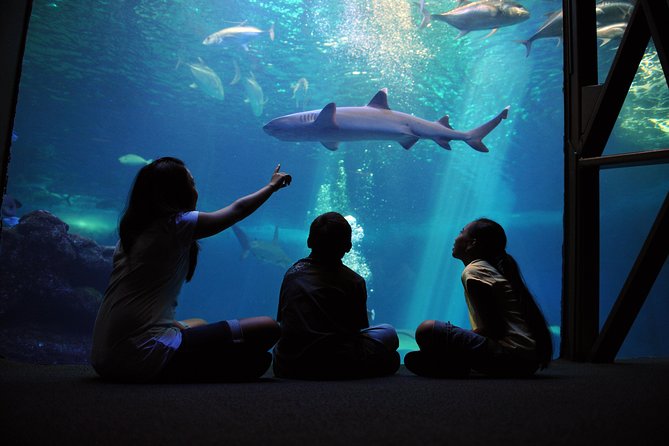
- 3D Humpbacks of Hawaii Sphere: a virtual whale encounter that many people call the top moment of the visit
- Hands-on Tide Pool Tactile Discovery: two-finger touch experiences that add fun without needing a tour boat
- 60+ interactive exhibits: you’re walking through native Hawaiian habitats instead of seeing random ocean animals
- Scheduled naturalist presentations: Turtle Lagoon at 10:30am and 2:30pm, plus Shark Nursery Bay at 11:45am and 1:45pm
- Living coral focus: the Living Coral Reef exhibit is one of the biggest draws for reef fans
- Food and shopping on site: Seascape Restaurant and Maui Ocean Treasures are there when your legs need a break
Maui Ocean Center at a glance: native Hawaiian life and the whale show
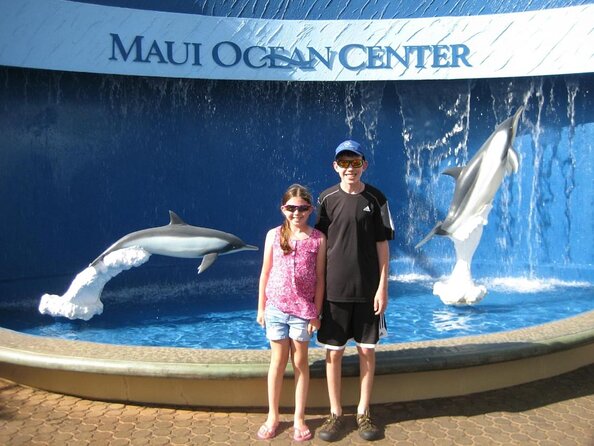
Maui Ocean Center is basically a guided walk through Hawaii’s near-shore world, using exhibits built around real local ecosystems. That matters, because you’re not just collecting species photos. You’re learning the story of what lives around the islands and why people care about it.
Two experiences tend to anchor the whole day. First is the Humpbacks of Hawaii 3D Sphere, which turns whale behavior into something you can watch like you’re under the water with them. Second is the Turtle Lagoon area with daily Marine Naturalist presentations, which help you connect what you’re seeing to what those animals actually do in Hawaiian waters.
The place is also family-friendly in a very practical way. You’ll find interactive zones, daily presentations, and enough variety that adults don’t feel bored while kids burn off energy.
You can also read our reviews of more tours and experiences in Maui

Your all-day ticket strategy: when to arrive and how to pace it
Your admission is all-day access, with entry anytime between 9am and 5pm, and the last chance for entry at 4pm. You can treat this like a quick hit for about two hours, but the site is set up so you can also linger.
Here’s how I’d plan it so you don’t feel rushed:
- Arrive near 9am if you want an easy flow through the exhibits before shows get busy.
- Use the whale 3D Sphere as your anchor event, then build the rest of the day around where you’ll be when it runs.
- Catch at least one presentation block. Turtle Lagoon and Shark Nursery Bay both have set times, and the naturalists bring the exhibits to life.
If you like reading placards, watching animals longer than “just a second,” or taking a lot of photos, you’ll likely end up staying longer than the two-hour estimate. Some people end up around 4–5 hours when they slow down and actually absorb the details.
One more time-saving tip: make a quick loop first. That way you know where everything is, then you can return to the exhibits that grabbed you.
Inside the exhibits: what the 60+ displays really feel like
The core of your visit is moving through a chain of exhibits that go from smaller, close-up spaces to bigger viewing areas. The design keeps you from feeling like you’re stuck watching one tiny tank for hours.
You’ll see marine life like sharks, stingrays, turtles, eels, octopuses, sea jellies, and tropical reef fish. The big advantage is that the emphasis stays on Hawaiian-native species, which makes it more meaningful than a generic aquarium browse.
Living Reef and Living Coral Reef: reef lovers will stay here
If coral is your thing, you’ll want to prioritize the Living Coral Reef Exhibit. It’s described as one of the world’s largest displays of live Pacific corals, and that scale matters. Seeing coral growth in a real exhibit helps you understand why reef conservation is not just an environmental slogan. Reef habitat is the foundation for the entire food web.
The Living Reef area is also a good spot to pause between busier zones. The displays and naturalist talks there are built to help you notice how fish use coral structure, not just how they look.
A clear, close-viewing tunnel moment
One review highlights a clear tunnel experience that makes for strong shark photos, plus a manta ray sighting. Even if you aren’t a photographer, those kinds of viewing angles change how you experience animal behavior. Instead of looking across glass, you’re watching in a more connected way.
You can also read our reviews of more tours and experiences in Maui





Turtle Lagoon presentations and the naturalist touch: where learning becomes easy
The Turtle Lagoon area is one of the best examples of how this aquarium turns “walk around and see stuff” into “I get what I’m looking at.”
You can plan around the daily Marine Naturalist presentations at 10:30am and 2:30pm. The talks cover what you’re seeing in Turtle Lagoon, and the naturalists are also available around key exhibits to answer questions about fish, plant life, and coral.
Why this is valuable: it’s one thing to spot animals. It’s another to understand how they relate to Hawaii’s coastal waters. Naturalists can also help you spot details you’d otherwise miss, like what to look for in behavior or how to identify species by features.
If you’re traveling with kids, this is also where the day feels structured without feeling like a classroom. Kids often get a lot out of being able to ask short questions and get direct answers on the spot.
Open Ocean and the big tank effect: the 750,000-gallon showpiece
The Open Ocean exhibit is the headline aquarium space: a 750,000-gallon setting designed for Hawaii’s marine life. This is where the scale starts to make the visit feel more special, because you can watch animals moving in a way that feels closer to ocean motion than small, stationary displays.
If you’re the type who gets restless in small exhibits, Open Ocean gives you a place to reset. Even when you don’t see a specific animal right away, the environment itself helps you stay engaged.
Also, the layout supports repeat visits. If you walk in once and miss a moment, you can often catch it again while you’re exploring other sections.
Tide Pool Tactile Discovery: the hands-on part that actually makes sense
The Tide Pool Tactile Discovery is a standout because it adds a hands-on element without requiring any special gear. The guidance is specific: it’s a two-finger touch experience.
That detail matters for two reasons. First, it keeps the activity from becoming chaotic. Second, it helps you interact safely and responsibly with small creatures you might otherwise only see behind glass.
This is the kind of stop that works well for mixed ages. Adults tend to enjoy it because it’s educational and structured. Kids tend to love it because it feels like a real activity, not just “watch and move on.”
Shark Nursery Bay and the scheduled moments you should not skip
The Shark Nursery Bay is another area tied to daily presentations, at 11:45am and 1:45pm. The timing is perfect for mid-morning and early afternoon, which makes it easy to build around meals and other exhibits.
This also helps you avoid the common aquarium problem: wandering with no clear rhythm. When you have set presentation times, your day becomes simpler. You know when to be in the right place.
One review specifically mentions a class floor where sharks swim underneath, which is a great example of the “small detail, big memory” factor. If you like unique viewing angles, plan to linger in the nursery bay area and not just walk through.
The cultural wood carving demonstration and why it belongs here
Maui Ocean Center doesn’t treat this as only marine biology. It includes cultural elements too, including a cultural wood carving demonstration.
That matters because it connects the ocean experience to Hawaiian life and tradition. Even if you’re mostly there for the animals, a short culture demo gives the day a broader meaning and breaks up the time spent inside viewing spaces.
This is also a good moment for pacing if you’ve been watching animals for a while. It gives your eyes a reset and gives you something tangible to remember beyond photos.
Price and logistics: is $55.44 good value for Maui?
At $55.44 per person, this ticket price sits in the “worth it if you use it” category. If you treat it as a two-hour stop with only a quick glance at the tanks, it can feel expensive fast. If you plan your timing around presentations and spend time with the reef and touch zones, the value improves.
A big part of that is what you get included:
- All-day access between 9am and 5pm (last entry at 4pm)
- The Humpback Whales of Hawaii 3D Sphere
- Multiple scheduled naturalist presentations (Turtle Lagoon and Shark Nursery Bay)
- Tide pool tactile discovery
- Living coral reef exhibit
- Cultural wood carving demonstration
So the question becomes: will you actually spend the time? If your plan is to linger, attend at least one talk, and not rush the hands-on area, you’ll likely feel satisfied. If you want the size of a mega-aquarium or you’re only interested in the whale sphere, you may feel underwhelmed.
What costs extra
Food and drinks are not included. There’s an ocean-friendly certified restaurant called Seascape Restaurant and it also serves island-inspired cuisine and fresh catch specials. Parking costs extra: $3 per hour via the ParkLinq app or QR code upon arrival.
This is worth noting because Maui can add little “surprise” expenses quickly. If you’re watching your budget, decide early if you’ll eat on site or plan another meal elsewhere.
Who should book this, and who might want a different plan
Maui Ocean Center is a great fit if you want:
- Up-close marine viewing without a boat ride
- A day plan that’s easy to repeat and flexible (all-day admission)
- Kids activities that aren’t just passive watching
- Regular talks with naturalists at set times
- Reef and local-species focus, not a random world tour of sea life
It may feel less satisfying if:
- You expect the biggest possible aquarium scale
- You’re the type who needs big outdoor space or nonstop action
- You’re only interested in one show and don’t want to spend time walking the exhibits
One review also flags that the whale sphere has restrictions for very young kids (under 5). If you’re traveling with little ones, it’s smart to verify what your child can do before you build your whole day around that 3D show.
Should you book Maui Ocean Center All Day Admission?
Book it if you want a Maui day that’s calm, educational, and flexible. The combination of native Hawaiian exhibits, daily naturalist presentations, and the whale 3D Sphere makes it an easy “yes” for ocean lovers and families who like structured breaks during their walking day.
Skip or rethink it if your priority is a massive aquarium with lots of big, long-form displays. At this price, you’ll get the best value by actually using the all-day access and catching at least one scheduled presentation block.
If you’re unsure, do this: set one non-negotiable for your day (either the whale sphere or a naturalist presentation time), then give yourself enough time to wander back to the exhibits that keep your attention.
FAQ
Do I get to enter any time during the day?
Yes. Admission is valid anytime between 9am and 5pm, with the last chance for entry at 4pm.
How long should I plan to spend at Maui Ocean Center?
The ticket is listed as about 2 hours on average, but you can stay longer since it’s all-day access.
What does the ticket include?
It includes all-day access, the Humpback Whales of Hawaii 3D Sphere, and access to featured areas like Turtle Lagoon presentations, Tide Pool Tactile Discovery, Shark Nursery Bay presentations, and the Living Coral Reef Exhibit. It also includes a cultural wood carving demonstration.
Are meals included with admission?
No. Food and drinks are not included, though there is an on-site restaurant and dining options.
Is parking available, and what does it cost?
Yes. Paid parking is $3 per hour via the ParkLinq app or QR code upon arrival.
Is the ticket mobile?
Yes. This experience uses a mobile ticket.
Can I cancel and get a refund?
You can cancel for free up to 24 hours in advance of the experience start time for a full refund.
Where is the meeting point?
The start location is 192 Maalaea Rd, Wailuku, HI 96793, USA, and the activity ends back at the meeting point.
Is it suitable for people with mobility needs?
Most travelers can participate, and reviews note the center is generally accessible. At the same time, reviews mention that stairwells for presentations can be difficult for some handicapped visitors, so it’s smart to plan for possible steps around presentation areas.
Are service animals allowed?
Yes. Service animals are allowed.