REVIEW · MAUI
Maui: Private Surf Lessons in Lahaina
Book on GetYourGuide →Operated by Royal Hawaiian Surf Academy · Bookable on GetYourGuide
Maui surf lessons are fun. This one is extra useful because you get 1-on-1 coaching and you spend the time learning, not waiting. I like that the instructor stays with you the whole session and that the lesson uses calm waves built for beginners. Still, it’s a premium price at $250 per person, and you’ll want to show up with the basics (towel, sunscreen, swimsuit).
You’ll gear up quickly, starting with a quick safety-and-technique talk on shore before you hit the water. Then it’s a cycle of riding, coming back to the waiting area, and getting sent back out again when it’s your turn. One consideration: you’ll be responsible for bringing a towel and sunscreen, since those aren’t included.
In This Review
- Key things I’d focus on before you go
- Guardrails Check-In and Gear-Up: Less Guessing, More Surf Time
- The 15-Minute Land Lesson: Safety Plus Technique You Can Use Instantly
- 90 Minutes on the Clock: How Private Instruction Gets You More Waves
- Riding Calm Waves: What You’ll Actually Work on as a Beginner
- Waiting Area Strategy: Why You’ll Feel Busy (In a Good Way)
- The Pro Photo Bonus: Close-Up Shots You Can Actually Buy Later
- What’s Included (and What’s Not): Pack Smart for Maui Sun and Salt
- Price and Value at $250 Per Person: When Private Surf Makes Sense
- Should You Book This Private Surf Lesson in Lahaina?
- FAQ
- How long is the Maui private surf lesson?
- What gear is included?
- What should I bring?
- Where do I check in for the lesson?
- What age limits apply?
- Are pets allowed?
- Is there a cancellation option or pay-later booking?
Key things I’d focus on before you go
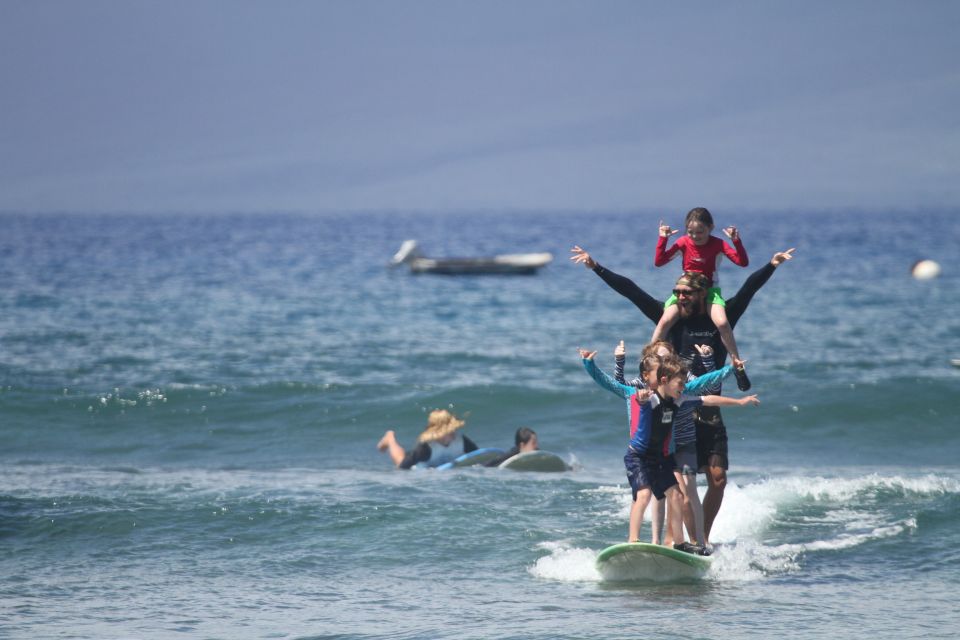
- Real private instruction with personal attention for more waves and faster learning
- Calm, beginner-friendly surf so you can focus on standing and timing
- CPR-certified instructor plus a short safety briefing so you know the rules right away
- Provided gear (board, rash guard, water shoes) so you don’t hunt for rentals
- Pro photography available with close-up shots you can buy after
Guardrails Check-In and Gear-Up: Less Guessing, More Surf Time
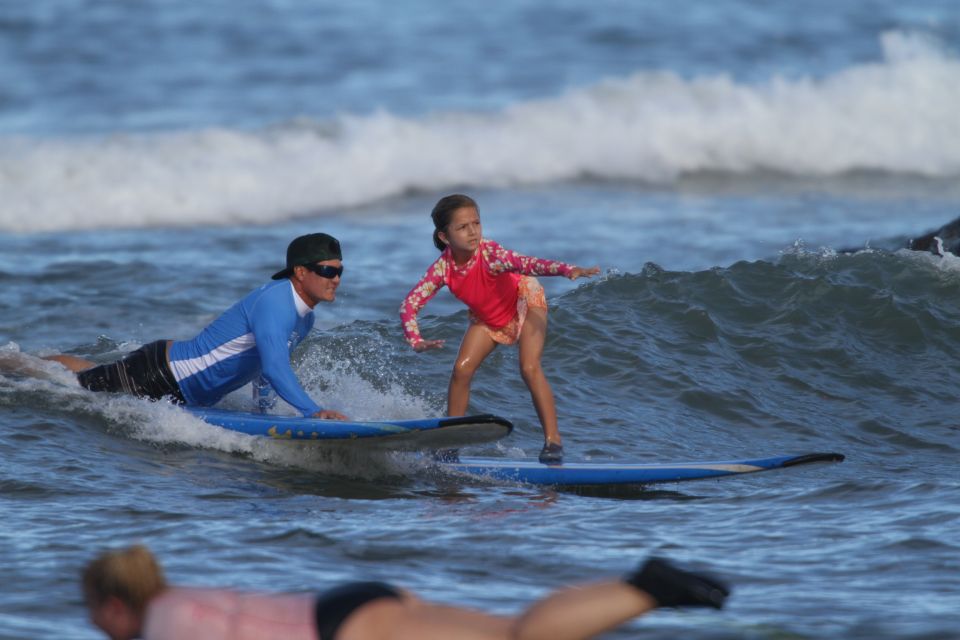
Your lesson starts with a simple plan: check in, get outfitted, then get moving toward the water. You’ll check in 30 minutes before your start time at 505 Front Street, Lahaina. The activity operates at Guardrails, between two beach parks, and parking is directed to the yellow flag on the mountain side of the highway. If you’ve arrived in Maui already stressed about where to park, this kind of clear meeting-point setup helps a lot.
Once you’re in, the staff gets you sorted with the basics that matter. You’ll be handed a surfboard, long-sleeve UV rash guard, and water shoes. The long-sleeve rash guard is a big deal in Hawaii sun. It reduces the time you spend thinking about sunburn and lets you focus on your stance and your takeoff.
You’ll also use cubicles at the shop for anything you don’t want to get wet. You’ll want to treat this like a “keep it dry and stable” moment. Anything that doesn’t float should be stored there, and anything you really care about should stay dry. Bring a towel, and plan on sunscreen for after or for any exposed skin not covered by the rash guard.
You can also read our reviews of more private tours in Maui



The 15-Minute Land Lesson: Safety Plus Technique You Can Use Instantly
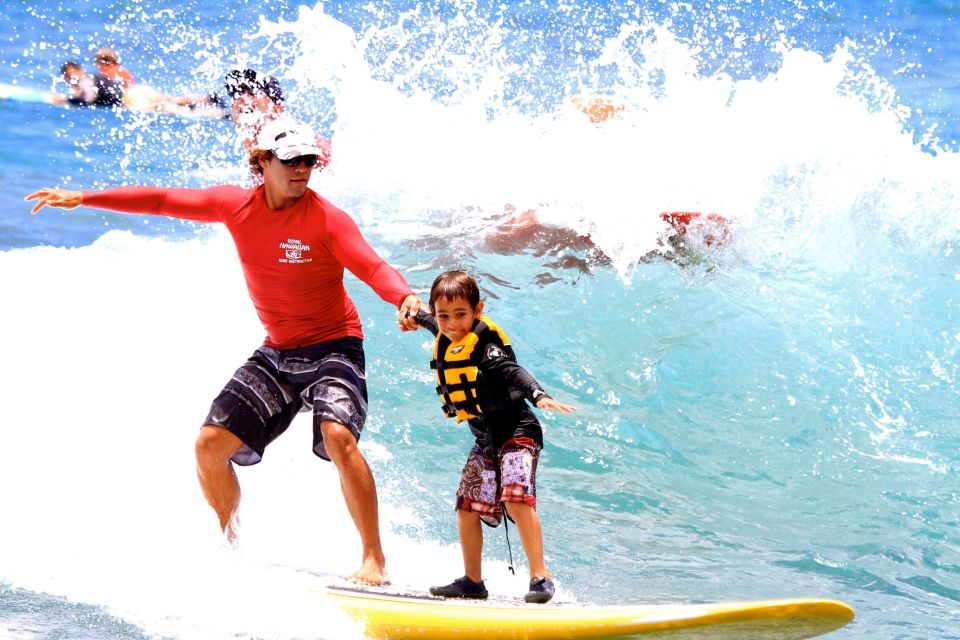
Before you touch the water, expect a short 15-minute land lesson. It’s not just rules. It’s the kind of briefing that helps you avoid common beginner mistakes: where to position yourself, how to behave around other surfers, and what to do when you’re out there trying to catch your first wave.
This is also where your instructor sets your priorities. You’re not listening to a long lecture. You’re getting the handful of cues that will help you ride longer and stand sooner. That matters because your real progress happens in the next phase, when you’re learning in real time.
One nice safety-related detail: the included instructor is CPR certified. I don’t want to scare you, but it’s comforting to know that the person responsible for guiding you is trained for emergencies, especially in ocean conditions.
90 Minutes on the Clock: How Private Instruction Gets You More Waves
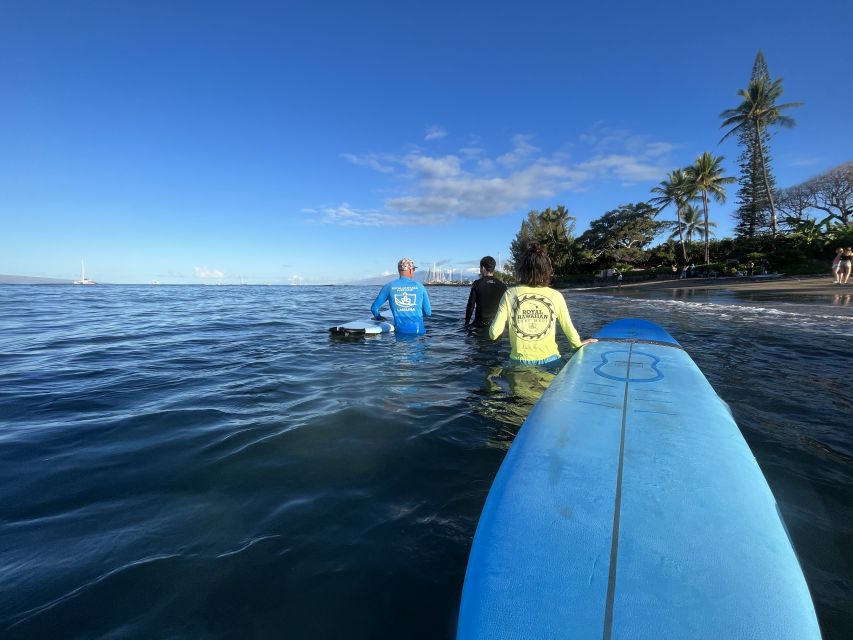
The schedule is compact. The full experience is listed as 2 hours, and the surf time is 90 minutes from when you leave the surf shop until the instructor signals you back in.
That timing tells you something important about how this is designed. It’s built to keep you actively learning instead of spending the day in long downtime. With private lessons, your instructor isn’t splitting attention across strangers. Your feedback loop is faster: try something, get corrected, then try again.
On a typical session flow, you’ll:
- Listen to the shore briefing
- Head into the water when you’re ready
- Receive step-by-step advice as you work on riding
- Return to the waiting area after your wave
- Get sent back out again when it’s your turn
That waiting-area rhythm is where many group lessons feel frustrating. Here, the goal is to keep you cycling through attempts so you learn faster. For beginners, more tries usually beat “one perfect wave” every time.
Riding Calm Waves: What You’ll Actually Work on as a Beginner
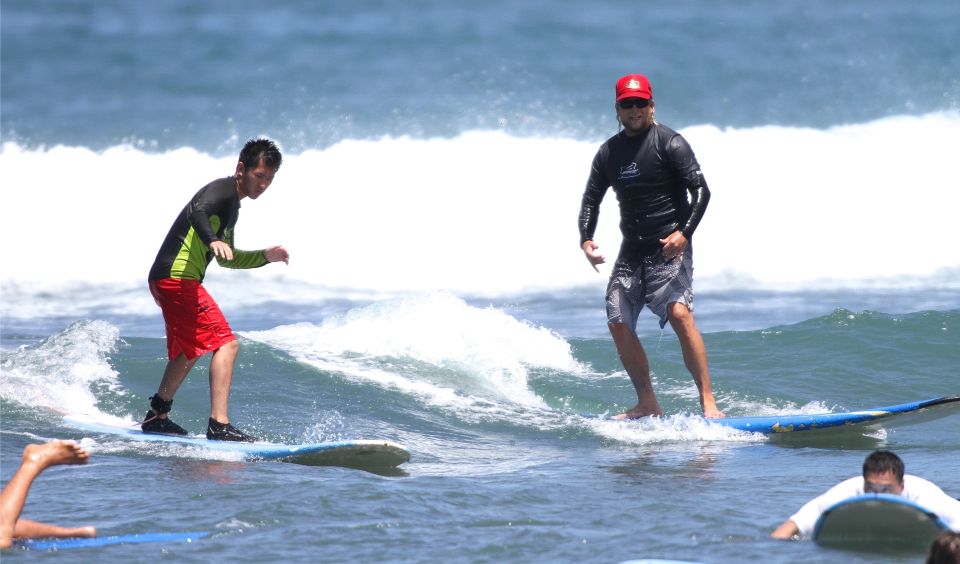
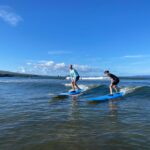
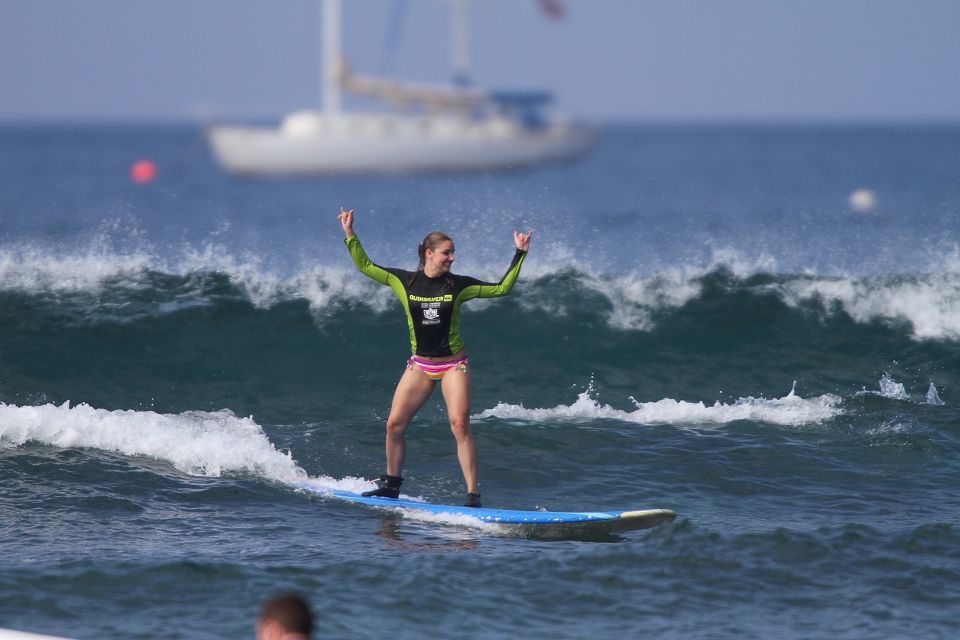
The lesson is designed for calm waves suitable for beginners, which is exactly where you want to start if you’re new to surfing. The point isn’t to impress anyone. The point is to learn the basics: how to paddle efficiently, how to get your board positioned, how to time your pop-up, and how to stay balanced as the wave carries you.
I’d also keep expectations realistic. Even with beginner-friendly waves, ocean conditions can change. In one case, a learner did mention higher waves during their lesson and still felt they were taught effectively. The takeaway for you: your instructor should adjust the plan so you can learn without being overwhelmed.
The best part about private coaching is that corrections happen while you can still connect them to what you just did. You’re not getting advice like, Try this next time. You’re getting it during the moment-to-moment decision-making of paddling, turning, and standing.
And because you’re in a 1-on-1 setup, your instructor can focus on your body position and habits. That’s where beginners usually improve quickest, because the lesson isn’t generic.
Waiting Area Strategy: Why You’ll Feel Busy (In a Good Way)
When you finish a wave, you’ll return to a designated waiting area. This part is simple, but it’s worth understanding. In the waiting zone, you’re resetting, catching a breath, and preparing for the next turn without losing the momentum of the lesson.
Private lessons often feel better because you spend less time watching others and more time practicing. The instructor signals when it’s your turn again, so you’re not guessing when you’ll go back out.
If you’re prone to getting cold, you’ll want to pay attention to how long you’ll be waiting. The session is structured to limit idle time, but you’ll still be in the water repeatedly. That’s another reason the rash guard and water shoes are included.
You can also read our reviews of more tours and experiences in Maui



The Pro Photo Bonus: Close-Up Shots You Can Actually Buy Later
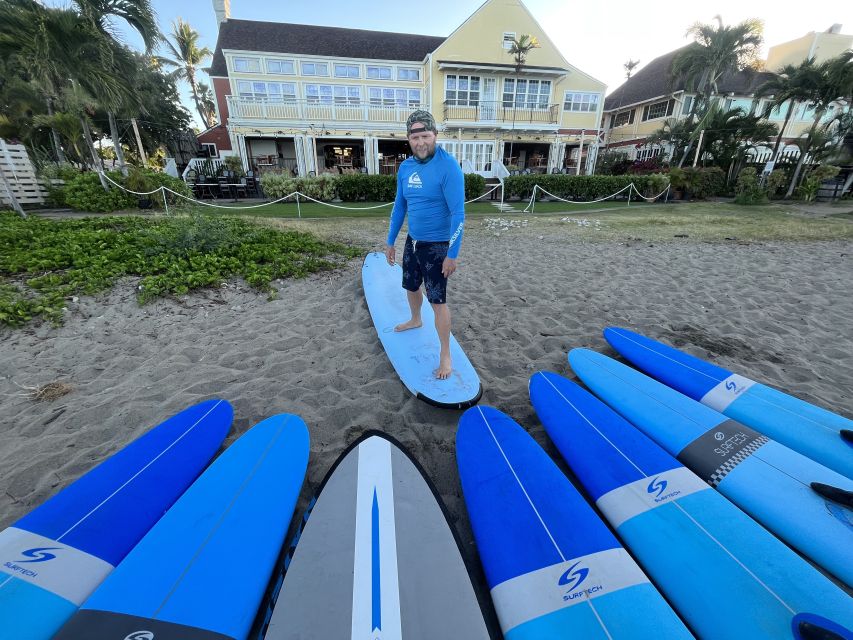
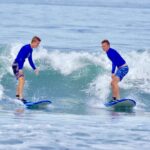
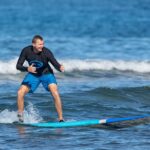
One added bonus is that there’s a professional photographer taking close-up shots throughout your surf lesson. You’ll see the images after the class, and photos are available for purchase.
If you’ve ever tried to film surfing with your phone, you’ll appreciate what’s different here. In at least one experience, the photos were taken with a lens setup that doesn’t match typical smartphone limitations, and the photos were delivered by email. Even if you don’t plan to buy, it’s a nice way to have a record of learning day nerves and all.
This is a good option if you want proof you were really out there, not just photos of the beach. Surfing photos are also one of those memories that fade unless you do something proactive.
What’s Included (and What’s Not): Pack Smart for Maui Sun and Salt
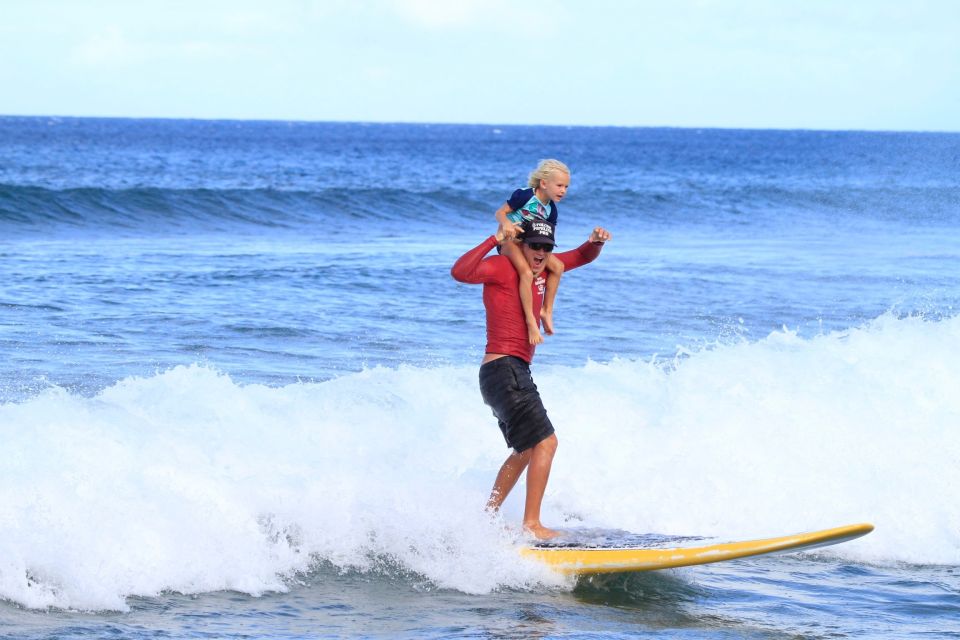
Here’s what you get as part of the lesson:
- Surfboard
- Rash guard (long-sleeve UV protection)
- Water shoes
- Private surf instructor (also CPR certified)
- Professional photography
- Private lesson in a private group setup
Not included:
- Towel
- Sunscreen
- Swimming suit
This matters because Maui sun is real. The rash guard helps, but your face, shoulders, and anything not covered still need protection. Bring sunscreen and apply before you go in, even if you think you’ll just be out for a short time.
Also bring a swimsuit. It sounds obvious, but people often assume it’s included with beach activities. It’s not. You’ll be out in the water and you’ll want to be comfortable immediately.
If you wear sunglasses, you might find they become annoying in surf. Since you’re provided water shoes and other gear, the lesson is set up for comfort and safety, but you should still think about what you want to keep attached.
Price and Value at $250 Per Person: When Private Surf Makes Sense
At $250 per person, this is not the cheapest thing on Maui. But private surf lessons are one of those categories where value can be very real if you want faster progress.
Here’s why it can be worth it:
- You get personal attention for the whole lesson, not just occasional tips.
- The plan is structured around more learning attempts, since you’re not waiting around for your turn the way you often do in larger groups.
- You get the right beginner setup (calm waves) and safety guidance from a CPR-certified instructor.
- Gear is handled for you, so you’re not paying extra for rentals or arriving unprepared.
If you’re only casually curious and you want the cheapest way to say you tried surf, you could look for group lessons instead. But if you want to actually stand up, catch waves, and understand what you did wrong and how to fix it, private instruction is usually the fastest route.
This is also a smart choice if you’re traveling as a couple, family member, or solo and want the instructor’s attention completely on you. The lesson runs about 2 hours total, so you’re getting a full learning session without turning it into a whole-day project.
Should You Book This Private Surf Lesson in Lahaina?
Book it if you want a surf lesson that’s built around attention, safety, and practical coaching. I’d especially recommend it if you’re a beginner who learns best with feedback in the moment, or if you’d rather pay for privacy than spend time waiting your turn.
Consider it carefully if budget is tight, because $250 per person adds up fast. Also plan to pack the basics you’re responsible for: towel, sunscreen, and a swimsuit.
If you want a Maui activity that’s active, skill-based, and memorable in a real way, this private surf session at Guardrails is a strong pick.
FAQ
How long is the Maui private surf lesson?
The experience is listed as 2 hours total. The private surf lesson is 90 minutes from the time you leave the surf shop until the instructor signals you back in.
What gear is included?
You get a surfboard, a long-sleeve UV rash guard, and water shoes. You’ll also have a private surf instructor (CPR certified), and there is a professional photographer taking close-up shots.
What should I bring?
Bring a towel, sunscreen, and a swimsuit. Towel and sunscreen are not included.
Where do I check in for the lesson?
Check in at 505 Front Street, Lahaina about 30 minutes before your lesson start time. The activity operates at Guardrails, and parking is directed at the yellow flag on the mountain side of the highway.
What age limits apply?
Group lessons are for ages 10 and older. For ages 9 and younger, it’s recommended to sign up for private or semi-private lessons.
Are pets allowed?
No, pets are not allowed.
Is there a cancellation option or pay-later booking?
Yes. You can cancel up to 24 hours in advance for a full refund. You can also reserve now and pay later, with payment due later rather than today.