REVIEW · MAUI
Maui: Small Group Shark & Turtle Scuba Dive from Shore
Book on GetYourGuide →Operated by Dive Maui/Hawaiian Rafting Adventures · Bookable on GetYourGuide
Turtles and sharks, right off the pier. This shore scuba session takes you to the sunken Mala Wharf, where you’ll cruise a colorful reef with a PADI-certified guide. Expect a relaxed pace, a quick walk from the shop, and wildlife you can’t fake on a postcard.
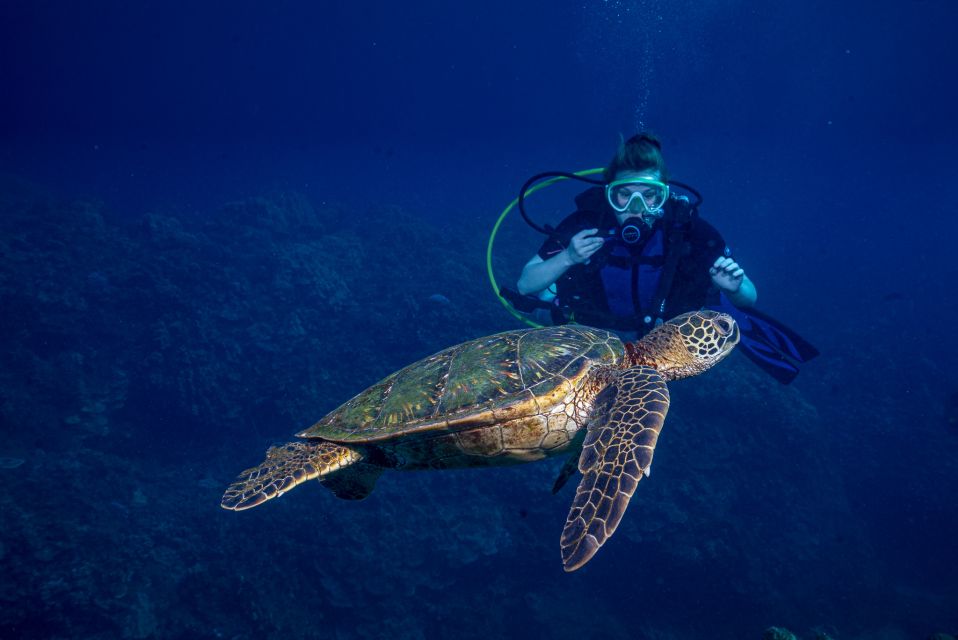
What I like most is the chance to see Maui’s resident turtles up close. I also love the variety of reef life here—white-tip reef sharks and small characters like frogfish, eels, octopus, and nudibranchs that reward slow, careful looking.
The main catch: this is for certified divers only, with a recent-activity requirement, and you’ll need to carry your own gear. If you’re not comfortable with that, you’ll feel the strain before you even hit the water.
In This Review
- Key things to know before you go
- Mala Wharf, in one sentence: why it’s worth your tank time
- Getting to the water: Lahaina’s easy walk from 1223 Front St
- The safety briefing: what it signals about how the outing runs
- Underwater at Turtle Town: turtles, white-tip reef sharks, and Hawaiian endemic fish
- How to spot frogfish, eels, and nudibranchs without burning your whole tank
- Tank size and timing: what “up to one hour” really means
- Small group pace: what a max of 4 divers changes
- Price and value: why $128 can make sense for this reef
- Conditions and reality checks: weather can steer the plan
- Who this shore scuba session is best for
- Should you book this shore scuba session?
- FAQ
- Do I need to be a certified diver?
- How long will I be in the water?
- What’s included in the price?
- How big is the group?
- Where do we meet, and is parking available?
- What animals can I hope to see?
- What happens if weather is bad?
Key things to know before you go
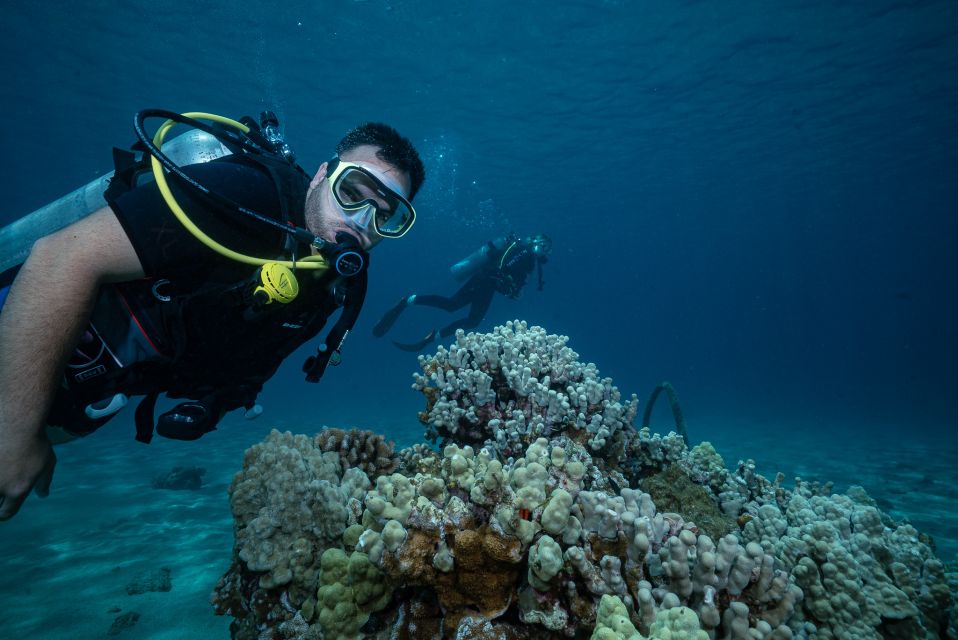
- Mala Wharf’s story matters: the site was damaged by Hurricane Iniki in 1992, and it’s now one of Maui’s best reef spots.
- Up to 1 hour underwater on 80s tanks, depending on air.
- Small group, big attention with a max of 4 divers (private sessions may be available).
- Wildlife checklist is real: turtles, white-tip reef sharks, endemic fish, plus octopuses, eels, nudibranchs, and frogfish.
- Lahaina shore access is simple: a short walk from the shop to the pier.
- Guides earn high praise, including a recurring mention of a guide named Joe.
Mala Wharf, in one sentence: why it’s worth your tank time
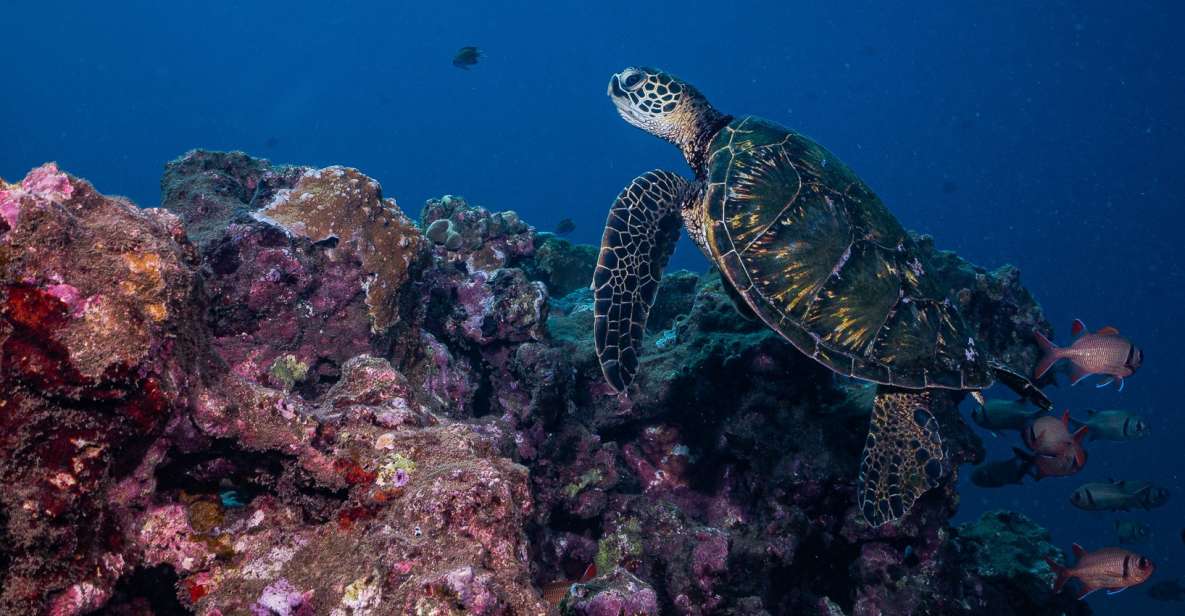
Mala Wharf is known for what shows up there, and that’s the point. You’re not just chasing scenery. You’re underwater with an established reef community that includes turtles, reef fish, and the occasional white-tip reef shark.
The added bonus is the mix of “easy to notice” and “wait for it” wildlife. Turtles and big schools of fish grab your attention right away. Frogfish, nudibranchs, and some hidden reef dwellers reward patience—and good finning skills.
You can also read our reviews of more scuba diving tours in Maui
Getting to the water: Lahaina’s easy walk from 1223 Front St
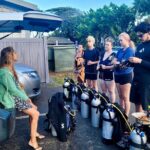
You meet at 1223 Front St in the heart of Lahaina, near Baby Beach and Mala Pier. Parking is available in the shop’s front lot, with free overflow across the street. The practical tip I’d follow: don’t park in front of Snorkel Bob’s.
Once you’re checked in, you’ll do a safety briefing and then take a short walk to the pier. The walk is only about five minutes, so you’re not wasting your vacation time dragging gear around town.
That shore access is a real value for people who hate complicated logistics. You show up, get organized, and you’re in the water with minimal hassle.
The safety briefing: what it signals about how the outing runs
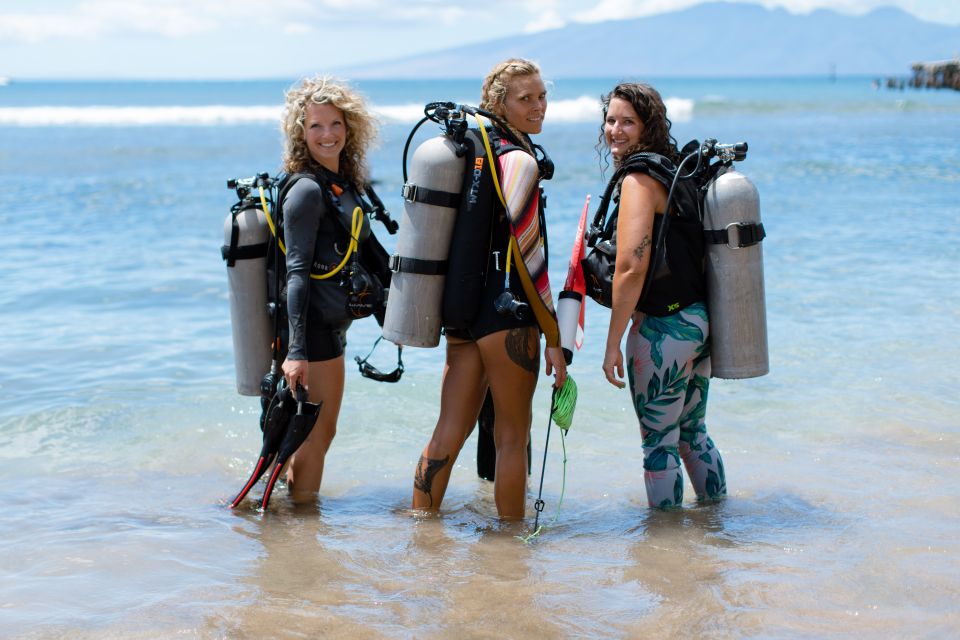
You’ll spend around 20 minutes on safety and setup before you go in. It’s not just paperwork. It’s the part that helps you enjoy the actual water time instead of wrestling with uncertainty.
This outing is for certified divers only, so the briefing likely focuses on your practical readiness: entry/exit routines, buoyancy reminders, and how the guide wants the group to move along the reef.
From the review feedback, the guiding style seems to matter a lot. People describe the operation as smooth and the guide as professional, kind, and supportive. That combination is what keeps a “shore session” from feeling stressful.
Underwater at Turtle Town: turtles, white-tip reef sharks, and Hawaiian endemic fish
Your main underwater swim is around one hour, air permitting. The goal is to explore the reef at and around Mala Wharf while keeping the group together and the experience relaxed.
Here’s what you should look for:
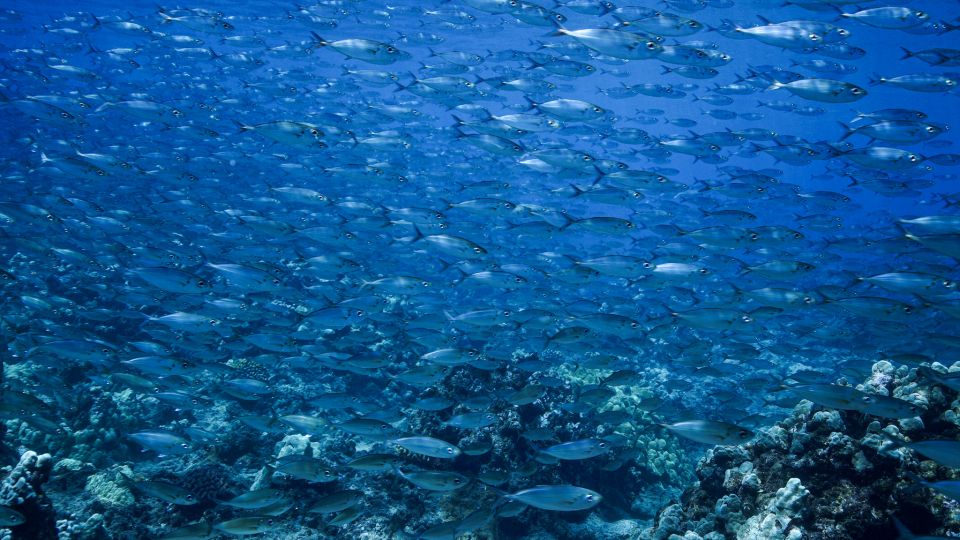
- Turtles: this is a strong turtle area, and you’ll likely have multiple moments to watch them graze or cruise.
- White-tip reef sharks: this is one of the headline species here. Even if they don’t show up instantly, they’re part of the reason people book this site.
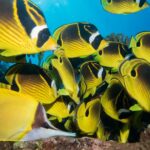
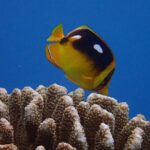
- Hawaiian endemic fish: you’re not just seeing common tropical reef animals. You’re looking at species that belong here.
You may also see other reef residents. The experience description points to octopuses, eels, nudibranchs, and frogfish, plus lots of smaller critters along the reef.
One review specifically called out a good mix of turtles and plenty of fish, along with eels. Another noted seeing a squid too. In other words, the reef seems to offer variety even when conditions shift.
How to spot frogfish, eels, and nudibranchs without burning your whole tank
Mala Wharf rewards divers who slow down a little. The frogfish in particular is described as elusive but popular, which is exactly what you should expect: it’s there, but it won’t chase you.
If you want better odds, focus on these habits:
- Move like you’re photographing, not sprinting. Slow fin work helps you hover closer to reef structure.
- Look for contrast. Many reef critters blend in until your eyes catch a different texture or color edge.
- Let the guide’s directions set your scanning pattern. If the group is positioned well, you’ll see more than if everyone wanders off independently.
Also keep in mind that visibility can vary. One diver noted great visibility, while another said conditions weren’t the best but still produced turtles and other wildlife. Translation for you: even if the water isn’t crystal clear, the reef life can still be worth it—you just need patience.

Tank size and timing: what “up to one hour” really means
Unless you request something different, shore sessions are conducted on 80s (standard size tanks). That detail matters because it shapes your “realistic” time underwater.
Expect close to an hour when air planning goes well, then adjust based on your breathing rate and how much you hover watching animals. If you tend to fin hard or cruise long distances, your “up to” time can shrink. If you’re calm and controlled, you’ll likely get closer to the full window.
This is one reason I like shore sites for experienced divers. You spend more of your energy on the reef and less on long travel.
Small group pace: what a max of 4 divers changes
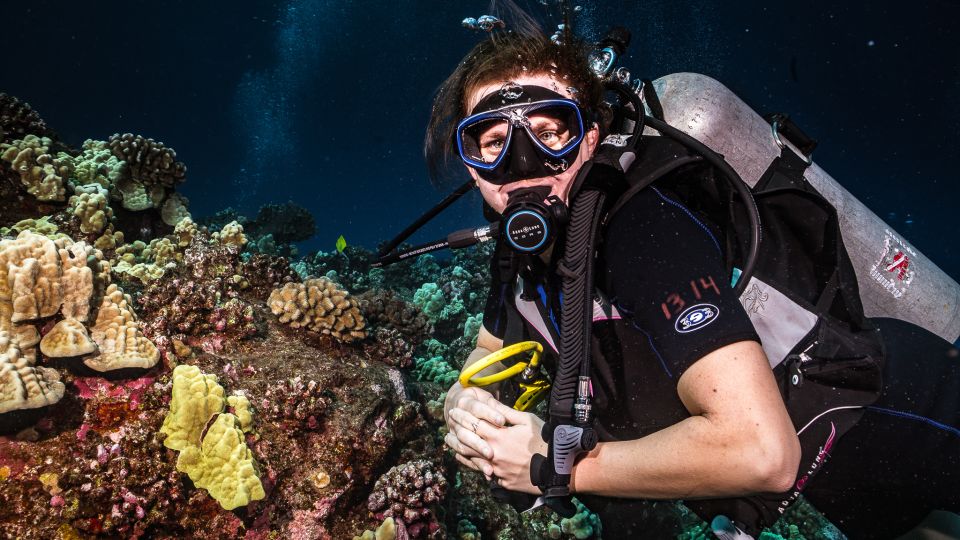
The group size is limited to 4 participants, and private sessions may be an option. That small cap is more than a comfort perk. It affects how the guide can work with you in the water.
With fewer divers, you’re more likely to:
- keep a steady pace without feeling rushed
- get feedback on buoyancy and positioning
- stop and search when something interesting shows up
In the reviews, people consistently praise the guide’s ability to keep things smooth and to help divers feel safe and supported. That matters most when you’re close to wildlife and reef structure, not just cruising open water.
If you’re the kind of diver who likes a bit of guidance—and also wants time to actually see things—this setup fits well.
Price and value: why $128 can make sense for this reef
At $128 per person, you’re paying for a guided shore scuba experience with included equipment. The listing-style facts are simple: use of SCUBA equipment and an up to one-hour underwater window at Mala Wharf.
What makes the price feel reasonable is the combo:
- Short on-land time (briefing, then quick walk) means you’re not paying for a long transfer day.
- Gear included saves rental hassle and last-minute decision-making.
- Small group size improves attention and reduces the chaos factor you sometimes get on larger boats.
It’s not a bargain for every diver. If you already have gear and you’re comfortable booking independent charters, you might find cheaper options. But if you value a guided plan, a known reef site, and the chance to see turtles and reef sharks, the $128 price is easier to justify.
Conditions and reality checks: weather can steer the plan
This experience requires good weather. If it’s canceled due to poor weather, you’ll be offered another date or a full refund. There’s also a minimum number of travelers requirement, so departures can depend on the headcount.
Water conditions can also influence how the reef feels on the day. One diver described visibility as great. Another said conditions weren’t the greatest but still ended up seeing turtles and other marine life.
So go into it with the mindset that you’re booking a site with strong odds, not a guarantee of perfect clarity. Your job is to be ready to look carefully and to follow the guide’s movement plan.
Who this shore scuba session is best for
This isn’t for first-timers. It’s for certified divers, and you’ll need your certification card. You also must have dived in the last 2 years, which helps ensure you’re current and comfortable.
You’ll also need to be able to carry your own scuba gear in and out of the water. That’s a physical requirement that can matter more than people expect, especially if you’re hauling tanks and equipment with limited mobility.
Not suitable for certain health or mobility situations: the info lists restrictions around back problems, heart problems, pregnancy, wheelchair users, non-swimmers, and people with pre-existing medical conditions. Minimum age is 10.
If you’re a generally healthy, active diver who’s current on skills and enjoys wildlife-watching, this is a strong choice.
Should you book this shore scuba session?
Yes, if you want a Maui reef experience that’s practical and animal-focused, and you’re comfortable being a certified diver on a small group. Mala Wharf is built for exactly what people describe as the highlight: turtles, reef fish, and the possibility of white-tip reef sharks, with extra bonus critters like frogfish, eels, octopus, and nudibranchs.
I’d skip it if you’re not current on your diving skills, don’t want to carry your gear, or you’re chasing a trip that you can treat like a casual activity. This is a real scuba session. It rewards preparation.
If you’re ready for that and you like reef life over scenic sightseeing, this one is easy to recommend.
FAQ
Do I need to be a certified diver?
Yes. This is for certified divers only, and you must bring your certification card. You also need to have dived in the last 2 years.
How long will I be in the water?
You’ll have up to a 1-hour scuba time at Mala Wharf, air permitting.
What’s included in the price?
The price includes up to 1-hour use of SCUBA equipment and the guided scuba session at Mala Wharf.
How big is the group?
It’s a small group limited to 4 participants. Private sessions may also be available.
Where do we meet, and is parking available?
Meet at 1223 Front St in Lahaina. There is parking in the shop’s front lot and free overflow parking across the street; do not park in front of Snorkel Bob’s.
What animals can I hope to see?
The experience focuses on turtles and white tip reef sharks at Mala Wharf, with Hawaiian endemic fish. You may also spot octopuses, eels, nudibranchs, and frogfish.
What happens if weather is bad?
The experience requires good weather. If it’s canceled due to poor weather, you’ll be offered a different date or a full refund.