REVIEW · KIHEI
Maui: Surfing Lesson for everyone ; pure fun!
Book on GetYourGuide →Operated by Surf Shack Maui · Bookable on GetYourGuide
First wave nerves turn into smiles fast. Surf Shack Maui pairs a focused land lesson with hands-on, in-water guidance, so beginners can start figuring out balance and pop-up timing quickly. I also like the small group setup (up to 6), because you’re not lost in the background while others get turns.
The main drawback: this experience isn’t a fit for everyone. It’s not suitable for non-swimmers and it also isn’t recommended if you have back problems, plus kids ages 5–8 need to book private lessons for safety.
In This Review
- Key things you’ll notice right away
- Maui Surf Lesson for Everyone: What $99 Actually Buys
- Where to Meet: Kalama Park Parking Spot #5 (and that yellow-nose van)
- The 2-Hour Flow: Land Basics, Then Guided Turns
- Instructor Style That Helps Beginners Learn Faster
- Gear and Comfort: Rash Guard, Booties, and Boards That Fit
- Waves, Timing, and Your Chance to Stand Up
- Who Should Book: Families, Beginners, and the Not-So-Great Fit
- Value Check: Is a $99, 2-Hour Lesson Worth It in Maui?
- Practical Tips Before You Go (So You Enjoy More and Stress Less)
- What About Photos, Gratuity, and the Stuff Not Included?
- Should You Book Surf Shack Maui?
- FAQ
- How much does the Maui surf lesson cost?
- How long is the surfing lesson?
- Where do we meet for the lesson?
- How many people are in each group?
- What’s included in the price?
- What should I bring?
- Is this lesson for beginners?
- Is it safe for non-swimmers?
- Are there any age-specific rules for kids?
- Can I cancel or pay later?
Key things you’ll notice right away
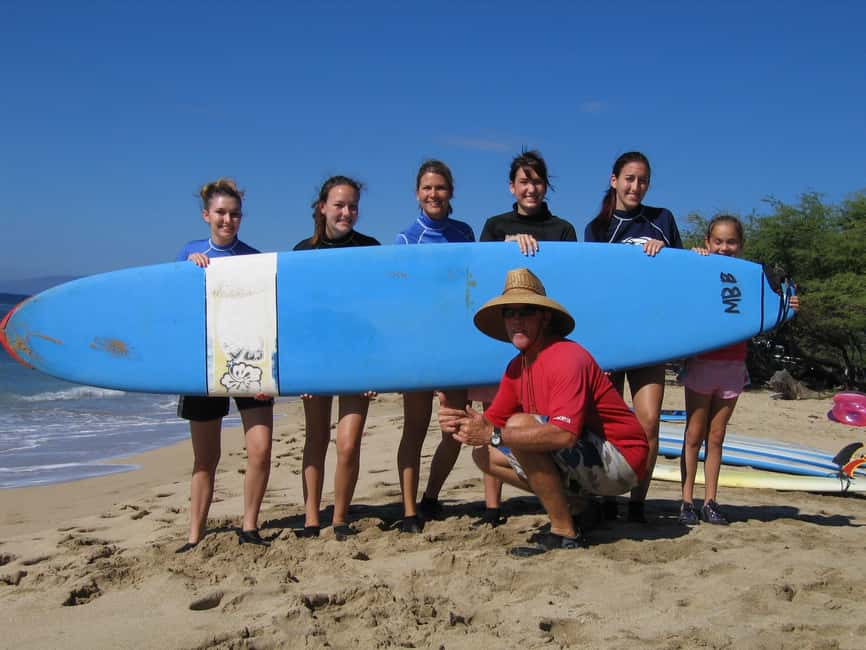
- Small group coaching (max 6) means more individual feedback while you practice
- Land lesson first helps you understand what to do before you meet the waves
- Protected beginner water areas keep things safer and more manageable for first-timers
- Patient, adaptable instructors focus on technique changes that actually work for your body (Mikey helped one rider by having him start from kneeling)
- All the key gear included (board, rash guard, booties) so you can show up and go
- Instructor support even when waves are imperfect so you still leave with progress
Maui Surf Lesson for Everyone: What $99 Actually Buys
Let’s talk value, because surf lessons can feel expensive until you see what’s included. At Surf Shack Maui, the $99 price covers the basics that usually slow people down: a professional instructor, a surfboard rental, and safety clothing in the form of a rash guard plus booties. You also get both a land lesson and in-water guidance, which matters for beginners because you learn the movement once on land and then apply it immediately in the surf.
This also isn’t a sit-and-watch format. The setup is designed for hands-on reps. That’s where the real worth is: more chances to try, more chances to correct mistakes, and more chances to stand up—at least for at least a couple of moments you’ll want to remember.
One more quiet value point: the instructors are certified in water safety and first aid. That doesn’t sound exciting, but it’s the kind of detail that helps you relax. When you’re relaxed, you take instruction better, and your chances go up.
You can also read our reviews of more tours and experiences in Kihei

Where to Meet: Kalama Park Parking Spot #5 (and that yellow-nose van)
You’ll meet in Kalama Park parking lot, in parking spot #5. Check in with the team there, and look for their van with the bright yellow nose. This is one of those details that can save you time and stress, especially if you’re arriving mid-day with hungry kids or tired legs.
Plan to arrive about 15 minutes early. It’s not just for paperwork. With a lesson that runs only 2 hours total, that early buffer keeps you from feeling rushed before you even start learning.
Also: transportation isn’t included. So you’ll want your own plan for getting there—ride-share, rental car, taxi, whatever works for your Maui rhythm.
The 2-Hour Flow: Land Basics, Then Guided Turns
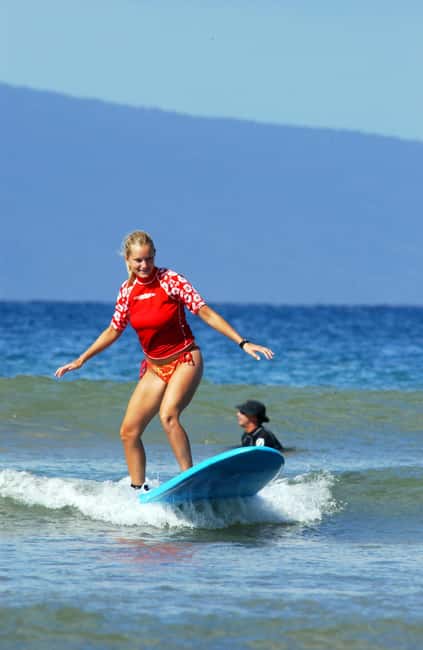
This lesson is built around a simple idea: teach the motions in a controlled setting, then bring you into the ocean at the right time. You start with a land lesson designed to get your body and brain ready. Expect a step-by-step approach that focuses on the fundamentals you need to actually get your weight moving the right way.
Then comes the in-water part, with real-time coaching. The instructors don’t just point. They help you correct. In one great example, a coach named Mikey worked with a rider who had an injured pectoral muscle and had trouble pushing up from lying down. Instead of forcing the same movement, Mikey tried alternatives and had the rider start from a kneeling position, which made the pop-up mechanic easier.
That’s what you want from a beginner surf coach: someone who adapts the technique to the student in front of them.
The water is also described as protected for beginners. Translation: you should feel like you’re being guided into conditions that reduce chaos, so you can focus on standing up and steering rather than just surviving the first few minutes.
Instructor Style That Helps Beginners Learn Faster
Good surf instruction feels calm and specific. That’s exactly what stands out here. In the feedback, the coaching is described as kind, patient, and encouraging, with instructors who actively correct small errors.
Small errors matter more than people think. A tiny misalignment in where you place your feet or how you push can be the difference between sliding and standing. With a small group limit of 6 participants, you’re more likely to get that kind of targeted correction while it still matters.
You’ll also notice something else: instructors seem willing to make the best of the day’s wave conditions. On days when the surf isn’t behaving ideally, the focus shifts to process. The goal stays the same—help you get reps, learn positioning, and build confidence—so your lesson doesn’t feel wasted.
And if you’re worried about the emotional side of first-time surfing, that’s a real thing. One of the strongest themes is how coaches keep morale up. Beginners are more willing to try again when the instructor makes it feel doable.
Gear and Comfort: Rash Guard, Booties, and Boards That Fit
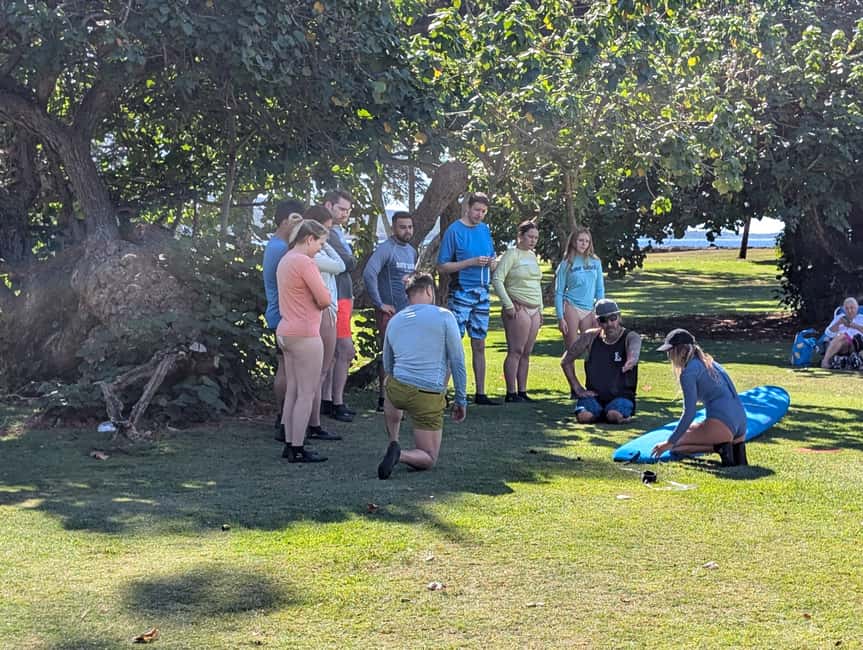
One of the best parts for me as a practical traveler is showing up with minimal stuff and getting the essentials handled. Here, all the needed equipment is provided: surfboard rental, rash guard and booties (reef shoes), plus what you need to get onto the water safely.
You still need to bring the human basics:
- Swimwear
- Towel
- Sunscreen
That towel detail is important. Towel isn’t listed as included, so pack it. Sunscreen is also on you, and on Maui that’s not just a beach suggestion—it’s smart. If you burn, your next attempt (or your next day) can suffer.
The rash guard and booties do more than keep you comfortable. They help you move with less distraction from sun or skin irritation, and booties can protect your feet from rougher contact. For first-timers, less worry means more focus on the actual surfing moves.






Waves, Timing, and Your Chance to Stand Up
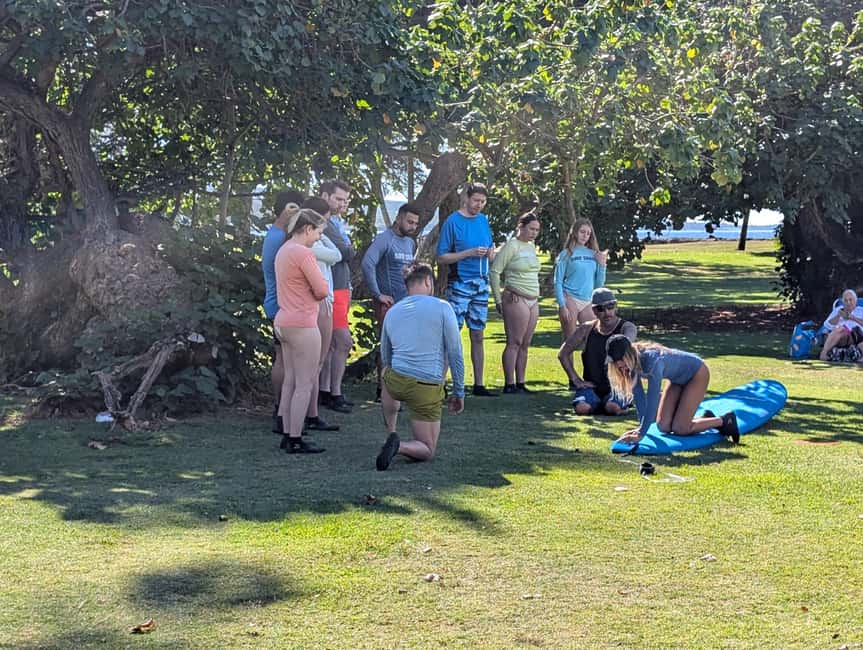
Surf lessons always come down to the day’s ocean conditions. Sometimes the waves cooperate. Sometimes they don’t. The difference with a good class is what happens when waves aren’t ideal.
In feedback, there’s a clear pattern: the instructor works with what’s there. That could mean adjusting what you practice or how you manage turns. The key is that you still get instruction and still get in the water rather than watching from shore while the lesson fades.
Because this is for beginners and happens in protected areas, you’re more likely to experience manageable wave moments. And the lesson structure supports quick learning. The land warm-up helps your first water attempts feel less like a surprise test.
If your goal is standing up fast, this lesson is built for that mindset, but with realistic framing: you’ll learn the mechanics first, then your body will figure out the rest with coaching cues.
Who Should Book: Families, Beginners, and the Not-So-Great Fit
This is marketed as a surfing adventure for everyone—kids, adults, and even grandparents. That broad range is backed by the beginner-friendly design and the land-to-water method.
Where it gets specific is in safety. Two groups should think twice:
- Non-swimmers: not suitable
- People with back problems: not suitable
Kids have another important detail. For children ages 5–8, you’re asked to book a private lesson. That’s for safety and to help the child get the best experience.
So who is this best for?
- Families who want an activity that feels active and memorable for more than one age group
- First-timers who don’t want to feel overwhelmed or coached only from the sidelines
- People who want equipment handled and coaching that fixes real technique
If you’re traveling with mixed experience levels, the small group format helps because instructors can tailor guidance as needed.
Value Check: Is a $99, 2-Hour Lesson Worth It in Maui?
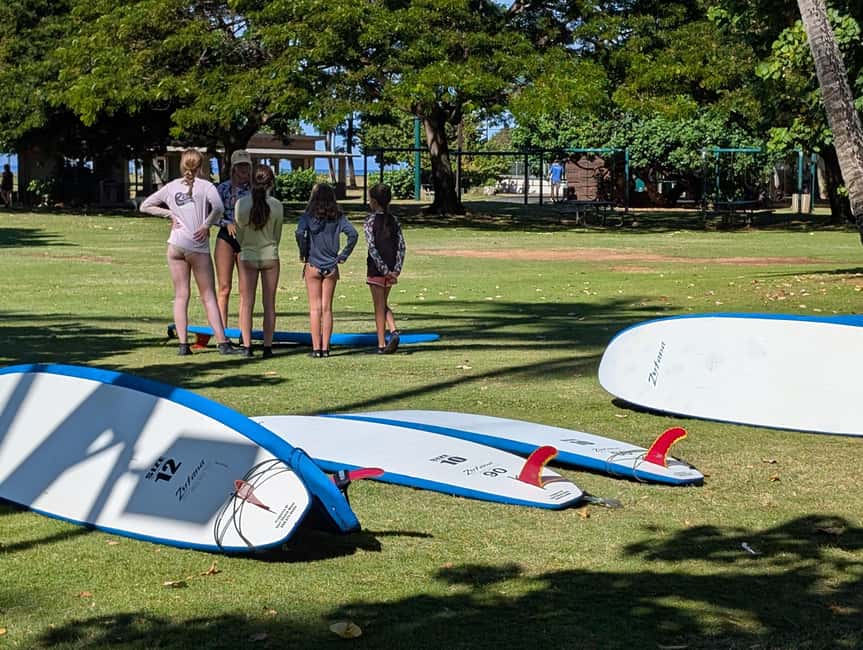
For $99 per person, you’re paying for more than time in the water. You’re paying for:
- A qualified instructor
- Safety-focused training
- A land lesson plus in-water coaching
- Surfboard rental
- Rash guard and booties
For many people, the gear is the hidden cost. Here it’s included, and that matters because it reduces friction. You don’t have to hunt down a rental board or decide which rash guard size to trust on short notice. You just show up with swimwear and move.
The small group size also supports value. When only a few people are in the lesson, you’re more likely to get personal attention. That’s harder to guarantee in bigger groups where instructors have to spread time across more bodies.
Photos are available as an add-on on site. That can be worth it if you’re booking this for a family milestone or you want proof that you really did it.
Practical Tips Before You Go (So You Enjoy More and Stress Less)
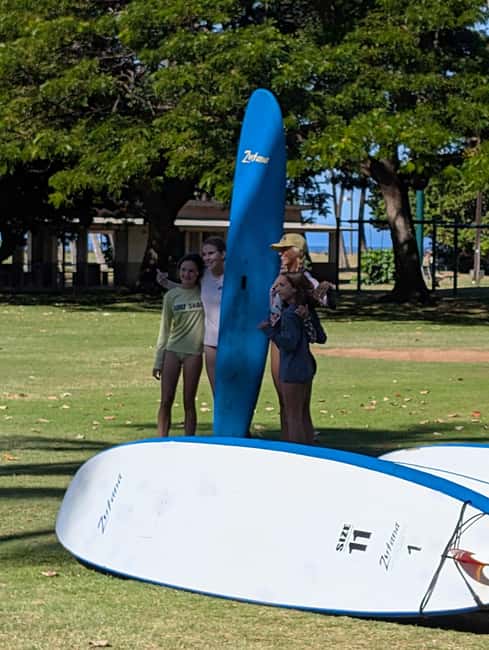
A few simple choices can make your lesson smoother:
1) Arrive early
Give yourself time to find parking spot #5, check in, and get dressed without a time crunch. You start learning better when you’re not rushing.
2) Wear what you’ll move in
Swimwear is required. Pick something you feel comfortable moving in while you paddle and pop up.
3) Bring the essentials you’re responsible for
Towel and sunscreen are on your list. If you forget sunscreen, Maui can remind you fast.
4) Choose the right format for young kids
If you have a child ages 5–8, plan for private instead of group. That instruction is there for a reason.
5) Be honest about comfort in the water
Non-swimmers aren’t suitable, so don’t treat that as flexible. If you’re not comfortable swimming, pick a different Maui activity that matches your comfort level.
What About Photos, Gratuity, and the Stuff Not Included?
Photos can be purchased as an add-on on site. If you want the best chance of getting a photo, ask about timing with the team when you check in, so you know when you’ll likely be photographed.
Gratuity isn’t included. That’s common for service-based activities, but it’s worth planning for. If your instructor helps you progress in a real way, you’ll likely feel good about tipping.
One more small note: towel isn’t included, but photos are add-on. So your only “extra” costs are really about convenience and capturing the moment, not about missing core gear.
Should You Book Surf Shack Maui?
If you want a beginner-friendly Maui surfing lesson where the coaching is patient and the format is built for progress, I think this is a strong choice. The combination of a land lesson, small group limits, protected beginner conditions, and included gear makes it feel like a well-built package for first-timers.
Book it if:
- You’re a family where multiple ages want to try surfing
- You want technique help that actually changes what you do
- You like the idea of learning in a calm, coached environment
Skip it if:
- You can’t swim comfortably
- You have back problems
- You’re traveling with a child age 5–8 who needs the private setup instead of group
If you’re on your first few days in Maui, this is also the kind of activity that can turn into a repeat. The sooner you catch the surfing bug, the more likely you’ll fit in a second lesson or a follow-up session later in your trip.
FAQ
How much does the Maui surf lesson cost?
It costs $99 per person.
How long is the surfing lesson?
The lesson lasts 2 hours.
Where do we meet for the lesson?
Meet in parking spot #5 in the Kalama Park parking lot. Check in with the team and look for the van with the bright yellow nose.
How many people are in each group?
The group is limited to 6 participants.
What’s included in the price?
Included are a surfing instructor, surfboard rental, rash guard and booties, plus a land lesson and in-water guidance.
What should I bring?
Bring swimwear, a towel, and sunscreen.
Is this lesson for beginners?
Yes. It’s suitable for beginners and for those who haven’t surfed in a long time.
Is it safe for non-swimmers?
No, it is not suitable for non-swimmers.
Are there any age-specific rules for kids?
Kids ages 5–8 should book a private lesson for safety and to ensure they have a great experience.
Can I cancel or pay later?
You can cancel up to 24 hours in advance for a full refund. You can also reserve now and pay later, with no payment required today.