REVIEW · OAHU
Oahu: Beginner-Friendly Waikiki Beach Surfing Lesson
Book on GetYourGuide →Operated by Surfer Girl Academy, LLC · Bookable on GetYourGuide
Waikiki makes your first ride feel possible. This beginner surf lesson has you in Waikiki Beach with lifeguard-certified instructors watching every move. It’s a rare mix of iconic scenery and real-world coaching, not just a casual paddle and hope.
I especially like the teaching setup: a 20–30-minute land instruction that actually covers ocean safety and the stand-up mechanics, then a supervised push into the water. It’s also a small group (limited to 8), so you’re not just a number in the lineup.
One consideration: the session doesn’t include the photo/video download. The guides capture GoPro-style shots that you can buy afterward, and that can add cost if you want every frame. Also, the meeting spot is at a small beach area, so give yourself a little extra time to find Surfer Girl Academy.
In This Review
- Key things that make this Waikiki surf lesson worth your time
- Why Waikiki surf lessons feel more doable than you expect
- Finding Surfer Girl Academy and getting ready fast
- The 20–30 minute land class: where you earn your wave time
- What the ~70 minutes in the water actually feels like
- Beginner-wave strategy: standing up, staying safe, and learning the wave rhythm
- The surf setup: why reef shoes, leash, and rash guard matter
- Small group coaching: why it speeds up learning
- Price and value: what $125 buys, and what costs extra
- Who should book this Waikiki surfing lesson
- Quick checklist before you go (so you don’t lose wave time)
- Should you book this Waikiki beginner surf lesson?
Key things that make this Waikiki surf lesson worth your time
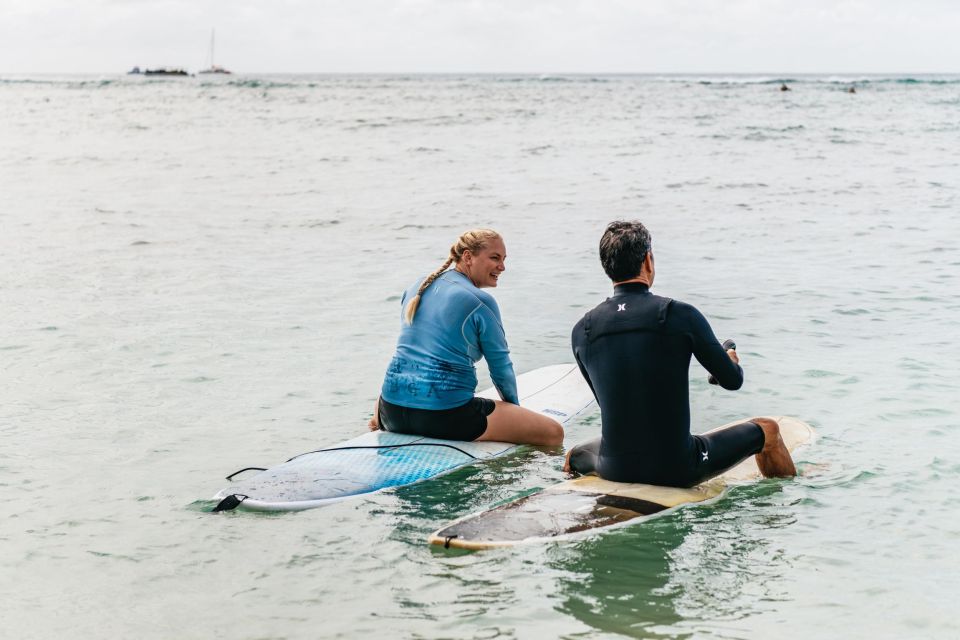
- One instructor for every four participants keeps corrections coming fast
- 20–30 minutes on land helps you understand standing up before you’re in the impact zone
- ~70 minutes supervised in the water gives you real chances to catch waves
- Beginner-friendly wave choice means you spend time riding, not only falling
- Gear is included: surfboard, leash, Hurley rash guard, reef shoes, and an optional wetsuit
- Photos/videos are optional add-ons, often a big part of the fun for first-timers
Why Waikiki surf lessons feel more doable than you expect
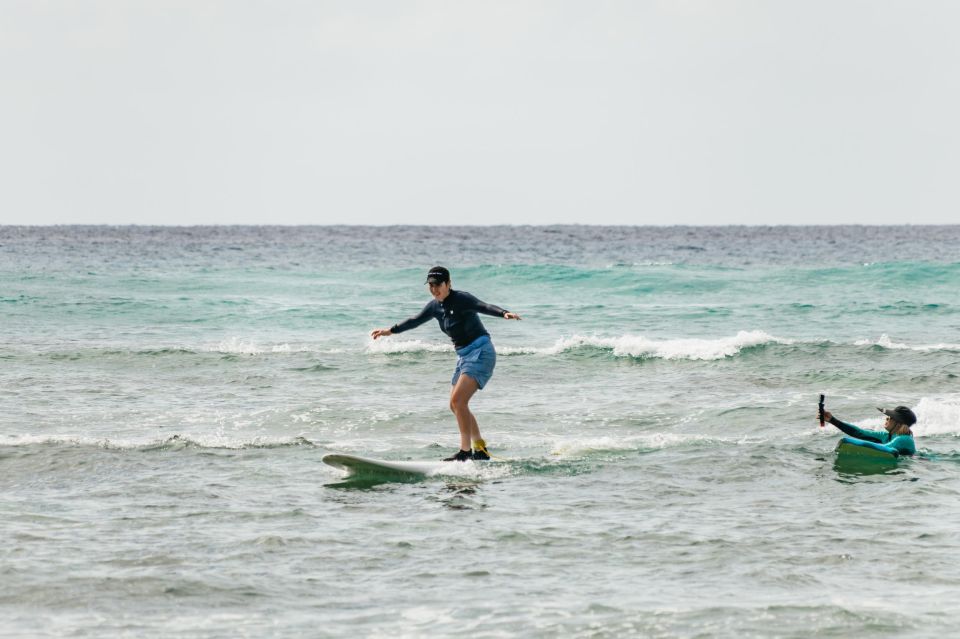
Oahu’s Waikiki gets famous for a reason. Even if you’ve never surfed, the view alone makes you want to try. But what matters for your actual learning is how the lesson is structured once you’re on the sand. This one is built for beginners and anyone who just wants a confidence boost, with lifeguard-certified supervision and a tight instructor-to-student ratio.
The big win here is that you’re not thrown into the deep end without a plan. The coaches start by teaching you what to do when you’re faced with waves—where to stand, how to handle the board, and how to move when the timing is off. That turns Waikiki from a pressure cooker into a training ground.
And yes, you’re still surfing Hawaii’s well-known waves. You’re just doing it in a controlled way, in an uncrowded part of the beach where you’re more likely to get repeated tries. That repeat practice is the difference between feeling clumsy for 90 minutes and actually standing up with the board under your feet.
You can also read our reviews of more tours and experiences in Oahu



Finding Surfer Girl Academy and getting ready fast

You meet at Surfer Girl Academy, right by the ocean. Parking by the ocean is free, which is one less thing to fight with in Waikiki traffic and tight lots.
Once you arrive, the lesson moves quickly into gear-up mode. You’ll put on what they provide and get set up with what you bring. Included gear covers the essentials that first-timers sometimes overlook:
- a surfboard
- a leash (so the board doesn’t become your escape plan)
- a Hurley rash guard
- reef shoes (huge for slippery sand and surfzone footing)
- a wetsuit (optional) depending on conditions
- a sticker for the souvenir crowd
Then comes the simple prep checklist you should not skip: swimwear, towel, sunscreen, water, and cash. You’ll also want change of clothes because getting sandy and wet is kind of the whole point.
One small practical note from real experience: the beach area can be tricky to identify at first, especially if you’re arriving with only a map. If you’re unsure, it helps to contact the company ahead of time or right when you land at the meeting point so you’re not wasting lesson time guessing.
The 20–30 minute land class: where you earn your wave time
The lesson starts with 20–30 minutes of land instruction. This is the part that feels almost too short—until you realize it’s there to prevent the most common first-timer mistakes.
On land, you’ll go over:
- basics of surfing technique, especially standing up
- general ocean safety
- guidance on how to position yourself on the board and how to start moving toward success
That matters because in the water, you don’t have time to think your way out of a bad posture. Good land coaching helps you show up to the waves already knowing what your body needs to do when it’s cold, windy, and your balance is still learning the language of a surfboard.
You’ll also understand what your instructors are looking for. When a coach can correct your foot placement or your stance quickly, you don’t just hear tips—you apply them immediately on the next wave.
What the ~70 minutes in the water actually feels like
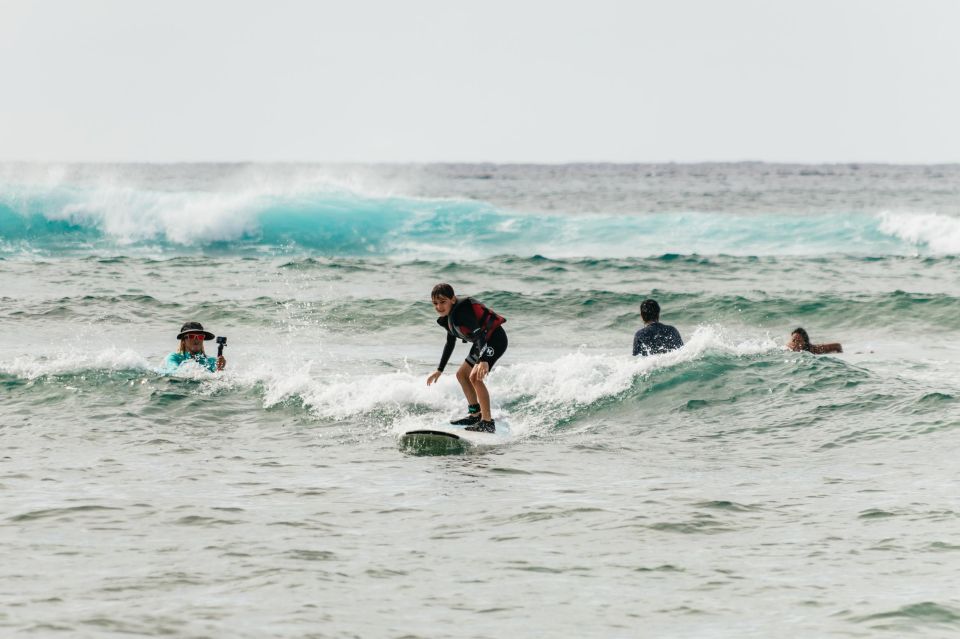
After land practice, you head into the water for roughly 70 minutes of supervised surfing. This is where the lesson earns its keep.
The coaching style is hands-on without being chaotic. You’ll have one instructor for every four participants, which keeps things organized even when multiple people are trying to catch the same set. In smaller groups, instructors can spot patterns fast—like whether you’re leaning too far forward, turning the board too early, or losing your stance the second the wave starts lifting you.
A few reviews highlight how attentive the coaching feels in practice—especially the kind of corrections that help you feel in control. You also get support in choosing waves and getting positioned, which is key for beginners. If you’re in the wrong spot, you spend your effort paddling instead of riding.
You may also notice the experience is designed for momentum. Many people report getting to their first real attempts fairly quickly, and the structure keeps you moving toward the goal rather than waiting forever for your turn.
Beginner-wave strategy: standing up, staying safe, and learning the wave rhythm
Surfing is mostly timing and balance. The coaches teach you how to work with wave energy instead of fighting it.
From the instruction focus, here’s what you should expect you’ll learn in the water:
- how to paddle effectively so you’re not always arriving late
- how to position the board for a takeoff you can actually manage
- how to stand in a stable stance long enough to ride, not just fall forward
- how to handle the moment when a wave changes shape under you
The instructors also guide you on where to go in the water. That’s more important than it sounds. In Waikiki, wave conditions can change quickly, and beginner success depends on being matched with the right energy level. In reviews, people specifically call out that the waves are sized well for beginners. That means you’ll spend more of your lesson riding and less time getting pounded.
Also, don’t be surprised if you see marine life. One reviewer mentions surfing while also spotting turtles. It’s not a guarantee, but it’s a real reminder that you’re in the ocean, not a pool.
And yes, you will fall. Early on, most first-timers do. The value is that falls are treated like part of the curriculum, not a failure.






The surf setup: why reef shoes, leash, and rash guard matter
The gear they provide makes a difference in comfort and safety, especially for first-timers.
Reef shoes help protect your feet on rougher sand and from slippery spots during walk-in and walk-out. Even if the beach looks smooth, surf zones are rarely perfect for bare feet.
The leash is a big one. It keeps your board attached if you wipe out, which reduces the chaos factor and helps you get back to the line faster. For beginners, that peace of mind matters.
The Hurley rash guard keeps you comfortable while also protecting your skin. You’re rubbing against the board, getting wiped by saltwater, and working with a wetsuit if conditions call for it—so having the right base layer helps.
If you’re sensitive to cold water, use the wetsuit option. The lesson is short enough that you don’t want to spend your best ride time shivering.
Small group coaching: why it speeds up learning
This lesson caps at 8 participants, and the teaching ratio is built around quick feedback. In practical terms, that means:
- you’re not stuck waiting for an instructor to notice you
- corrections happen while you’re still fresh
- you get more repeat attempts in the same time window
Some people mention their groups were very small—sometimes only a few students with two guides—which can make the experience feel more personal and efficient. Even with a full group, the structure aims for constant supervision rather than passive watching.
One detail worth noting: there’s a system for non-surfers. A review mentions chairs set out for bystanders who aren’t in the water. That’s smart if you’re bringing friends or family who want to watch without standing around for hours.
Price and value: what $125 buys, and what costs extra
At $125 per person for a 2-hour lesson, you’re paying for instruction, equipment, and real time in the water with supervision—not just a board rental.
Here’s how the value shakes out:
- You get surfboard + leash + rash guard + reef shoes, which saves you from sourcing basic gear in Waikiki.
- You get instruction including ocean safety and the mechanics of standing up.
- You get enough water time (about 70 minutes of supervised surfing) to actually learn, not just get a taste.
The extra cost to plan for is photos/videos. You can buy the captured content afterward, and multiple reviews mention footage prices around $45. If you’re the type who wants proof you really did it—especially on your first day—budget for it. If you’re trying to keep costs tight, you can skip the download and still leave with the skill and memories.
So is it worth $125? For beginners who want a structured first session with gear and safety support, the math works. The cost makes sense because the lesson time is the commodity. You’re paying for time on the waves plus coaching that increases your odds of standing up.
Who should book this Waikiki surfing lesson
This is a good fit if you:
- are surfing for the first time
- want a confidence-building lesson without overthinking it
- like hands-on coaching and tight supervision
- want a beginner-friendly beach setup in a top-location destination
It’s also ideal if you’re traveling with limited time. Two hours is short enough to squeeze into a Waikiki schedule while still giving you meaningful learning time.
A couple of groups should double-check fit. The activity is not suitable for children under 12, pregnant women, or wheelchair users, based on the provided info. If you fall into any of those categories, you’ll want a different option that matches your needs.
Quick checklist before you go (so you don’t lose wave time)
Bring what the lesson asks for: swimwear, change of clothes, towel, sunscreen, water, and cash.
Wear or plan for:
- secure swimwear that won’t shift during paddling
- sunglasses if you like them, but expect saltwater
- a practical way to carry personal items while you’re in the water
Then show up ready to move. Waikiki time is like wave sets: it flows whether you’re ready or not. The smoother you are at getting gear on and getting into the lesson rhythm, the faster you’ll feel the progress.
Should you book this Waikiki beginner surf lesson?
If your goal is a first-time Waikiki surf session with coaching that focuses on fundamentals and safety, I’d say book it. The best reason: the lesson time is structured for learning. You get land instruction, then a long chunk of supervised water time, and the group size keeps feedback coming.
I’d only hesitate if you hate the idea of optional photo/video add-ons or if you’re looking for a long, deep, advanced training program. This is beginner-friendly coaching, not a multi-day expedition.
If you want the classic Oahu surf experience without guessing your way through it, Surfer Girl Academy’s lesson is one of the most straightforward ways to get on a board and start building real confidence fast.