REVIEW · OAHU
Oahu: Kids Surfing Lesson in Waikiki Beach (up to 12)
Book on GetYourGuide →Operated by Surfer Girl Academy, LLC · Bookable on GetYourGuide
First waves, then proud grins. This 2-hour kids surfing lesson in Waikiki is built for children who want in on the fun without the usual trial-and-error. You get 1-to-1 instruction from patient surf guides, plus you’ll be right there watching the moment your kid figures out how to ride.
What I like most is how the lesson starts on land with beach technique—so the ocean part isn’t chaos. Another big plus: they use a tandem surf approach (holding hands while you both stand up), and instructors like Yuko are quick to adjust when a child hesitates.
One thing to consider is the cost: $204 per person adds up fast if you have multiple kids. Also, the lesson is listed as 2 hours, but some families report it feels closer to about 1 hour 45 minutes, so plan your day with a little flexibility.
In This Review
- Key takeaways before you go
- Waikiki kids surf lesson in 2 hours: the flow of the day
- Gear included on the boardwalk: what you get and what you must bring
- The beach technique part that actually makes ocean time work
- 1-to-1 coaching and the tandem surf moment
- Safety and etiquette: how a “fun lesson” stays controlled
- Open-ocean instruction: what the coaching feels like in the water
- The little extras: sticker, optional photos, and getting a keepsake
- Price and value: is $204 worth it for kids surfing?
- Who this lesson is best for (and who should skip it)
- Practical tips so your child gets the best session
- Should you book this Waikiki kids surf lesson?
- FAQ
- What ages is the surf lesson for?
- How long is the kids surfing lesson in Waikiki?
- What’s included with the lesson?
- Do I need to bring a towel and sunscreen?
- Is water provided?
- Do they offer optional photos or videos?
- What language are the instructors?
- Is this lesson a private group?
- Who should not book this experience?
Key takeaways before you go
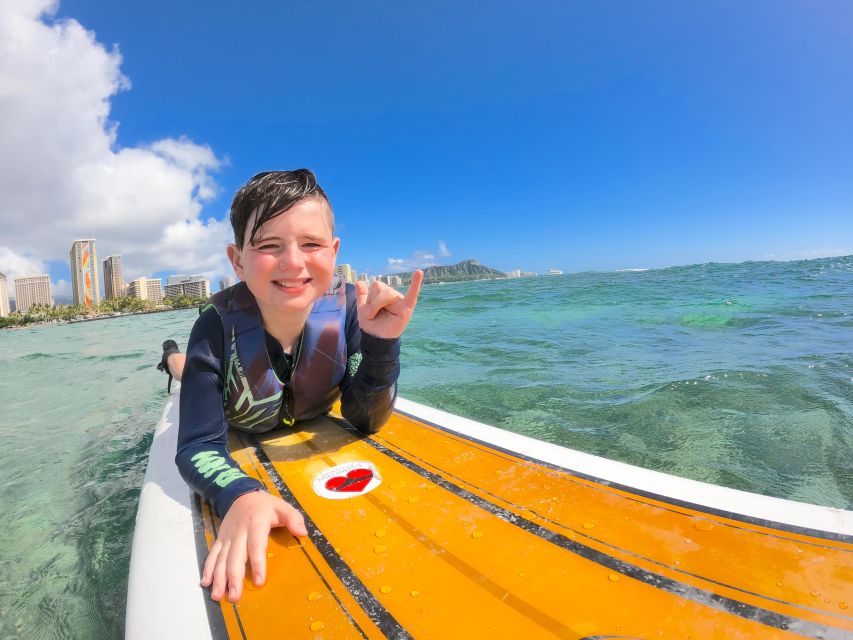
- Tandem starts when kids need confidence so hesitant surfers still get on a board and succeed
- Beach technique first: safety, etiquette, and how to pop up correctly
- You get the ocean time too with more than an hour of open-water instruction
- Included surf gear covers the basics (board, leash, rash guard, reef shoes; wetsuit optional)
- A keepsake + optional photo service helps you remember the big moments
Waikiki kids surf lesson in 2 hours: the flow of the day
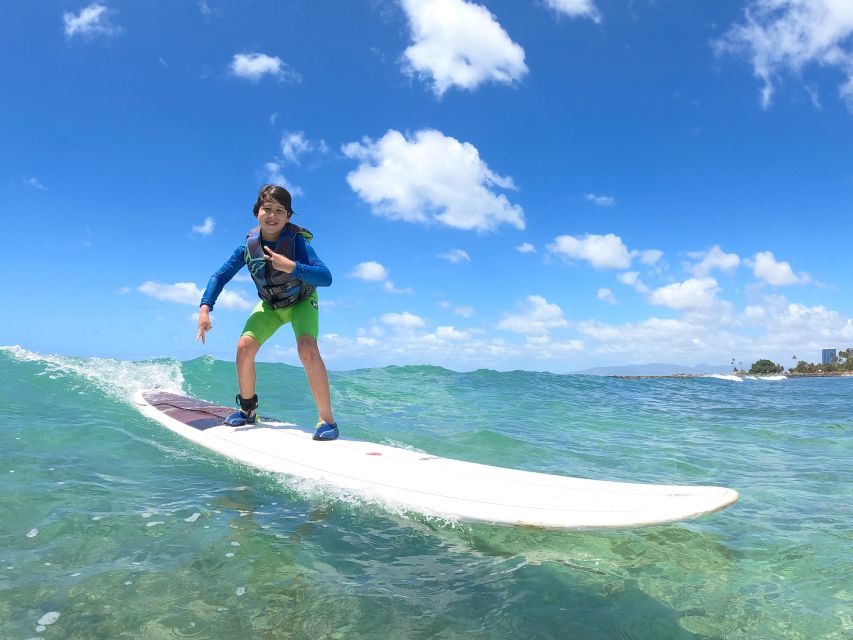
This is a straightforward, kid-friendly surf session designed around one goal: getting your child onto a board safely, with coaching that matches their comfort level. You’re not dropping your kid into a group drill and hoping for the best. Instead, you’ll meet at the location shown on Google Maps, then the instructors take over.
In the first stretch, expect instruction on land. They cover what to do before getting in the water and how to move with a surfboard. After that, they shift into ocean time where the coaching continues. The total lesson is 2 hours, and the plan includes at least 20 minutes of beach technique plus more than an hour in the open ocean.
For families, the biggest value is pacing. Kids don’t just get told what to do. They get repeated, clear corrections. When a child isn’t ready to do everything alone yet, they step in with a tandem setup and keep the child moving forward.
You can also read our reviews of more tours and experiences in Oahu


Gear included on the boardwalk: what you get and what you must bring
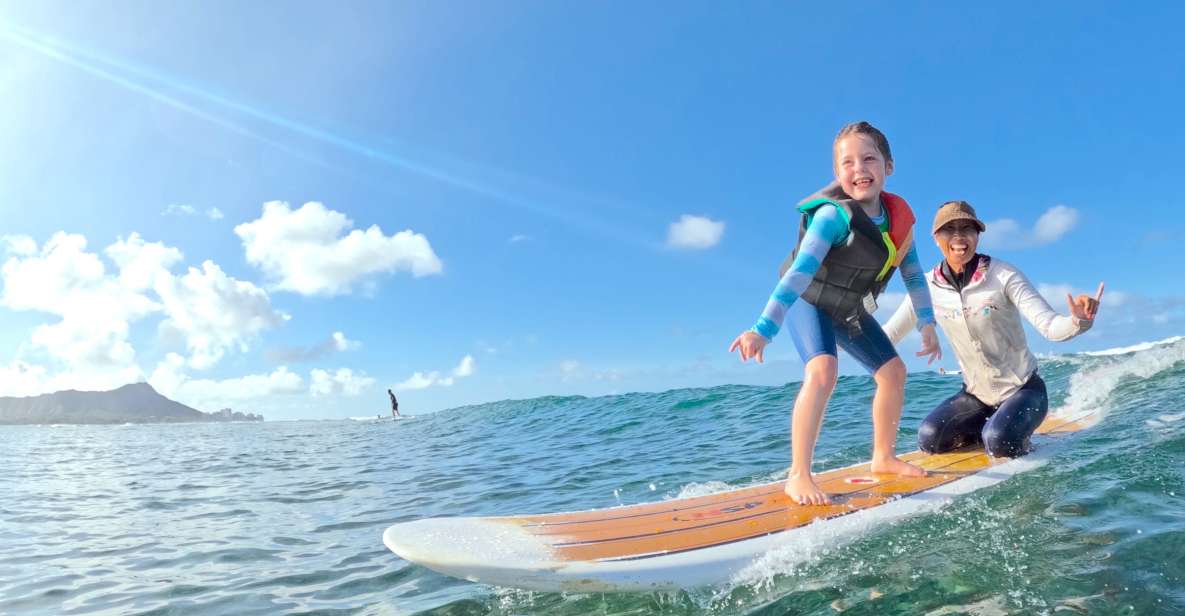
The package is set up so you don’t have to hunt down surf basics on your own. Included gear typically covers the essentials:
- Surfboard
- Leash
- Hurley rash guard
- Reef shoes
- Wetsuits are available as an optional add-on
- An original Surfer Girl Academy sticker
Here’s what you still need to bring, because it’s not included:
- Swimwear
- Beach towel
- Sunscreen
- Water
- Cash (yes, cash is requested)
My practical advice: pack a small bag that makes changing easy right after the lesson. You’ll want something to rinse off with and a comfortable dry layer. Also, put sunscreen on early if your child is sensitive about rushing—once you’re in wetsuit/reef-shoes mode, it’s harder to think clearly.
The beach technique part that actually makes ocean time work
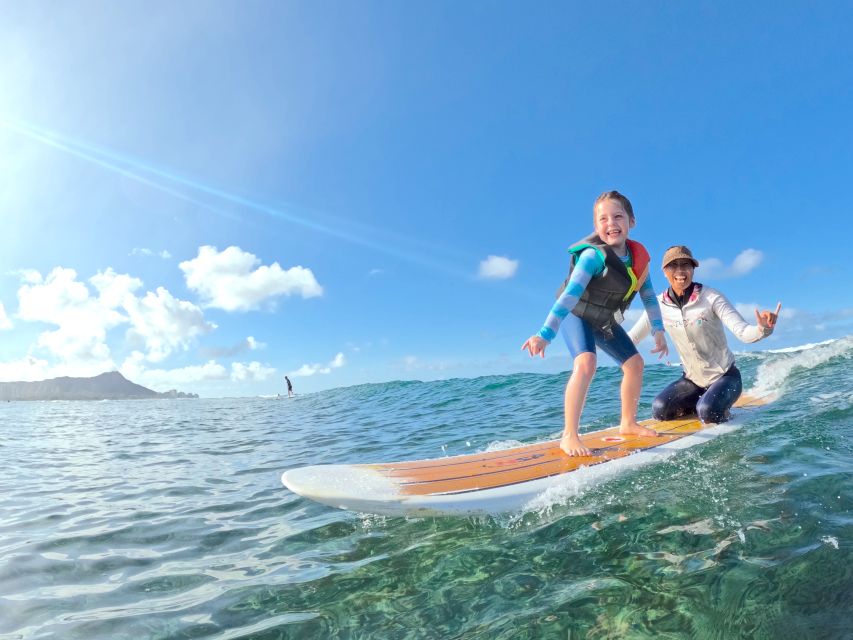
The lesson doesn’t start with paddling and pressure. It begins with beach technique, and that matters for kids. When a child understands how to hold the board, how to position themselves, and how to stand up, the ocean becomes a skill exercise instead of a mystery.
On land, you can expect:
- Safety basics and surf etiquette
- Tips for how to stand up on the surfboard properly
- How to manage the board before and after attempts
This is the section where kids often surprise you. Once they learn what the board wants from them, you can see frustration turn into focus. And instructors are built for repetition. They reset quickly and guide each attempt, rather than treating wipeouts as failure.
One detail that comes up in how instructors work with kids: they check in fast after a child goes down. That kind of quick support helps a nervous beginner stay calm instead of spinning into stress.
1-to-1 coaching and the tandem surf moment
The headline feature here is simple: private-group instruction with guides who focus on your child. That’s not just a comfort perk. It changes outcomes.
If your kid is hesitant, you can expect the instructors to respond, not force. One of the most praised elements is the tandem surf approach—kids and the instructor hold hands to stand up together. The goal is to get that first real success without requiring your child to do everything alone on the first try.
A few useful implications for you:
- If your child is nervous, it’s okay. The lesson is designed to handle that.
- You’re not waiting around while the instructor deals with other kids.
- The coaching keeps shifting based on readiness, so a child can progress at their pace.
The proof shows up in the kind of wins parents describe: kids standing multiple times during the session and finishing proud, not exhausted. Even when a child isn’t fully ready to ride independently, they still get meaningful ocean time.
Safety and etiquette: how a “fun lesson” stays controlled
Kids surf better when the session has rules they can remember. The instructors build in safety and etiquette as part of the early teaching, not as a last-minute lecture.
You’ll get guidance on things like:
- Surfboard awareness and how to handle the board safely
- Ocean-time conduct so kids aren’t guessing
- Practical safety reminders for being in the water and interacting with the surf setup
Also, your child is wearing equipment that helps protect them—rash guard and reef shoes are included, and wetsuits are optional depending on conditions and comfort. Leashes are included too, which is key for beginners who are still learning how to control the board.
A quick note on health: this activity isn’t suitable for pregnant women or wheelchair users. If your child gets motion sick easily, it’s worth telling the instructors right away. There’s at least one case where a child experienced sea sickness and the lesson ended early, with the instructor handling it kindly.






Open-ocean instruction: what the coaching feels like in the water
After the beach portion, your kid moves into open-ocean instruction with more than an hour planned. This is where you’ll see why the “1-to-1” piece matters.
A typical feel of the session:
- The instructor positions your child to try again
- After wipeouts, the guide returns quickly so your child doesn’t stay panicked
- Coaching continues between attempts, so kids don’t just repeat mistakes
You’ll also notice a pattern in the best beginner sessions: they don’t just throw your child into deep water and hope. Instead, they work in a way that builds short wins—getting to standing, then repeating it until it sticks.
If you’re thinking about your own expectations, adjust them. At this age range (4 to 12), standing even a few times is a big deal. The instructors are there to make it happen, not to measure who’s most athletic.
The little extras: sticker, optional photos, and getting a keepsake
This lesson includes a Surfer Girl Academy original gift sticker, which sounds small until you watch kids care about it. It’s a quick way to mark the achievement and take home something tangible.
There’s also an optional pictures service. Some sessions include a photographer in the water, and families describe being thankful they could keep the moments when their child finally stood up. Photos are not listed as automatically included, but the option to add them (and potentially download them) is part of the deal.
If you want the best chance of getting great memories, do two things:
- Arrive with your child already dressed in swimwear (less waiting, more time learning)
- Ask ahead (or check on-site) about how the photo add-on works so you’re not scrambling after.
Price and value: is $204 worth it for kids surfing?
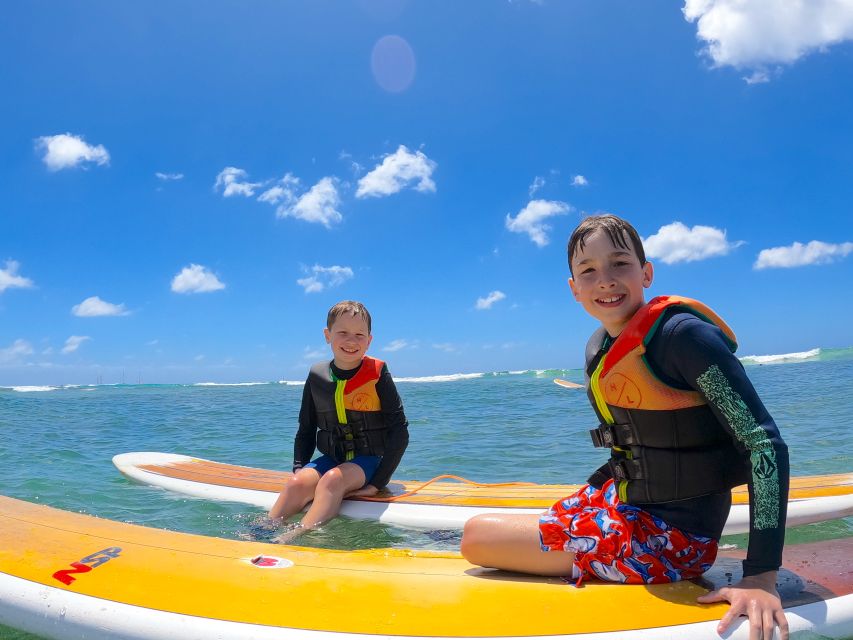
Let’s talk value without fluff.
At $204 per person, this isn’t a budget add-on. The question is what you’re paying for, and here’s the honest breakdown based on what’s included:
- You’re paying for professional instruction designed for kids (not generic surf tourism)
- You get 1-to-1 coaching and tandem support for nervous beginners
- You receive core surf gear: board, leash, rash guard, reef shoes (and a wetsuit if you opt for one)
- You get a keepsake sticker
- You may have access to optional photos/video
The value sweet spot is families who want their child to actually learn and feel safe doing it. If you’re thinking of “fun in the water” only, you might find cheaper options. But if you want your kid to come away with a real skill—standing, riding briefly, and confidence—then the cost starts to make sense.
Also, the private-group nature matters. You’re not paying for a crowded lesson where your child might wait their turn. You’re paying for focused time and faster feedback.
Who this lesson is best for (and who should skip it)
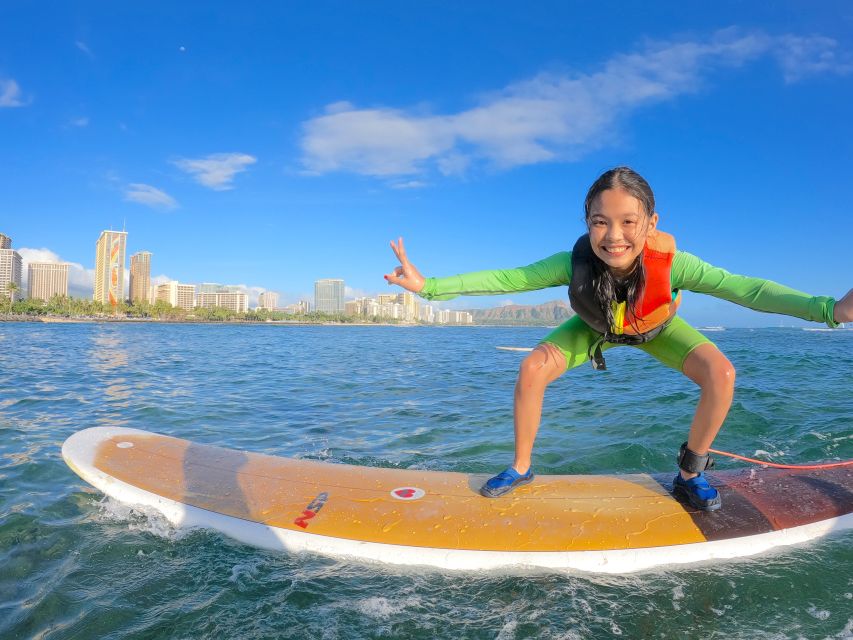
This works best when:
- Your child is ages 4 to 12 and truly wants to try surfing
- Your kid learns best through hands-on coaching and encouragement
- You value safety instruction and clear technique rather than just taking photos
It may not be a fit if:
- Your child has limited mobility concerns that don’t align with the activity’s stated restrictions (this lesson is not suitable for wheelchair users)
- Someone in the group is pregnant (not suitable)
- Your child is likely to struggle with motion sickness and you can’t support them appropriately (tell the team early)
If your child is nervous, you’re still in the right place. The lesson is set up to handle hesitation with tandem instruction and patient pacing.
Practical tips so your child gets the best session
These are the small things that make a surf lesson go smoother:
- Bring the right basics: towel, sunscreen, water, swimwear. The lesson gear is provided, but you still need sun and hydration covered.
- Plan to change clothes quickly right after. A swimsuit works for the session, but kids get cold fast after getting out.
- Set expectations for progress, not perfection. Standing a few times and feeling proud is a real win here.
- If your child has sensory issues, tell the instructors early. Being in the ocean is a big input, so getting adjustments fast helps.
And if your child has moments of fear: don’t read it as failure. This lesson is designed for the “first try” stage, and the tandem approach exists for exactly that.
Should you book this Waikiki kids surf lesson?
Book it if you want your child to leave with skill, confidence, and a memory you can actually keep. The pairing of beach technique + ocean instruction, plus tandem hand-hold support, is made for beginners. Add in the included gear and the fact that instructors focus on the child one-on-one, and the price starts to look more reasonable.
Skip it if you’re looking for the cheapest way to dip toes in the water, or if anyone in your group has restrictions that make it unsafe (pregnancy, wheelchair use). Also, if you’re traveling on an extremely tight schedule, build in a little wiggle room since some lessons can feel slightly shorter than the 2-hour listing.
If your kid is ready to try, this is a solid Waikiki choice: controlled, guided, and geared for kids who want to catch their first break.
FAQ
What ages is the surf lesson for?
The lesson is for children (keiki) aged 4 to 12.
How long is the kids surfing lesson in Waikiki?
The duration is 2 hours.
What’s included with the lesson?
It includes a surfboard, leash, Hurley rash guard, and reef shoes. Wetsuits are optional, and you also receive a Surfer Girl Academy original sticker.
Do I need to bring a towel and sunscreen?
Yes. A beach towel and sunscreen are not included, and you’re asked to bring them.
Is water provided?
No, water is not included.
Do they offer optional photos or videos?
Yes. A pictures service is available as an optional add-on, with pictures and video download listed as optional.
What language are the instructors?
Instructors speak English and Japanese.
Is this lesson a private group?
Yes, it’s a private group.
Who should not book this experience?
It’s not suitable for pregnant women and wheelchair users.