REVIEW · OAHU
Oahu: Waikiki 2-Hour Beginner Group Surf Lesson
Book on GetYourGuide →Operated by Kai Sallas' Pro Surf School Hawaii · Bookable on GetYourGuide
Two hours, one surfboard, instant confidence. This Waikiki beginner surf lesson pairs a quick 20-minute land briefing with hands-on coaching so you learn how to move from the first splash to real, rideable waves. I like that it’s aimed at actual first-timers, and that you’re taught to handle Waikiki-style conditions without the scary overcrowded feel.
What really makes it work is the teaching style and the size of the group: you stay in a max-6 small group with CPR & lifeguard certified instructors. One consideration: this activity isn’t suitable for pregnant women or people with mobility impairments, so check your comfort and range of movement before you book.
In This Review
- Key things to know before you paddle out
- Waikiki, minus the chaos: why 1 mile out helps beginners
- The 20-minute land lesson: the stuff that saves wipeouts
- In the water with current pros: coaching that gets you standing
- How the included gear makes a real difference
- Surf etiquette and wave handling, taught in beginner terms
- Group size and coaching attention: why max-6 matters
- Safety in the lineup: CPR-certified and practical
- Who this lesson is best for (and who should pick another option)
- Price and value: getting $103 worth of coaching and gear
- Timing and logistics: how to show up ready
- What your day will feel like in real terms
- Should you book this Waikiki beginner surf lesson?
- FAQ
- What’s included in the surf lesson?
- What should I bring?
- How long is the lesson?
- Do you have to be a complete beginner?
- What are the age rules for kids?
- Are weak swimmers allowed in the group?
- Are the instructors certified?
- Can I cancel and get a refund?
- Is the lesson suitable during pregnancy or for mobility issues?
Key things to know before you paddle out
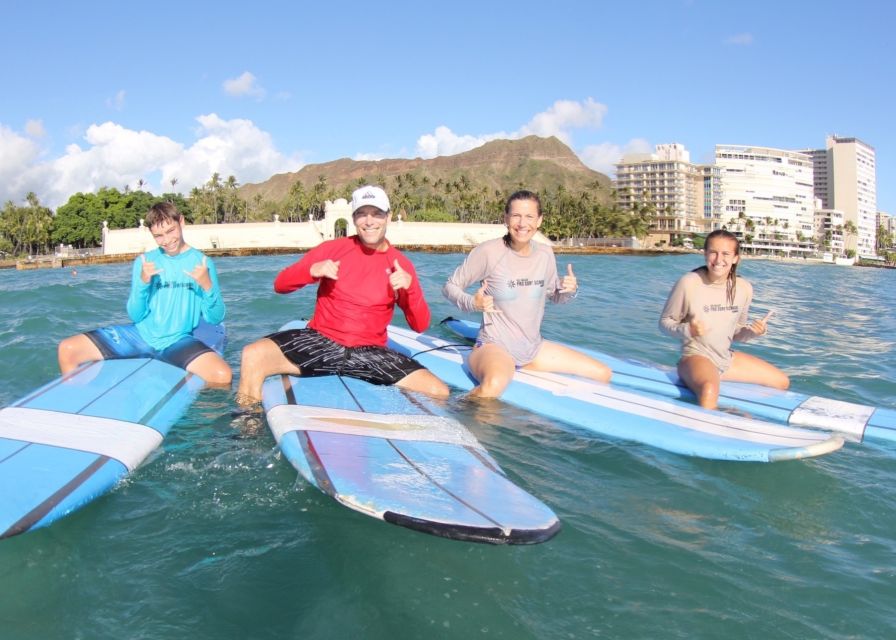
- Pro surfers teaching the lesson: you learn technique from current, working surf pros, not just “sunset beach” instructors.
- Built around safety: CPR and lifeguard credentials are part of the instruction team.
- Small groups (up to 6): you’re more likely to get quick fixes when something’s not clicking.
- A 1-mile move away from the worst crowds: you start at a beginner-friendly spot that’s not jammed.
- Included gear that matters: surfboard and leash, plus a rashguard and reef booties.
- Stand-up momentum is the goal: the lesson is structured so you ride in the water for the majority of the 2 hours.
Waikiki, minus the chaos: why 1 mile out helps beginners
Waikiki has a reputation for being fun—and for being busy. This lesson takes you about 1 mile outside Waikiki, which is a big deal when you’re brand-new. Less crowding means less interference between people trying different skills at the same time, and it creates a calmer rhythm for learning.
The spot is described as uncrowded and beginner-friendly, so your first attempts aren’t constantly interrupted by other beginners, experienced surfers, or wave timing chaos. You still get that Waikiki feeling—warm water, famous shoreline vibes—but you’re not thrown directly into the loudest, most intimidating pocket.
You can also read our reviews of more tours and experiences in Oahu



The 20-minute land lesson: the stuff that saves wipeouts
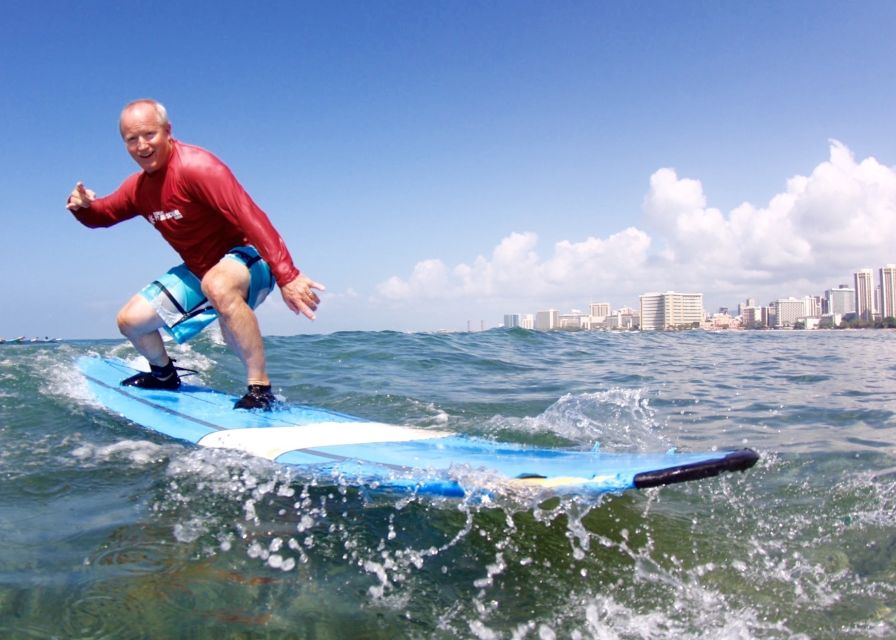
Before you hit the water, you get a short 20-minute lesson on land. That’s not a throwaway warm-up—it’s the part that helps you understand how surfboards and your body work together.
Here’s what you can expect from the land portion:
- A primer on surf materials and safety techniques, so you know how to handle gear and protect yourself.
- Guidance on surf etiquette, which matters even when you’re the slowest paddler in the lineup.
- Coaching on how to maneuver over crashing waves, which sounds abstract until you’re standing in the shallows and a set starts coming through.
- Instruction on your surf stance—where your feet go, how to balance, and what to do when you wobble.
This is the kind of teaching that helps you stop guessing. Instead of thinking, OK, now I’ll magically stand up, you’re building a sequence: paddle → pop up → balance → adjust.
In the water with current pros: coaching that gets you standing
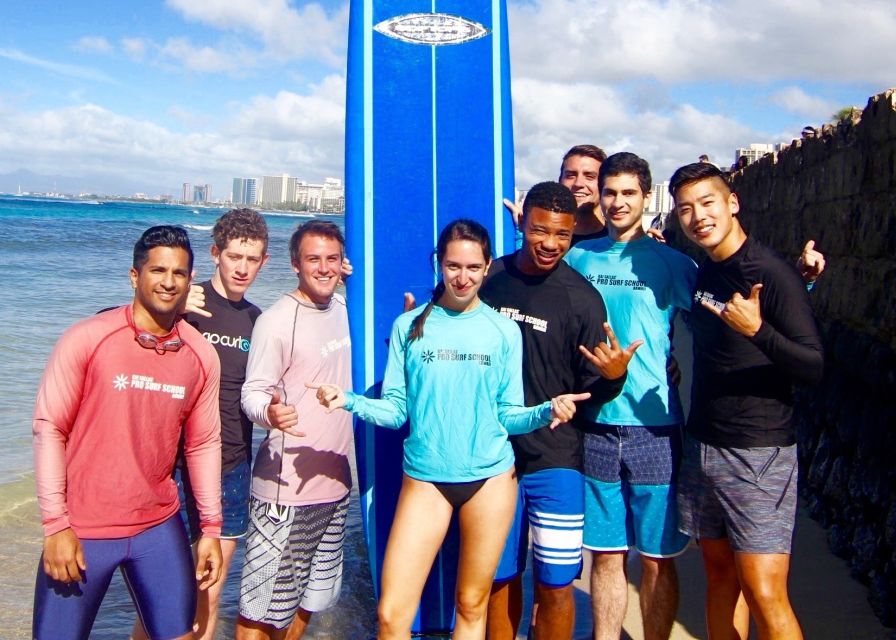
After the land prep, you’re in the water for the rest of the 2-hour session. This is the main event, and it’s set up for beginners who want to do more than just “try.”
The biggest advantage here is that the instructors are current, professional surfers, and the safety team is CPR and lifeguard certified. That combination changes the vibe. You still feel the thrill of the ocean—but you also feel like someone has a plan when conditions shift.
The coaching style tends to focus on quick, practical fixes:
- Encouragement that keeps you calm when a wave doesn’t cooperate.
- Close attention so you’re not stuck repeating the same mistake for the entire session.
- Tips that help you time your pop and improve your balance fast.
In past sessions, instructors like Turner and Kai (and other coaches) have been praised for patience and clear instruction, with many learners getting up and riding more than once. Even if you’re nervous going in, the structure is designed so you keep getting chances—so you don’t end the lesson with only one lucky stand-up moment.
How the included gear makes a real difference
You don’t have to rent the basics, which is a big hidden value. The lesson includes:
- Surfboard and leash
- Rashguard
- Reef booties
That matters because the “right fit” is part of learning. A rashguard helps you stay comfortable in the water and on the board, and reef booties improve grip and protect your feet when you’re stepping over wet rockier areas or rougher patches.
What you’ll still need:
- Swimsuit (not included)
- Towel (bring your own)
If you’ve ever tried to improvise surf clothing with random swimwear and no towel, you know it gets annoying fast. Pack like it’s an active lesson, not a sightseeing stop.
Surf etiquette and wave handling, taught in beginner terms
Surf etiquette is one of those topics people pretend is optional—until someone paddles right into your path. This lesson includes a run down on surf etiquette and how to maneuver over crashing waves, which helps you feel safer and more in sync.
You’ll learn what to watch for as sets come in and how to behave so you’re not creating extra problems for other surfers (even if you’re new). The goal isn’t to turn you into a lineup philosopher. It’s to make you predictable, respectful, and confident enough to focus on catching your own waves.
You can also read our reviews of more tours and experiences in Oahu
Group size and coaching attention: why max-6 matters
A small group limited to 6 participants might sound like a nice-to-have detail, but it’s a teaching advantage. In surf lessons, time is everything: every minute you’re waiting on the beach or watching from shore is a minute you’re not practicing.
With fewer students:
- Instructors can correct your technique without speaking over a crowd.
- Everyone gets more attempts during the water time.
- You’re less likely to feel lost when conditions change.
This is one reason people often leave happy even if they started uncertain. When your instructor can spot what’s going wrong immediately—stance, timing, balance—you improve faster.
Safety in the lineup: CPR-certified and practical
You’re learning in the ocean, so you should always care about safety. The big reassurance here is that the instructors are CPR & lifeguard certified, and the lesson is structured around safety techniques from the start.
Also pay attention to the “right lesson for the right body” rule:
- Children must be 11 years old to join a group class.
- If a child is under 11 or if someone is a weak swimmer, they’ll need a private one-on-one lesson instead of the group format.
That’s not them being strict for fun. It’s the difference between learning in a controlled coaching environment versus trying to keep up with a group plan when water comfort varies a lot.
Who this lesson is best for (and who should pick another option)
This is a beginner lesson, and it’s well-suited for:
- People who want to say yes to surfing without needing prior experience.
- Families with kids who meet the 11+ requirement.
- First-time surfers who care about safety and clear coaching.
It’s not suitable for:
- Pregnant women
- People with mobility impairments
If you’re unsure whether you fit, it’s better to be cautious. Surfing involves carrying a board, getting in and out of the water, and balancing on a moving surface. The lesson format is built for learning—but it still asks your body to move.
If you’ve got a kid who’s younger than 11 or someone in your group isn’t a confident swimmer, the smarter move is a private lesson. The lesson you’re considering explicitly calls for that change for safety.
Price and value: getting $103 worth of coaching and gear
At $103 per person, you might wonder if it’s expensive. In this case, the value is in what’s included and how the lesson is structured.
You’re getting:
- Board + leash
- Rashguard
- Reef booties
- Pro-level coaching
- Safety support with CPR/lifeguard credentials
- A full 2 hours focused on learning, with water time doing the heavy lifting
If you were to rent a board, figure out basic protective gear, and then pay separately for instruction, the costs can climb quickly. Here, the gear is already handled, and your time is built around instruction rather than wandering around the beach trying to figure out how to start.
Also, the small group size helps you get more “teacher minutes” instead of just being part of a crowd.
Timing and logistics: how to show up ready
The lesson runs twice a day and is 2 hours long. That gives you options—so you can pick the slot that fits your energy level and your day on Oahu.
One practical note: meeting locations can be confusing if you arrive right at the last second. In at least one case, a door was locked at the front entrance and staff were behind the shop. The fix is simple: arrive a bit early and confirm you’re at the right spot before you’re standing there holding a towel like a tourist.
And bring a towel. Not a “maybe I’ll find one” towel. A towel you can actually use when you’re cold-wet and ready to dry off.
What your day will feel like in real terms
Here’s the rhythm that usually defines how this lesson goes:
- You meet up, get geared, and do the short on-land instructions.
- You go into the water with clear guidance.
- You practice, reset, and try again.
- By the end, you’re not just “in the ocean”—you’re doing surf moves with intent.
The best part is that the lesson doesn’t rely on pure luck. It gives you enough structure—stance, safety, etiquette, wave handling—that you can make progress even if you’re starting from zero.
Should you book this Waikiki beginner surf lesson?
Book it if you want:
- Beginner-focused coaching from current surfers
- A small group so you get attention
- Included gear (board, leash, rashguard, reef booties)
- An experience that works for nervous first-timers and aims for actual wave riding
Skip it (or plan a different style of lesson) if:
- You’re pregnant or you need accessibility accommodations beyond what’s listed as suitable.
- You’re dealing with a child under 11 or a weak swimmer situation; in that case, choose a private one-on-one format for safety.
If your goal is to learn surfing in Waikiki without the chaotic pressure and without wasting time, this is a solid choice.
FAQ
What’s included in the surf lesson?
You’ll get a surfboard and leash, plus a rashguard and reef booties.
What should I bring?
Bring a towel. A swimsuit isn’t included.
How long is the lesson?
The lesson is 2 hours long.
Do you have to be a complete beginner?
Yes. It’s a beginner group surf lesson, and instruction covers the basics before you ride.
What are the age rules for kids?
Children must be 11 years old to join a group class.
Are weak swimmers allowed in the group?
If someone is a weak swimmer, they are required to take a private one-on-one lesson for safety.
Are the instructors certified?
Yes. The instructors are CPR & lifeguard certified.
Can I cancel and get a refund?
You can cancel up to 24 hours in advance for a full refund.
Is the lesson suitable during pregnancy or for mobility issues?
No. It’s not suitable for pregnant women or people with mobility impairments.