REVIEW · MAUI
Rappel Maui Waterfalls and Rainforest Cliffs
Book on Viator →Operated by Canyoning Maui, LLC, dba Rappel Maui · Bookable on Viator
Rappelling Maui waterfalls feels like a nature video game. This small-group adventure takes you off the main road to learn rappelling among rainforest cliffs and waterfalls, then rewards you with a swim break in the cool pools below. Your guide keeps the day running even when rain changes the plan, choosing the safest options on the spot in this wet part of Maui.
My favorite part is the small-group setup, max 8 people, which means you’re not just herded along. I also like that the tour balances adrenaline with real instruction, with guides described as calm and confidence-building as you learn to do it yourself. You’ll likely hear names like Shauna, Alba, Elena, Deacon, Naomi, and Jackson pop up in guiding styles—patient, safety-minded, and good at keeping nerves in check.
One consideration: this is hands-on, physical, and it comes with strict limits. There are minimum age and measurement rules (including weight and waist range) plus a requirement to understand and speak English well, so it’s not a casual walk-and-look tour.
In This Review
- Key things you’ll notice fast
- From Hana Highway to a quieter Maui rainforest
- How the safety briefing actually helps you rappel
- Rappel sequence: starting smaller, building up to the bigger drops
- Waterfalls, cliff-jumps, and the swim break you’ll remember
- Weather reality: rain runs here, so your route changes too
- Garden of Eden Arboretum: why a botanical stop makes the day better
- Price and value: what $240.84 buys you
- Who this fits best (and who should rethink it)
- The real deal on group energy and guidance quality
- Final call: should you book Rappel Maui Waterfalls and Rainforest Cliffs?
- FAQ
- How long is the tour?
- What’s the maximum group size?
- What is the minimum age for this activity?
- Are there weight and waist requirements?
- Do I need to know English?
- Is prior rappelling experience required?
- Where do we meet for the tour?
- What’s included in the price?
- Does the tour run in bad weather?
Key things you’ll notice fast
- Max 8 people means more coaching and less waiting around
- First-timer friendly with step-by-step help as you clip in and rappel
- Up to about 30 feet (8 meters) as the cliffs get bigger
- Swim and waterfall pools as part of the day, not just scenery
- Rain and flooding handled on the fly with alternate rappel options
From Hana Highway to a quieter Maui rainforest
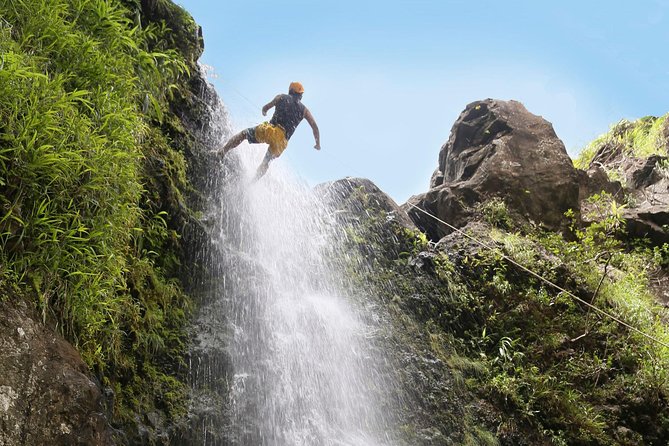
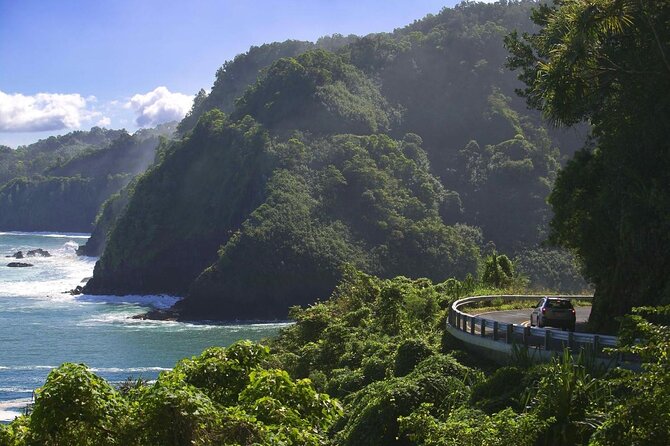
If you’re going to spend time on the Road to Hana side of Maui, you want more than another roadside viewpoint. This tour starts at 10-600 Hana Hwy, Haiku, and that location matters because it gets you into the rainforest zone where waterfalls are a real part of the environment—not a distant postcard.
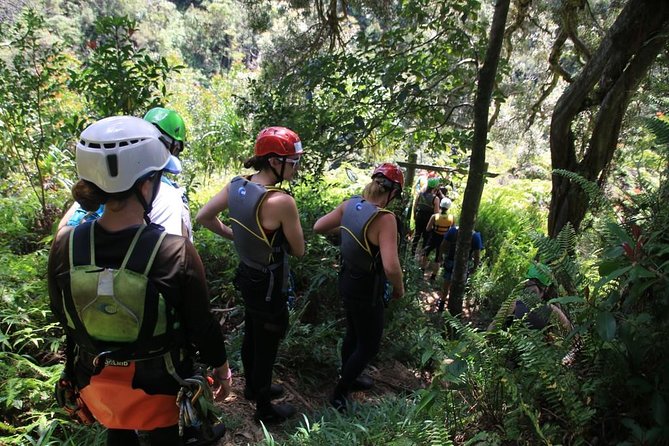
The drive itself (even if you’re arriving by your own means) sets the mood: you’re moving from coastal views into lush, wet country. Then you meet your guide and gear up for a day that’s part hiking, part climbing, and part controlled falling. In other words, you’ll be using your legs and your brain, not just your camera.
You can also read our reviews of more tours and experiences in Maui.

How the safety briefing actually helps you rappel
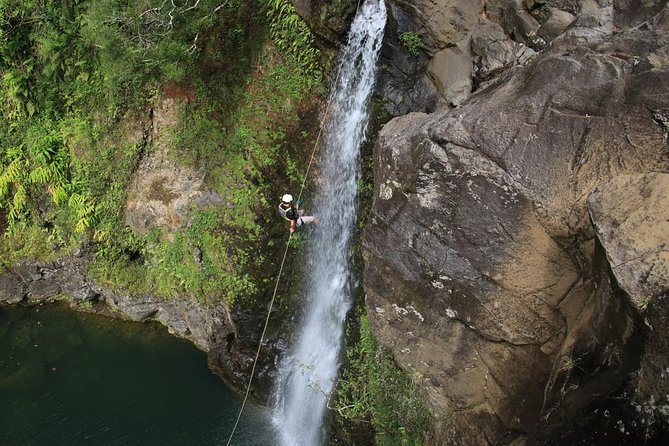
Safety here isn’t treated like a lecture you endure. The best guides I’ve seen in this kind of activity focus on two things: making sure the equipment is set correctly, and teaching you enough technique that you feel in control.
What you can expect is hands-on guidance before you start your first rappel. You’ll learn how to use the gear, how to move on the trail, and how to manage the moment when you’re committed to the descent. Multiple people in the feedback emphasize that guides checked safety equipment carefully while still empowering kids and adults to do the rappels themselves—so you’re not reduced to a passenger.
If you’re nervous, that matters. Several accounts mention that the guides kept things calm and easy-going, correcting and adjusting quietly rather than making you feel singled out. That’s the right vibe for a first attempt: you need clarity, not pressure.
Rappel sequence: starting smaller, building up to the bigger drops
The core of the tour is learning to rappel in natural waterfall settings. You’ll begin on smaller cliffs and waterfall sections, then progress to higher rappels—up to around 30 feet (8 meters). That step-up approach is useful because it lets you build body memory while you’re still in a lower-stakes zone.
You should also plan for variety in what you rappel. This isn’t one long rope trip; you’re moving between sections, walking through rainforest terrain, and then taking controlled descents. The best part is that the waterfall environment adds a kind of motion and sound that makes the whole experience feel more alive than an outdoor climbing wall.
Some groups describe doing three total rappels, with two happening directly in waterfall areas. If you’re the type who wants a clear count of moments to anticipate, that’s a good ballpark—but don’t expect the day to be identical every time. Weather, waterfall flow, and your guide’s safety call can change what’s runnable.
Waterfalls, cliff-jumps, and the swim break you’ll remember
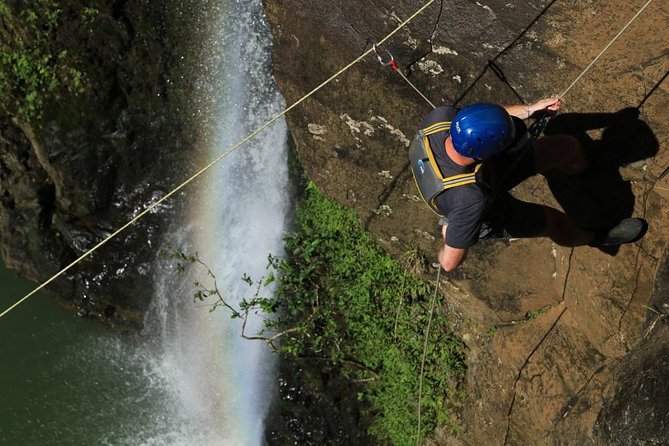
This tour isn’t only about hanging out on a rope. Expect a mix of rappel, hike, and time to swim in waterfall pools. Some sections also include cliff-jump style moments, which is where the day shifts from “I can do this” to “yep, I’m all in.”
That swim break is not just a reward. It’s a practical reset. After rope work and wet rock, having a chance to cool off and move normally helps you enjoy the rest of the day with more energy and less stiffness.
And because Maui is humid and this is the rainforest side, the water time can feel especially good. Even in rainy conditions, the tour is designed around staying active and using the environment instead of treating it like an obstacle.
Weather reality: rain runs here, so your route changes too
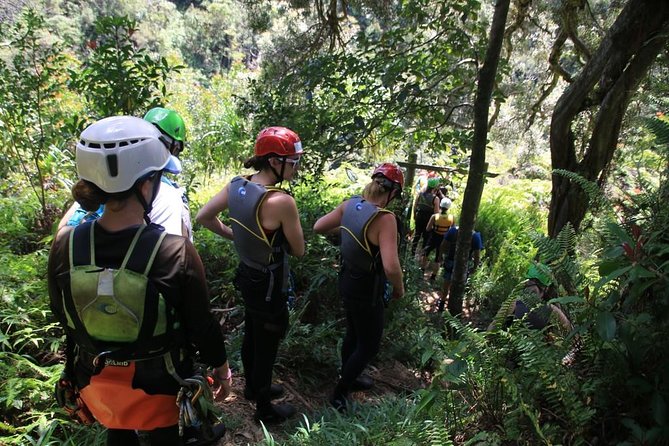
In this part of Maui, rain isn’t an occasional event. The tour operates in all weather conditions, and your guide adjusts based on what’s happening on the day—especially if waterfalls are flooding.
So here’s the real expectation: you might not rappel down the exact waterfall pool you pictured. But the tour is structured with alternate rappel options when the primary sites are too full. That’s a huge difference between a tour that shuts down and one that adapts.
Multiple people mention that even when conditions prevented rappels in the waterfalls, the experience still included other strong options. Translation: don’t book thinking you’re guaranteed the same set of descents every time. Book thinking you’re getting a guided canyon-style adventure where the plan is flexible and safety comes first.


Garden of Eden Arboretum: why a botanical stop makes the day better
You’ll also stop at Garden of Eden Arboretum & Botanical Garden. This matters because it gives the experience breathing room between adrenaline moments. It also helps you understand the rainforest as more than a backdrop—plants and terrain are part of what makes the rappels possible in the first place.
Even if you only spend limited time there compared with the rope sections, it’s a valuable change of pace. You get a more grounded sense of place, and you’re reminded that this whole area is a living system where water, plants, and rock all interact.
Price and value: what $240.84 buys you
At $240.84 per person for about three hours, this is not a bargain-basement activity. But it’s also not overpriced for what it is: guided technical instruction plus natural-site rappel access that you can’t replicate on your own.
Your money covers:
- a professional guide
- bottled water and seasonal snacks
- all taxes and fees
The big value driver is the small group size. Max 8 people means you get more attention while learning something hands-on. It also reduces the downtime where you’re waiting to be called back to the rope.
One more practical point: hotel pickup and drop-off isn’t included. If you’re staying far from the meeting area, factor in that extra transportation cost and time. Still, once you’re at the start point, you’re set up to have a structured, supported adventure rather than a random self-guided hike.
Who this fits best (and who should rethink it)
This tour is built for people with moderate physical fitness. You should be able to walk and hike unassisted, handle uneven terrain, and keep moving even if the weather is wet.
It also has strict participant requirements:
- Minimum age is 10, with kids accompanied by an adult
- You must weigh between 70 lbs and 250 lbs
- Waist must be between 22 and 48 inches
- You’ll be weighed at check-in, and there’s no refund if you don’t meet the restrictions
- You must understand spoken English well and speak it fluently
So who usually loves it?
- Adults and teens who want an adrenaline activity with real coaching
- First-time rappellers who prefer a guided path rather than learning from guesswork
- Families who want a supervised confidence boost (with the right age and body-measurement fit)
Who might struggle?
- Anyone who can’t comfortably hike unassisted
- People who don’t meet the weight/waist requirements
- Groups that can’t meet the English requirement for instructions and safety steps
If you’re on the fence because you’re worried about nerves, focus on this: the guides’ job is to keep you calm and make sure you understand what to do, not to watch you panic.
The real deal on group energy and guidance quality
The consistent theme in the feedback is that the guides manage two jobs at once: safety and morale. People describe calm, easy-going coaching that helps kids and adults attempt things without feeling embarrassed if they need a tweak.
You’ll also notice the experience has a team feel. With a max of 8, you’re not just a number. You get more chance to hear instructions clearly, get quick corrections, and enjoy the waterfall moments without feeling rushed.
Names that show up often include Shauna and Alba, plus Elena, Deacon, Naomi, Jackson, Elaina, Taylor, and Mike. While you shouldn’t rely on a specific guide name when booking, it’s a good sign that many groups have had the same high standard of encouragement and careful equipment checks.
Final call: should you book Rappel Maui Waterfalls and Rainforest Cliffs?
I’d book it if you want a Maui activity that feels genuinely off the beaten path and uses the rainforest the right way: rope skills, waterfall descents, a swim break, and real guided instruction in a small group.
Skip it if any of the following are true for you: you can’t meet the age/weight/waist requirements, you’re uncomfortable hiking unassisted, or you need a low-effort sightseeing day. Also, go in expecting the waterfall details to shift with rain and flooding. That’s not a dealbreaker here—it’s part of how the tour keeps operating.
If you’re willing to get wet, move a bit, and trust the rope team, this is the kind of adventure you’ll remember long after the Road to Hana drive fades from memory.
FAQ
How long is the tour?
The tour runs for about 3 hours.
What’s the maximum group size?
The group is limited to a maximum of 8 travelers.
What is the minimum age for this activity?
The minimum age is 10 years old, and children must be accompanied by an adult.
Are there weight and waist requirements?
Yes. Participants must weigh between 70 lbs and 250 lbs, and waist measurements must be between 22 and 48 inches. Participants are weighed at check-in, and there is no refund if you don’t meet the restriction.
Do I need to know English?
Yes. Participants must understand spoken English well and speak it fluently.
Is prior rappelling experience required?
No experience is not required. The tour includes guidance and instruction so you can learn to rappel during the activity.
Where do we meet for the tour?
The meeting point is 10-600 Hana Hwy, Haiku, HI 96708, USA. The tour ends back at the meeting point.
What’s included in the price?
The price includes all taxes, fees, and handling charges, bottled water, seasonal snacks, and a professional guide.
Does the tour run in bad weather?
It operates in all weather conditions. Your guide will choose the best cliffs and waterfalls to rappel based on weather, and alternate rappels may be used if waterfalls are flooding.