REVIEW · HONOLULU
Hawaii Volcanoes National Park Experience from Kauai
Book on Viator →Operated by Aloha Sunshine Tours · Bookable on Viator
Volcanoes and turtles, in one day. This Kauai-to-Big-Island trip uses round-trip flights to make a long day feel efficient, then adds Kona coffee and a stop at Hawaiʻi Volcanoes National Park.
I especially like that you’re not just driving around the island in circles; you get planned variety.
My second favorite part is the local guide narration plus the small group size, capped at 22. You’ll also have moments to look around on your own instead of feeling totally herded the whole time.
One thing to keep in mind: it’s an 8 to 10 hour day with changing elevations, and Volcanoes NP can mean cool, wet weather and occasional volcanic gas. If you’re sensitive to asthma or similar issues, plan carefully.
In This Review
- Key things you’ll notice on this Kauai-to-Big-Island day
- Flying from Kauai to Kona: why this tour works as a day plan
- Kona meeting point and the 8:00 am reality check
- Greenwell Farms: the Kona coffee stop that makes the day feel local
- Manuka State Wayside Park: a quieter walk before the big sights
- Punaluʻu black-sand beach: turtles, basalt, and rougher water
- Punaluʻu Bake Shop lunch: where sweet bread becomes your midday fuel
- Hawaiʻi Volcanoes National Park: Halemaʻumaʻu glow, Kīlauea Iki, lava tube, and steam vents
- Mauna Kea Access Road, Kohala Coast, and Hilo: the day’s big variety fix
- Price and value: is $589.99 a fair trade for one day?
- Who should book this (and who should think twice)
- Should you book this Kauai-to-Volcanoes day trip?
- FAQ
- What’s included in the tour price?
- How long does the tour take?
- Where do I meet the tour in Kona?
- Is transportation to Lihue Airport on Kauai included?
- Are meals included?
- What should I bring for Volcanoes National Park?
- Is cell service available in the park?
- Is this tour okay if I have asthma or respiratory problems?
- How big is the group?
Key things you’ll notice on this Kauai-to-Big-Island day
- Round-trip airfare Kauai (Lihue) ↔ Kona (Kona International Airport) is included
- Greenwell Farms gives you a real Kona coffee stop on Mauna Loa slopes
- Punaluʻu black-sand beach is a top spot for sea turtle viewing from shore
- Hawaiʻi Volcanoes National Park highlights include Halemaʻumaʻu, Kīlauea Iki, Thurston Lava Tube, and steam vents
- Punaluʻu Bake Shop lunch is built around Hawaiian sweet bread flavors like taro, guava, and mango
- Small-group experience (maximum 22) with English narration throughout
Flying from Kauai to Kona: why this tour works as a day plan
This is one of those rare Big Island schedules that doesn’t assume you’ll be renting a car, spending a night, and losing half a day to logistics. You fly round-trip from Kauai’s Lihue Airport to Kona International Airport, and that buys you time to pack in multiple stops.
That matters because the Big Island is huge, and the “right” drives take longer than you think. By building the trip around flights and a pre-set route, you avoid the usual slowdowns and still reach Hawaiʻi Volcanoes National Park, which is the heart of any one-day plan.
The trade-off is simple: it’s still a full day. You’re up early, moving between very different microclimates, and you’ll want to keep your packing tight. If you prefer slow travel with lots of free time, this may feel like more motion than you’re after.
You can also read our reviews of more tours and experiences in Honolulu.

Kona meeting point and the 8:00 am reality check
You start at Kona International Airport (73-200 Kupipi St, Kailua-Kona). If you’re arriving in Kona, the meeting area is the lot behind the Alaska Baggage claim, marked B-2.
The scheduled start is 8:00 am, so I’d plan your morning with buffer. Once the day starts, the itinerary is built around timing between stops, and Volcanoes NP in particular works best when you get there early.
Also, don’t count on your phone to rescue you. Cell service can be limited or nonexistent in parts of the park and surrounding areas, so download any maps you rely on and keep key info offline.
The vehicle is air-conditioned, which is a win in the hotter coastal stretches. Still, bring layers for the park and higher-elevation areas, where temperatures can drop fast.
Greenwell Farms: the Kona coffee stop that makes the day feel local
Greenwell Farms is one of the oldest coffee farms in Hawaii, established in 1850 by Henry Nicholas Greenwell. You’re on Mauna Loa’s slopes in Kona coffee country, where the growing pattern is built around volcanic soil, sunny mornings, cloudier afternoons, and consistent rainfall.
What I like about this kind of stop is that it’s not random shopping. Kona coffee has a real story tied to the way the islands developed economically, and the farm setup gives you a place to connect that story to what you taste later.
You’ll have about 30 minutes here. That’s enough time to walk, look around, and buy something if you want it, but it’s not so long that you lose momentum before the rest of the day.
One practical tip: coffee and baked goods make great souvenirs, but keep your purchase secure. Between stops and changing temperatures, spills can happen fast if your bag isn’t closed well.
Manuka State Wayside Park: a quieter walk before the big sights
Manuka State Wayside Park is a small 13-acre refuge along the Hawaii Belt Road (Highway 11) on the slopes of Mauna Loa. The highlight is the 2-mile Manuka Nature Trail, designed to show a mix of wet and dry forest ecosystems.
I like that this stop slows the day down for a bit. Volcanoes NP tends to be dramatic in a hands-on way; Manuka is calmer. It’s also a good reminder that the Big Island’s geology isn’t just lava and craters. You’ll see native Hawaiian plants and wildlife, and there’s a chance for endemic birds like the Hawaiian hawk and honeycreeper.
There’s interpretive signage and picnic areas, so you can do this stop in a couple of modes: short stroll and pictures, or a more relaxed walk with time to read.
This stop is free and runs about 30 minutes, so treat it like a reset button. If the rest of your group is rushing, you can still take your time here and come away feeling like you actually saw something besides parking lots.
Punaluʻu black-sand beach: turtles, basalt, and rougher water
Punaluʻu Black Sand Beach on the Big Island’s southeast coast is famous for its black sand made from volcanic basalt. The view is striking, and you’ll notice the beach sits under palm shade, which makes the scene feel different from the sharper volcanic visuals of the crater stops later.
The best part here is the turtle potential. Hawaiian green sea turtles often bask along the shoreline, and you usually don’t need a long walk to catch a sighting if you’re there at a good moment.
One caution: the water can be rough, so don’t plan on swimming. I’d treat this as a viewing stop first. Look, take photos, enjoy the texture of the sand, then move on before the sun and wind start to wear you down.
Expect around 30 minutes, plus a quick stop at the nearby bakery for lunch later. Wear shoes you can stand in comfortably, because black sand isn’t the kind that feels great in flimsy footwear.

Punaluʻu Bake Shop lunch: where sweet bread becomes your midday fuel
Punaluʻu Bake Shop (in Naʻālehu) is known for Hawaiian sweet bread, and it leans into flavors like taro, guava, and mango. It’s also described as the southernmost bakery in the U.S., and it has a gift shop and a garden.
You stop for lunch here, and this is one of the spots where timing matters. The rest of the day includes walking on uneven volcanic terrain and time around hot steam areas, so you want energy that’s easy to eat.
The tour doesn’t set one exact meal for you. You can pick from options like sourdough sandwiches, Kalbi beef, and Hawaiian plate lunches, with baked goods as your side project.
I also like that this stop encourages local flavors without being too precious. It’s a good chance to buy something to snack on during the park portion, as long as you keep it from melting in the heat.
One more real-life tip: some roadside stands and shops are cash-only, and while your lunch stop isn’t described that way, having cash on you tends to reduce stress on a day with multiple quick stops.
Hawaiʻi Volcanoes National Park: Halemaʻumaʻu glow, Kīlauea Iki, lava tube, and steam vents
This is the main event, and it’s where the day earns its name.
You start at the visitor center area to get the geology and history angle before you head out. That helps. Volcanoes NP can feel like a collection of sights, but a basic storyline makes it stick: how Kīlauea’s activity shapes the ground, and why some places feel hot even when they look calm.
From there, you’ll be taken to key stops, including Halemaʻumaʻu Crater, Kīlauea Iki Rainforest Lookout, Thurston Lava Tube, and active steam vents. The glow of molten lava at Halemaʻumaʻu is the kind of image that usually has people talking for days. Even when you’re not close enough to smell much, the visuals make volcanic activity feel immediate.
Kīlauea Iki gives you contrast: a look at a massive crater with a rainforest setting nearby, which helps balance the harshness of pure volcanic rock.
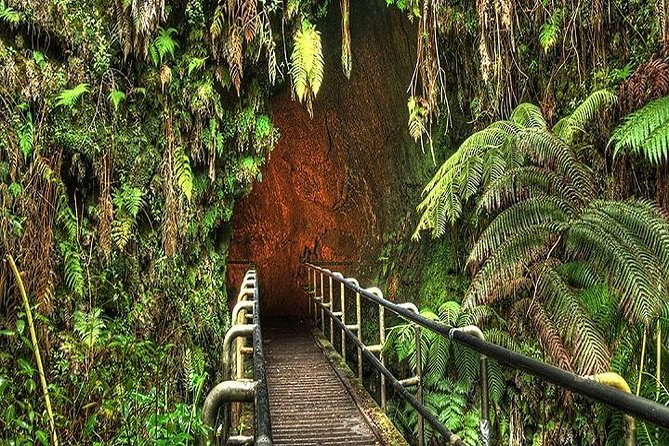
At Thurston Lava Tube, you go through a natural tunnel formed by flowing lava. This is where sturdy shoes matter. The ground can be uneven, and you’ll want good footing for photos and short walks.
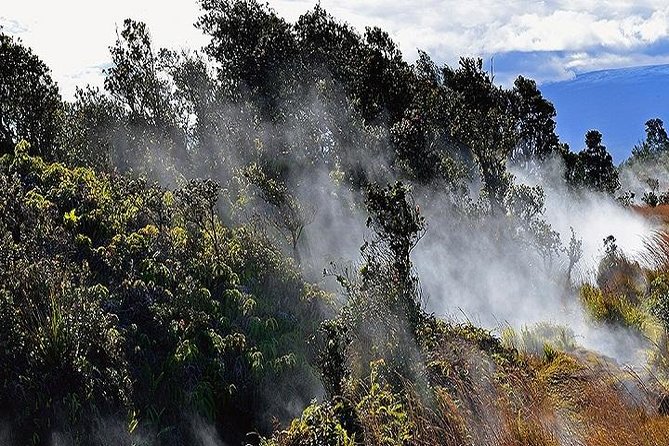
Steam vents are a reminder to take the active side of the park seriously. The heat can feel intense, and you may notice volcanic gases. If you have respiratory issues, this is not the part to “tough out.” Follow safety guidance, and consider discussing your situation ahead of time with your clinician.
Mauna Kea Access Road, Kohala Coast, and Hilo: the day’s big variety fix
After (or around) Volcanoes NP, the route includes a broader sweep of the Big Island. The tour mentions Mauna Kea Access Road, the Kohala Coast, and time in Hilo.
The Mauna Kea Access Road is a steep, winding climb from the Saddle Road (Route 200) toward the summit area. As you go up, climates change quickly and the air thins. Temps can drop, so layers are not optional here. Even if you don’t step far out of the vehicle, you’ll want warm gear, especially if your day includes stops where you’re standing still.
The Kohala Coast is described as drier than much of the island, known for beaches, luxury resorts, and scenic views. This is the “slow down and look” break between more active volcanic moments.
Finally, you reach Hilo, which includes a cultural and history-focused stop area. Highlights mentioned include the Lyman Museum, the Hilo Historic District, the Pacific Tsunami Museum, and Liliuokalani Gardens, plus the Hilo Farmers Market. If you like your Hawaii with both land-based stories and food culture, this part helps keep the day from becoming only geology and heat.
Price and value: is $589.99 a fair trade for one day?
At $589.99 per person, this tour isn’t cheap. But you’re not paying only for a bus ride.
You’re also paying for round-trip airfare between Kauai (Lihue) and Kona, plus admission to Hawaiʻi Volcanoes National Park, plus an air-conditioned vehicle and guide narration. For many people, those included elements are what make the cost feel more reasonable than trying to stitch the trip together on your own with rental cars and separate booking.
Still, it’s worth being honest about the structure. Meals are at your own expense, and it’s a long day where you’ll be moving on a schedule. You’re paying for convenience and access more than for lots of downtime.
If your priority is getting to Volcanoes NP from Kauai in a single day without spending money and time on planning, the included flights push this toward good value. If you’d rather sleep in and take slow scenic drives, you might find a cheaper, more flexible option fits better.
Who should book this (and who should think twice)
This fits best if you want a high-ROI day: coffee country, black-sand shoreline, major Volcanoes NP stops, and then a bit of Mauna Kea and Hilo culture.
You’ll likely enjoy it if:
- You want major sights without the stress of driving across the island
- You like guided context and storytelling during the day
- You’re okay with a packed schedule and changing weather
Think twice if:
- You have respiratory issues, because volcanic gases and steam vents can be a problem
- You hate long drive-up and walk-on-uneven-ground days (sturdy shoes are recommended)
- You need a lot of free time. Cell service can be spotty, and the day has a set rhythm
One note for the “respect the rules” department: Hawaiʻi Volcanoes National Park is an active volcanic area with strict Leave No Trace expectations. Follow the rules about staying on marked trails and not taking anything from the park.
Should you book this Kauai-to-Volcanoes day trip?
I’d book it if your goal is simple: see Hawaiʻi Volcanoes National Park highlights from Kauai in one day, with round-trip flights and a guide who keeps the story moving. The inclusion of Greenwell Farms and Punaluʻu Bake Shop also makes the day feel more like real island life than just crater stops.
I wouldn’t book it if you want a laid-back pace or you’re highly sensitive to conditions around steam vents. In that case, the safety and comfort concerns outweigh the convenience.
If you do book, show up ready: layers, rain jacket, closed-toe shoes, water and snacks, sunscreen, and a hat. And if you’re traveling with kids or need a car seat, that’s available for children ages 4 and under.
FAQ
What’s included in the tour price?
The tour includes an air-conditioned vehicle, round-trip airfare from Kauai’s Lihue Airport to Kona International Airport, admission to Hawaiʻi Volcanoes National Park, and narration from a local guide. Tickets for attractions are provided by your driver on the morning of your tour.
How long does the tour take?
It runs about 8 to 10 hours.
Where do I meet the tour in Kona?
The meeting point is Kona International Airport (73-200 Kupipi St, Kailua-Kona). If you’re flying in, meet at the lot behind the Alaska Baggage claim, labeled B-2.
Is transportation to Lihue Airport on Kauai included?
No. Transportation to Lihue Airport on Kauai is not included.
Are meals included?
Meals are not included. You can stop for lunch at Punaluʻu Bake Shop, and you’ll pay for meals and snacks yourself.
What should I bring for Volcanoes National Park?
Bring water, snacks, sunscreen, and a hat, plus layers and a rain jacket. Closed-toe, sturdy shoes are recommended for uneven volcanic terrain.
Is cell service available in the park?
Cell phone service is limited or nonexistent in many parts of Hawaiʻi Volcanoes National Park, so plan ahead and download maps or guides.
Is this tour okay if I have asthma or respiratory problems?
The park can have volcanic gases like sulfur dioxide, and steam vents can also be an issue. If you have respiratory conditions, take the hazard warnings seriously and follow safety guidance.
How big is the group?
The tour has a maximum of 22 travelers.