REVIEW · OAHU
Oahu: High Ropes Adventure, Climbing, & Rappel Experience
Book on GetYourGuide →Operated by Coral Crater Adventure Park · Bookable on GetYourGuide
Sixty feet is no joke at Coral Crater Adventure Park, where you take on a 60-foot Adventure Tower and a 50-foot freefall. I love that the action is real and hands-on, not a slow walk-through. I also love the way instructors coach you before you start so you know how to handle the ropes and moves. The catch: it’s a serious physical challenge, and you must meet the height and weight rules.
This is a tight, 90-minute adrenaline session built around multiple formats: high ropes obstacles plus a climbing wall, with rappel-style moves and jumps mixed in. It’s set up to be fun even if you’re not a “gym person,” but you should still go in ready to work your legs, grip, and core. Bonus: it runs rain or shine, so plan around the weather instead of hoping it clears up.
In This Review
- Key Things You’ll Remember About Coral Crater’s High Ropes Adventure
- The 60-Foot Adventure Tower and the 50-Foot Freefall Moment
- High Ropes Challenge Course: Climb, Abseil, and Jump Across 18 Elements
- The Climbing Wall for Ninja-Style Speed and Skill Practice
- Safety Gear and Instructor Tips That Make the Difference
- Fit Requirements: Who Should Go and Who Should Skip It
- Getting There: Coral Crater’s 40-Minute Drive From Waikiki
- Price and Value: What $104 Buys for 90 Minutes
- What to Bring (and What Shoes to Wear) for a Safe, Comfortable Day
- Is This Oahu High Ropes Adventure Worth Booking?
- FAQ
- How long is the Coral Crater high ropes and tower experience?
- What’s included with the ticket price?
- Do I need closed-toe shoes?
- What are the height and weight requirements?
- Does the activity run in the rain?
- How far is Coral Crater from Waikiki?
- Is food or drinks included?
Key Things You’ll Remember About Coral Crater’s High Ropes Adventure
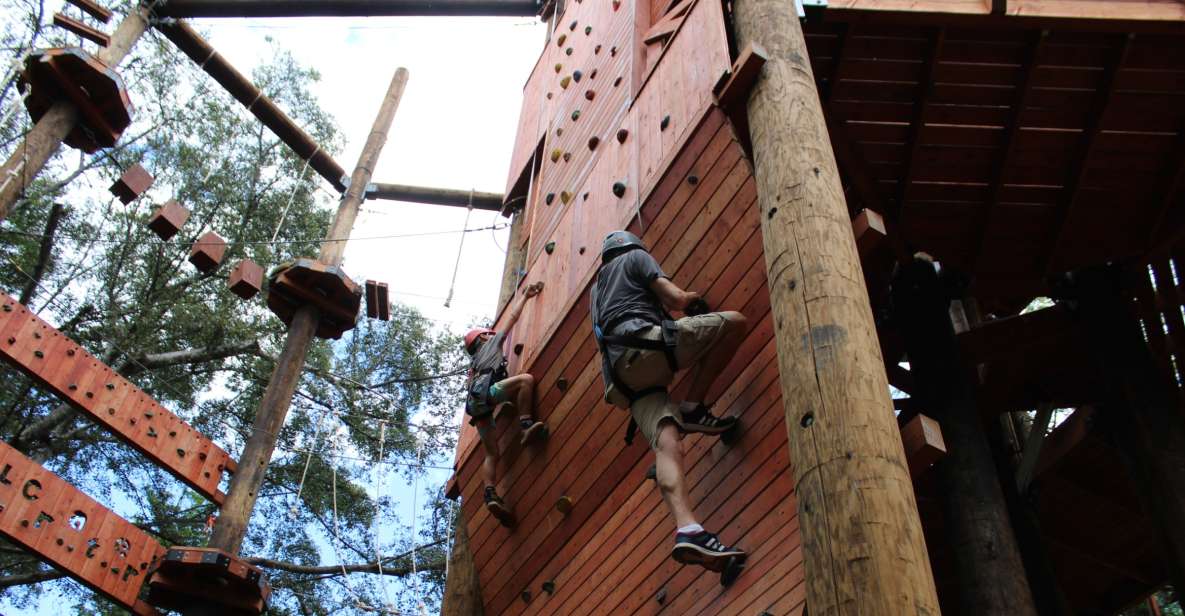
- 60-foot Adventure Tower with the main event being a 50-foot freefall
- 18 challenge elements on the high ropes course, including climb, abseil/rappel, and jumps
- A climbing wall built for different ability levels, where speed and control both matter
- Instructor-led safety coaching plus safety gear so you’re not figuring it out alone
- A location that’s about 40 minutes from Waikiki (traffic can stretch that)
- You’ll be active for about 90 minutes, so come ready for a workout
The 60-Foot Adventure Tower and the 50-Foot Freefall Moment
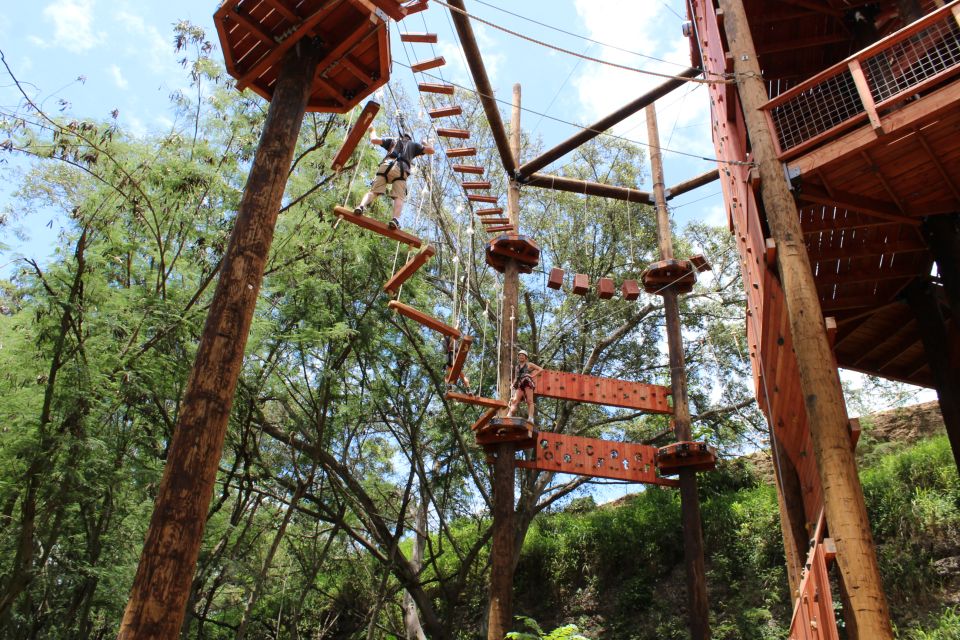
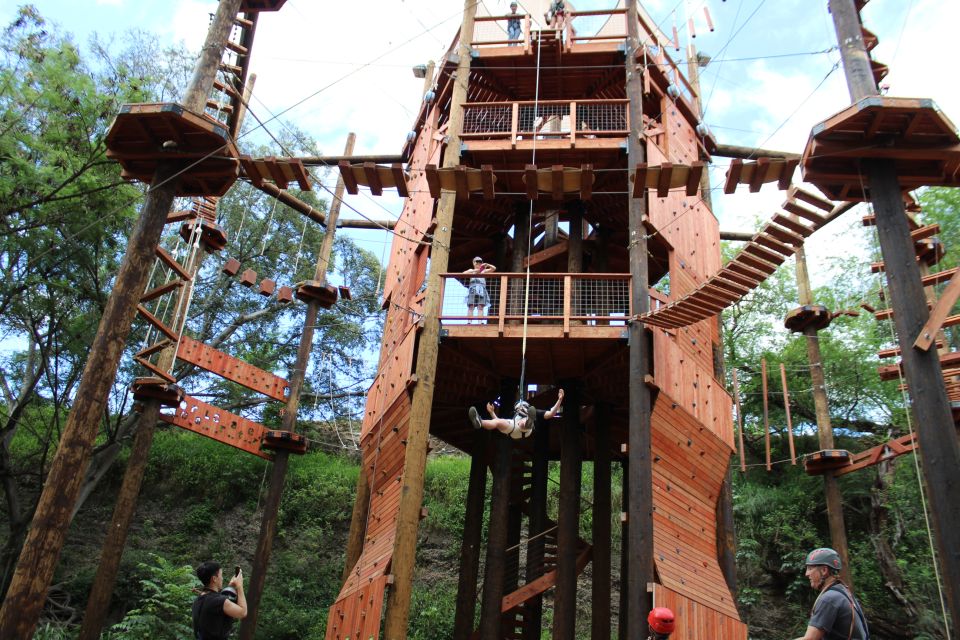
The headline here is the tall tower and what comes out of it. You’re facing a 60-foot structure, and the freefall is from a 50-foot jump point. If you like thrills, this is the part you’ll talk about on the drive back.
What makes this tower segment worth your time is that it’s not just fear-factor for the sake of it. You get guidance from an instructor before you start the course elements, so you’re not standing there wondering what hand goes where. When you’re clipped in and moving, it feels controlled—even if your body is busy doing that excited, nervous thing.
One thing to keep in mind: this is a “you do the work” experience. You’ll be gripping, stepping up, and following directions quickly, so the best mindset is calm focus, not bravado. The freefall comes from that setup—when you’ve already learned the basics on the course.
You can also read our reviews of more tours and experiences in Oahu.


High Ropes Challenge Course: Climb, Abseil, and Jump Across 18 Elements
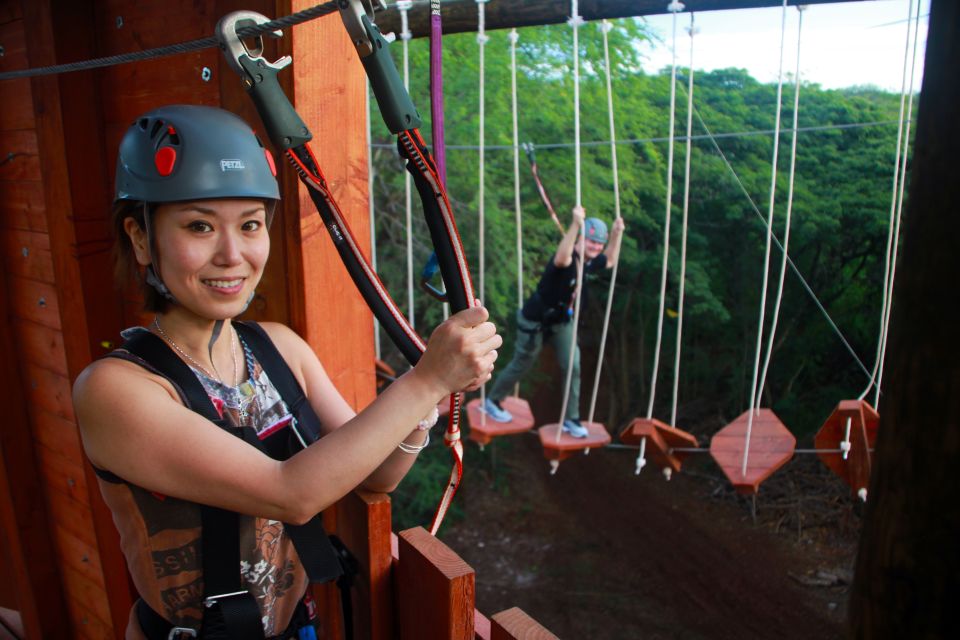
Your main challenge is the High Ropes Adventure Course with 18 obstacle elements. The variety is what keeps this from getting repetitive. You’re not just climbing or just swinging; you’re switching between movement types—climb up, rappel/abseil down, and jump through different sections.
That matters because your body has to adapt. Even if you’re comfortable on ladders, a ropes course asks for different balance and timing. Rappel moves especially tend to feel technique-driven: you control the descent through how you position your body and use the system safely.
This course also rewards attention. In a place like this, a small lapse in focus can slow you down, while good pacing helps you move smoothly between platforms. Instructors give you pointers, and that’s the difference between feeling overwhelmed and feeling like you’re learning as you go.
If you’re the type who gets bored with slow sightseeing, you’ll probably love this format. It’s short, intense, and built to keep your brain engaged along with your muscles.
The Climbing Wall for Ninja-Style Speed and Skill Practice
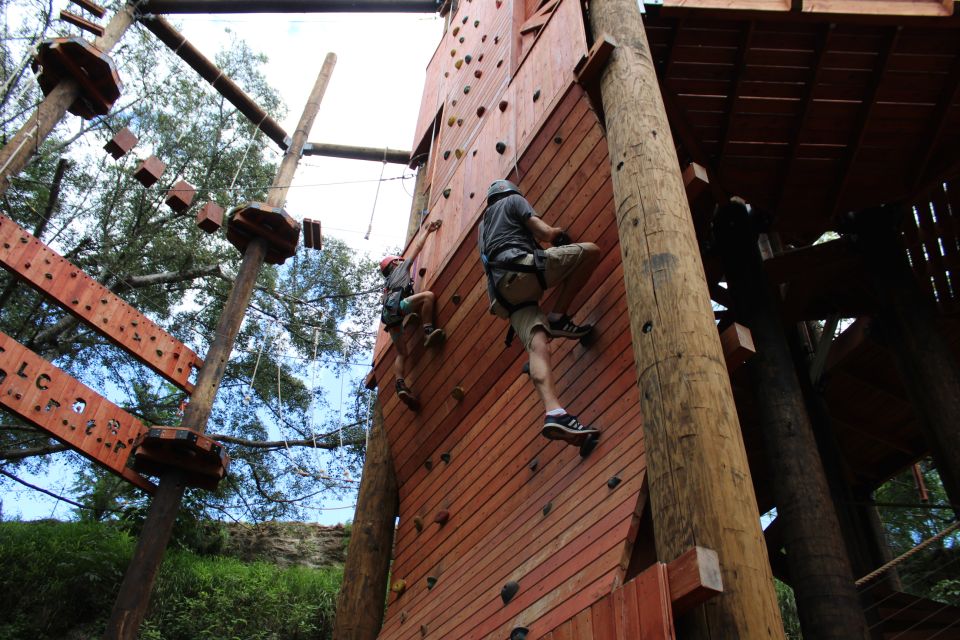
Alongside the high ropes, you’ll get time on the climbing wall. The idea is to test your grip, reach, and problem-solving while still being part of an adventure course setup. You can also use it to practice at different ability levels, which is great if you want to push yourself without going straight to max difficulty.
There’s a fun competitive vibe baked into this part. The setup encourages you to show your skills—like going for the fastest route to the top—so you’re not just climbing for climbing’s sake. Even if you’re not trying to win anything, it gives you a clear goal during your 90 minutes.
What I like about having a climbing wall here is that it gives your hands a different kind of work than ropes platforms. High ropes can be grip-heavy but also balance-heavy. The wall shifts that into controlled climbing technique, so you still get a workout but with a different rhythm.
If you’re more comfortable climbing than you are with freefall fear, this segment becomes your confidence builder. It also gives you something to focus on if you’re nervous about the tower.
Safety Gear and Instructor Tips That Make the Difference
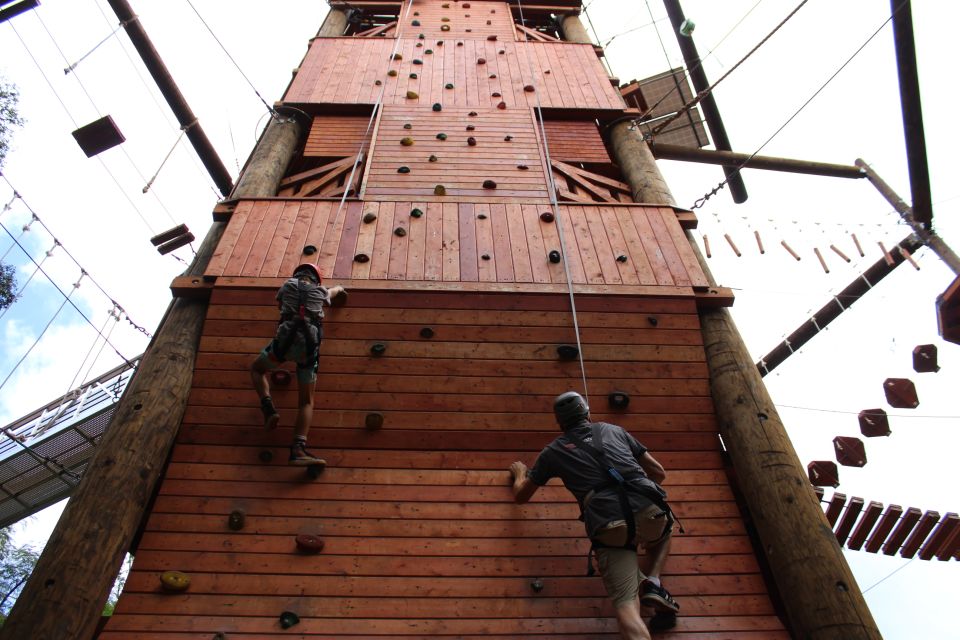
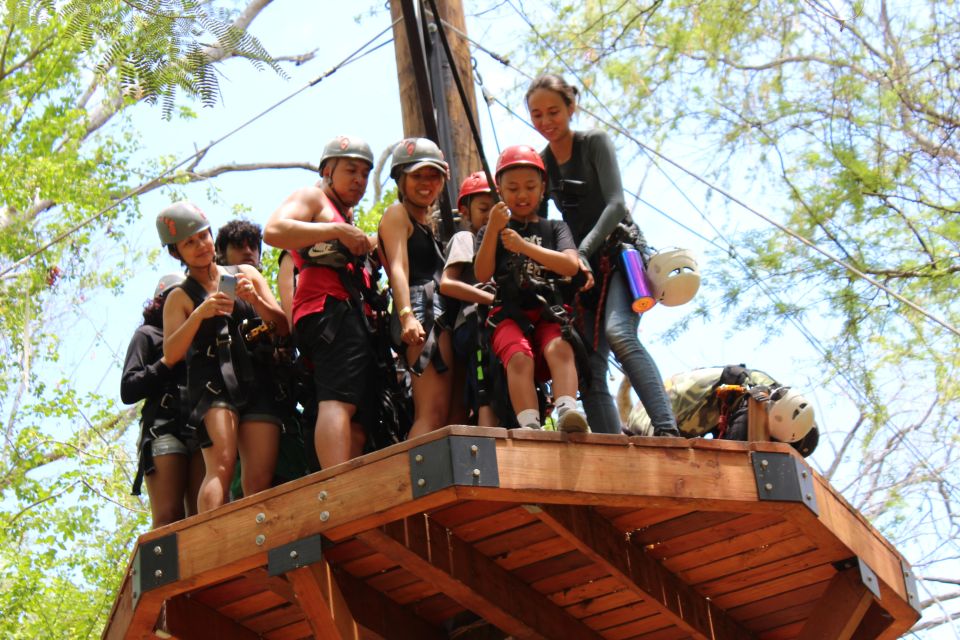
This experience includes an instructor and safety gear, and that’s not a throwaway detail. When you’re working with ropes, harnesses, and switching between climb/rappel/jump elements, you need someone guiding you so you’re not improvising.
You can expect a safety-focused start before you jump into the course work. You’ll get tips on how instructors help you get set up—like how they rope you in—and pointers to help you get going. That coaching tone matters. It’s the difference between feeling rushed and feeling like the steps are clear.
Another key point: you’ll be weighed during check-in before each tour. That means the experience is run with safety parameters in mind, not just “come try it.” If you’re close to the limits, still show up prepared to meet them because weight restrictions are strict.
This is also a good experience for people who want structure. You don’t need to be a lifelong athlete, but you do need to listen, follow instructions, and move with control.
Fit Requirements: Who Should Go and Who Should Skip It
This isn’t for everyone, and that’s fair. Participants must weigh between 40 lbs and 275 lbs (124 kg), and you’ll be weighed at check-in. Height matters too: you must be 4’6” to independently navigate the course. If you’re shorter (but at least 6 years old), you can still participate, but you’ll need an adult participant to lead you through or you can hire one of the guides to help with safety tasks.
There are also health and mobility limitations listed. This activity isn’t suitable for pregnant women, people with back problems, mobility impairments, or heart problems. And if you’re over 275 lbs (125 kg), you won’t be permitted to participate.
Here’s the practical takeaway: be honest about your body. Even if you’re excited for the freefall, you’ll feel the ropes and climbing. A strong “I can do this” attitude helps, but physical ability helps more.
From a real-world standpoint, I’d treat this as a workout disguised as an adventure. The experience is thrilling, but if you struggle with holding your own body weight, you may find it tough to complete comfortably.





Getting There: Coral Crater’s 40-Minute Drive From Waikiki
Logistics can make or break an Oahu day. Coral Crater is about a 40-minute drive from Waikiki with no traffic. If you go later in the day on a weekday, traffic can stretch it to over an hour, so it’s smart to check conditions ahead of time.
The directions given are straightforward, but the big decision is transportation. If you rent a car, you’ll likely feel calm and flexible. One visitor I heard from appreciated being able to handle the distance easily because they drove themselves.
From Waikiki, you’ll be using H1 West, then combining routes through I-H-201 W and I-H-1 W toward Makakilo. Take the exit toward Makakilo/Kapolei/Kalaeloa, pass Kapolei High School on the left, turn left on Roosevelt Ave, then right on Midway St. Coral Crater’s parking lot is on the corner.
If you’re planning to rely on transit or rides without a buffer, give yourself extra time. The activity is fixed-duration, and you don’t want to arrive stressed.
Price and Value: What $104 Buys for 90 Minutes
At about $104 per person for roughly 90 minutes, this isn’t a casual add-on. The value comes from what’s included and what you get to do with it.
Your ticket includes an instructor and safety gear. That matters because you’re not just paying for access—you’re paying for safe setup and hands-on coaching in a high-energy environment. You’re also getting a lot of action time packed into a short slot: the tower, the high ropes obstacle set with 18 elements, and the climbing wall.
What isn’t included: food and drinks. So budget for that like you would for any other activity day. If you’re flying or planning other stops afterward, also factor in time to eat before you arrive, since the experience is active and you’ll want to be comfortable.
Also consider that it takes place rain or shine. If you’re visiting Oahu during mixed weather, having an experience that runs anyway can make the ticket feel more “worth it,” because it doesn’t depend on perfect conditions.
In short: $104 makes sense if you want adrenaline plus real skill practice in one session.
What to Bring (and What Shoes to Wear) for a Safe, Comfortable Day
This is one of those activities where what you wear can affect how fun the experience feels. Bring an ID or passport, and wear closed-toe shoes only. Open-toed shoes aren’t allowed, and the course is physical enough that you’ll want secure footwear.
Use comfortable clothes and sports shoes. Think practical: breathable layers and nothing that’ll flap, slip, or get in the way. The park is stroller accessible, but if you’re bringing a stroller, plan around the fact that the actual course work still has age, height, and physical requirements.
Also bring the right mindset for weather. Since it runs in the rain, you might get wet and still need good traction. Wear clothing you don’t mind getting damp.
Finally, remember there’s no food or drink included. Plan your hydration and snacks around your schedule so you’re not stuck hungry during or right after.
Is This Oahu High Ropes Adventure Worth Booking?
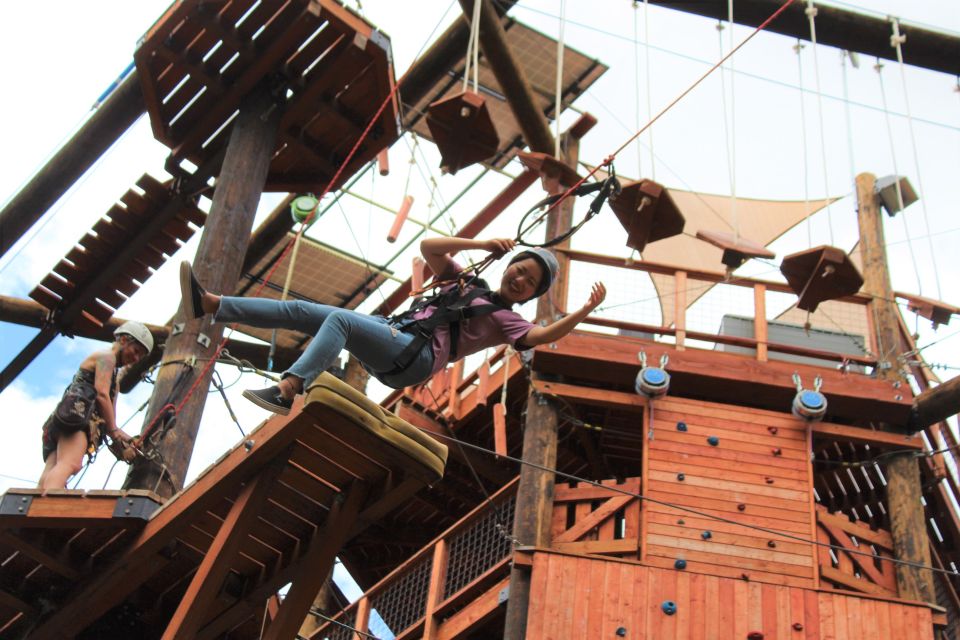
I’d book this if you want a short, structured thrill with multiple types of challenges: a tower, a high ropes course with 18 elements, rappelling/abseil-style moves, jumping, and a climbing wall. It’s also a strong pick if you enjoy learning on the job—because instructors give tips on getting roped in and how to move through obstacles.
You should think twice if any of these are true: you don’t meet the weight/height rules, you have back or heart issues, or you’re dealing with mobility limitations. It’s also not a good match if you’re looking for an easy day. Even with coaching, it’s a workout.
If you’re worried about distance, plan around the drive from Waikiki and give yourself time if you’re going at busier hours. Renting a car can make the whole day smoother.
For people who like adrenaline but also want safety structure, this is a very solid Oahu choice.
FAQ
How long is the Coral Crater high ropes and tower experience?
It lasts about 90 minutes.
What’s included with the ticket price?
Your ticket includes an instructor and safety gear.
Do I need closed-toe shoes?
Yes. Closed-toe shoes are required, and open-toed shoes are not allowed.
What are the height and weight requirements?
Participants must weigh between 40 lbs and 275 lbs (124 kg) and you’ll be weighed at check-in. You must be 4’6” to independently navigate the course. If you’re shorter than 4’6” (and at least 6 years old), you can still participate with an adult guide leading you through or by hiring one of the guides to help with safety tasks.
Does the activity run in the rain?
Yes. It takes place rain or shine.
How far is Coral Crater from Waikiki?
It’s about a 40-minute drive from Waikiki with no traffic, but afternoon weekday traffic can take over an hour.
Is food or drinks included?
No. Food and drinks are not included.