REVIEW · MAUI
Self-Guided Audio Driving Tour in Road To Hana
Book on Viator →Operated by GuideAlong (GyPSy Guide) · Bookable on Viator
Road to Hana is a big day. The twist here is that your audio guide tracks your GPS and starts talking right when you reach the next sight. That means you get the stories and tips without having to ride in a tour bus or follow a rigid schedule.
Two things I really like: the step-by-step guidance that helps you not miss key spots, and the fact that it’s built for real driving conditions with offline use after you download. One consideration: a few major stops on the route require extra planning, like reservations and passes, so you’ll want to line those up before your drive.
In This Review
- Key Points Before You Hit the Road
- GPS Audio That Actually Matches the Road
- Price and Offline Value for Independent Drivers
- How Long Is Enough Time? (8 to 16 Hours)
- Stop-by-Stop Highlights: Hana Highway to Ho‘okipa
- Ke‘anae Arboretum: No-Cost Rainforest Perspective
- Hana Lava Tube: Explore Without Overcommitting
- Ho‘okipa: Ocean Energy, Not a Swim Stop
- Ke‘anae Point: Lava, Ocean, and a Coral-Lava Church
- Waterfalls and Beach Breaks: Twin Falls to Hamoa
- Twin Falls Maui: The Mud Walk That Pays Off
- Upper Waikani Falls: The 3 Bears Effect
- Koki Beach: Coastal Legend and a Photo View
- Hamoa Beach: Family-Friendly When Conditions Allow
- Wai‘anapanapa and Pipiwai: The Main Event Finale
- Wai‘anapanapa State Park: Black Sand, Sea Arch, Blowhole
- Pipiwai Trail: A Moderate Loop With Big Payoff
- Driving Reality Checks That Make the Day Easier
- Who Should Book This (and Who Might Not)
- Should You Book This Self-Guided Audio Tour?
- FAQ
- How much is the Road to Hana self-guided audio tour?
- How long does the tour take?
- What language is the tour offered in?
- Does the tour include admission tickets or reservations?
- Do I need an NPS pass for the Pipiwai Trail?
- Will it work without cell service?
- Can I start and stop the tour anywhere along the route?
Key Points Before You Hit the Road
- GPS-triggered narration: your audio starts automatically as your car’s location changes
- Flexible stop strategy: you can skip what you do not want and keep moving
- Offline-friendly: download ahead so you do not worry about losing cell service
- Real timing help: it’s designed around the long hours this drive can take
- Built for self-guided independence: one purchase covers everyone in your vehicle (up to 8)
GPS Audio That Actually Matches the Road
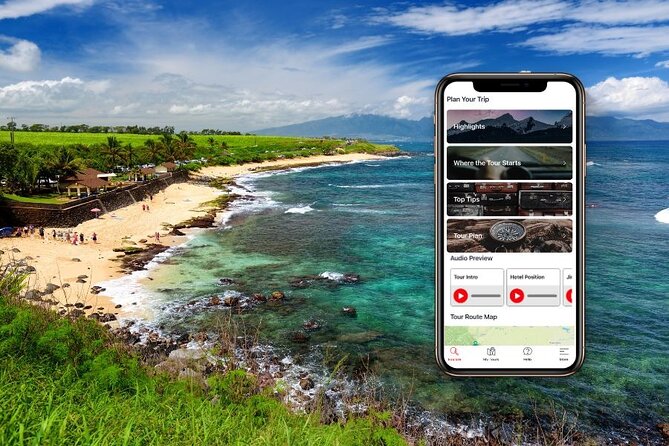
Road to Hana is not a place where you want to constantly check your phone. This audio tour solves that by pairing your phone’s GPS with location-based commentary. As you pass markers along the route, you hear directions, context, and behind-the-scenes stories right as you need them.
It also changes the feeling of the trip. Instead of staring out the window and hoping you know what you are looking at, you get a running explanation of why the place matters—plants, lava history, Hawaiian legends, and small practical notes like what to expect from the trail or the conditions at the beach.
And yes, the humor helps. More than one person called out that the narration feels friendly, like someone riding shotgun with you—some even named the narrator in their own way (examples include George and Uncle George in the feedback you provided). That tone matters because the Road to Hana can feel long and repetitive if your day is only scenic views.
You can also read our reviews of more guided tours in Maui



Price and Offline Value for Independent Drivers
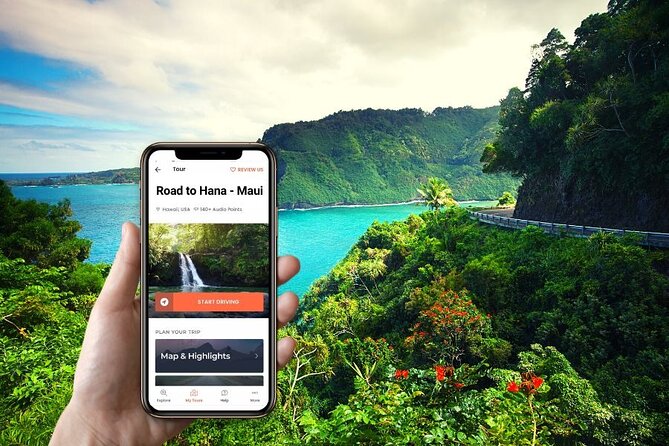
At $19.99 per group (up to 8), the value is strongest if you are traveling with family or friends in one vehicle. It’s not priced like a per-person activity that forces you to multiply costs. One purchase lets everyone ride with the same soundtrack and directions.
The other reason this is such a good budget-friendly option is the offline design. Once you download the audio tour through the GuideAlong app, the commentary does not rely on constant cell service. That matters on Hana because service can be spotty. In the feedback you shared, a big theme was that the tour kept working even when people had little to no signal.
Practical tip: if your phone battery tends to drain fast, plan to use a car charger. You do not want low battery to turn your audio guide into a silent slideshow while you are negotiating curves.
How Long Is Enough Time? (8 to 16 Hours)
The tour duration is listed as 8 to 16 hours, and that range is honest. The road itself is slow, and each stop adds time for parking, walking, bathrooms, photos, and getting back in the car.
Here’s the planning advice that matters most: start early. One reviewer specifically recommended leaving by about 8AM at the latest because driving in the dark is miserable and the day becomes harder to manage. Also, Hana is not a checklist you can sprint through. If you want the waterfalls and the coastal parks, give yourself a real window.
Then use the tour’s built-in flexibility:
- If you want a short day, you can treat it like a highlights drive and skip the longer hikes.
- If you want a full Hana day, you can stack stops and plan around the major timed-entry places.
Because the audio is location-based, you are not locked into a single rigid departure time from a specific hotel. The tour’s commentary can be started and resumed using your phone, and you can effectively start your experience anywhere along the Hana route and still get guidance.
Stop-by-Stop Highlights: Hana Highway to Ho‘okipa
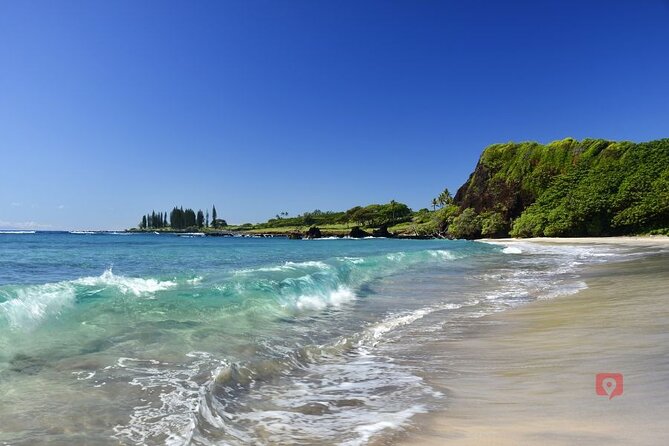
You begin on the Hana Highway area of Maui, and the tour’s audio guide plays automatically based on GPS. Think of Stop 1 as your set-up: the guide gives you step-by-step driving instructions to the key sights along the route, plus stories and tips while you roll along.
Ke‘anae Arboretum: No-Cost Rainforest Perspective
Ke‘anae Arboretum is one of the easiest wins on this drive: it takes less than 30 minutes and it is free. You’re looking at tropical plants—golden-stemmed bamboo, ginger, papaya, hibiscus—plus a trail that follows the Piinaau Stream.
The photo moment here is the Rainbow Eucalyptus, known for bark colors that look almost too good to be real. Keep walking a bit and you’ll also see evidence of ancient Hawaiian taro cultivation terraces tied to the landscape.
You can also read our reviews of more tours and experiences in Maui





Hana Lava Tube: Explore Without Overcommitting
Next up is Hana Lava Tube. It’s a cave/lava-tube experience that is often considered one of the most accessible on Maui. The practical part: you can go in some distance without feeling forced to explore the full interior if you are not into claustrophobic spaces.
This is one of those stops that changes your understanding of the island’s shape. The road to Hana is full of water and green—lava tubes remind you that the foundation is volcanic.
Ho‘okipa: Ocean Energy, Not a Swim Stop
Ho‘okipa is more about watching the ocean than getting in it. The tour notes it is not recommended for swimming due to constant winds and currents, but it is spectacular for chilling and watching world-class windsurfers.
One small wildlife detail is worth following: turtles are often visible snoozing near the shore (and yes, they can sleep in the water). Keep your distance and do not touch. If you bring kids, this is still a good stop—just treat it as an observation point, not a beach day.
Ke‘anae Point: Lava, Ocean, and a Coral-Lava Church
Ke‘anae Point is a flat peninsula where old lava flows shaped the coastline. It’s an ideal spot to see how Haleakalā’s volcanic energy shaped the land, and the area is linked to taro farming.
There’s also a small church built from coral and lava rock, reportedly more than a century and a half old. Even if you are not into architecture, it’s a striking cultural marker in a landscape that otherwise screams geology.
A practical bonus: coconuts can sometimes be found along the shoreline, and the waves hitting the rocky outcrops make for great waiting-time entertainment.
Waterfalls and Beach Breaks: Twin Falls to Hamoa
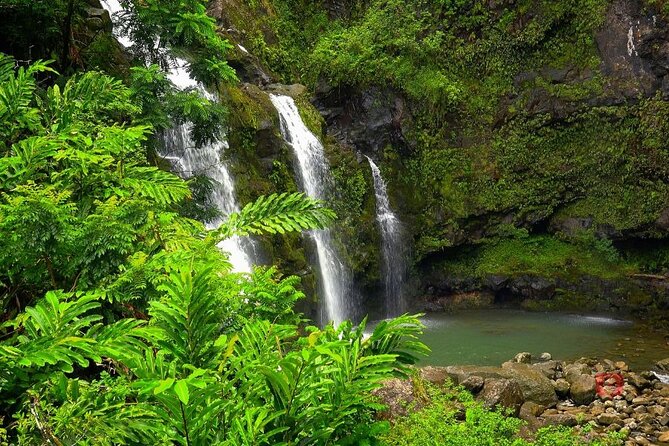
This part of the drive is where Hana starts feeling like a rhythm: short car stops, quick trails, then water again—falls and surf.
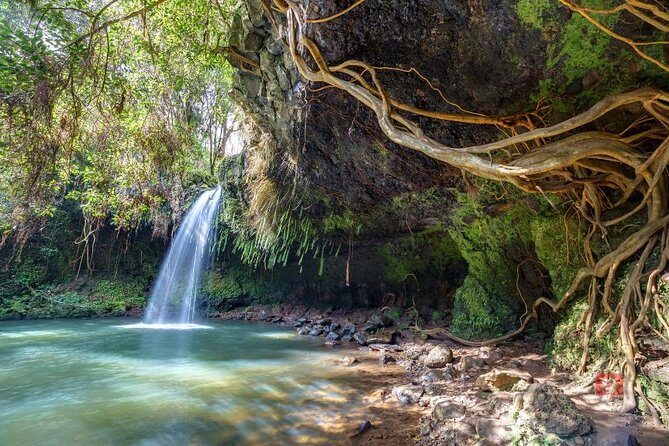
Twin Falls Maui: The Mud Walk That Pays Off
Twin Falls is commonly the first place on Hana where you’ll want to step out and do a short hike. The trail is about 1.5 miles, and bamboo forest is part of the vibe.
The key heads-up: the trail is frequently muddy, so wear shoes you can get dirty and potentially wet. You can choose how far to go, and the tour also mentions a farmstand for grabbing tropical fruit smoothie-style drinks.
Upper Waikani Falls: The 3 Bears Effect
Upper Waikani Falls is also called 3 Bears Falls because the flow changes the look. After heavy rain, water may appear as one big stream (the bear), while lighter water can split into three separate falls—one large, one medium, and one small.
This stop is popular for a reason: it’s the rare waterfall where the guide helps you interpret what you see based on conditions rather than just saying it’s beautiful.
Koki Beach: Coastal Legend and a Photo View
At the Koki Beach area, you can enjoy views toward Alau Island, described as an ex-cindercone sitting about a quarter mile offshore. That makes it interesting even if you only stop for photos.
The cultural layer is also part of the tour’s tone here. The area connects to Hawaiian legends about Pele and Maui, giving the ocean a deeper story beyond postcard scenery.
Hamoa Beach: Family-Friendly When Conditions Allow
Hamoa Beach is a small crescent of sand with public bathrooms and showers, and it’s timed nicely for stretching your legs and cooling off. But keep the safety expectations realistic: there are no lifeguards.
The tour notes it can be family friendly when conditions are calm. If the day is windy, treat this as a view-and-rest stop, not a swim guarantee.
Wai‘anapanapa and Pipiwai: The Main Event Finale
If you do just one “big” end-of-day plan, make it Wai‘anapanapa and the Kipahulu-side hike options. These are the stops most likely to shape whether you have a smooth day or a stressful one.
Wai‘anapanapa State Park: Black Sand, Sea Arch, Blowhole
Wai‘anapanapa State Park is home to Maui’s famous black sand beach and multiple volcanic-coast features. You’ll want to follow signs to explore along the beach to spot a sea arch and a blowhole.
This is also a stop with reservations required for entry. One reviewer suggestion was blunt: get reservations if you want to enter, because it can make or break your day.
Plan for time too. The tour suggests about 2 hours, which is a good amount for walking the coast, looking at blowhole areas, and taking in the black sand without feeling rushed.
Pipiwai Trail: A Moderate Loop With Big Payoff
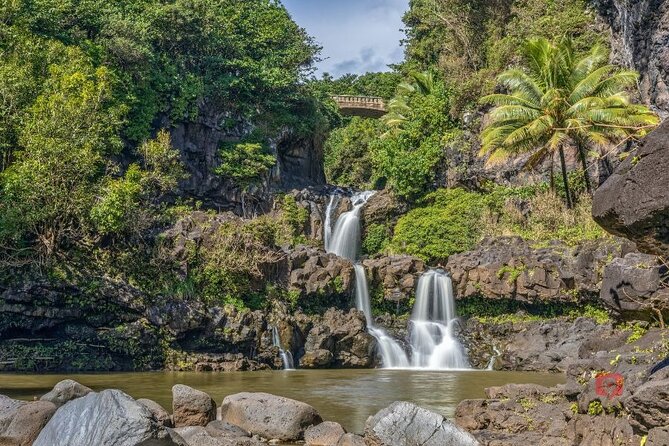
Pipiwai Trail is at Oheo Gulch in Kipahulu, at the end of the drive. It is inside Haleakalā National Park, so you’ll need to show your NPS pass for entry or purchase one on arrival.
The full hike is a 4-mile loop with about 650 feet of elevation gain. It’s described as moderate, but heat can make it feel harder than you expect. Expect a walk time of 2+ hours, depending on your pace and conditions.
You’ll pass highlights like views of Makihiku Falls. Most people continue to Waimoku Falls, which is framed as the highlight and furthest point. Bamboo forest sections are described as especially peaceful, which matters on a busy Hana day.
Timing tip from the tour guidance: if you arrive at the trail by 2PM, you should have plenty of time to hike and still drive back. That’s the kind of advice that keeps you from turning the day into a sprint.
Driving Reality Checks That Make the Day Easier
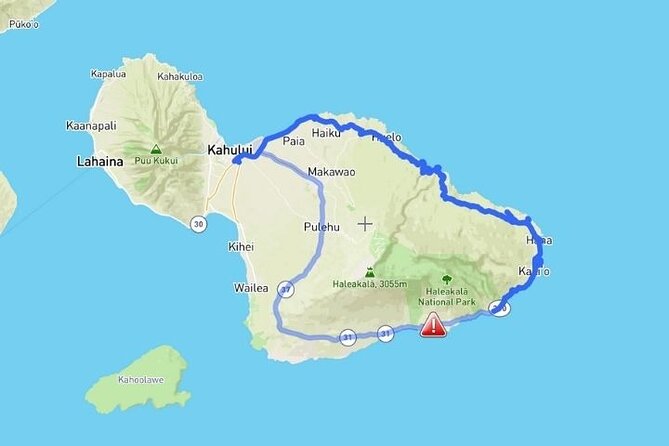
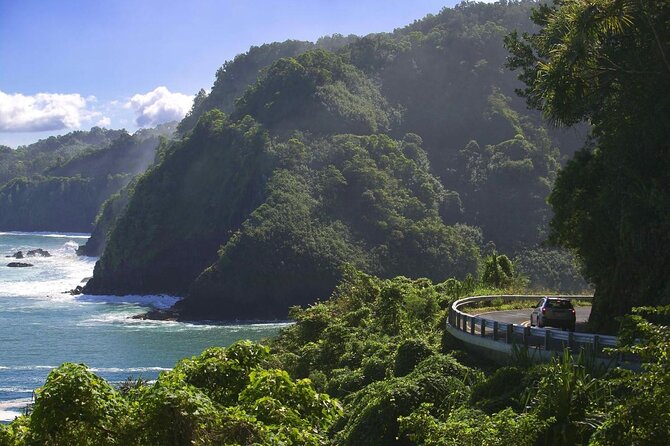
The Road to Hana is not hard because it is confusing. It is hard because it is slow and it asks for patience.
From the feedback you shared, I’m taking two driving realities seriously:
- Expect lots of curves and one-lane bridges, and be ready to yield to locals and traffic.
- Your day gets easier when you plan for a slow pace. Starting early helps. Staying ahead of sunset helps. Dark driving on this road is not a fun option.
Also, remember that this is a self-guided experience. You’ll still rely on your own driving choices for parking spots, crowd moments, and when to stop. The audio guide helps you pick the stops and understand what you’re seeing, but it does not replace good road judgment.
Who Should Book This (and Who Might Not)
This works best for independent travelers who:
- Want to drive the Road to Hana on their own schedule
- Prefer cultural and historical stories, not just scenic talking points
- Are traveling in a group that can share one purchase in one vehicle
It’s also a solid option if you dislike the pressure of a group tour timeline. One of the most repeated benefits in the feedback you provided was how the GPS-synced audio reduces stress—especially during stretches with no cell service.
Where it might not fit as well:
- If you hate using an app or managing downloads ahead of time, you might find the setup annoying.
- If you only want one quick stop and zero planning, the Road to Hana probably won’t match your style anyway, because the route rewards a full-day mindset.
Should You Book This Self-Guided Audio Tour?
Yes, if you want maximum Hana for your money and you like the idea of hearing what you’re looking at at the exact moment you’re there. At $19.99 per group for up to 8 people, it’s hard to beat—especially when it stays usable offline once downloaded.
Before you commit, do two quick checks:
- Confirm you can handle any reservations (especially Wai‘anapanapa State Park) and any passes required for places like Pipiwai.
- Charge your phone and plan for a long day. If you start early and keep realistic stop times, the audio guide turns the drive into something smoother and more meaningful.
If you’re ready to drive, be patient, and take breaks on purpose, this audio tour is a strong way to experience Hana without paying big tour-bus prices.
FAQ
How much is the Road to Hana self-guided audio tour?
It’s $19.99 per group, up to 8 people.
How long does the tour take?
Plan for about 8 to 16 hours depending on how many stops and how much hiking you do.
What language is the tour offered in?
The tour is offered in English.
Does the tour include admission tickets or reservations?
Admission tickets and timed entry/reservations are not included. Stops like Wai‘anapanapa State Park require reservations for entry.
Do I need an NPS pass for the Pipiwai Trail?
Yes. Because Pipiwai Trail is inside Haleakalā National Park, you need to show an NPS pass for entry or purchase one on arrival.
Will it work without cell service?
Yes. After you download the tour, it works offline, and cell service is not required during the drive.
Can I start and stop the tour anywhere along the route?
Yes. Commentary plays automatically based on your location, so you can start and end your experience along the Hana route where it works best for you.