REVIEW · MAUI
Lahaina: Day or Sunset Whale Watching Tour with Naturalist
Book on GetYourGuide →Operated by Dive Maui/Hawaiian Rafting Adventures · Bookable on GetYourGuide
Whales up close, without the big-boat fuss. This Lahaina humpback whale tour takes you out from Front Street toward the Maui Nui whale sanctuary, then pairs you with a naturalist and a custom inflatable raft for intimate viewing.
I especially like the small-boat feel and how guides keep the experience real and educational, with names like Rene and Joe showing up again and again in the crew lineup. I also like the hydrophone part, where you can actually hear whale songs through speakers, not just watch from the surface.
One consideration: this is an ocean trip on an inflatable raft, and it needs good weather. If wind and chop are strong, expect a rockier ride and plan for motion comfort.
In This Review
- Key highlights worth your time
- Entering Lahaina’s whale sanctuary world from Front Street
- How the raft changes what you see
- The naturalist experience: what you’ll learn without a lecture vibe
- Auau Channel whale watching: the pacing that keeps you in the action
- The hydrophone moment: hearing what you’d otherwise miss
- What the itinerary feels like in real time
- Sea comfort and safety: small raft, real ocean motion
- Weather risk: why the tour stresses good conditions
- Price and value: what $80 buys you (and what it can’t guarantee)
- Who this tour suits best
- What I’d do before you book (so you don’t waste a Maui day)
- Should you book the Lahaina whale watching tour with Naturalist?
- FAQ
- Where is the meeting point?
- How long is the tour?
- Is hotel pickup included?
- What is included in the tour price?
- What should I bring or avoid?
- What happens if the weather is bad?
Key highlights worth your time
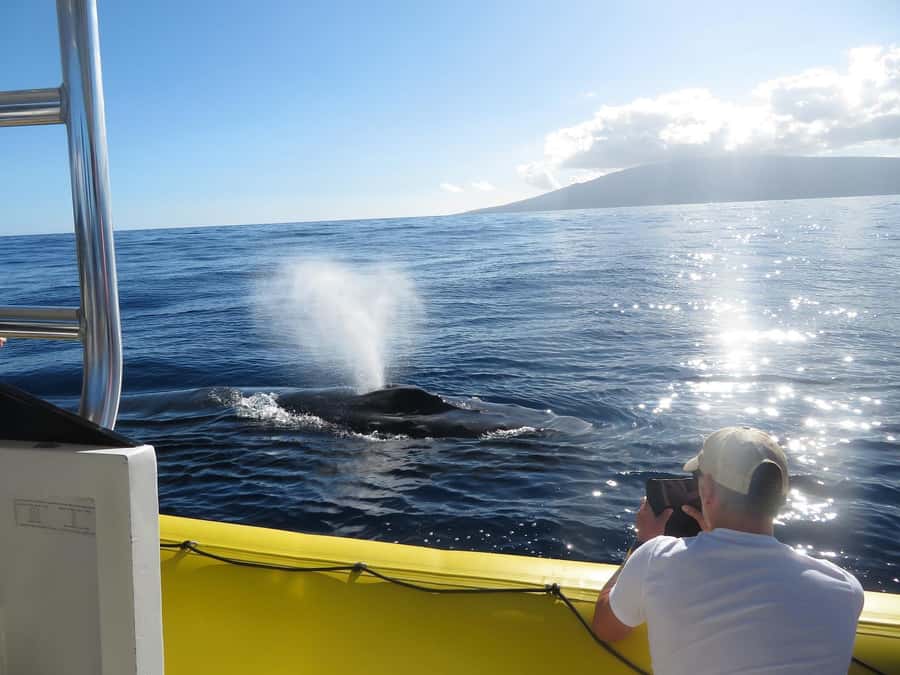
- Custom-made ocean raft that gets you closer than the usual high-sided boat setup
- Onboard naturalist who explains what you’re seeing, from behavior to the season’s why
- Hydrophone + speakers so you can hear whale songs while you watch
- Maui Nui whale sanctuary route in search of winter humpback activity
- Guaranteed sightings or a free return trip when conditions cooperate
Entering Lahaina’s whale sanctuary world from Front Street
Lahaina is busy, scenic, and loud in a good way. But once you meet at 1223 Front St (Dive Maui), the day shifts into something calmer: ocean time. You’ll walk a short stretch before heading out, then spend the main chunk of the outing in the Auau Channel area looking for humpbacks.
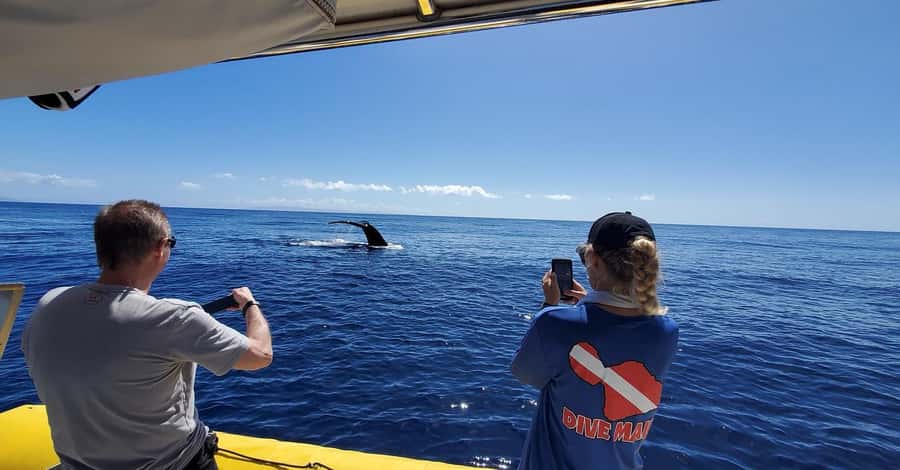
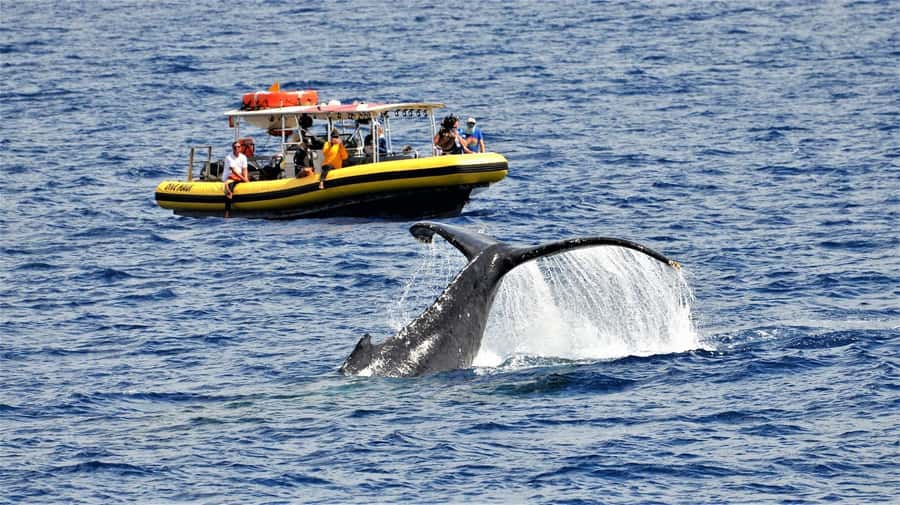
The big appeal here is that this is not whale watching as a distant sightseeing exercise. You’re on a raft built for close contact. When whales surface near the boat, you feel it in your body, not just your phone screen. That closeness is also why this tour tends to get such strong reactions. In multiple bookings, people highlight encounters where whales stayed near the group and even swam beneath the boat.
You can also read our reviews of more evening experiences in Maui



How the raft changes what you see
A lot of whale tours look similar on paper: you go out, you scan the water, you hope for action. The real difference is how the boat handles and how much you can interact visually.
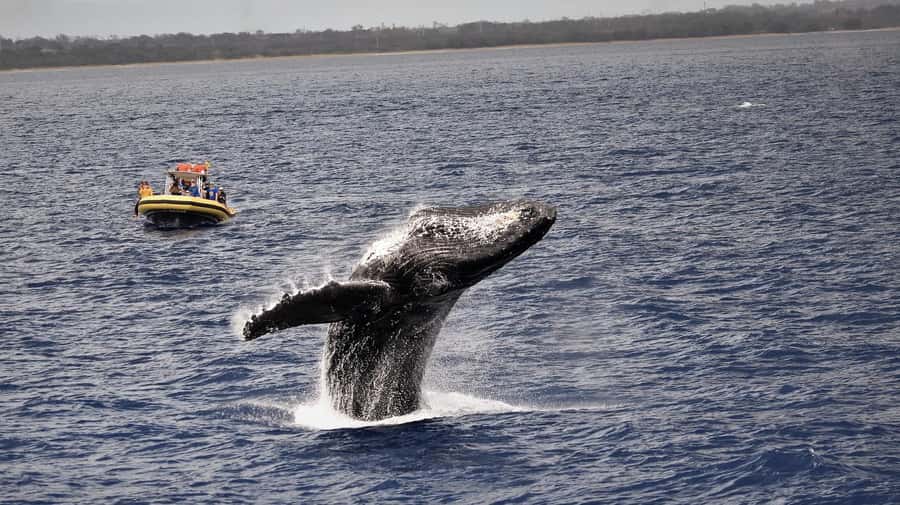
Here, the custom-made inflatable raft is the heart of the experience. It’s designed to keep you low and close to the ocean surface, which matters for humpbacks. Their behavior often plays out in three ways: breaching near the surface, tail slaps and slaps from angles you can’t predict, and “slow cruising” that’s hard to notice unless you’re positioned well.
In reviews, people repeatedly mention seeing whales go under the raft and staying with the group for minutes at a time. That’s the payoff of a smaller, raft-style platform. It’s also why the experience feels more like shared time with wild animals, rather than a quick stopover from far away.
The naturalist experience: what you’ll learn without a lecture vibe
This tour is built around an onboard naturalist. That’s not a small detail. If you’ve ever watched whales without context, you know how easy it is to miss what you’re actually seeing.
The naturalists on this tour are the kind of educators who connect behavior to meaning. In recent trip reports, names like Rene, Brian, Renee, and Marina show up as guides who explain what the animals are doing and why. You’ll also hear the crew’s explanations as the captain positions the raft. That helps you understand why the captain makes certain turns or changes in speed.
Seasonal context helps, too. Humpback whales migrate to Maui waters in winter to mate and give birth. When you see mothers and calves, escorts, or more dramatic surface activity, the narration gives it a framework. It turns a “cool animal sighting” into a story you can follow.
Auau Channel whale watching: the pacing that keeps you in the action
Your main time on the water is about two hours. That’s a healthy window, because humpbacks don’t run on your schedule. Some trips start strong. Others take a bit of searching before the first good encounter.
What you’re looking for is simple: find whales, position smartly, then give everyone clear viewing. In multiple reports, the captain is described as getting the group to whale activity quickly, rather than drifting around for long stretches. People also note that there can be multiple kinds of moments in one trip: a series of surface blows, a breaching burst, then quieter time when whales hang under or alongside the raft.
Also keep in mind you may see more than whales. Some bookings mention dolphin sightings alongside the whales. That’s not the promise, but it’s a nice bonus when the ocean gives you variety.
The hydrophone moment: hearing what you’d otherwise miss
The hydrophone and speaker setup is one of the most memorable parts for first-time humpback watchers. You’ll hear whale songs while you’re on the water, not just after the fact from a recording.
Why this matters: whale vocalizations can happen even when you’re not looking at the exact moment the whale is singing. With the hydrophone running, the day feels more alive. The ocean isn’t silent background noise anymore. It becomes part of the show.
In practice, the effect is straightforward. You watch a surface event, then you hear the vocal activity through the speakers, and suddenly the animal feels connected to you in a new way. It’s a rare feature on casual whale tours, and it’s one of the reasons the ratings are so high.
You can also read our reviews of more whale watching tours in Maui



What the itinerary feels like in real time
This is a fairly simple structure, and that’s good news if you like clarity and hate rushing.
- Meet at Dive Maui (1223 Front St): Arrive on time. The tour leaves on schedule, and there’s no hotel pickup to “catch you later.”
- A short walk before getting on the water: Expect a brief transition from land to boat time.
- Main whale watching in the Auau Channel area: This is the heart of the day, typically about two hours.
- Back to Front St: Then you’re done, no long bus transfers or extra stops.
The time window is 90 minutes to 2 hours, depending on the departure. That range is common for sea conditions and where the captain finds the best whale activity.
Sea comfort and safety: small raft, real ocean motion
An inflatable raft can feel very close to the waterline. That’s also why motion matters. One reviewer specifically recommended Dramamine if you get sea sick, and they noted it was a bit rocky when it was windy, with things smoothing out later.
So here’s the practical take: if you’re sensitive to motion, treat this as a real possibility, not a maybe. And if you have any concerns about your health, read the “not suitable” list carefully.
Not suitable for:
- children under 2 years
- pregnant women
- people with back problems
- people with heart problems
- wheelchair users
Service animals are allowed, and the trip runs in English.
One more rule to plan for: no glass objects on the tour. It’s common on water-based activities, but it’s easy to overlook if you show up with a small glass bottle or container.
Weather risk: why the tour stresses good conditions
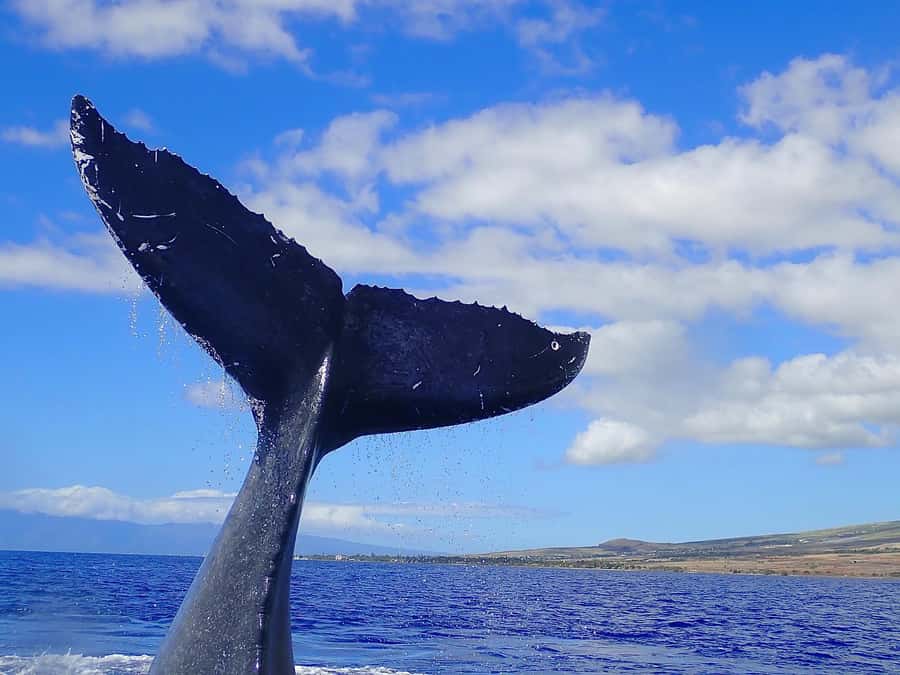
This experience requires good weather. That doesn’t mean you’ll always get a postcard day. It means the operators are watching the conditions closely enough that they can safely run, and they won’t just push out no matter what.
The good news is that if it’s canceled due to poor weather, you’ll be offered either a different date or a full refund. That flexibility matters on Maui, where you can get big swings in wind and sky across a short time window.
Also note the meeting point doesn’t include hotel pickup. So you need to be ready to get yourself there reliably.
Price and value: what $80 buys you (and what it can’t guarantee)
At about $80 per person, this is not a bargain whale watch. But it also isn’t priced like a luxury private charter. The value comes from two things you can feel:
1) Closer boat format: Smaller raft-style viewing can change what’s possible, especially when whales swim under or stay near the group.
2) Naturalist + hydrophone: You’re not just scanning the ocean. You’re learning and listening while you watch.
There’s also a confidence lever: the tour highlights guaranteed sightings or a free trip for another day. That’s a meaningful value add, because whales can be unpredictable. No operator can control what the ocean does. But a sighting guarantee (or return option) shifts the risk away from you.
Still, keep expectations grounded. One booking noted they didn’t get much whale action even though the crew was great. That’s a reminder that whale watching is always partly chance. What you can control is your preparation: choose a day when you can stay flexible, and be comfortable with the reality that weather and whale behavior drive the final result.
Who this tour suits best
I’d put this tour at the top of your shortlist if you want:
- close viewing rather than “from far away” spotting
- a guided learning experience instead of silent scanning
- audio support through whale songs via hydrophone
It also works well for families, since it’s specifically described as a good option for the whole family. Just stay within the age and health limits.
If you’re the type who gets seasick easily, or you have any back or heart concerns, this may not be the best match. And if you use a wheelchair, this activity isn’t suitable.
If you love nature documentaries but hate when they’re boring in real life, this one has a built-in fix: narration plus the hydrophone gives your brain something to latch onto besides just waiting for a spout.
What I’d do before you book (so you don’t waste a Maui day)
You don’t need to overthink it, but you should plan like a real ocean trip.
- Pick the right day and keep flexibility because good weather is required.
- Be at Dive Maui early so you’re not stressed when it’s time to leave.
- Think about motion comfort if you’ve felt queasy on boats before. Dramamine came up in real trip feedback.
- Bring a simple, ocean-friendly setup and skip anything glass.
The tour is short. That means you’re spending a concentrated slice of your Maui time on the water. When it goes well, it can be the kind of activity you remember long after the rest of the vacation fades.
Should you book the Lahaina whale watching tour with Naturalist?
Yes, if you want the most “up close” humpback experience that still feels guided, not chaotic. The combination of a custom raft format, an onboard naturalist, and the hydrophone whale songs turns a standard whale watch into something more complete.
I’d book it especially if:
- humpbacks are your top Maui priority
- you like learning while you watch
- you want a small-boat feel rather than a crowded viewing line
- you’re okay with the weather-driven nature of ocean trips, and you can handle being rescheduled if needed
Skip it if you fall into the stated limits (age, pregnancy, back or heart issues, wheelchair use). And if you need calm, guaranteed smooth waters, you should choose a different kind of day, because this one is tied to real sea conditions.
If you can handle that, you’re in for a strong chance at multiple whale moments, and plenty of chances for the kind of encounters people describe as unforgettable.
FAQ
Where is the meeting point?
Meet at Dive Maui at 1223 Front St. You can park along Front St or at the Lahaina Cannery Mall, and you should arrive on time since tours leave on schedule.
How long is the tour?
The duration is listed as 90 minutes to 2 hours.
Is hotel pickup included?
No. Hotel pickup and drop-off are not included, so you’ll need to get yourself to the meeting point.
What is included in the tour price?
The tour includes whale watching with a naturalist. Food and drinks are not included.
What should I bring or avoid?
Glass objects are not allowed. If you get motion sick, the trip is on a smaller inflatable raft and can feel rocky in wind, so it can help to plan for seasickness comfort.
What happens if the weather is bad?
This experience requires good weather. If it’s canceled due to poor weather, you’ll be offered a different date or a full refund.