REVIEW · MAUI
Maui: Group Surf Lesson
Book on GetYourGuide →Operated by Sea Maui Surf · Bookable on GetYourGuide
A little salt water goes a long way in Maui. This 90-minute group surf lesson at Ka’anapali Beach turns first-timers into wave-chasers with an instructor right there. You start on land with a safety chat, then move fast into the real thing: paddling out and learning how to stand up when the board starts moving.
Two things I really like are the small group size (up to four) and the way the instruction stays hands-on. You get real coaching, not just a speech, and your instructor stays close enough to correct what matters before you repeat a mistake.
One consideration: this is for people who feel comfortable swimming in the ocean, and the lesson isn’t set up for everyone. If you have back problems or mobility limitations, this may not be the best fit.
In This Review
- Key highlights you’ll feel from the start
- Where you meet Sea Maui Surf at Whalers Village
- Ka’anapali Beach surfing: what the 90 minutes feels like
- Gear that removes friction: rashguard, reef booties, board leash
- The lesson flow: briefing, coaching in the water, then first wave chances
- Why the small group limit matters (more than you’d think)
- Catching waves at Ka’anapali: what to expect in real conditions
- Safety and supervision: the instructor stays close
- After your session: that Maui moment of earned confidence
- Price and value: is $120 for 90 minutes fair?
- Who this Maui surf lesson is best for
- Practical tips so you don’t waste your first session
- Weather reality: when the ocean changes the plan
- Should you book this Ka’anapali group surf lesson?
- FAQ
- How long is the Maui group surf lesson?
- How much does it cost?
- Where do I check in for the lesson?
- What surf gear is included?
- What should I bring?
- What age is this lesson for?
- How big are the groups?
- Is the instruction offered in English?
- What if weather conditions affect the lesson?
- What is the cancellation window?
Key highlights you’ll feel from the start
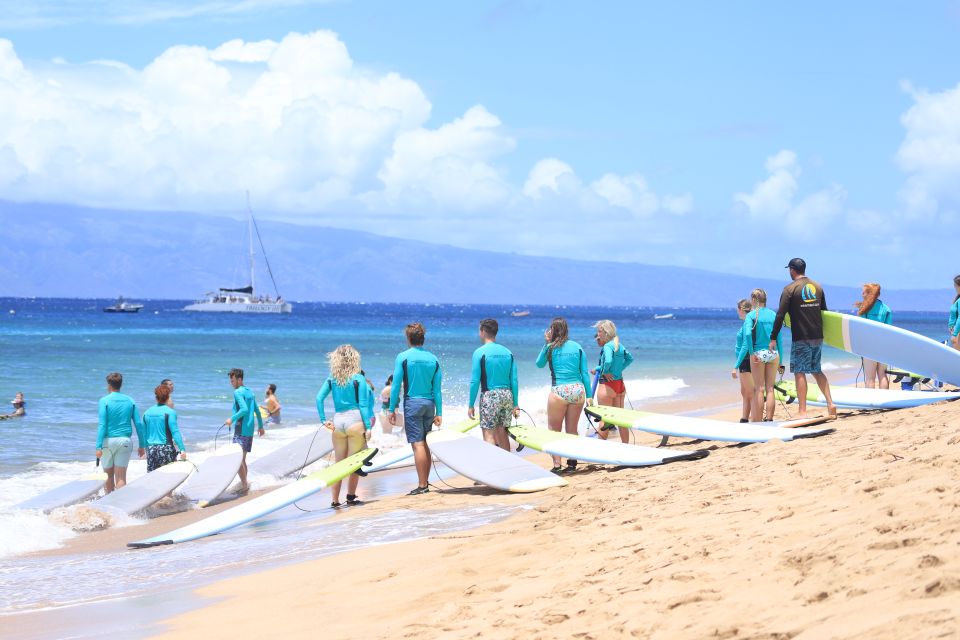
- Up to four students per instructor, so you actually get attention when you need it
- Ka’anapali Beach coaching, with the iconic Maui shore as your practice field
- Gear included: protective rashguard, reef booties, and a board with a leash
- Safety briefing before you hit the water, so you know what to do and why
- You paddle, you splash, you learn, and you keep trying until something clicks
- English instruction, making the steps easy to follow and repeat
Where you meet Sea Maui Surf at Whalers Village
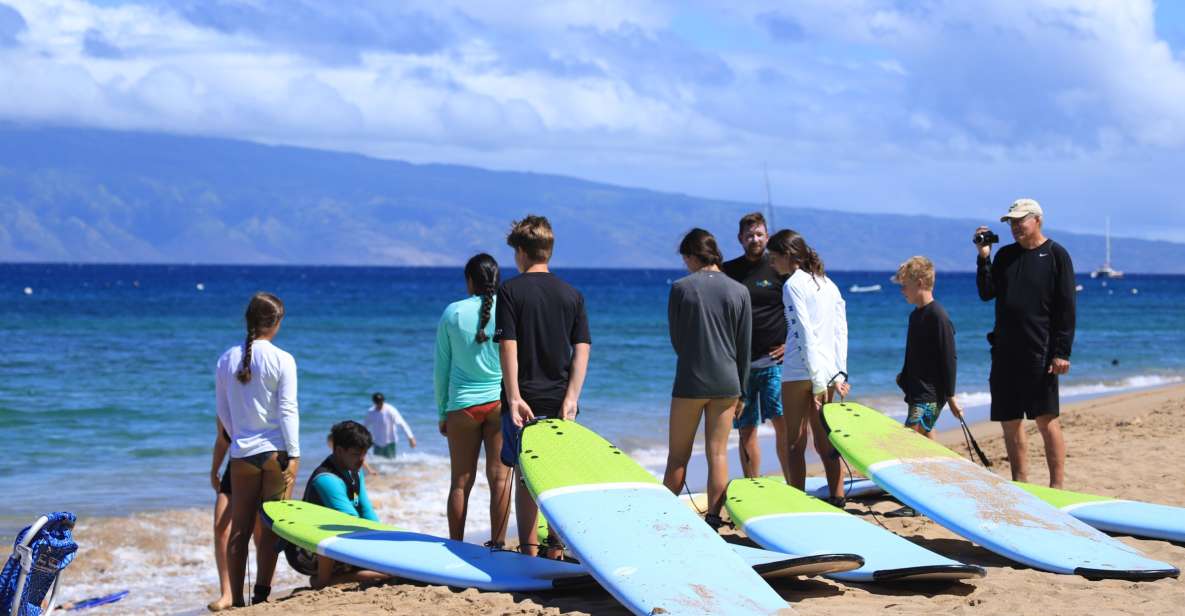
Your lesson starts at the Sea Maui Surf booth at Whalers Village, right on the beach side of the shopping area. It sits between Leilani’s restaurant and the Westin, so you can usually spot it as you walk toward the shoreline.
If you’re driving, plan to arrive early. Whalers Village parking can take time, and you’ll want enough buffer to check in without rushing.
One small detail I appreciate: there’s a way to get four hours of complimentary validation if you bring your ticket from the Whalers Village parking structure during check-in. That can take some sting out of a day on Maui.
You can also read our reviews of more tours and experiences in Maui


Ka’anapali Beach surfing: what the 90 minutes feels like
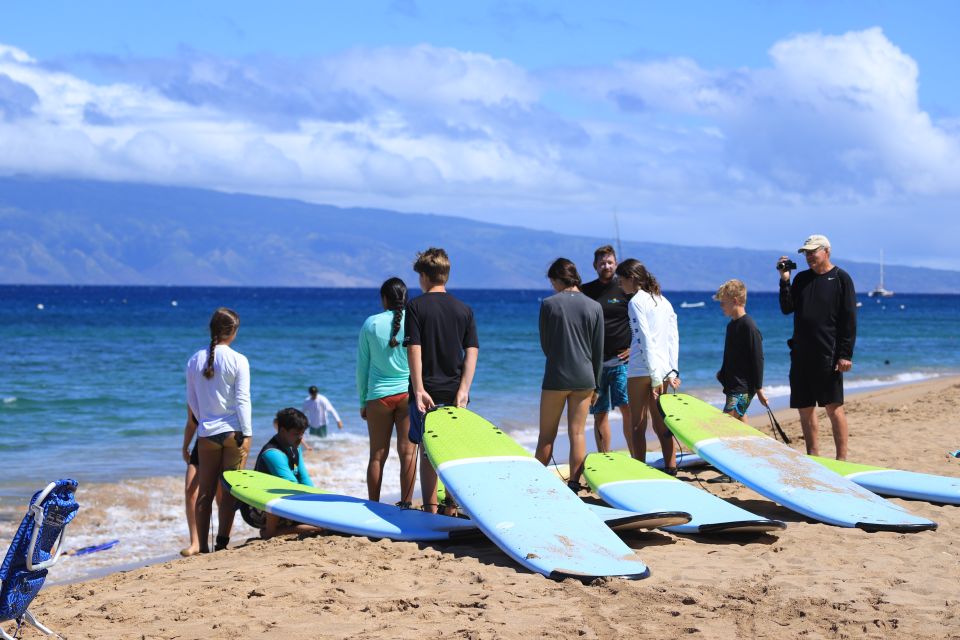
This isn’t a long, drawn-out tour. It’s a focused surf lesson built to get you into the water and working on real skills. You’re out for about 90 minutes, and the goal is simple: learn surfing basics and (when conditions allow) stand up and ride.
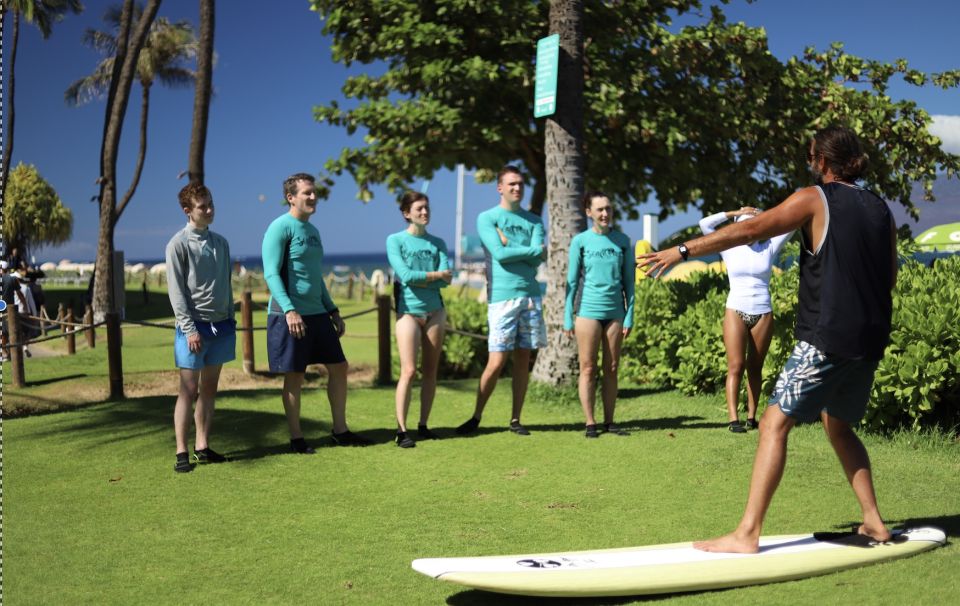
You’ll begin with a short briefing on the beach. It’s not complicated, but it matters. You’ll learn how to handle your board, how to approach the water safely, and how to listen for cues once you’re paddling.
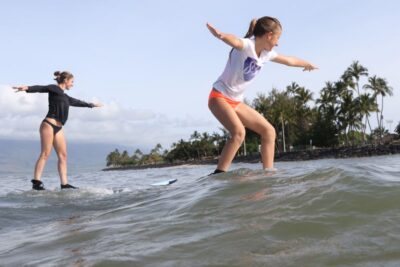
Then the lesson shifts into movement. You grab your board, walk down the sand, and paddle out while your instructor stays nearby. Expect the ocean to do what the ocean does. Even when you’re trying to be graceful, you’ll likely get a splash or two—the salty part comes with the sport.
Gear that removes friction: rashguard, reef booties, board leash
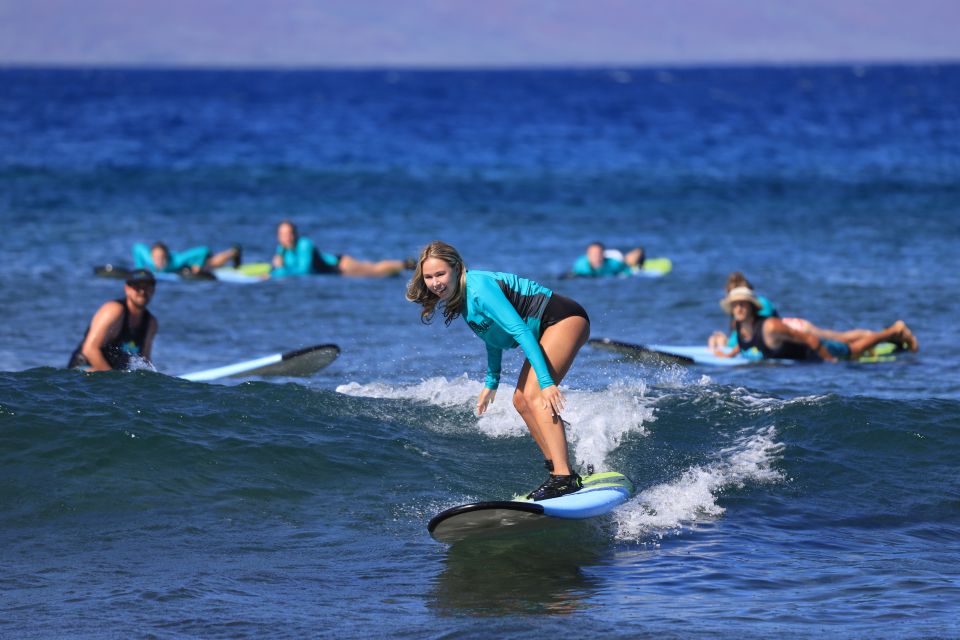
One reason I like this lesson setup is that you don’t waste time guessing what to wear. Protective items are included: a rashguard and reef booties, plus a surfboard and a leash.
That leash matters for beginners. It’s part of the safety plan and helps keep your board from drifting away from you during spills. (And yes, spills are part of the learning curve.)
Your job is straightforward: come prepared with swimwear and bring a towel. Also bring biodegradable sunscreen, since you’ll be in the sun and salt air for most of the session.
The lesson flow: briefing, coaching in the water, then first wave chances
Here’s the learning rhythm you can expect, step by step.
First, you meet your instructor and get an ocean safety briefing right there at the beach. This is where you learn the basic rules for how the session works and how to stay safe around waves and other students.
Next, you grab your equipment and head out. You’re not sent off on your own. Your instructor stays close, which means they can spot what you’re doing and help you adjust quickly. With a group capped at four participants, that “watch and correct” style is actually possible.
Once you’re paddling, the coaching focuses on the essentials: positioning, timing, and how to get into the stance when a wave is forming. You’ll repeat movements. You’ll feel clumsy at first. Then you’ll have that moment where the board feels more predictable and your body stops fighting the wave.
Why the small group limit matters (more than you’d think)
Surf lessons can turn into a crowd quickly, especially when everyone wants the instructor’s attention at the same time. This one has a built-in fix: the instructor maximum is four students.
In practical terms, that means you’re less likely to wait for feedback. Your instructor can watch your approach, your paddling rhythm, and your setup, then give targeted cues while you’re still in the water and the wave chance is happening.
You’ll also likely feel more comfortable asking questions. It’s easier to focus when you’re not competing for attention, and it’s easier to learn when the group is small enough for the instructor to track everyone’s progress.





Catching waves at Ka’anapali: what to expect in real conditions
Ka’anapali Beach is an excellent place to learn because it’s a classic Maui surf setting. You get the vibe and the setting, but you also get something more important: a shore where instructors can coach consistently.
Waves can vary by day. The lesson is designed to match conditions and keep safety first. When conditions are manageable, that first feeling of catching a wave can happen for many people during the session.
If the ocean is stronger or choppier than expected, don’t treat that like failure. Stronger surf simply means more caution, fewer chances for clean rides, and more time spent on the basics that build your foundation. You’re still learning the sport, even on days when the ocean demands more respect.
Safety and supervision: the instructor stays close
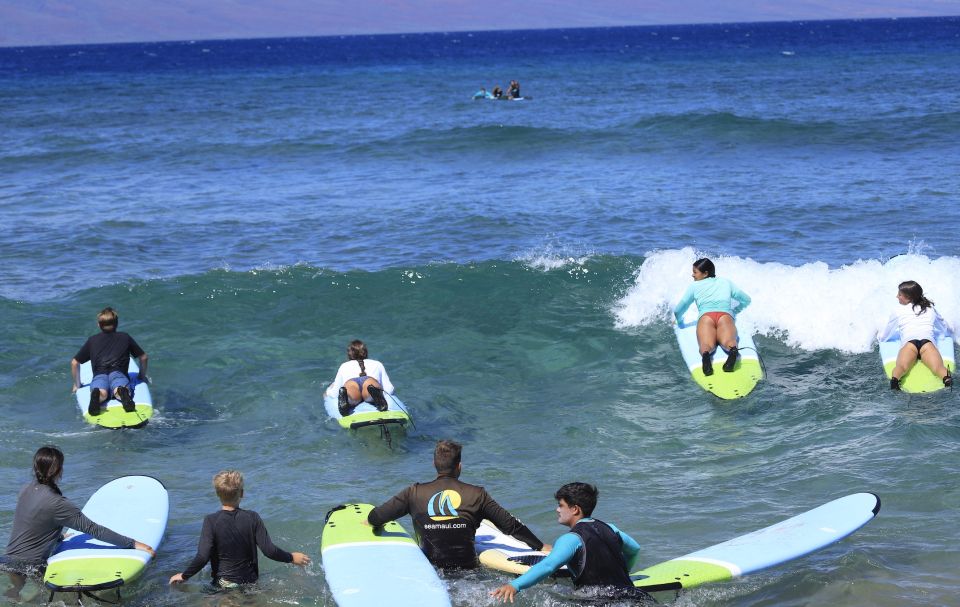
The biggest reassurance here is simple: your instructor is always at hand. You’re never fully on your own out there.
Before you paddle out, you get an ocean safety briefing. After that, you operate in the coached zone, where your instructor can guide your decisions and help you adjust to what you’re seeing.
This is also why the “small group” rule matters again. Safety isn’t just a checklist. It’s the ability to actively monitor what’s happening and respond quickly.
After your session: that Maui moment of earned confidence
When the lesson ends, you head back to the beach and take off gear. That part is underrated. After you’ve paddled out, tried standing up, and worked through the ocean’s ups and downs, you get a very real sense of accomplishment.
It’s the kind of experience that makes you feel like you actually participated in Maui, not just watched it. You walk away knowing more about the sport than you did at check-in—and you’ll probably be the person in your group who talks about what worked, what didn’t, and how the timing felt in your body.
Price and value: is $120 for 90 minutes fair?
At $120 per person for a 90-minute group lesson, this isn’t a budget activity. But it can be good value when you look at what’s included and how the session is structured.
You get all the key equipment you’d otherwise need to rent: board, leash, rashguard, and reef booties. That alone saves hassle and cost, especially if you’re not already packing surf gear.
Then there’s the group size. With up to four students, you’re paying for more direct attention and coaching than you’d get from a larger class. That matters in a skill like surfing, where one small adjustment can change your outcome fast.
So for me, the value comes from the combination: coached time in the water, safety focus, and gear included—at a price that aligns with a premium island experience.
Who this Maui surf lesson is best for
This lesson is designed for people 13 years or older who feel comfortable with their ocean swimming abilities. If you’re an adult beginner or a confident teen swimmer, you’ll likely fit right into the teaching style.
It also helps if you’re the type who can laugh at a wipeout and keep trying. The sport rewards persistence, and the structure of a small group lesson gives you more chances to practice.
Not suitable for: people under 13, people with back problems, and people with mobility impairments. If any of those apply, it’s worth choosing a different Maui activity that matches your body and comfort level.
Practical tips so you don’t waste your first session
A few things will make the day smoother.
Come wearing your swimwear. You’ll start and end at the beach, and it’s easier to transition quickly when you’re already set.
Bring a towel and keep your biodegradable sunscreen handy. Sun plus ocean time adds up fast, and you don’t want to think about it mid-lesson.
In the water, focus on listening for instructor cues. Surf is timing-heavy. If you’re unsure what to do, ask or watch the instructor’s correction style—small changes are where improvement happens.
Weather reality: when the ocean changes the plan
Surf lessons depend on conditions, and safety is the deciding factor. If the weather affects the session, it can be rescheduled or canceled.
If a rescheduled time doesn’t work out and the provider can’t accommodate an alternative, you should expect a full refund. That’s the kind of rule that protects you from getting stuck with an unsafe plan.
Should you book this Ka’anapali group surf lesson?
If you want a guided first surf experience without the stress of figuring out everything alone, I’d book it. The small group size, gear included, and close supervision are the winning combo for beginners.
You should also book if you’re comfortable swimming and you want to learn a real Maui activity in a short window. Ninety minutes is enough to get past the nervous stage and start making connections between paddling, timing, and standing.
Skip it only if you don’t feel comfortable in the ocean, or if back or mobility concerns make this kind of activity risky for you.
FAQ
How long is the Maui group surf lesson?
The lesson duration is 90 minutes.
How much does it cost?
It costs $120 per person.
Where do I check in for the lesson?
Check in at the Sea Maui Surf booth located on the beach side of Whalers Village, between Leilani’s restaurant and the Westin.
What surf gear is included?
The lesson includes a surfboard with a leash, a protective rashguard, and reef booties.
What should I bring?
Bring swimwear, a towel, and biodegradable sunscreen.
What age is this lesson for?
It’s for participants 13 years or older who feel comfortable with their ocean swimming abilities.
How big are the groups?
The lesson is a small group, limited to a maximum of four participants per instructor.
Is the instruction offered in English?
Yes, the instructor speaks English.
What if weather conditions affect the lesson?
Lessons can be rescheduled or canceled due to weather, with safety as the priority. If they can’t accommodate a rescheduled time, a full refund is issued.
What is the cancellation window?
You can cancel up to 24 hours in advance for a full refund.


![Diamond Head Hike [Starts at 7:00 a.m.] - The hike itself: what 30 minutes one way really feels like](https://4.honoluluandmaui.com/wp-content/uploads/diamond-head-hike-starts-at-700-a-m-400x267.jpg)