REVIEW · MAUI
Maui Small-Group Kiteboarding Lesson – Kite Beach
Book on Viator →Operated by Action Sports Maui · Bookable on Viator
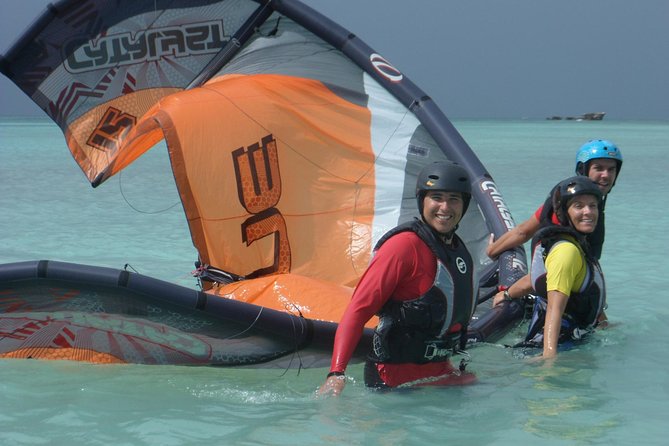
Kiteboarding starts with the kite, not the board. This Maui Small-Group Kiteboarding Lesson puts you on Kite Beach at Kahului Harbor, with a structured flow that moves from gear setup to beach training and then into the water. I like that it’s designed to be tailored to your skill level, so you do not need to arrive knowing what to do.
You’ll also get hands-on coaching through the parts that usually feel confusing, like launching and controlling the kite while you learn what to do next. The one real catch: you have to meet the physical and safety basics, including being able to SWIM and having moderate fitness, and the activity depends on good weather.
If you’re looking for an active lesson instead of just watching videos, this is a solid pick. You’ll be learning kite control with the goal of becoming a kiteboarding partner—meaning you’re not only learning how to start, but how to function with others in the sport. The only consideration I’d flag is that the session is about 2.5 hours and food or transportation is not included, so plan to eat before you go and handle your own ride.
In This Review
- Key Things I’d Focus On Before You Go
- Why Kite Beach and Kahului Harbor Make Sense for First-Timers
- The 2.5-Hour Lesson Flow: Ground School to Solo Practice
- Step 1: Gear selection and Kite Beach orientation
- Step 2: Ground school training on the beach
- Step 3: Water training exercises with the instructor
- Step 4: Going solo to practice what you learned
- Small-Group Learning at a Max of 10
- Instructors Matter: Troy and Mikalea’s Teaching Style
- Price and Value: What $295 Buys You on Maui
- Weather and Safety: The Non-Negotiables
- Getting There: Kalama Beach Park in Kihei (Action Sports Maui)
- Who This Kiteboarding Lesson Is Best For
- Should You Book This Maui Kiteboarding Intro?
- FAQ
- Where does the kiteboarding lesson start?
- How long is the lesson?
- How much does it cost?
- What’s included in the lesson?
- Do I need previous kiteboarding experience?
- What physical requirements do I need to meet?
- Do I need to tell them my weight before the lesson?
- What if weather cancels the lesson or I need to cancel?
Key Things I’d Focus On Before You Go
- Gear selection and Kite Beach orientation first, so you’re not guessing once the instructor takes you out
- Ground school on the beach, where you learn the systems and habits before you’re in deeper water
- Training exercises with the instructor close by, then a push toward going solo to practice what you learned
- Small group size (max 10), which keeps the coaching more personal
- Built-in skill-level tailoring, so the lesson adjusts as you pick things up at your pace
- Instructors named Troy and Mikalea in past sessions, praised for clear tips and patient coaching
Why Kite Beach and Kahului Harbor Make Sense for First-Timers
Kahului Harbor and Kite Beach are a good classroom because the lesson isn’t “run around and hope.” Instead, you’re walked through the kiteboarding basics in stages: first you understand the gear and the environment, then you build control on the beach, then you apply it in the water. That matters because kiteboarding can feel intimidating if you’re thrown into the water too soon.
I also like the way this lesson is framed for beginners. The highlights specifically call out that no previous experience is required, and the teaching is tailored to your skill level. That gives you a path from zero to functional—so you’re not just collecting random tips.
The practical downside is also right there in the requirements. You must be able to swim, and you should have moderate physical fitness. If you’re not confident in the water, or you’re worried about stamina for a 2.5-hour active session, this is not the right first step.
You can also read our reviews of more tours and experiences in Maui

The 2.5-Hour Lesson Flow: Ground School to Solo Practice
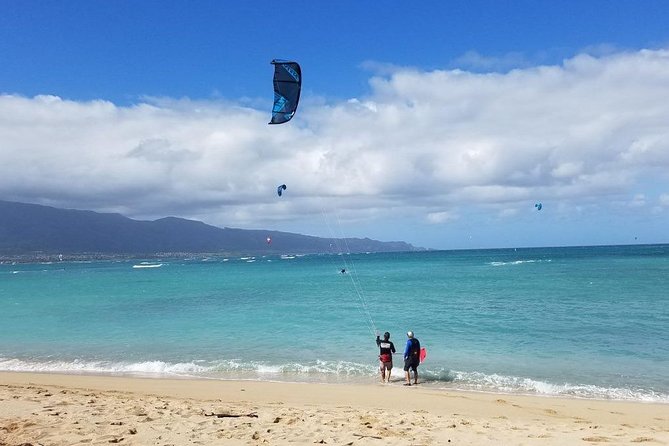
This experience runs about 2 hours 30 minutes, and the pacing is one of its strengths. You’re not stuck in one mode the whole time. It starts on land, shifts to water drills, and ends with you practicing more independently.
Step 1: Gear selection and Kite Beach orientation
You begin with gear selection and a Kite Beach orientation. This is where you learn how your setup works and how to read the basics of the area you’ll be using. For a first lesson, orientation is not just a formality—it helps you avoid the common beginner problem: trying to learn the kite while also trying to figure out where you are and what the rules look like.
Step 2: Ground school training on the beach
Next comes ground school. Expect instruction that focuses on kite handling and the movements that come before you go out farther. The goal is to give you muscle memory and safety habits while you’re still standing on solid ground.
If you’ve watched videos before, I think this part will help you most. Videos show what it looks like. Ground school helps you understand what you should feel and do when it is not going perfectly.
Step 3: Water training exercises with the instructor
Then the lesson moves into the water. The instructor stays with you through training exercises so you can transfer what you learned on the beach into real conditions. This is the stage where a good coach earns their pay, because the kiteboard experience has multiple moving parts at once.
The lesson is designed to guide you through the basics you need to become a kiteboarding partner, not just to get one short success moment.





Step 4: Going solo to practice what you learned
The final phase pushes you to go solo to practice what you learned. This is important for confidence. You’re not just repeating motions while someone else controls everything—you’re applying the skills you practiced so you can actually own them.
From a value standpoint, the solo phase is where your time turns into progress. Coaching is great, but practice is what locks it in.
Small-Group Learning at a Max of 10
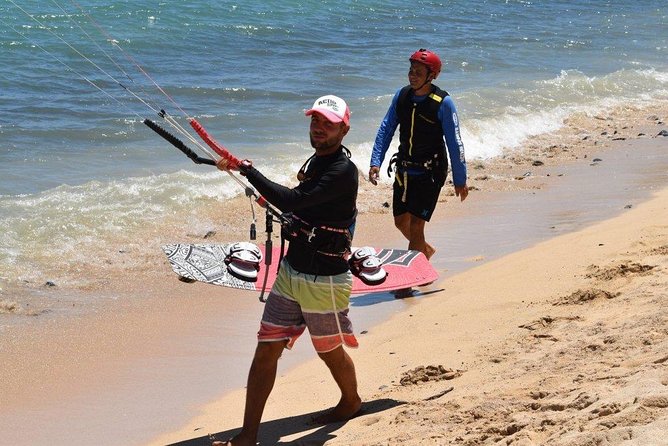
This is capped at a maximum of 10 travelers. That size matters because kiteboarding instruction benefits from attention. When you’re learning a sport where timing and control are everything, too large a group means you may wait longer between corrections.
A small group also tends to make the day feel less chaotic. You can focus on your own learning without feeling lost in a crowd.
And since the lesson is tailored to your skill level, the group structure helps the instructor manage different starting points without turning the session into a one-speed-only class.
Instructors Matter: Troy and Mikalea’s Teaching Style
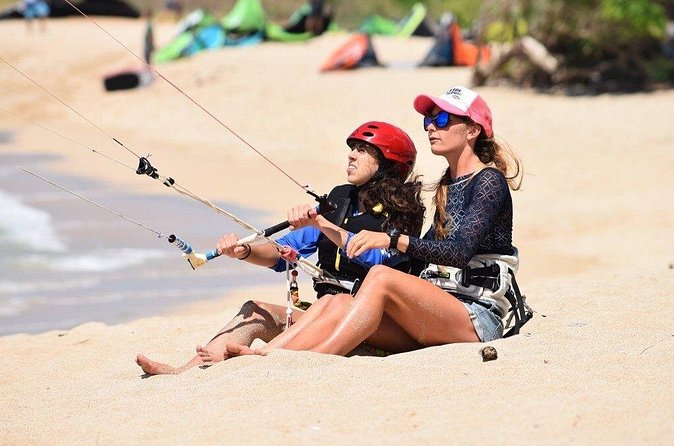
The strongest feedback from past participants points to the instructors themselves. One session credited Troy for being very helpful with the kite flying experience and for giving pointers that went beyond what people had seen in videos. That’s a big deal for beginners, because video tips often miss the real-world cues—what to do when the kite responds differently than expected.
Another standout was Mikalea, praised for being professional and patient from start to finish. Kiteboarding is not a sport where you learn instantly. Patience helps because it takes time to build coordination and comfort with the kite.
Even without seeing the instructor’s exact teaching style in advance, you can plan to get the most out of the class by being ready to ask questions early. If you communicate what feels confusing on the beach, you’ll likely get better-targeted guidance once you’re in the water.
Price and Value: What $295 Buys You on Maui
The price is $295.00 per person, and GST is included. Bottled water and a professional guide are included too. Food and drinks are not included, and transportation to or from attractions is also not included.
Here’s how I’d judge the value: you’re paying for structured coaching over roughly 2.5 hours, with multiple phases (gear setup, beach ground school, water drills, and solo practice). That’s not just a scenic activity. It’s skill instruction that tries to move you toward independence.
The cost can also feel reasonable if you compare it to what many people spend on gear, lessons, and trial-and-error. In other words, you’re paying to compress the learning curve into one guided session with feedback you can’t easily replicate on your own.
The main “value drain” is logistical, not instructional. If you show up hungry or without a plan for getting there, you can end up spending extra time and money outside the lesson. Bring a snack or plan a meal before you go, since food is not part of the package.
Weather and Safety: The Non-Negotiables
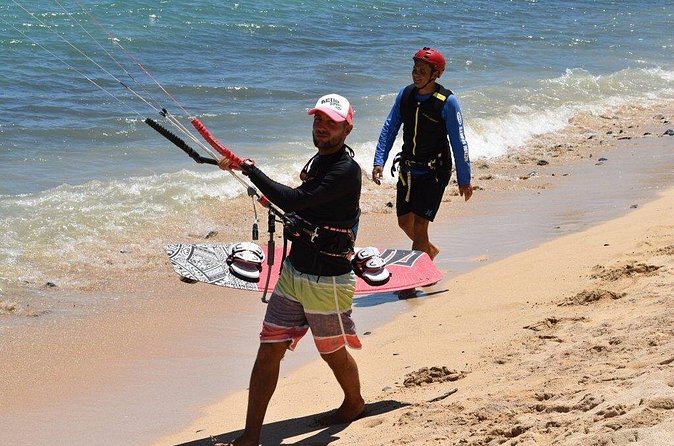
This experience requires good weather. If it gets canceled due to poor weather, you’ll be offered a different date or a full refund. That’s exactly what you want from a kiteboarding lesson—wind and conditions are not just a detail, they are the entire sport.
Beyond weather, there are clear safety requirements:
- Travelers must have the ability to SWIM
- Participants must have moderate physical fitness
- All participants’ weights must be advised at time of booking
That last one is worth taking seriously. Kiteboarding setups and training can depend on your body weight for safe, appropriate instruction. If you skip that step, you risk starting the day with mismatched expectations.
If you’re on the fence because you feel physically nervous, I’d treat the moderate fitness requirement as a planning signal. You’re going to be active for about 2.5 hours, and you’ll be learning while working against fatigue and water conditions.
Getting There: Kalama Beach Park in Kihei (Action Sports Maui)
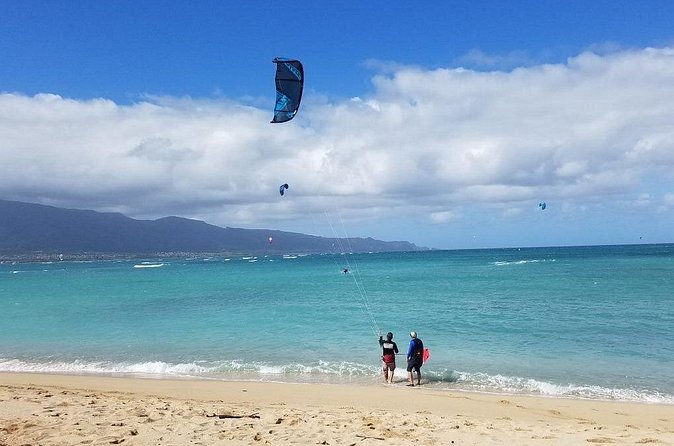
The start point is Action Sports Maui at Kalama Beach Park, Kihei, HI 96753. The activity ends back at the same meeting point.
That return-to-start setup is convenient. You do not have to plan your day around a drop-off and pickup window. It also makes it easier to build the rest of your Maui schedule around a single block of time.
Since transportation is not included, make sure you handle your own ride. Also, because the lesson is weather-dependent, having flexible plans nearby helps you deal with schedule shifts if conditions change.
Who This Kiteboarding Lesson Is Best For
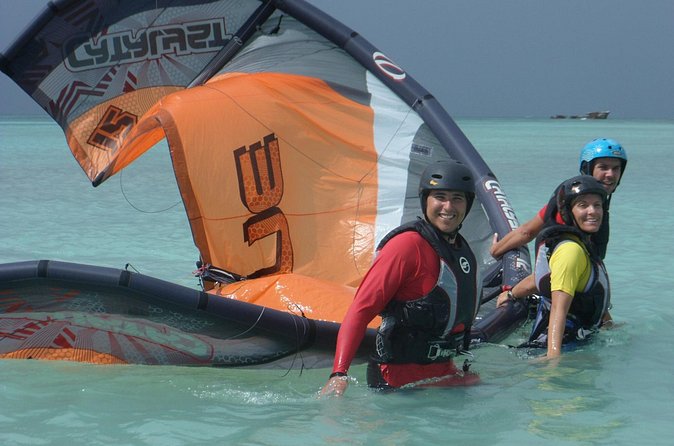
This is ideal if you want hands-on instruction without previous experience. The highlight specifically says you can come with no prior background, and the lesson is tailored to your skill level. If you’ve watched videos, that can help you visualize the goal—but you’ll still need coaching to translate that vision into safe, controlled kite handling.
It also fits you if you learn best in short stages. The flow moves from ground school to water drills, then to solo practice. That structure helps reduce overwhelm.
This may not be the best fit if you:
- cannot swim
- are not comfortable with moderate physical activity
- are hoping for a mostly casual experience with minimal exertion
- need guaranteed certainty on timing without weather risk
Should You Book This Maui Kiteboarding Intro?
I’d book it if you want a guided first step into kiteboarding with real instruction, not just a demo. The combination of ground school, instructor-led water training exercises, and then a chance to practice solo is a strong structure for building actual skills.
The “yes, but” is planning for conditions and basics. Make sure you meet the swim and fitness requirements, and have a food/transport plan since those are not included. If your schedule can handle weather delays and you’re comfortable following safety rules, this lesson looks like a fun, efficient way to get your foundation.
If you’re trying to decide between a lesson and watching videos alone, go for the lesson. Kiteboarding is one of those sports where feedback and correction are the difference between progress and frustration.
FAQ
Where does the kiteboarding lesson start?
The meeting point is Action Sports Maui at Kalama Beach Park, Kihei, HI 96753, USA.
How long is the lesson?
The experience runs for approximately 2 hours 30 minutes.
How much does it cost?
The price is $295.00 per person.
What’s included in the lesson?
It includes GST (Goods and Services Tax), bottled water, and a professional guide.
Do I need previous kiteboarding experience?
No previous experience is required, and the lesson is tailored to your skill level.
What physical requirements do I need to meet?
You should have a moderate physical fitness level, and you must be able to swim.
Do I need to tell them my weight before the lesson?
Yes. All participants’ weights MUST be advised at time of booking.
What if weather cancels the lesson or I need to cancel?
The experience requires good weather. If it’s canceled due to poor weather, you’ll be offered a different date or a full refund. You can also cancel for a full refund up to 24 hours in advance of the experience’s start time.