REVIEW · OAHU
Oahu Night Dive: Adventure for Certified Divers
Book on GetYourGuide →Operated by Dive Oahu Inc · Bookable on GetYourGuide
Night water turns Oahu’s reef into a spotlight. This 3-hour night scuba experience takes you to two well-known south-shore underwater sites, starting at twilight and then rolling into full darkness, where marine life acts like it owns the place. I especially liked the chance to see more than one “mood” of the ocean in the same outing, and the fact that you’re issued the key gear for night conditions, including underwater lights and two tanks.
The main thing to be aware of is the pace: after a safety briefing, you get about an hour underwater on the first stop, then another hour on the second stop, with a break in between. If you want lots of extra time under the water, this schedule can feel a bit tight.
In This Review
- Quick hits on this Oahu night scuba outing
- Why Oahu looks different after dark
- Where to meet and how the first 25 minutes set you up
- Twilight underwater session: reefs in transition, with lights ready
- Surface interval at sunset: snacks, reset time, and less stress
- Second underwater session in complete darkness: where spotting really counts
- Gear rental value: why included equipment matters at night
- Price and who this is best for
- Practical checklist: what you should bring
- Should you book this Oahu night scuba outing?
- FAQ
- What’s the duration of the Oahu night scuba outing?
- Do I need to be a certified scuba participant?
- What gear is included?
- What wildlife might I see at night?
- Is there parking near the meeting point?
- Is this suitable for children or pregnant people?
- Can I cancel for a refund?
Quick hits on this Oahu night scuba outing
- Two underwater sessions: twilight first, then complete darkness
- Full night gear rental: wetsuit, weights, fins, BCD, two tanks, and underwater lights
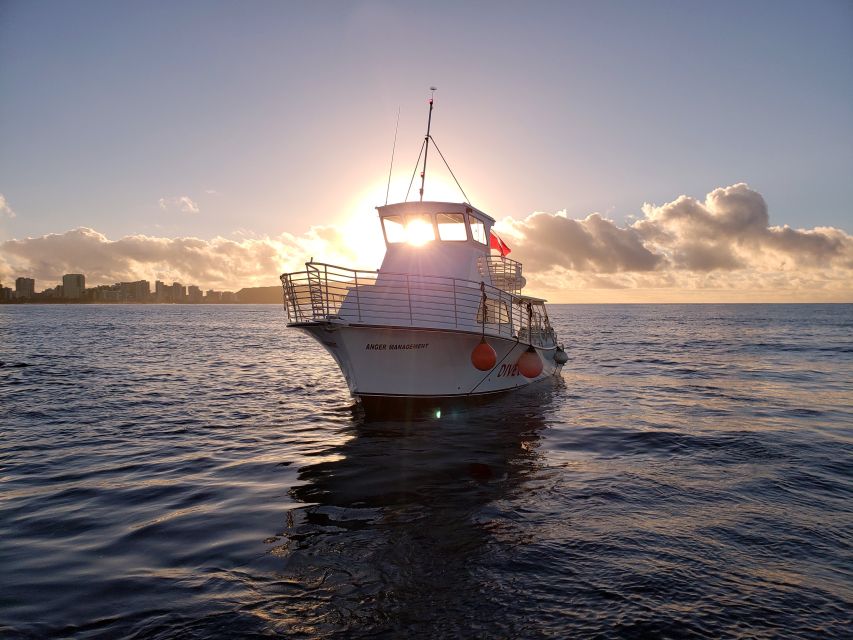
- South shore focus with a charter that has sun and shaded space plus a restroom
- Marine life chances: sharks, turtles, eels, rays, octopus, and more
- Surface snacks and refreshments during the sunset surface interval
Why Oahu looks different after dark
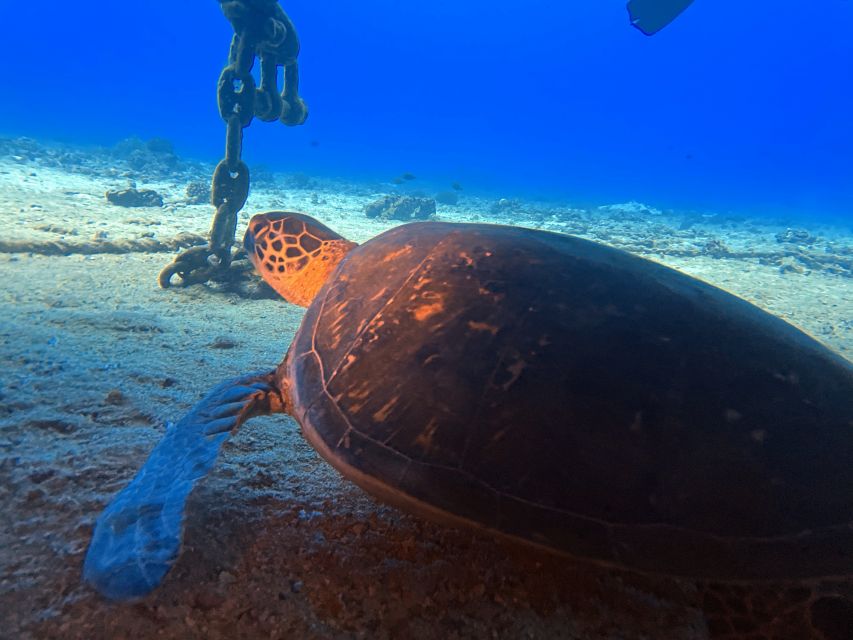
On Oahu’s south shore, the ocean changes fast as the sun drops. In twilight, you’re still in that transition zone where daytime patterns fade and night behavior begins. Then, when it gets truly dark, you notice how much more “active” the water can feel. Night scuba isn’t just about seeing by flashlight. It’s about watching the reef switch habits.
What makes this outing feel practical is that you’re not stuck with one moment. You get two different kinds of underwater viewing: the first stop happens as dusk is fading, and the second is scheduled for ocean life that comes out when it’s dark. That matters because some animals are easier to spot during twilight, while other creatures show their real nightly routines after the light drops.
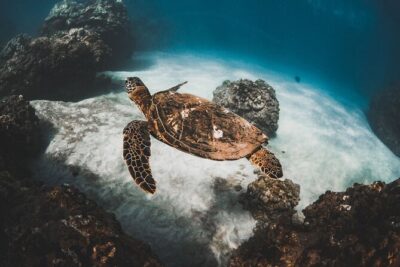
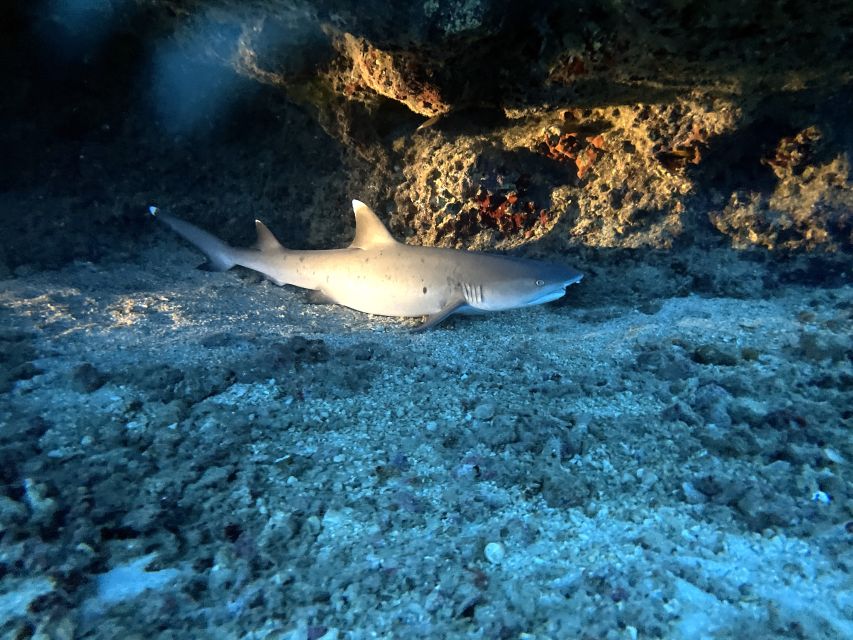
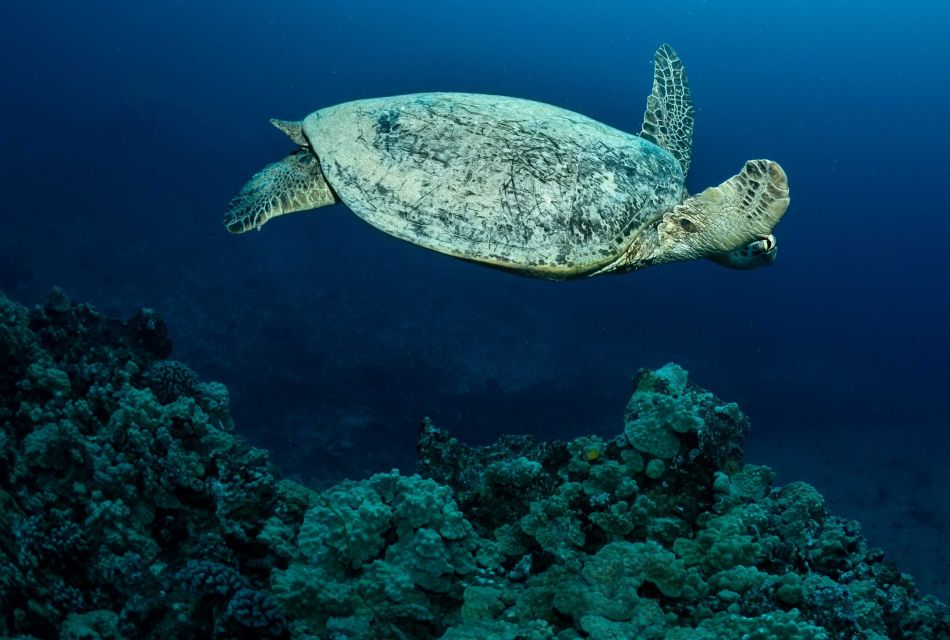
And yes, you might see the big-ticket animals people come for. The tour description sets the expectation for close encounters with sharks, turtles, eels, rays, and endemic Hawaiian fish, plus the chance to spot dolphins. In real life, wildlife sightings aren’t guaranteed, but having the right conditions and a guide who’s out there at night is the difference between guessing and actually finding.
You can also read our reviews of more evening experiences in Oahu



Where to meet and how the first 25 minutes set you up
You’ll meet at the harbor, front row, slip 8, and you’re looking for a large picture of a turtle. Arrive at least 30 minutes early so you’re not rushing gear checks and paperwork.
Once you’re aboard, you start with a safety briefing that takes about 25 minutes. That’s a good use of time, especially for night water. The briefing is where you get the routine for staying together, using the lights correctly, and handling buoyancy when visibility drops. If you’ve done daylight scuba before, night scuba still brings different “work” for your body and your brain. This is the moment to get your head in the right place.
The boat itself is set up for comfort on a short charter: there’s a sun deck and a shaded deck, plus a restroom. That sounds basic, but when you’re on a tight three-hour outing, having a place to cool down, warm up, or just reset without running around the deck helps your energy for both underwater sessions.
Parking is simple to plan. If you’re driving, Kewalo Basin parking runs about $1 per hour, and Ala Moana Beach Park has free parking.
Twilight underwater session: reefs in transition, with lights ready
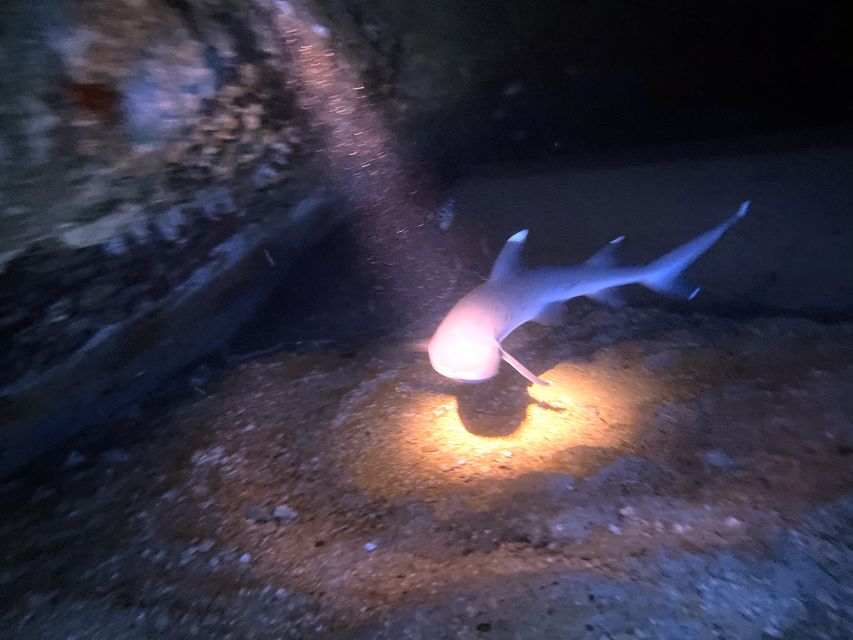
Your first underwater session happens at twilight, guided by a PADI-certified instructor. This is when the reef feels like it’s halfway between day and night. Some marine life is winding down, while nocturnal species start moving in. You get the best of both worlds: that early-night “switch” moment plus enough remaining light to feel oriented.
You’re also on a guided route, which is a big deal at night. Your instructor helps you read what you’re seeing: how the reef structure looks under artificial light, where animals tend to hover, and how to keep your breathing calm and controlled so you don’t stir up the water.
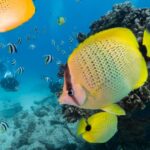
The tour description lists a strong range of possible wildlife encounters. Expect your best chances for things like sharks, turtles, eels, rays, octopus, starfish, crabs, Hawaiian endemic fish, and other reef life. With underwater lights included, you’re not left using your own struggling setup. The point is to have lighting that supports gentle observation rather than blasting the scene like a searchlight.
A practical tip for this phase: focus on slow scanning near reef edges and openings. At twilight, motion can be subtle. If you go too fast, you’ll miss the smallest signs that something is just starting to come alive.
Surface interval at sunset: snacks, reset time, and less stress
After the first hour underwater, you’ll take a break on the surface for about 30 minutes. This is where the tour includes snacks and refreshments, which might sound minor, but it matters on a warm-weather night when adrenaline is still pumping.
This break also gives you a chance to do a quick body check. Night scuba can make you tighten up without noticing, especially if you’re concentrating hard on buoyancy and visibility. Sitting for half an hour, drinking water, and getting a few bites of food helps you start the second underwater session with steadier nerves.
It’s also a timing win. Sunset surface time lines up with that “almost night, almost day” transition on the surface. Even if you’re focused on the water ahead, you’ll probably appreciate the change in light on the deck. It’s easier to feel excited than drained.
Second underwater session in complete darkness: where spotting really counts
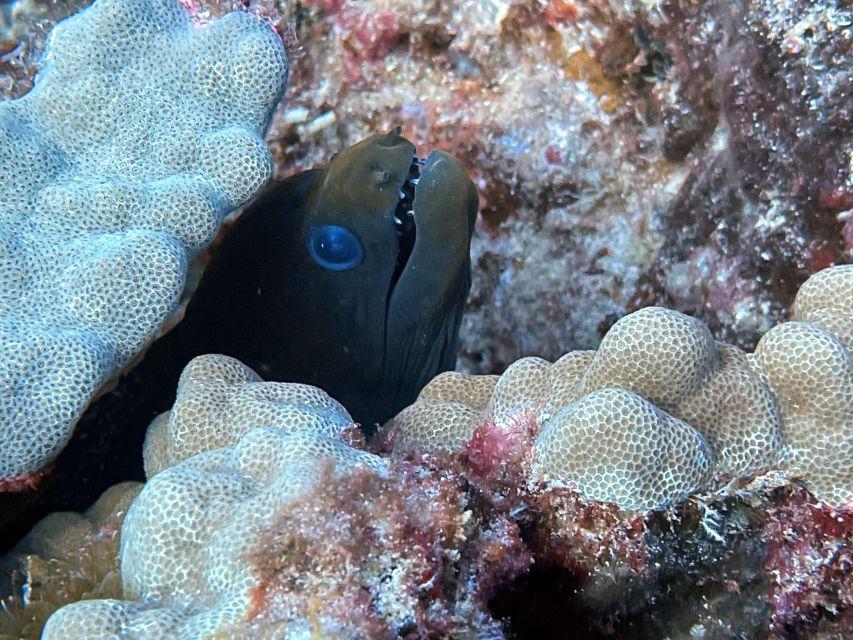
The second stop is the true night portion. You’ll head out for oceanic nightlife on Oahu’s south shore with complimentary underwater lights. Then you plunge into the kind of dark where you realize how much your eyes depended on natural light before.
This is the session that usually feels the most different. In daylight, the reef is a whole visual map. In darkness, the map becomes what your light beam reveals, plus what your guide helps you track. That’s why the guide is so important here. They can help you avoid common mistakes like sweeping your light around too much, moving too fast, or hovering in one spot long past the moment when animals respond.
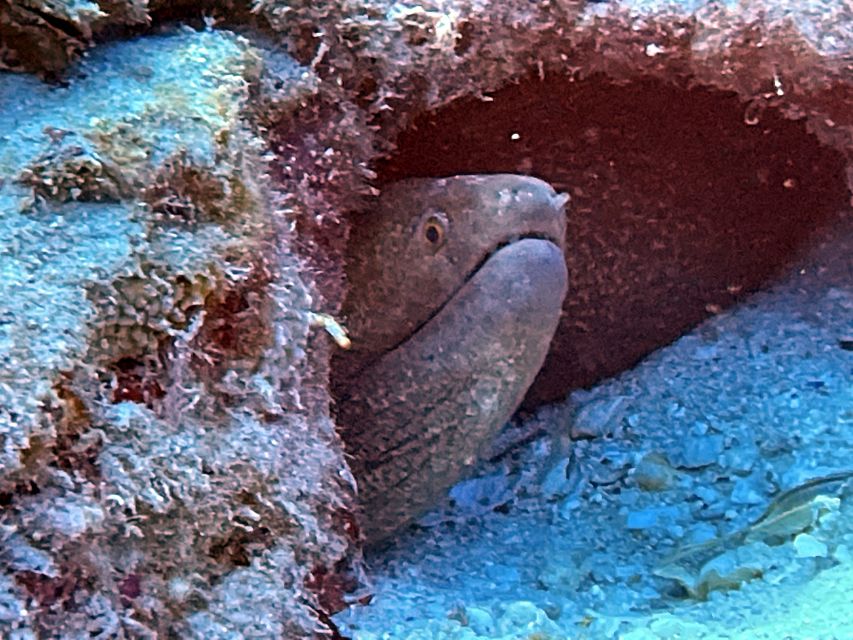
The tour description sets expectations for encounters again—sharks, turtles, rays, eels, and other nighttime creatures. You might also see Hawaiian endemic fish and other animals that are easier to notice when they’re active after dark. Octopus and other reef dwellers can be more noticeable when the reef is quiet and your attention is tuned to small movements.
If you’re an organized scuba participant, this is your moment to use that organization. Keep your team close, communicate clearly, and treat your light like a tool, not a constant spotlight. You’re aiming for calm observation, not an underwater photo shoot.
You can also read our reviews of more scuba diving tours in Oahu
Gear rental value: why included equipment matters at night
This outing is priced at $248 per person for about three hours, and the value comes from what’s included. The tour provides premier gear rental, including two tanks, wetsuit, weights, fins, and a BCD, plus underwater lights. That’s a lot of equipment to source and transport on your own.
Here’s what you should think about when deciding if that’s worth it for you:
- If you already own everything, you’re paying mainly for the guided experience, boat time, and lighting for night conditions.
- If you don’t own gear, the included rental is a big cost saver and a convenience win, especially for items like weights, BCD, wetsuit, and night-specific lighting.
Night scuba depends on correct setup. Wrong buoyancy or uncomfortable gear can ruin the experience fast, and at night you don’t have the luxury of making constant adjustments underwater. Having wetsuit, weights, fins, and BCD included also means you can focus on the experience rather than the logistics of assembling an unfamiliar kit.
One more practical point: two tanks in the same outing is also part of the pacing. You’re doing two separate underwater sessions with a surface interval, and the gear allocation supports that without you scrambling for what’s next.
Price and who this is best for
For $248, you’re buying a lot more than “time in the water.” You’re getting a guided, structured night program with a charter, included gear, underwater lighting, and two underwater sessions within a short total window.
This is best for certified scuba participants who:
- Feel comfortable swimming and are in good health
- Understand how to handle a buoyancy system and follow a guide
- Want a night experience that’s guided and equipment-supported, not a DIY attempt
It’s not the right choice if you’re looking for a beginner intro. The requirement is clear: you must present proof of your scuba certification at the boat, and the activity is not suitable for children under 15. It’s also not recommended for pregnant women or people with pre-existing medical conditions.
Also, plan your travel on the calendar. You must not fly within 24 hours after your underwater session. If your Oahu schedule includes same-day flights later, this can complicate things fast.
Practical checklist: what you should bring
You’ll want to bring:
- Swimwear
- A towel
- Scuba certification proof
Wear clothing that’s easy to change in and out of. The wetsuit is included, so you’re not showing up in cold-weather gear, but you’ll still want to dry off after you’re done. A towel is your simple quality-of-life item.
Should you book this Oahu night scuba outing?
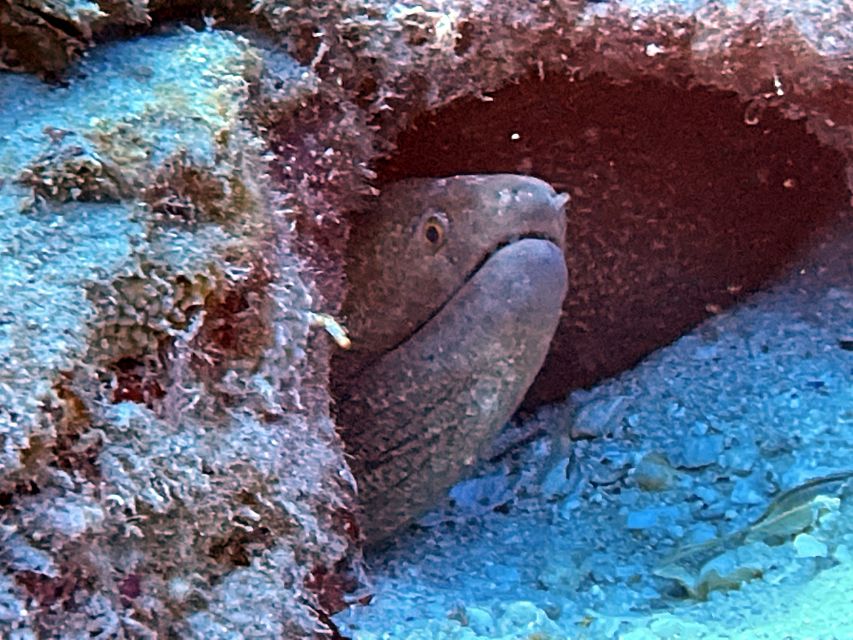
If you’re certified and you want a guided night experience with real structure—twilight first, then full darkness—this is a strong pick. The biggest decision factor is whether you like shorter, focused underwater time with a break in between. At about three hours total, it’s designed to be efficient, not all-day.
I’d book it if you value included night gear, especially the underwater lights and two-tank setup. I’d skip it if you want a long, slow underwater session, or if your schedule includes a flight within 24 hours after.
FAQ
What’s the duration of the Oahu night scuba outing?
It runs for about 3 hours total, including a safety briefing and two guided underwater sessions with a surface break in between.
Do I need to be a certified scuba participant?
Yes. You must be certified and be able to present proof of your certification at the boat.
What gear is included?
The tour includes premier gear rental: 2 tanks, underwater lights, wetsuit, weights, fins, and a BCD.
What wildlife might I see at night?
The experience may include encounters with sharks, turtles, eels, rays, octopus, starfish, crabs, Hawaiian endemic fish, and dolphins.
Is there parking near the meeting point?
Yes. Parking is available at Kewalo Basin for about $1 an hour, or you can use free parking at Ala Moana Beach Park.
Is this suitable for children or pregnant people?
No. It’s not suitable for children under 15, pregnant women, or people with pre-existing medical conditions.
Can I cancel for a refund?
Yes. You can cancel up to 24 hours in advance for a full refund.