REVIEW · MAUI
Group Surf Lessons in Lahaina, Maui
Book on Viator →Operated by Maui island surf & snorkel · Bookable on Viator
That first pop-up feeling is pure Maui magic.
This small group lesson in Lahaina mixes quick coaching on land with real wave time in the water, so you learn faster than if you just jump in and hope. I also like that the instructors take the day’s conditions seriously, with flexible timing when wind and wave conditions change.
Two things I especially like: the lesson is kept tight (about 15–20 minutes on land before you go to the water), and you’re not fighting the crowd—there’s a max of 6 travelers, which makes it easier to get hands-on help when you need it. One thing to consider: this is a short session, so if you’re dreaming of a long surfing day, you’ll want to plan your extra Maui time after.
In This Review
- Key highlights at a glance
- Why This Lahaina Surf Lesson Feels More Like Coaching
- Where You Meet in Launiupoko (and Why It Matters)
- The 15–20 Minute Land Lesson: Get Your Pop-Up Plan Straight
- Getting a Surfboard and Handling It Like a Beginner
- Time in the Water: About an Hour of Real Surf Practice
- Surf Etiquette and Safety: What You Learn Before You Ride
- Photos After the Lesson: A Fun Reminder Without Extra Effort
- Instructor Style: Patient Coaching Makes the Difference
- Price and Value: Is $95 Worth It?
- Who Should Book This Maui Surf Experience
- What to Bring and How to Prep (So You Don’t Waste Your Waves)
- Should You Book This Lesson in Lahaina?
- FAQ
- How long is the surf lesson in Lahaina?
- Is the surfboard provided?
- What happens during the lesson?
- How much time do we spend in the water?
- How big is the group?
- Where is the meeting point?
- Are photos taken during the experience?
- What is the cancellation policy?
- Is the activity suitable for moderate physical fitness?
- Are service animals allowed?
Key highlights at a glance
- Max 6 people means more individual attention in the water
- Land lesson first helps you practice the basics before you paddle out
- Surfboard included so you skip the hassle of finding gear
- About 1 hour in the water gives real wave time, not just a demo
- Photos available for purchase after the session
Why This Lahaina Surf Lesson Feels More Like Coaching
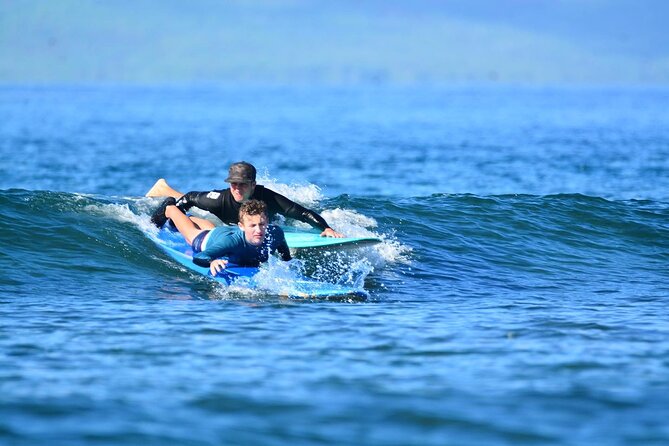
Lahaina has a lot of surf options, but this one stands out because it keeps the class small and the instruction practical. You start with basics you can actually use right away—standing up, paddling, and wave etiquette—then you move into the ocean while your muscle memory is still fresh.
The value comes from the format: a short skills block on shore, then a focused stretch in the water. At $95 per person (for about 1.5 hours total), you’re paying for time with an instructor and board access, not for a long, wandering day.
A nice bonus is the way you get to enjoy the rest of Maui afterward. Once your surf lesson ends back at the meeting point, you have the rest of the day free—so you can build in beach time, a meal, or another activity without feeling rushed.
You can also read our reviews of more tours and experiences in Maui



Where You Meet in Launiupoko (and Why It Matters)
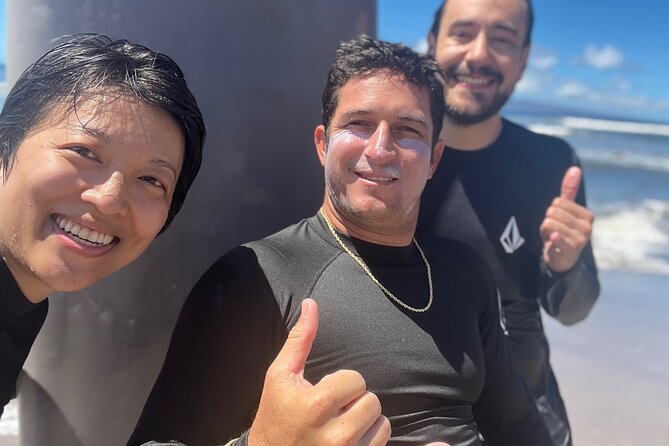
Your departure point is in Launiupoko (near V82Q+XC Launiupoko, HI). The biggest practical win here is that the meeting location is described as easy to find, which matters when you’re juggling sunscreen, timing, and ocean gear.
It also helps that the activity is near public transportation. That doesn’t mean you have to avoid a car, but it does give you options—especially if you’re staying somewhere along the Lahaina area and don’t want extra parking stress.
You should also plan to bring a calm, flexible attitude. Surf days depend on wind and wave conditions, and the setup is designed so the instructor can guide you into the best available window.
The 15–20 Minute Land Lesson: Get Your Pop-Up Plan Straight
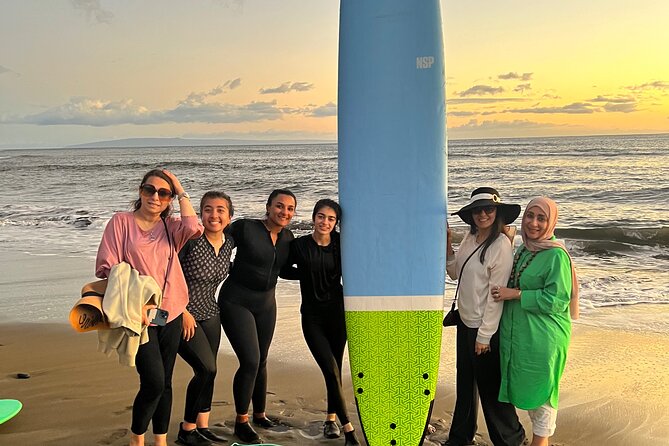
Before you head out, you’ll do a land training session—typically 15 to 20 minutes. This is where you learn the building blocks: how to stand up, how to paddle, and what to do once you’re near other surfers.
If you’ve ever watched someone fall over and thought, I get it, but how do I fix it?—this part is meant to prevent that. The goal is step-by-step coaching, not vague advice.
On land, you also learn wave etiquette, which sounds boring until you’re actually in the water. Having rules in your head helps you feel less anxious. You’ll be more confident when you’re trying your first real rides because you know what behavior to expect from yourself and others.
Getting a Surfboard and Handling It Like a Beginner
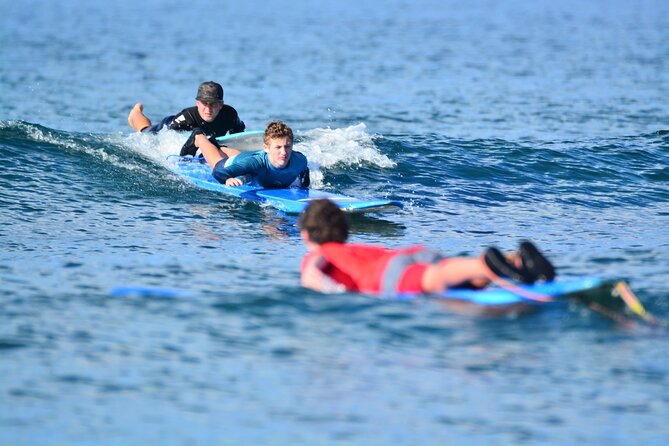
You’ll get set up with a surfboard provided by the instructor. That matters because board sizes and handling can change everything for beginners—having the right setup keeps you from wasting your first waves struggling with equipment you borrowed from a random shelf.
This is also a moment to ask questions. Since the group is capped at 6 travelers, it’s easier for the instructor to spot what you’re doing and correct you early. If you’re nervous, it’s still worth asking for a quick reminder before you go in.
One tip you can use mentally: treat the board as part of the learning. If you’re focused on balance and paddle rhythm instead of rushing to stand, you’ll usually get more tries during your water time.
Time in the Water: About an Hour of Real Surf Practice
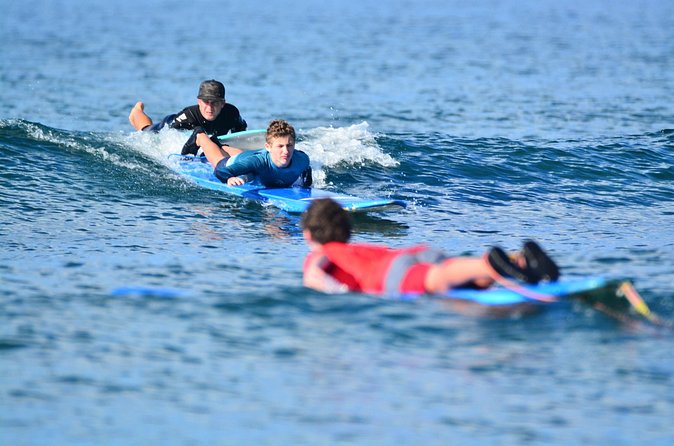
After land training, you get into the water to catch waves. The lesson keeps the pacing simple: you’ll surf for around 1 hour, and the rest of your 1 hour 30 minutes is spent on instruction and transitioning.
This is where the small group format pays off. With fewer people around, it’s easier to get individualized coaching—like when to paddle harder, when to try standing sooner, and how to manage wipeouts without getting flustered.
The instructors also pay attention to conditions. In past sessions, guidance has included finding a good time to surf when the waves weren’t cooperating, and adjusting the schedule if wind and wave conditions changed. That kind of flexibility is a big deal because it reduces the odds that you’ll spend your lesson fighting a miserable sea.






Surf Etiquette and Safety: What You Learn Before You Ride
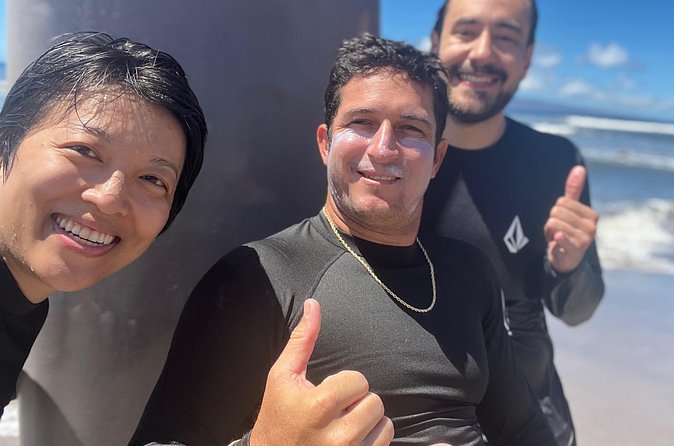
You’ll cover wave etiquette as part of the instruction, and that’s one of the most valuable parts of a beginner lesson. Etiquette isn’t just rules—it’s how you avoid dangerous moments and how you share space with others in the lineup.
Even if you’re only planning to stand up a few times, etiquette helps you understand how to position yourself. It also helps you relax because you’re not guessing what’s expected.
Service animals are allowed, and the activity is suitable for people with moderate physical fitness. That usually means you should feel comfortable with the basics: carrying yourself and gear a bit, paddling, and being on your feet during the land coaching.
Photos After the Lesson: A Fun Reminder Without Extra Effort
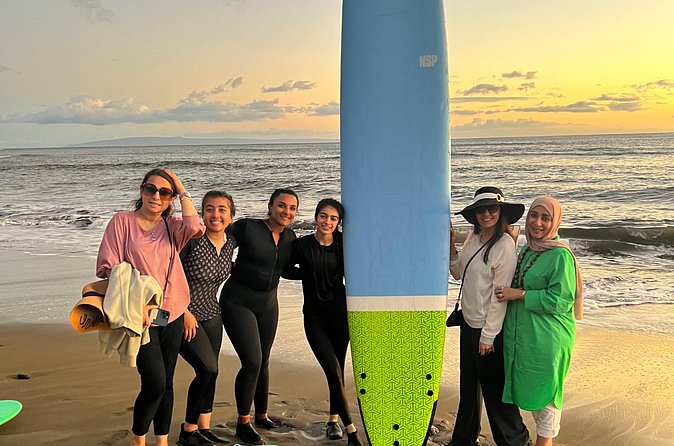
Photos are taken throughout your experience and are available for purchase after the lesson. This is the kind of extra that’s worth it for beginners, because the moment you finally do your first successful ride can be hard to remember clearly afterward.
The lesson timing is tight enough that you won’t want distractions, so having photos handled by the team is convenient. You can focus on surfing while they capture the learning moments.
Instructor Style: Patient Coaching Makes the Difference
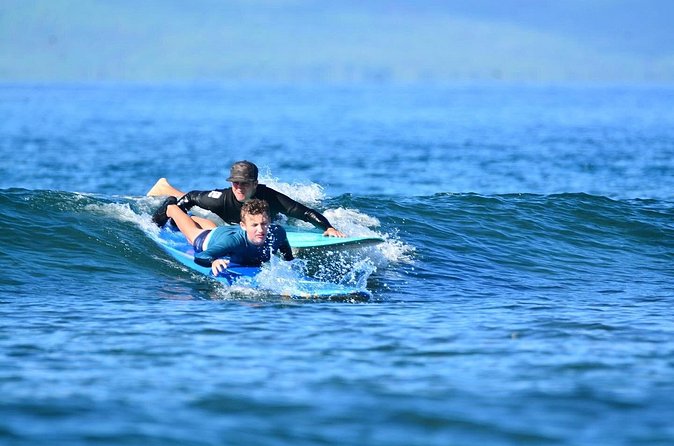
The names that come up again and again in feedback are Nick and Jonah, and what people consistently describe is patient communication and good energy. I like this approach because it turns a scary start into a system you can follow.
One review detail I’d take seriously: instructors have been flexible about timing when conditions aren’t ideal, and they’ve helped everyone get stand-up attempts and multiple rides within the limited Maui time. That’s a smart strategy on an island—there’s no point forcing wave time when the ocean isn’t working with you.
If you’re a first-timer, this kind of coaching is exactly what you want. Beginners don’t need a long lecture; they need someone to correct the basics fast.
Price and Value: Is $95 Worth It?
At $95 per person for about 1 hour 30 minutes, the biggest value factor is what you get inside that time: board provided, a land lesson, then roughly an hour in the water with step-by-step instruction.
Surf lessons can get expensive when they turn into all-day logistics. Here, you’re paying for the parts that actually help you learn—standing, paddling, etiquette, and riding—and you’re not buying a long tour that eats up your day.
You’re also getting the small-group advantage. A max of 6 travelers means you’re more likely to be coached while you’re actively trying. For a beginner, that’s where the money goes.
Who Should Book This Maui Surf Experience
This lesson is a good match if you want your Maui surfing time to be practical and time-efficient. If you’re the type who likes learning in short bursts and then getting right back in the action, you’ll probably enjoy this format.
It also fits families and kids who have energy but need coaching and structure. The instruction style described in feedback highlights how well the team supports new surfers.
On the other hand, if you’re already comfortable surfing and looking for advanced technique work, this might feel short. Also, if you’re hoping for a full day on the water, you’ll need to add extra activities after the lesson since the schedule is tight by design.
What to Bring and How to Prep (So You Don’t Waste Your Waves)
The data you have doesn’t list specific gear requirements, so I’ll keep this practical and general. Wear swimwear you can move in and that won’t fight you when you’re paddling.
Bring sunscreen and expect to reapply. Maui sun is friendly only in postcards. You’ll also want water and a plan for drying off quickly after you finish.
Most of all, come ready to laugh at the learning curve. Falling off is part of the deal. A good lesson doesn’t eliminate wipeouts—it shortens the time you spend guessing.
Should You Book This Lesson in Lahaina?
If you want an efficient, beginner-friendly way to learn surfing with small-group attention, I think this is a strong yes. The structure—land coaching first, then about an hour in the water—is built for people who want progress, not just a one-time photo moment.
Book it if you’re new to surfing, traveling on a tight schedule, or you want a board-included class that won’t swallow your whole day. Skip it only if you’re looking for a long, advanced surf progression session.
One last pro move: if the conditions change, stay flexible. This is the kind of surf lesson that works best when you let the instructor choose the most surfable window.
FAQ
How long is the surf lesson in Lahaina?
The lesson runs for about 1 hour 30 minutes.
Is the surfboard provided?
Yes. The instructor provides the surfboard for you during the lesson.
What happens during the lesson?
You start with instruction on land, then you get in the water to catch waves. You’ll learn basics like standing, paddling, wave etiquette, and riding a wave.
How much time do we spend in the water?
You’ll surf for around 1 hour, with the earlier part of the lesson on land.
How big is the group?
The activity has a maximum of 6 travelers.
Where is the meeting point?
The meeting point is listed in Launiupoko (near V82Q+XC Launiupoko, HI, USA). The activity ends back at the meeting point.
Are photos taken during the experience?
Yes. Photos are taken throughout the experience and are available for purchase after the lesson.
What is the cancellation policy?
You can cancel up to 24 hours in advance for a full refund.
Is the activity suitable for moderate physical fitness?
Yes. The activity notes a moderate physical fitness level for participants.
Are service animals allowed?
Yes. Service animals are allowed.