REVIEW · MAUI
Road to Hana Rainforest, Black Sand Beach, Waterfalls & Lunch
Book on Viator →Operated by Stardust Hawaii, LLC · Bookable on Viator
The Road to Hana turns driving into sightseeing. This full-day tour strings together waterfalls, rainforest roads, and black sand into a single plan, with a small group and a guide calling out what you’re actually seeing. Two things I really like: the pacing that gives you short, useful stops instead of rushing, and the fact you get lunch at Wai’anapanapa State Park, right in the middle of the best scenery.
Here’s the one drawback to plan for: it’s a long day on curvy, single-lane roads. If you’re prone to motion sickness, the drive can be tough even though the guides do their best to help and keep the ride safe and comfortable.
Key points at a glance
- Small group (max 14) means more personal attention at photo stops and restroom breaks.
- Hotel pickup in most areas keeps you from wrestling with early-morning logistics on your own.
- Wai’anapanapa picnic lunch pairs food with one of Maui’s most famous black-sand shorelines.
- A real “Road to Hana” sampler: rainforest bends, multiple waterfalls, lava sights, and coastal viewpoints.
- Guides like Marty, Dom, Roger, Quinn, and Gaura often make the day through stories, history, and smart stop timing.
- Swims are optional but available at places like Hana Bay, with reef protection and cave-and-waterfall scenery nearby.
In This Review
- Why this Road to Hana day trip feels easier than self-driving
- Paia and Ho’okipa: the morning hits before the road gets intense
- Hana Highway: 59 bridges, 640 turns, and why it works with a guide
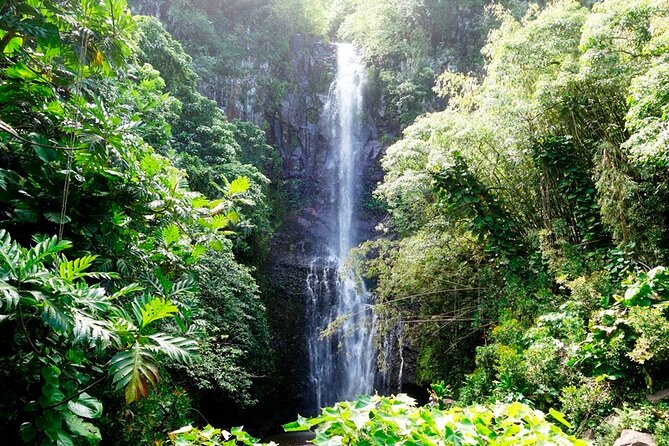
- Waterfalls on Maui: Twin Falls, Haipua’ena, Upper Waikani, and Wailua
- Ke‘anae Point and banana bread: small villages with big charm
- Wai’anapanapa State Park: the lunch that anchors the best scenery
- Hana Bay, lava tubes, and the bonus “volcanic Maui” stops
- How the stop timing actually feels in real life
- Price and logistics: is $245.99 worth it for you?
- Motion sickness and comfort: my honest prep checklist
- Should you book this Road to Hana tour?
- FAQ
- What time does the Road to Hana tour start, and how long does it last?
- Is hotel pickup included?
- What meals and snacks are included?
- Can the tour accommodate allergies or vegan or raw diets?
- Where do you see Maui’s black sand beach?
- What happens if weather affects the tour?
Why this Road to Hana day trip feels easier than self-driving
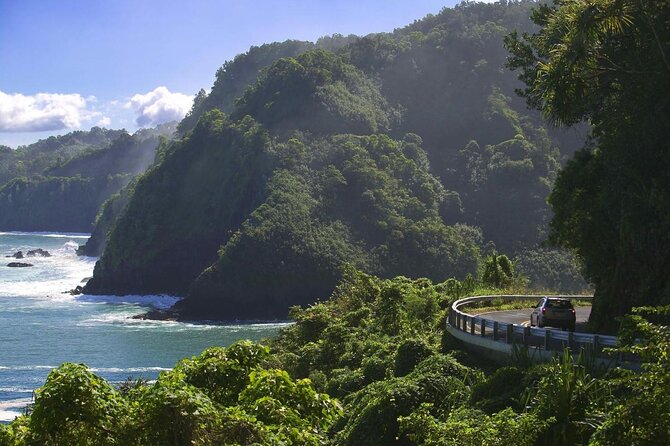
The Road to Hana is famous for a reason. It’s 64 miles of coastal twisting, with the Hana Highway continuing east toward Kipahulu, and the route stays lined with rainforest. Your payoff is big views and constant photo moments. The downside is the same thing: you’re dealing with narrow roads, slow turns, and stopping wherever the moment is right.
On this tour, you skip the mental load. You sit in an air-conditioned vehicle and get a narrated drive that helps you understand what you’re passing instead of just staring out the window. That matters because the road is doing all the work for you, but you’ll enjoy it more when you know why that fern is growing there or what kind of volcano made that coastline.
I also like the small-group setup. A max of 14 travelers makes bathroom breaks feel less chaotic, and it’s easier for the guide to keep everyone together at the tight pullouts and viewpoints. Even when the stops are short, the group size keeps it from turning into cattle-train tourism.
Paia and Ho’okipa: the morning hits before the road gets intense
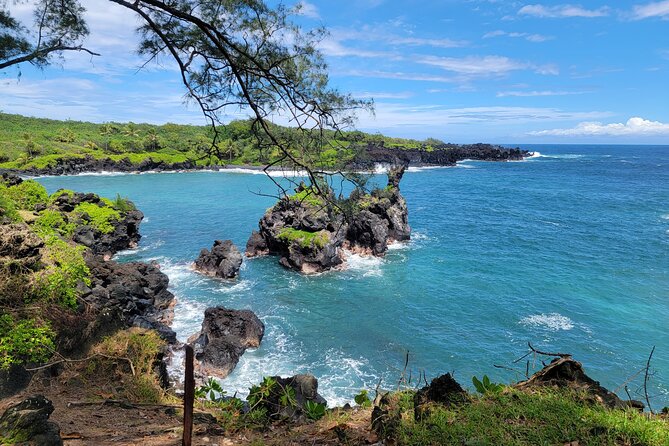
You start early, and that’s a gift. The tour begins at 5:45am, with pickup times depending on where you’re staying (more on that later). Leaving before the rush helps you enjoy the North Coast without fighting traffic and packed pullouts.
Just a few miles into the drive toward Hana, you hit Pāʻia, split into Lower Pāʻia and Pāʻia. This was once a plantation town during Maui’s sugar cane heyday, and today it still shows up in the form of local storefronts and colorful, rustic business streets. It’s a nice first “stretch your legs” stop before you commit to the winding part of the highway.
Then you roll to Ho’okipa Beach Park. It’s a classic Maui stop for watching local surfers and spotting wild turtles. The view is good, and the vibe is simple: sit, look for turtles, and take photos of the Northshore coastline. There are lavatories available, which is a practical deal on an all-day tour.
These early stops also help you adjust to the day. The road will soon be 59 single-lane bridges and hundreds of turns, so you want your legs working and your timing set.
You can also read our reviews of more tours and experiences in Maui
Hana Highway: 59 bridges, 640 turns, and why it works with a guide
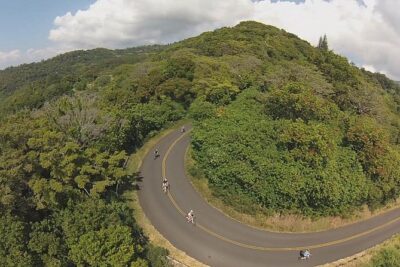
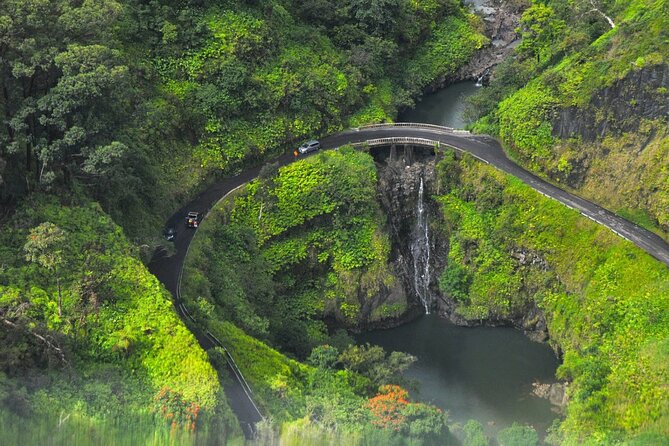
The Road to Hana isn’t just scenic. It’s physically demanding in a way most people underestimate. The Hana Highway covers about 64.4 miles, and on the way you’ll pass 59 single-lane bridges, plus over 640 turns and curves. Most of the concrete and steel bridges date back to around 1910, which adds a real sense of why the route looks the way it does.
This is where a guide matters. The road is slow, and it’s easy to miss the best pullouts if you’re watching traffic and navigating. Guides also help with timing. One smart photo spot at the right moment can be the difference between a decent picture and a great one.
You also learn what you’re driving through. That includes the big visual cues: lush rainforest, tropical plant life, and the way the coast keeps changing mood as you climb and drop. You’re not just passing scenery. You’re traveling through a working ecosystem shaped by volcanic forces and coastal erosion.
The best part is that the tour keeps the focus on stops that match the drive. You’ll get opportunities to step out, look around, and reset, instead of spending the whole day trapped in the vehicle without any rhythm.
Waterfalls on Maui: Twin Falls, Haipua’ena, Upper Waikani, and Wailua
Waterfalls are the reason most people sign up, and this route gives you several chances without making every stop a long hike.
One of the first is Twin Falls, an accessible waterfall-and-pool area on the Hana Highway. It’s a straightforward “yes, you’re in the right place” stop. Then there’s Haipua’ena Falls, which is smaller and gets fewer visitors. The note that it has an unsigned trail and a short hike over an often muddy path is a big heads-up. If you don’t want slippery footing, you should decide ahead of time. But if you like quieter nature spots, it’s the kind of stop that feels more personal.
Next up: Upper Waikani Falls, often nicknamed Three Bears. You’ll see three separate but parallel falls. The third and smallest is the baby bear falls on the right. Even if you’ve seen waterfalls before, this one is visually different because you’re comparing the falls side by side.
You’ll also get Wailua Falls, and you might like this one for a different reason. It’s picturesque but also very accessible from the road. The tour notes that you don’t even need to get out of your car to see it, which gives you a low-effort break during a day that already asks a lot.
A quick practical note: waterfall swimming is usually at your own discretion, and some pool conditions can be unpredictable. If you’re the type who prefers safer footing, keep it to photo time and enjoy the views from the edges.
Ke‘anae Point and banana bread: small villages with big charm
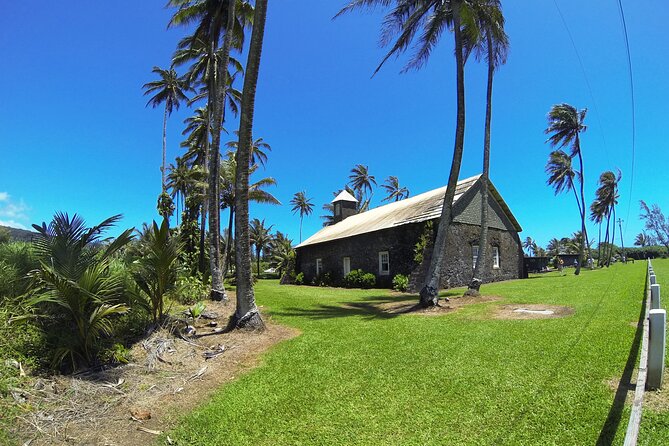
Ke‘anae Point is one of the most human stops on the tour. Here you get small Hawaiian villages doing their best to keep everyday life rooted in traditional practices like hunting pigs and growing taro, breadfruit, and bananas. This stop feels less like a themed photo set and more like a community you’re passing through.
You’ll also make time for the Half Way to Hana Snack stand area in this part of the peninsula. It’s famous for things like shave ice, fresh coconut, cold drinks, and Original Fresh Baked Banana Bread. Then the tour specifically includes Aunty Sandy’s Banana Bread. Aunty Sandy Hueu started baking there in 1983, and in 2003 her daughter Tammy joined in to keep it family-run on the Keʻanae peninsula. This is the kind of food stop that’s worth making, because it’s not just sugar on a schedule. It’s tied to a real place and a real tradition of feeding people along this route.
I love that the views from the Keʻanae overlook and peninsula are part of the reason for stopping. You can see the scale of taro farms and understand why this area has always mattered to local agriculture.
One more thing: there’s mention of a very photogenic spot for doing something life-threatening. I’m not advising it. But do take the hint that some roadside pullouts are dramatic, so move carefully, stay aware of traffic, and treat any cliff-edge photo requests like a bad idea you should skip.
Wai’anapanapa State Park: the lunch that anchors the best scenery
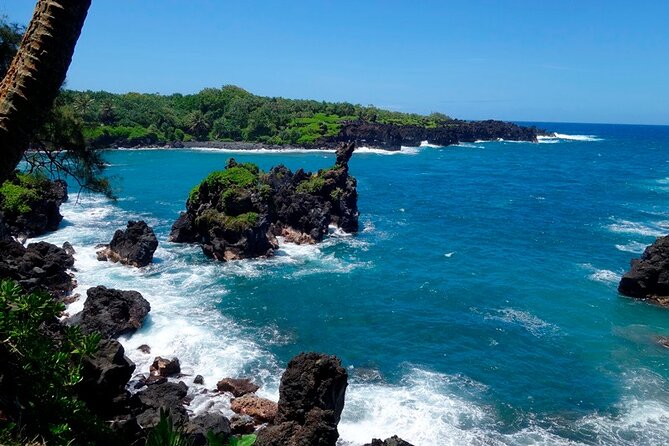
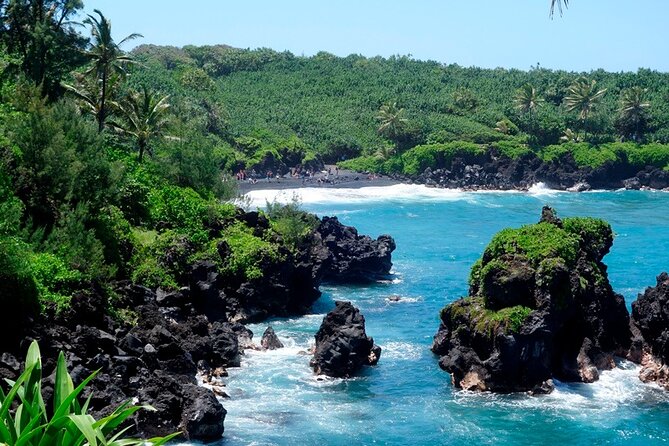
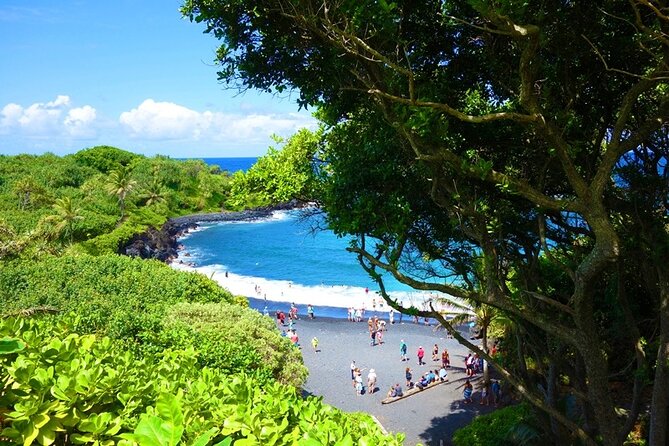
If you’re going to remember one stop from this entire day, make it Wai’anapanapa State Park. This is where you reach Maui’s famous black sand beach and the area’s freshwater caves. The setting is striking: cobalt blue ocean water surrounded by black sand and dark lava rocks from relatively recent volcanic activity (not geologic forever ago).
The best “value” part is timing. The tour serves picnic-style lunch here, so you aren’t stuck choosing between food and scenery. You get lunch on-site, plus lavatories are available, which is a sanity saver on a long drive day.
Your lunch includes homemade sandwiches from a local deli (ham, turkey, or veggie), along with fresh fruit. You’ll also have bottled water and Hawaiian cane juice, plus snacks like chips and granola bars spread through the day. That’s a lot of small support that keeps you from paying a second time for a mediocre roadside lunch.
Can you swim here? The tour notes swimming is at your own discretion. It’s a beautiful place to walk the bay edge and sit under the shade trees. If you’re craving ocean time, you can also plan for other shore stops on the route, but Wai’anapanapa is special even if you only do the shore walk.
Also, this stop gives you something many Road to Hana days lack: a real break. You spend about an hour, so it feels like you’re actually resting, not just passing through.
Hana Bay, lava tubes, and the bonus “volcanic Maui” stops
Once you’re past the big waterfall and banana bread moments, the day gets more about volcanic Maui and coastal viewpoints.
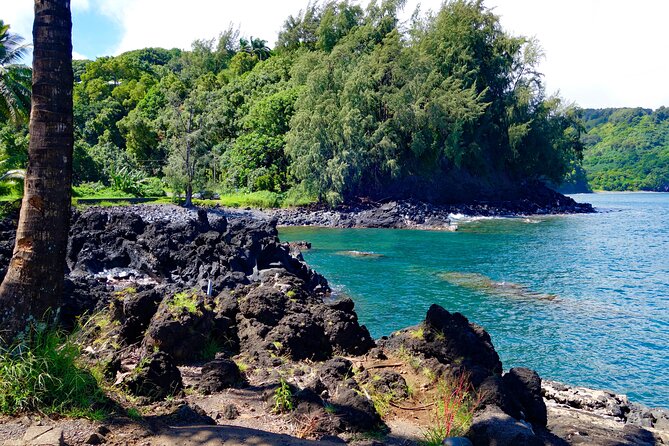
The tour includes a lava tube stop: Ka’eleku Cave is noted as the largest known accessible lava tube on Maui. Lava tubes form when massive lava flows cool on top, leaving an insulating channel underneath. After the volcano becomes dormant, these tubes can cave in and disappear over time, which is part of why only a few large ones remain. So yes, you’re seeing something that connects directly to the island’s volcanic birth, not just generic nature scenery.
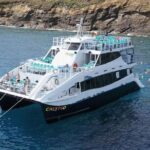
Then there’s Hana Beach Park inside Hana Bay. This is described as a long black-sand beach with what the tour calls the safest swimming beach along East Maui’s coast. The bay is protected by a coral reef and shielded from big swells by its curved shape. If swimming is on your must-do list, this is the stop where you’re getting the clearest safety note.
You’ll also hit Pua’a Ka’a State Park for Pua’a Ka’a Falls, also described as rolling pig. It’s a smaller waterfall area, and again swimming is at your own discretion and risk in freshwater pools.
If you like a slower, more cultural-natural feel, the tour includes Wailua Valley, described as an ahupua’a rich in Hawaiian culture, with ancient taro patches and ongoing cultivation. There’s also a lookout point that gives you a sense of what ancient Hawaii might have felt like, like a time-lapse view into how people lived with the land.
For quick viewpoint breaks, you’ll get Honomanu (a pullout view of Honomanu Bay) and a short stop at Eucalyptus Rainbow Trees, where the bark sheds in patches showing bright colors.
These stops aren’t always the headline like the black sand beach, but they’re the reason the day feels like more than a checklist.
How the stop timing actually feels in real life
This is a full day, and the schedule is built around short bursts. Some places are 5 or 15 minutes. Others are closer to an hour. You’re not walking for hours on end, but you are repeatedly getting in and out of the vehicle, moving between viewpoints, and handling rustic facilities.
The tour notes lavatories are available at certain stops, but the reviews also mention that restrooms can be rustic. That means you should treat this as a hike-day mindset, even though the actual hiking can be light.
You’ll also want to be mentally ready for the road time. Road to Hana days are known for driving. This one leans into that reality rather than pretending it’s an easy day trip. That’s part of why the included snacks, drinks, and lunch are not small perks. They keep your energy steady when the “real action” is coming in waves.
There’s also a pattern to the best days: start early, hit key photo points before crowds, and let the guide handle the best timing. One review specifically credited a guide with helping beat crowds and hitting high points. That’s the practical reason an organized small group works.
Price and logistics: is $245.99 worth it for you?
At $245.99 per person, this isn’t the cheapest way to see Hana. So the question isn’t whether it’s expensive. The question is whether it saves you enough stress to justify the cost.
Here’s what you’re buying:
- Hotel pickup and drop-off is included if you select it and you’re in the pickup area (the tour says it works for most Maui hotels).
- Lunch is included: picnic-style sandwiches with fruit, plus drinks and snacks.
- A narrated guide handles stops and gives context while you focus on enjoying the drive.
That combo is where the value sits. If you tried to do this yourself, you’d spend money on gas, paid parking or timing headaches, extra food stops, and potentially an entire day of stress on a road that doesn’t forgive mistakes.
The logistics matter, though. There are places where no pickup is offered. You’ll need to meet the group:
- No pickups in Napili-Honokowai, Kahana, Kapalua. Meet at Lahaina Cannery mall at 6:00am.
- No pickups at Makawao, Kula, Paia. Meet at Kahului park n ride at 6:40am.
- Guests staying in Wailuku meet at Maalaea Park and ride at 6:30am.
And the tour itself starts at 5:45am.
Food is also straightforward but not flexible. You choose ham, turkey, or veggie for lunch. The tour says no special diet options are available (raw, vegan, food allergies), and you must bring your own food if you need alternatives.
One extra real-world cost: driver gratuity is recommended at 15–20%. That’s not included in the ticket price.
Motion sickness and comfort: my honest prep checklist
This tour runs on curvy roads. Motion sickness isn’t a rare issue. Some guides have handled it well, and one guide even provided ginger chews and goggles to help. Still, don’t treat that as guaranteed for every day or every person.
Plan like this:
- If you’ve ever been car-sick in Maui’s winding roads, bring your own motion tools and medication options.
- Pick a seat strategically if the van setup allows it (often the front helps most).
- Bring sunglasses, and wear shoes that work for wet, muddy roadside areas, especially for places like Haipua’ena Falls.
Also expect “walkable but not fancy.” You’ll be at pullouts, waterfalls, and state park edges with nature conditions. Even when the stops are short, you want to be comfortable doing quick photo walks and stepping around uneven ground.
One more comfort tip: bring a light layer. Morning starts are early, and time spent near ocean air and shade can feel cooler than you expect once you’re off the road.
Should you book this Road to Hana tour?
Book it if you want stress-free driving, a small-group feel, and you care about seeing multiple top Hana highlights without planning every stop yourself. The included picnic lunch at Wai’anapanapa State Park is a strong anchor, and the food + rest breaks make the long day much easier to handle.
Also book if you value the guide touch. Names like Marty, Dom, Roger, Quinn, and Gaura show up in the best experiences, and the consistent theme is that great guides keep the day smooth, handle timing, and add stories that make the road feel meaningful instead of random.
Don’t book if you want a relaxed half-day outing. This is a full-day commitment with lots of road time, and young kids might not love the amount of driving. If your priority is lots of beach hours, you may want to pair Hana with a different Maui day plan instead of expecting Hana to function like a simple shoreline getaway.
If you’re ready for a long, scenic, stop-and-go adventure through rainforest, waterfalls, and black sand, this tour is a solid way to do it.
FAQ
What time does the Road to Hana tour start, and how long does it last?
The tour starts at 5:45am. It’s described as lasting about 9 to 10 hours.
Is hotel pickup included?
Hotel pickup is included if you select it and your area is covered. The tour notes there are no pickups in Napili-Honokowai, Kahana, or Kapalua (meet at Lahaina Cannery mall at 6:00am), and no pickups at Makawao, Kula, or Paia (meet at Kahului park n ride at 6:40am). Guests staying in Wailuku meet at Maalaea Park at 6:30am.
What meals and snacks are included?
Lunch is included as a picnic-style meal with homemade sandwiches (ham, turkey, or veggie) and fresh locally grown fruit. You’ll also have bottled water, Hawaiian cane juice, and snacks like chips and a granola bar.
Can the tour accommodate allergies or vegan or raw diets?
No special diet alternatives are offered. If you have allergies or need a raw or vegan option, you must bring your own food. You choose between ham, turkey, or veggie for the included lunch.
Where do you see Maui’s black sand beach?
The tour visits Wai’anapanapa State Park for Maui’s famous black sand beach, plus fresh water caves. Hana Beach Park in Hana Bay is also described as having black sand and being a safer swimming option.
What happens if weather affects the tour?
This experience requires good weather. If it’s canceled due to poor weather, you’ll be offered a different date or a full refund.