REVIEW · HONOLULU
Honolulu: Historic Downtown Segway Tour
Book on GetYourGuide →Operated by Sidewalk Surfing Tours · Bookable on GetYourGuide
A 2-hour Segway tour sounds odd until it clicks. This one is a fast, fun way to cover Honolulu’s historic downtown highlights while keeping your eyes up for murals, landmarks, and photo moments, not just your feet. I especially like how the route strings together royal-era sights and downtown culture in one smooth sweep, and how the bilingual guidance helps you get comfortable quickly.
My other big plus: the care in the “learn it now” setup. You get a safety briefing plus practice, and the guides are attentive to the stuff that matters on sidewalks like turns, curbs, and uneven spots. The one drawback to plan around is that Segway riding isn’t for everyone, and it’s not suitable for people with mobility impairments (and also not for pregnant women), so you’ll want to think about comfort and control first.
In This Review
- Key things to know before you go
- Why a 2-hour Segway tour works in Honolulu’s downtown
- Meeting point at Kewalos Basin Park pier and the practice ride
- Kaka’ako wall art to the Mission Houses area: where the glide feels special
- Royal Honolulu loop: King Kamehameha statue, Iolani Palace, and the State Capitol
- Vietnam/Korean War Memorial to Chinatown and the Hawaii Theater
- The Ala Moana Beach glide finish
- Price and what you’re really paying for at $155
- Who this Segway tour fits best (and when to skip it)
- Should you book this Honolulu Historic Downtown Segway Tour?
- FAQ
- How long is the Honolulu Historic Downtown Segway Tour?
- What’s included with the Segway tour?
- Do you get a live guide, and what languages are offered?
- How big is the group?
- Where do you meet for the tour?
- What should I bring, and is the tour suitable for everyone?
Key things to know before you go
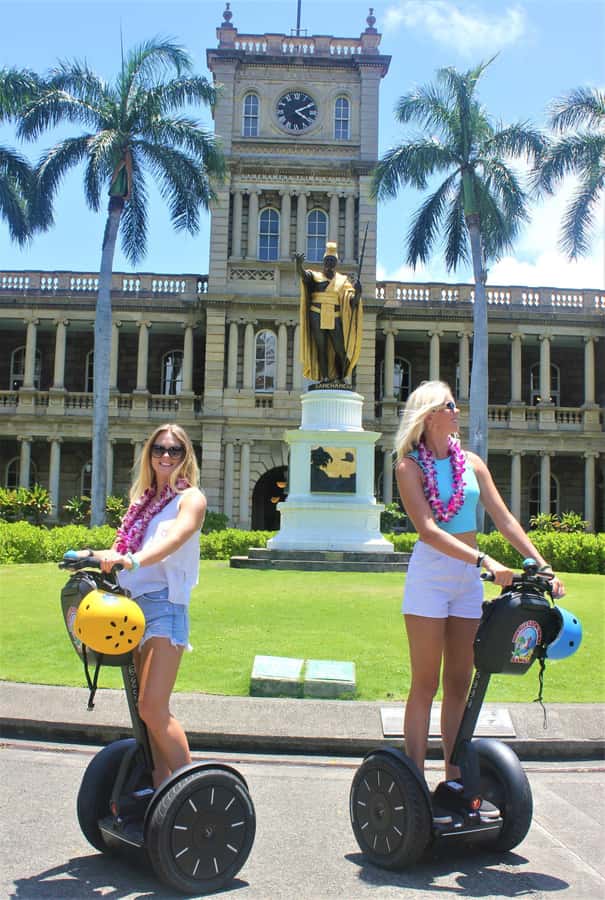
- Small group (up to 7) means less waiting and more time actually riding
- English or Japanese live guide helps you understand what you’re seeing, not just where to go
- Safety briefing + practice session gets you rolling before the historic sights start
- Downtown landmark loop packs Mission Houses, Iolani Palace, Chinatown, and Aloha Tower into two hours
- Ala Moana Beach finish is a nice change of pace from tight downtown streets
Why a 2-hour Segway tour works in Honolulu’s downtown
Honolulu downtown can be a mix of long blocks, bright sun, and stops that are spread out enough to make walking feel like a chore. A Segway changes the math. In about two hours, you move farther than you’d expect, and you can actually enjoy the scenery instead of constantly checking your watch.
I like this format because it keeps you in “sight mode.” You’re not stuck parking yourself at one monument. You’re gliding past it, then moving on to the next. That matters with places like Kaka’ako murals, where the art is best taken in while you’re slowly rolling through the area.
The route also hits a good balance of Honolulu flavors: older civic and religious sites, the look of the royal era, a memorial stop that adds weight to the trip, and then the contrast of Chinatown and the waterfront. If you want a tour that feels like you’re sampling neighborhoods rather than just collecting photos, this hits.
You can also read our reviews of more historical tours in Honolulu



Meeting point at Kewalos Basin Park pier and the practice ride

Start before you start. You meet by the food trucks area at Kewalos Basin Park pier, next to the Makani Cataraman tour counter, with a large sign that says FOOD TRUCKS. The setup is simple: you’ll practice in the nearby parking lot so the first time you steer isn’t right next to traffic or crowds.
One thing I’m glad you’ll do here is learn the basics in a low-stress space. The experience is a Segway, but the real skill is confidence: smooth turning, comfortable speed, and knowing how to handle changes in sidewalk surfaces. If you’re new to this (and many people are), that practice session is what keeps the ride enjoyable instead of tense.
You also bring the usual “Honolulu reality” items: comfortable shoes, hat, sunscreen, and water. Even if you’re not walking long distances, you’re still outdoors, and the sun has a way of showing up fast.
Kaka’ako wall art to the Mission Houses area: where the glide feels special
The tour kicks off with downtown movement that’s made for a Segway. You’ll roll past Kaka’ako and its wall art murals, which is exactly the kind of stop that works best when you’re not standing still. The art reads better when you’re gliding along it—close enough to see details, but moving enough to feel the neighborhood shift.
From there, you head toward the historic core. Expect a lineup that includes the Mission Houses, Kawaiahao Church, and Ali’iolani Hale. Even without reading every plaque, this stretch gives you a strong sense of how Honolulu’s old landmarks sit in modern city life.
This is also where the guide’s pacing matters. A good guide won’t rush you like you’re in a theme park. Instead, they’ll point out what you’re looking at and help you slow down for the spots that deserve a closer look. If you pay attention to turns and curbs (and you should), this portion tends to feel smooth and safe because the route is built for people who want to ride, not just survive the ride.
Royal Honolulu loop: King Kamehameha statue, Iolani Palace, and the State Capitol
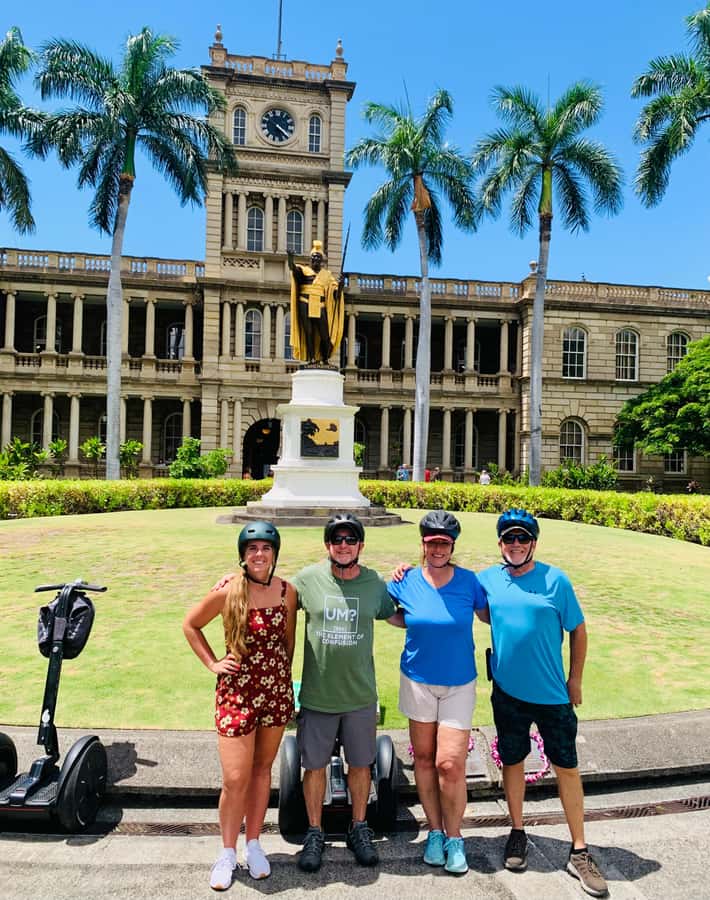
After the early historic sights, you move into the heavy-hitters. You’ll see the King Kamehameha Statue, then continue on to Iolani Palace and the State Capitol.
I like this section because it feels like a “power walk” without the power-walk pain. On foot, you’d probably slow down at each landmark, then speed up again between them. On the Segway, you keep a steady rhythm—so the royal/civic feel lands as a continuous story instead of a series of disconnected stops.
The practical win is that your eyes stay on the landmarks rather than on the sidewalk. With the Segway, you can actually look up at what you’re passing: gates, facades, and the kind of architectural presence you don’t get when you’re scanning the ground for footing.
One more small detail that makes a difference: the guides do instruction that’s focused on safety without turning the trip into a class. That approach is especially helpful if you’re traveling in a group that includes a first-timer. In the feedback I saw, learning quickly and staying comfortable on sidewalks was a big reason people rated this tour highly.
Vietnam/Korean War Memorial to Chinatown and the Hawaii Theater
Then comes a stop that adds seriousness to the day: the Vietnam/Korean War Memorial. It’s the kind of landmark that changes the tone of a tour, and even a short Segway pass-by can still feel reflective—more so when the rest of the route includes entertainment and city life.
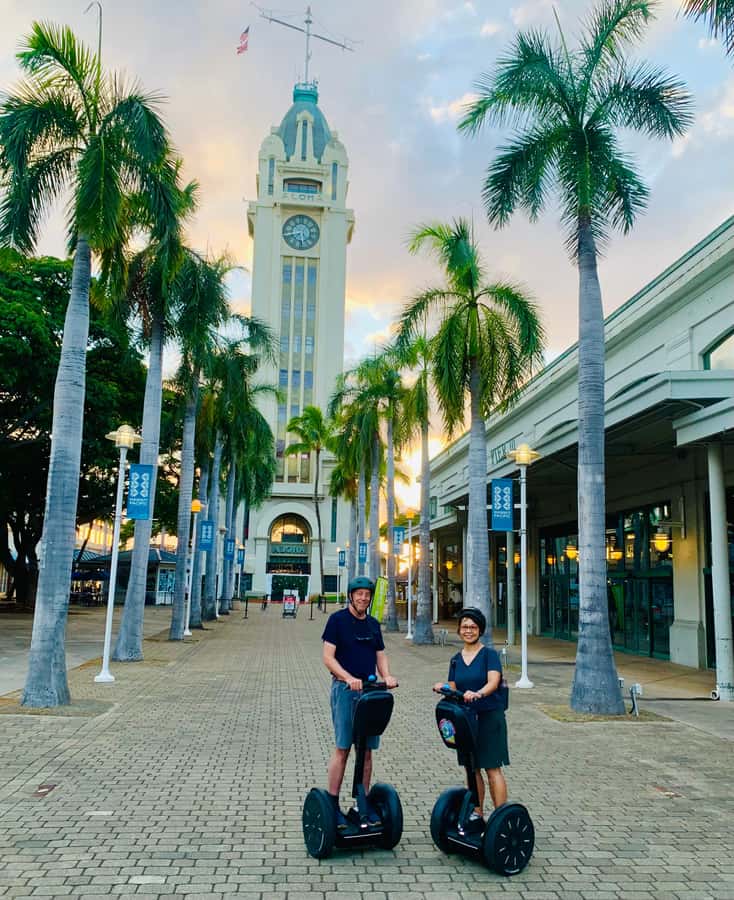
From there, you transition into the texture of downtown: Chinatown, then the Hawaii Theater, and finally the Aloha Tower area. This sequence works because it doesn’t only focus on “pretty buildings.” You get the feeling of how different parts of Honolulu read—historic and cultural zones, a more theatrical/performing-life vibe, and then the waterfront pull of the tower.
If you want value from a short trip, this is where it shows. You’re not spending 20 minutes arguing about which neighborhood to prioritize. The route makes the choice for you, and it does so in a way that keeps variety high while time stays tight.
And yes, this can be photo-friendly. One guide detail that people highlighted is that Timo (a named instructor) helps with photos at the right moments, which turns the Segway ride into something more than just transportation.






The Ala Moana Beach glide finish
The ending is what I’d call a palate cleanser: you ride along Ala Moana Beach to close out the tour. It’s a smart choice after downtown streets because the vibe shifts. You get a more open feeling and a more relaxed visual rhythm.
Also, it’s a confidence check. By the time you reach the beach stretch, most riders have the basics down: how to control speed, how to make turns without overcorrecting, and how to stay aware of your surroundings. That’s when the experience starts to feel natural.
Even though you’re still riding, not walking, you’ll notice you’re less “tasked” now. You can look around and enjoy the final run instead of focusing on your body position.
Price and what you’re really paying for at $155
At $155 per person for a 2-hour guided Segway tour, you’re paying for three things that matter in the real world:
First, you’re paying for the guide. This isn’t a random ride where you figure everything out yourself. You get a live tour guide and a safety briefing plus practice session, which is what makes first-time riders feel at ease.
Second, you’re paying for efficiency. Downtown Honolulu is not ideal for covering lots of landmarks quickly on foot in heat and glare. With a Segway, you see more stops with less fatigue, which is especially valuable if you only have a short window on Oahu.
Third, you’re paying for access to a curated route. The stops aren’t just random icons. They follow a logical flow through historic landmarks, then toward memorial and cultural zones, then finishing with the beach. That sequencing is part of the value: it reduces decision fatigue and gives you a coherent morning/afternoon.
Small group matters too. With a limit of 7 participants, you’re not stuck waiting in a line while the group re-groups at every turn. That keeps the pace fun instead of frustrating.
Who this Segway tour fits best (and when to skip it)
This is a great match if you:
- Want a guided way to see a lot of major downtown landmarks without turning the day into a long hike
- Are comfortable following instructions and learning a new mobility tool quickly
- Prefer a tour with English or Japanese support so the stories behind stops land clearly
- Like photo opportunities and want a guide to help at the right spots
It’s not for you if you need accommodations for mobility limitations. The tour is specifically listed as not suitable for people with mobility impairments, and it also isn’t suitable for pregnant women. If any part of that affects your comfort, it’s better to choose a walking/accessible alternative.
One more point for beginners: you should still plan to take the practice seriously. The guides are careful and the instruction is tailored for first-timers, but you’ll get more enjoyment if you commit to learning the basics right away.
Should you book this Honolulu Historic Downtown Segway Tour?
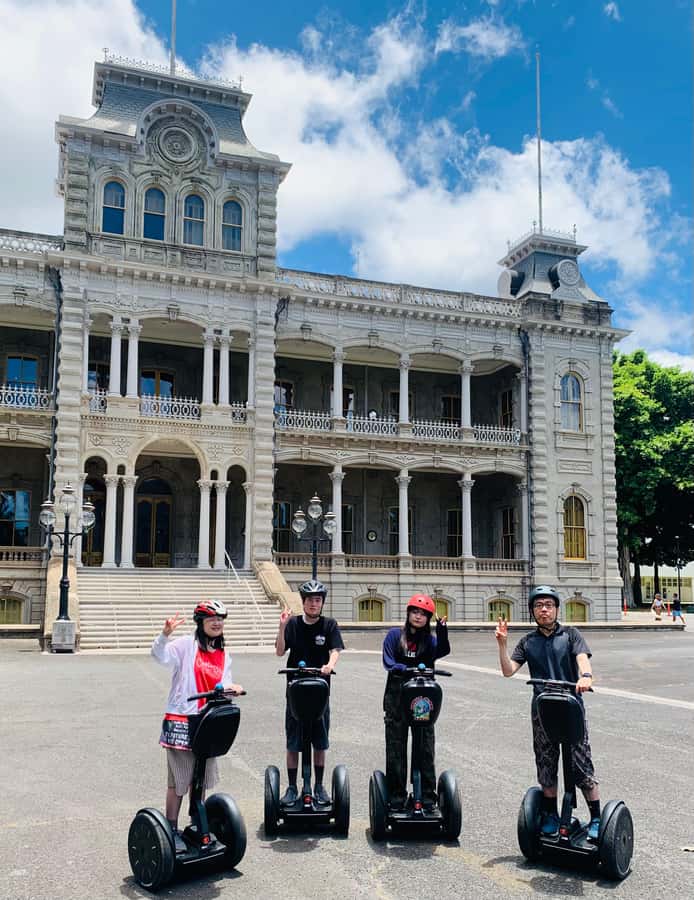
I’d book it if you want a two-hour version of Honolulu downtown that feels fun, guided, and efficient. The strongest reasons to choose it are the combination of small-group attention, the safety briefing plus practice session, and the bilingual guide support that helps you actually understand what you’re seeing. Add in the fact that named instructors like Timo have helped with photos and made riders comfortable fast, and the odds are good you’ll leave with clear memories, not just motion blur.
Skip it if you’re looking for a deep, slow museum-style experience, or if the Segway setup doesn’t fit your physical comfort. This tour is about movement, landmark hopping, and enjoying the city from a glide—not about reading every detail for hours.
If you’re on Oahu and want one standout “modern way to see the classics,” this is a strong bet.
FAQ
How long is the Honolulu Historic Downtown Segway Tour?
It lasts 2 hours.
What’s included with the Segway tour?
The tour includes the 2-hour guided Segway tour, a helmet, and a safety briefing and practice session.
Do you get a live guide, and what languages are offered?
Yes, you’ll have a live tour guide. The tour is available in English and Japanese.
How big is the group?
It’s a small group, limited to 7 participants.
Where do you meet for the tour?
You meet at Kewalos Basin Park pier next to the food trucks area, by the Makani Cataraman tour counter, where there is a large sign that says FOOD TRUCKS.
What should I bring, and is the tour suitable for everyone?
Bring comfortable shoes, a hat, sunscreen, and water. The tour is not suitable for pregnant women and people with mobility impairments.