REVIEW · HONOLULU
Honolulu: SUP (Standup Paddleboard) Yoga Class
Book on GetYourGuide →Operated by Yoga Floats · Bookable on GetYourGuide
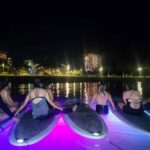
A paddleboard yoga class feels like a fun idea until you picture the wobble. This one makes it work by keeping you waist-deep and anchored the whole time, then guiding you through familiar yoga shapes on the water. Two things I really like: the class is taught with clear options for every level, and the vibe stays relaxed even if you wobble or slip.
There’s one drawback to plan for: you’re on the water, so you need to bring basic swim-day basics and be comfortable in swimwear. The instructor also steers the class toward adults only, with no kids under 12 and no pregnancy-friendly option stated in the info.
If you want a different way to practice yoga, this is a great fit. Expect a small group (max 10), personal attention, and a closing savasana where the ocean’s rhythm does most of the work.
In This Review
- Key things that make this SUP yoga class worth your time
- Magic Island to Ala Moana: why this location works for paddleboard yoga
- The 75-minute rhythm: what happens once you hit the water
- Standing and balancing poses without the panic
- The full pose menu: from familiar shapes to water-ready modifications
- The ending: savasana that actually lets your body unplug
- Price and value: is $53 fair for 75 minutes on water?
- What to bring (and what to know before you go)
- Who should book this SUP yoga class (and who should skip)
- Should you book? My decision guide
- FAQ
- Is this SUP yoga class beginner-friendly?
- Do I need to be a strong swimmer?
- What’s included in the $53 price?
- Where is the meeting point?
- How long is the class?
- Who can’t join?
Key things that make this SUP yoga class worth your time
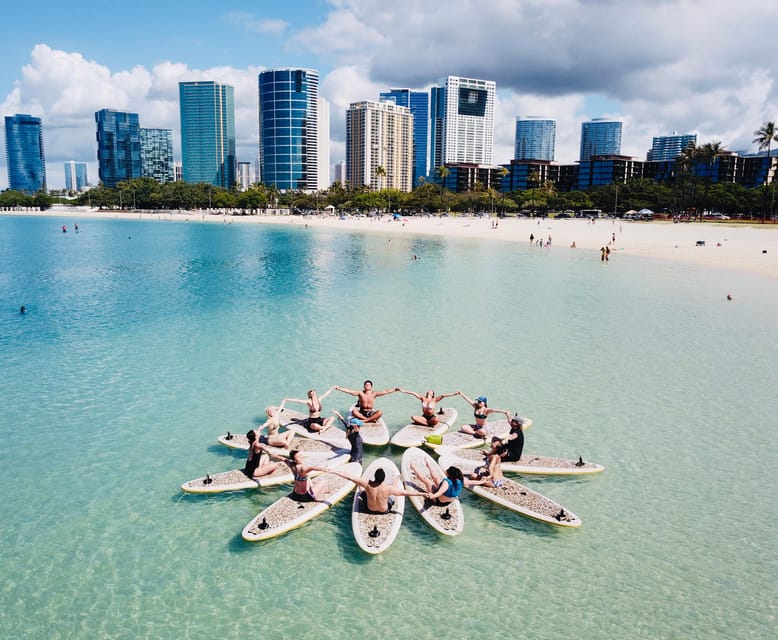
- Anchored, waist-deep water: you can focus on balance, not swimming.
- Small group size (up to 10): more instructor attention when your board starts drifting.
- A full 75-minute flow: meditation, poses, and time to work through what you need.
- Standing balance challenges: you’ll try more than just seated stretches.
- Savasana with ocean rocking: a calmer ending than most dry-land classes.
Magic Island to Ala Moana: why this location works for paddleboard yoga
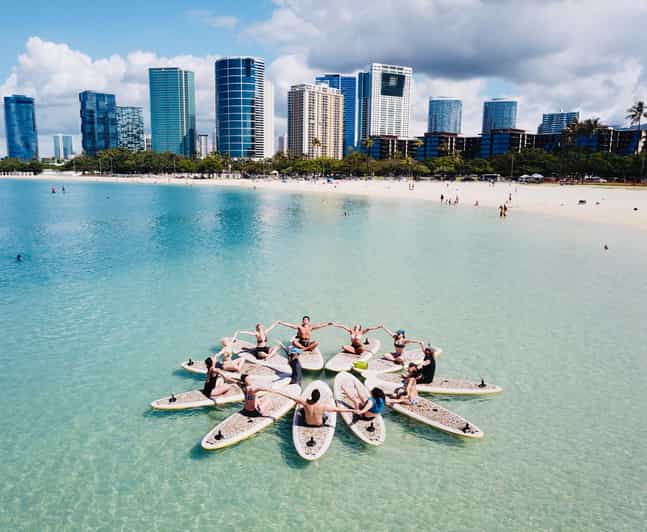
The class meets at Magic Island, right at Ala Moana Beach Park, at the south end of the Magic Island parking lot. That matters because paddleboard yoga is much easier to enjoy when the setting feels easy and familiar rather than chaotic. This area also keeps the class experience grounded in real beach life: sand, ocean air, and that early-day calm people come to Honolulu for.
You’ll see the boards and the setup before you head out. The meeting spot includes white and gray boards in the grass, or a colorful Yoga Floats van if you need a visual reference. This is the kind of start that helps you get your bearings fast, since you’re not scrambling to find equipment after you’ve already changed.
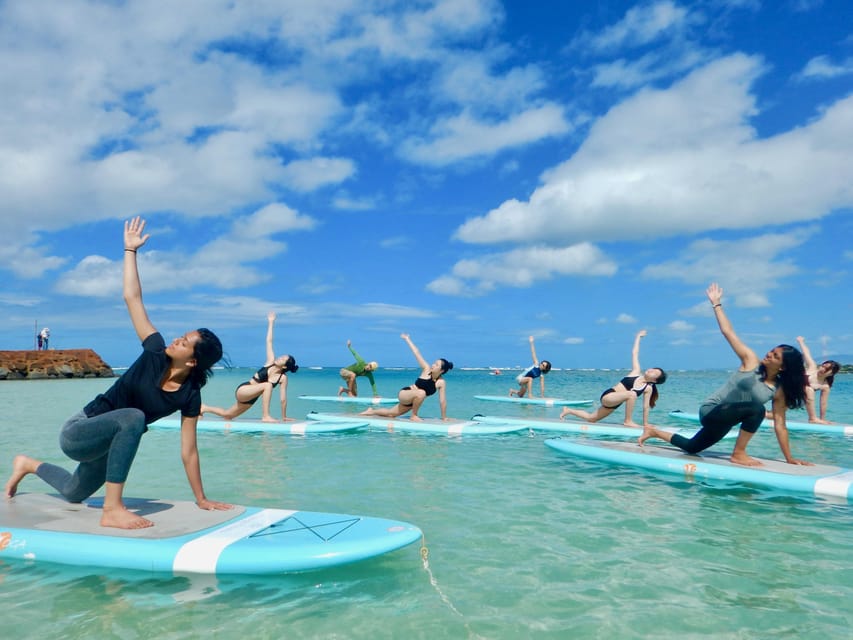
Another practical bonus: because the water stay-shallow plan is built into the class, you’re not guessing about depth once you arrive. The instructor leads you wading out to waist-deep water and then drops an anchor, so your board stays oriented and stable enough to learn.
You can also read our reviews of more tours and experiences in Honolulu
The 75-minute rhythm: what happens once you hit the water
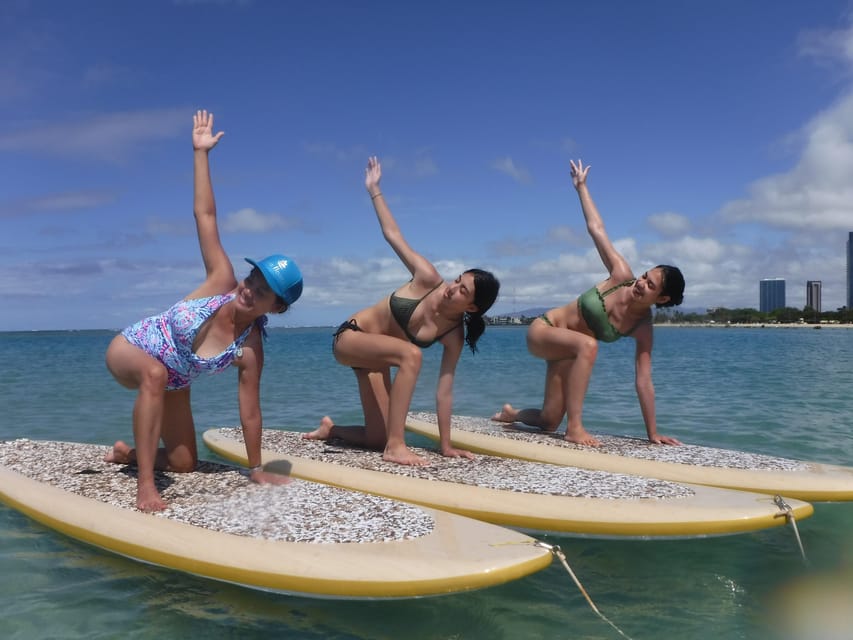
The flow is designed to teach balance in layers. You begin still on shore, meeting the instructor and small group, then getting the basics of paddleboard yoga principles before you step in. That first stage is where the instructor helps you understand what stable feels like, how the board moves, and how to stay centered without overthinking it.
Once you’re in the water, you wade to waist-deep, then the board is anchored. That one choice changes the whole class. Instead of worrying about getting out of trouble, you can actually practice the movements: core control, posture, and controlled breathing.
The class starts with a seated meditation. It’s a smart opening because it sets your attention before the wobble starts. From there, the instructor moves you into a sequence of poses adapted for paddleboards, including seated, kneeling, and reclining options—then later adding standing and balancing poses as you gain confidence.
You’ll also get free time to revisit poses you want to practice more. That’s useful because yoga classes often go too fast when you’re learning a new balance challenge. Here, the schedule gives you room to work on the part that feels hardest.
Standing and balancing poses without the panic
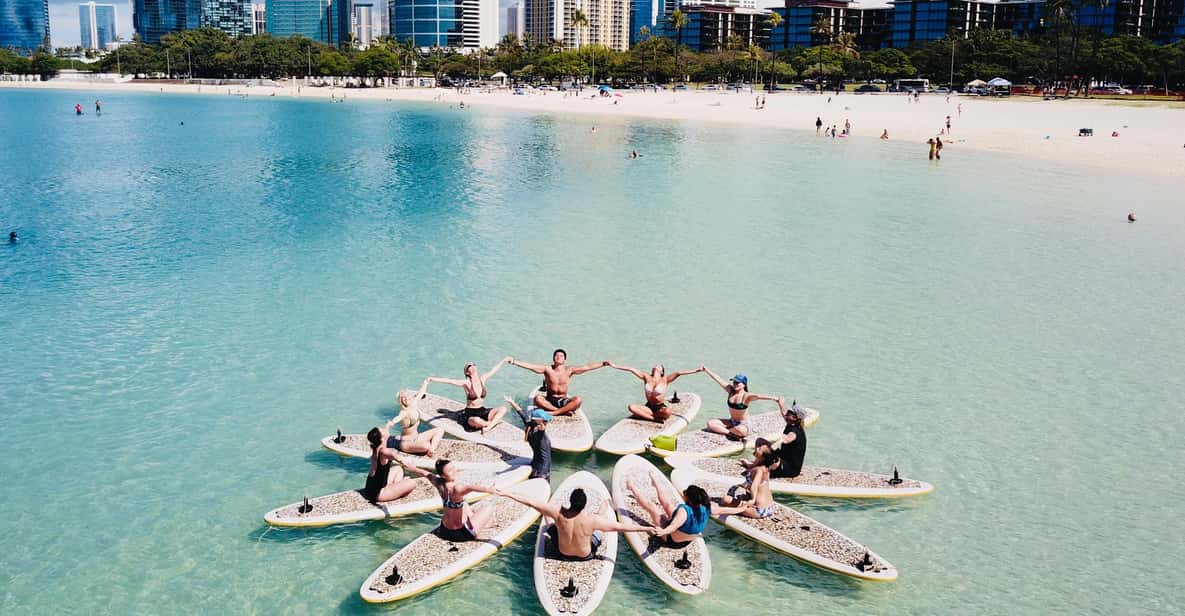
Paddleboard yoga is often sold as a thrill. What I like about this class is that it keeps the challenge real without turning it into a stress test.
The instructor offers options so you can match your ability level. That means you’re not forced to do the full expression of a pose if your balance isn’t there yet. If standing is the scary part, you still get the benefits through adaptations built for the board: seated or kneeling variations, plus core work that translates directly.
Then you get time for standing poses and balance challenges. This is where you’ll feel your body learning the board’s movement. Even if you’ve done yoga before, balancing on water is a different sensation than balancing on mats. Your core and feet have to negotiate micro-movements constantly, which is why it feels challenging in a good way.
One more thing I’d count as a win for your mental game: the class is built for good humor if things go wrong. When people fall, it’s handled in a chill way, so you’re not stuck in embarrassment. That atmosphere makes it easier to try hard without treating every wobble like a personal failure.
The full pose menu: from familiar shapes to water-ready modifications
This class adapts yoga poses you already know. You’re not thrown into a brand-new vocabulary of movements. Instead, you apply familiar seated, kneeling, and reclining shapes to a new surface.
What that means for you on the board:
- Seated and kneeling poses often help you learn how your center of gravity behaves on the paddleboard.
- Reclining and supported positions are where you can relax while still letting balance training happen in the background.
- Standing poses test both stability and control, which is where the core work becomes obvious.
The instructor also explains key principles while you’re still getting ready on shore, so you know why you’re doing what you’re doing. It’s not just a random flow that happens to be on water. You learn how to stay balanced and centered, then you apply that understanding as poses change.
If you’re a beginner, this approach can feel reassuring because it starts with positions that are easier to manage and gradually asks for more. If you’re more experienced, you still get something new: standing and balancing on a moving surface turns even basic postures into real stability practice.
The ending: savasana that actually lets your body unplug
Most yoga classes end with savasana. This one adds an extra layer: your final relaxation is supported by the gentle rocking of the ocean waves.
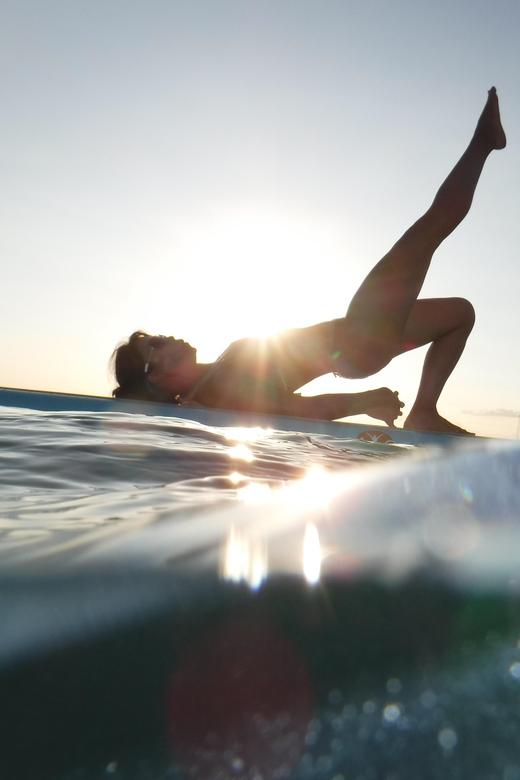
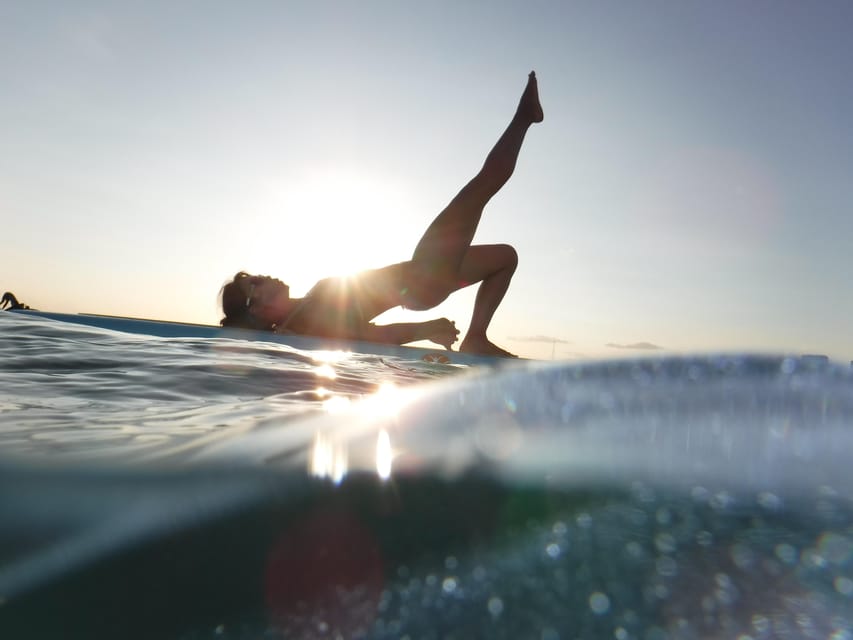
The class closes with a blissful savasana where you lie back and let the water movement do the steady rhythm. Your fingers and toes are free to trail in the water, which makes the ending feel more sensory than purely restful. It’s a small detail, but it changes how the cooldown lands in your body. You stop thinking about your legs being tight and start noticing breathing and sensation.
This ending also fits the whole class design. Early on, you build attention through seated meditation. Midway, you work stability and balance. Then you finish by letting the ocean’s motion replace effort with calm.





Price and value: is $53 fair for 75 minutes on water?
At $53 per person for 75 minutes, the value depends on what you want from the experience.
Here’s why I think the price makes sense for many people:
- You get all necessary equipment. That saves you from renting boards elsewhere or buying gear you might not use at home.
- You get a professional guide. In water-based activities, instruction isn’t a nice-to-have. It’s how you learn safely and confidently.
- The class is capped at 10 participants, so you’re not disappearing into a big group.
- The setting is one of the most scenic parts of Honolulu to practice: Magic Island and Ala Moana Beach Park area in calm water.
The main thing you should weigh is how you feel about the format. If you want a strictly traditional mat yoga class, the water component may not be your priority. But if you want yoga plus a real-world balance challenge, it’s hard to beat the combination of equipment, instruction, and time on the water.
One optional add-on is a photo package for $10 per person. If you like documenting experiences, it can be worth it. If not, you can skip it and focus on being present.
What to bring (and what to know before you go)
Plan this like a beach morning, not a gym class.
Bring:
- Swimwear
- Towel
- Sunscreen
- Water
That’s it, but don’t underestimate the towel. You’ll be changing and drying off after time in the water. Sunscreen matters even if you think you’ll stay out of direct sun, because you’re on the water in Hawaii.
Not allowed:
- Smoking
- Alcohol and drugs
So keep it clean and simple.
Also note the practical meeting detail: the class uses a call number if you’re having trouble finding the spot, and they don’t receive text messages at that number. If you’re the type who always plans to “figure it out once I arrive,” set aside a minute to check your location before you head over.
Who should book this SUP yoga class (and who should skip)
This is built to work for multiple skill levels. The info states it’s suitable for all skill levels, and the instructor provides options so beginners aren’t left behind and more experienced yogis can still challenge themselves with standing balance work.
It’s especially appealing if:
- You want a yoga class that includes balance training on a real moving surface.
- You like calm, serene morning energy in Honolulu, not a loud party vibe.
- You want an instructor who stays patient and supportive while you learn.
It’s not suitable for:
- Children under 12
- Pregnant women
If either of those applies, you’ll want a different activity. If you’re a strong swimmer or not, the good news is that the class is designed to stay shallow for everyone.
Should you book? My decision guide
Book it if you want yoga with a sensory twist and you like learning with a guide, not on your own. The class structure hits the sweet spot for first-timers: seated meditation, adapted poses, then progressive balance challenges, and an ending that feels genuinely relaxing.
Skip it if you’re looking for a purely traditional yoga session with no water element. Also, if you don’t want to be in swimwear or you’re not comfortable with being on a board—even in shallow water—then this will probably feel like stress rather than fun.
If you want something active but still mindful, this 75-minute SUP yoga at Magic Island is a strong choice.
FAQ
Is this SUP yoga class beginner-friendly?
Yes. The class is suitable for all skill levels, and the instructor offers options throughout the session so you can match your comfort and ability.
Do I need to be a strong swimmer?
No. The class wades out to waist-deep water and uses an anchor, and it is described as staying shallow for the whole class.
What’s included in the $53 price?
You get a professional guide, all necessary equipment, and a safe place to store belongings.
Where is the meeting point?
Meet at the south end of the Magic Island parking lot. Look for white and gray boards in the grass or the colorful Yoga Floats van.
How long is the class?
It lasts 75 minutes.
Who can’t join?
It is not suitable for children under 12 and it is not suitable for pregnant women.