REVIEW · MAUI
Pottery Class: Make your own mug or Bowl on Maui
Book on Viator →Operated by David Kett · Bookable on Viator
A spinning wheel can be intimidating, fast. This Maui pottery class at Kett Pottery turns you from total beginner into someone who leaves with a one-of-a-kind mug or bowl. I like that the group stays small (max eight), so you get real attention, and I like how David Kett breaks wheel throwing into clear, doable steps. The only real drawback to plan around is that it depends on good weather.
This is the kind of hands-on activity that feels almost magical even when you’re not an artist. You’ll practice on the wheel in phases—centering, opening, then pulling up the walls—then you get time to make extra pieces (often 1–3). After class, you can choose to have your pieces finished with glazing and firing, then shipped to you for a small shipping and firing fee.
In This Review
- Key Things I’d Put On Your Radar
- Where You Start: Kett Pottery in Makawao, Maui
- Small Group Wheel Time With David Kett (and Bijou, Too)
- The Three-Phase Process: Centering, Opening, Pulling
- Phase 1: Centering
- Phase 2: Opening
- Phase 3: Pulling
- Practice Time and the Reality of Making 1–3 Pots
- Choosing Your Mug or Bowl (Without Needing “Artistic Talent”)
- Glazing, Firing, and Shipping: How Your Piece Becomes Ready
- Timing, Weather, and Studio-Ready Tips
- Who Should Book This Maui Pottery Workshop
- Should You Book This Maui Mug or Bowl Workshop?
- FAQ
- How long is the pottery class in Maui?
- Where does the class start?
- How many people are in the group?
- Do I need to be artistic to make a mug or bowl?
- What steps will I learn for wheel throwing?
- Can you finish, glaze, and fire the pieces after class?
- What happens if weather is poor?
Key Things I’d Put On Your Radar
- Small group size (max eight) means more time with the wheel and less waiting around.
- David Kett’s step-by-step teaching keeps even shaky starts from turning into frustration.
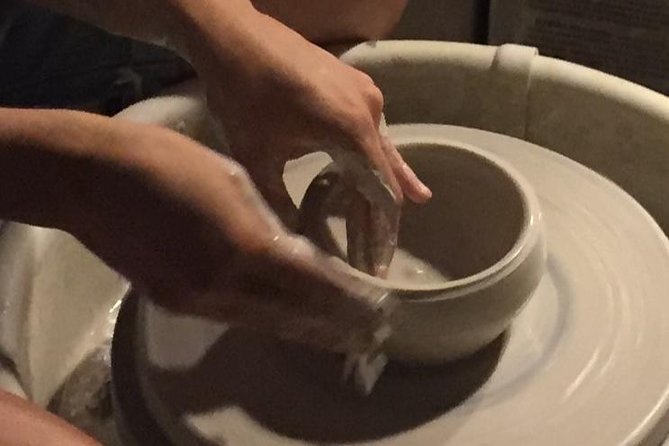
- Three-phase throwing basics (center, open, pull) give you a simple process you can remember.
- Bonus practice time lets you repeat and improve right away.
- Finishing + shipping available so your mug or bowl can become usable without you handling the tricky kiln steps.
Where You Start: Kett Pottery in Makawao, Maui
You’ll meet at Kett Pottery, 3660 Baldwin Ave, Makawao. This is a single-stop experience: you start there and you end back there. That sounds minor, but it matters on Maui—less moving around means more time actually throwing clay and less time juggling directions.
The class runs about two hours and is offered in English. You’ll use a mobile ticket, and you’ll receive confirmation at the time of booking. Service animals are allowed, and the experience is described as suitable for most travelers. Translation: you don’t need special training, and you don’t need to be the person with the creative Pinterest board.
One planning note: it requires good weather. If Maui decides to throw rain at your day, your class may be rescheduled or refunded, depending on how it’s handled. So if you’re on a tight schedule, try to book with some breathing room on either side.
You can also read our reviews of more tours and experiences in Maui



Small Group Wheel Time With David Kett (and Bijou, Too)
What makes this class work is the human scale. With a maximum of eight people, you’re not one of twenty getting a quick glance from the instructor and a bucket of clay. You can ask questions while you’re actually trying a step, and you’ll get corrections when they matter—before you’ve built up a bad habit.
David Kett’s teaching style is friendly and encouraging, and he’s good at turning wheel techniques into understandable pieces. One of the reviews calls out his use of spot-on analogies, and you’ll feel the difference right away when he shows you what to do and why. Wheel throwing can look like a magic act from the outside. In class, it becomes repeatable.
There’s also a personal touch. One review mentions David’s gorgeous dog, Bijou, which gives the studio vibe a bit of warmth. It’s not a reason to book, but it’s the kind of detail that makes a small workshop feel like a real local experience.
Practical tip: wheel work is all hands-on. If you wear anything that could get in the way—like fake nails—you might want to think twice. One reviewer said they wished they didn’t have them, because it’s hard to control where your fingers go when you’re trying to shape the clay.
The Three-Phase Process: Centering, Opening, Pulling
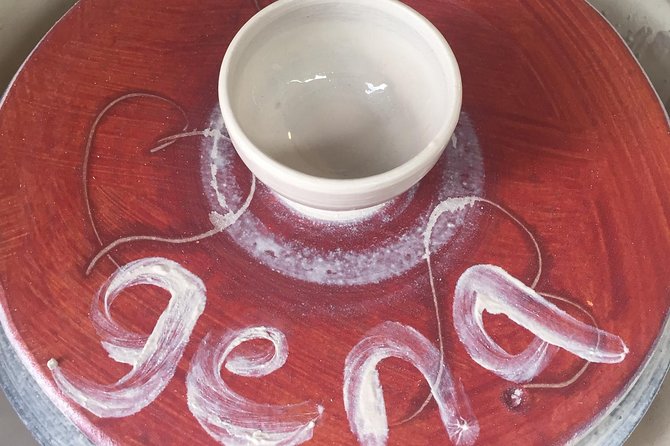
Here’s the heart of the class, and it’s why beginners do well. David walks you through throwing in three phases. The big idea is simple: each step builds on the last.
Phase 1: Centering
Centering is where most first-timers feel the wobble. Your job is to get the clay stable on the wheel so it stops acting like a living thing. David’s demonstrations are meant to help you understand the mechanics without turning it into a lecture. Once you get the feel—even for a few seconds—you’ll start trusting the wheel more.
Phase 2: Opening
Next comes opening: forming the bottom. You’re learning how to create a base that can hold shape as you build upward. This is also where good technique prevents disaster later, because a weak bottom can collapse when you pull the walls.






Phase 3: Pulling
Finally, you’ll pull the walls of the vessel—your mug or bowl. This is the part that feels the most rewarding. The motion is all about steady pressure and control, and the instructor’s guidance helps you avoid the two common beginner mistakes: pulling too fast, or pulling unevenly.
After you’ve gone through the first pot, the class shifts into practice mode. That’s important. The first pot teaches you the sequence. The later time helps you refine it so your second or third piece looks more like what you pictured.
Practice Time and the Reality of Making 1–3 Pots
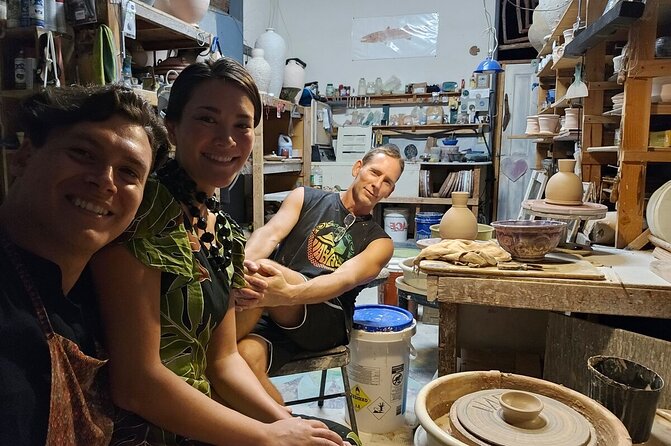
You’ll get plenty of time to practice after the initial guided pot. The pace is designed so you’re not just watching and then rushing at the end. You’ll have time to repeat the key motions and learn from what goes wrong.
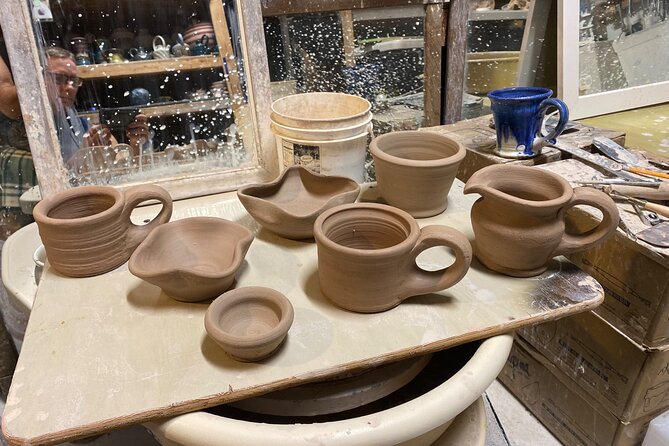
In terms of output, people make on average between 1 and 3 pots. That range is exactly what you want from a beginner-friendly workshop. It keeps expectations realistic. You’re learning a physical skill, not buying a souvenir off a shelf.
Also, remember what you’re really taking home. Even if a piece isn’t perfect, you still walk away with something functional and personal—or at minimum, a piece that shows your effort and your learning. That one-of-a-kind factor matters more than chasing a flawless studio result.
If you want the best odds at making something you’ll love, focus less on symmetry in the beginning and more on mastering the sequence: center, open, pull. Once you can do that flow, the shape improves naturally.
Choosing Your Mug or Bowl (Without Needing “Artistic Talent”)
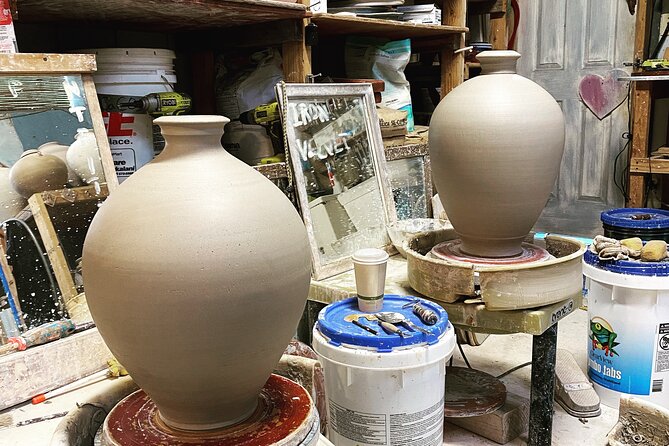
This class is built for people who aren’t sure they’re creative. You don’t need to be artistic to make something amazing on the potter’s wheel. That’s not just marketing language—it’s part of how the teaching is structured. When you’re given a repeatable method, you’re not guessing. You’re building.
For mugs and bowls, you’ll be working toward functional forms—items meant to be used. That’s a big deal because it makes the experience feel less like a craft project you’ll store in a closet and more like a real object with purpose.
What you can take from the experience is also practical. You’ll learn the basic mechanics of shaping clay into a vessel. Even if you don’t become the next pottery Instagram star, you’ll understand why certain steps are taught before others—and you’ll get a sense of how small adjustments change the final look.
And yes, the experience has that almost magical feel: turning spinning clay into something you can hold, keep, or even ship home. The class design is meant to bring you to that moment without requiring prior experience.
Glazing, Firing, and Shipping: How Your Piece Becomes Ready
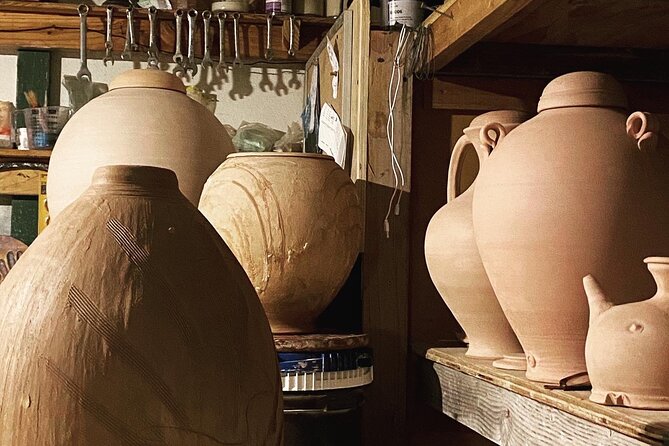
A key feature is what happens after you stop spinning the wheel. Once your class is done, you can have the instructor finish your chosen pots with glazing and firing for a small shipping and firing fee.
That option is valuable for two reasons. First, it removes the biggest barrier for beginners: kiln firing is not something you can learn in a two-hour session. Second, it saves you from having to transport fragile, unfired pieces home yourself.
You also have the flexibility of shipping. The class notes that shipping can be domestic or international, depending on where you live. So even if Maui is only a stop on your trip, you don’t have to fit your pottery into a suitcase.
One thing to plan emotionally: the piece you make in the workshop is a work-in-progress. The real transformation happens after class. If you keep that in mind, you won’t feel like you’re leaving your creation behind—you’ll feel like you’re setting it up to become usable.
Timing, Weather, and Studio-Ready Tips
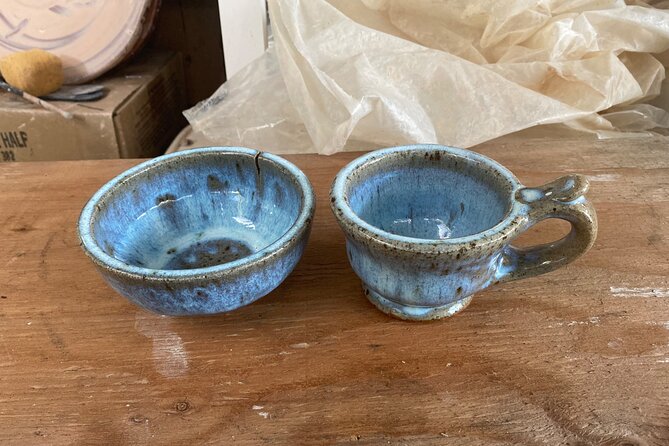
Expect about two hours, give or take. The class is designed around demonstrations, then hands-on time. So you’ll get a mix of watch-and-learn and do-your-own-thing. That rhythm helps you get comfortable faster.
Because it requires good weather, don’t schedule this as the only activity on a day where your plans are inflexible. If the weather is poor and the class is affected, you’ll want a plan B.
Here are a few practical tips that make wheel throwing easier:
- Keep fingernails short or skip anything that reduces finger control (one reviewer specifically mentioned fake nails).
- Wear something you’re okay getting a little dusty. Clay has a way of becoming part of the outfit.
- Pay attention during the instructor’s phases, especially centering. It’s the step that makes the rest less stressful.
- Use the extra practice time with intention. Pick one goal, like smoother walls or better control, and focus on that for your next attempt.
Also, because this is a small group, you’ll likely share space with other beginners. It’s usually a friendly vibe. The best learning happens when you ask questions without feeling rushed.
Who Should Book This Maui Pottery Workshop
If you want a creative activity that doesn’t require talent, book it. This workshop is especially good for:
- Couples and solo travelers who want something hands-on and memorable
- Families looking for a structured, beginner-friendly activity
- Anyone who likes learning by doing (wheel throwing is hard to explain, but easy to start with the right guidance)
It’s also a great choice if you’re tired of the same sightseeing loop. Instead of adding another photo to the folder, you make an object. Something physical. Something that’s literally shaped by your hands.
On the other hand, it may not be the best fit if you hate tactile activities or you’re extremely short on time. Even though it’s beginner-friendly, you still need to participate actively. You’ll get more out of it when you lean in.
Should You Book This Maui Mug or Bowl Workshop?
Yes, you should book this if you want a small-group wheel class where you can learn a real skill quickly and leave with a functional piece. The combination of David Kett’s step-by-step teaching, the three-phase method, and the hands-on practice time makes it feel achievable—even when you start with zero pottery experience.
Book it sooner if you’re the type who likes doing one meaningful thing well, instead of chasing a checklist of stops. And if you’re wearing fake nails or anything that limits finger control, consider adjusting ahead of time so you can shape with confidence.
If you want a fun, learn-by-doing Maui experience that results in something you can keep (or ship) and actually use, this is a strong choice.
FAQ
How long is the pottery class in Maui?
The class runs about 2 hours (approx.).
Where does the class start?
You’ll meet at Kett Pottery, 3660 Baldwin Ave, Makawao, HI 96768, USA. The experience ends back at the meeting point.
How many people are in the group?
The class has a maximum of eight travelers, which keeps it small and hands-on.
Do I need to be artistic to make a mug or bowl?
No. The class is described as easy for anyone, and you do not need to be artistic to make something on the wheel.
What steps will I learn for wheel throwing?
You’ll be guided through three phases: centering, opening (forming the bottom), and pulling (making the walls of the vessel).
Can you finish, glaze, and fire the pieces after class?
Yes. After the class, you can have your chosen pots finished with glazing and firing for a small shipping and firing fee.
What happens if weather is poor?
The experience requires good weather. If it’s canceled due to poor weather, you’ll be offered a different date or a full refund.