REVIEW · OAHU
Oahu: Waikiki 2-Hour Semi-Private Surfing Lesson
Book on GetYourGuide →Operated by Kai Sallas' Pro Surf School Hawaii · Bookable on GetYourGuide
Standing up on a Waikiki wave feels wild. I love the secluded beach vibe near Waikiki and the professional coaching that actually helps you progress fast. One heads-up: instruction is English, so if you were counting on Spanish you may have a mismatch.
This lesson starts with a short on-land session first. In about 20 minutes, you’ll get the wave basics, plus practical stuff like currents, winds, tides, and where to position yourself before you try standing.
Once you’re geared up, you’ll get in the water for the fun part. I like that the equipment is chosen based on your level, and you’re taught how to use your board, leash, and fins. Still, skip it if you’re pregnant, have back problems, have mobility impairments, or if you’re under 10 (or a weak swimmer) and need a one-on-one setup for safety.
In This Review
- Key Things That Make This Waikiki Surf Lesson Worth Your Time
- Where This Lesson Starts: The Benefit of a Secluded Waikiki Beach
- The 20-Minute Land Session That Saves You From Guesswork
- Gear Included: What You Get and Why It Helps
- Getting Into the Water: Paddling, Turning, and Staying in Control
- Learning Local Surf Conditions Without Getting in Over Your Head
- The Instructor Factor: Why Coaching Quality Matters Here
- Price and Value: Is $156 for 2 Hours Reasonable?
- Who Should Book This Waikiki Surf Lesson (and Who Should Skip It)
- What to Bring: Simple Stuff That Makes a Difference
- Final Take: Should You Book This Semi-Private Lesson?
- FAQ
- How long is the Waikiki 2-hour semi-private surfing lesson?
- Is equipment included in the surfing lesson price?
- What should I bring with me?
- What language is the instruction provided in?
- Is this activity suitable for everyone?
- What about children and weak swimmers?
- Can I get a refund if my plans change?
Key Things That Make This Waikiki Surf Lesson Worth Your Time
- A quieter Waikiki-area beach that gives you room to focus on your first turns and rides
- A focused 20-minute land start covering wave basics, tides, winds, currents, and safety
- Gear is included: surfboard, leash, rash-guard, reef, and booties
- Instructor coaching for real local conditions so you learn what to do on Oahu water
- Surf culture + etiquette fundamentals so you understand how to act in the lineup
- Private-group style instruction in English with the instructor tailoring help to your level
Where This Lesson Starts: The Benefit of a Secluded Waikiki Beach

A lot of Waikiki surf lessons feel like they’re happening inside a crowd. This one aims for a more private beach near Waikiki, and that changes your whole learning curve. When you’re not fighting noise and chaos, you can focus on paddling timing, getting the board angle right, and staying calm when a set rolls through.
You also get to spend your attention where it matters: learning how waves break and how to react before you’re already in trouble. The secluded setting doesn’t just feel nicer. It helps you practice the fundamentals without feeling rushed.
And yes, you’re still on Oahu. So you get that very real Hawaii energy—without the “everyone is watching” pressure.
You can also read our reviews of more private tours in Oahu



The 20-Minute Land Session That Saves You From Guesswork
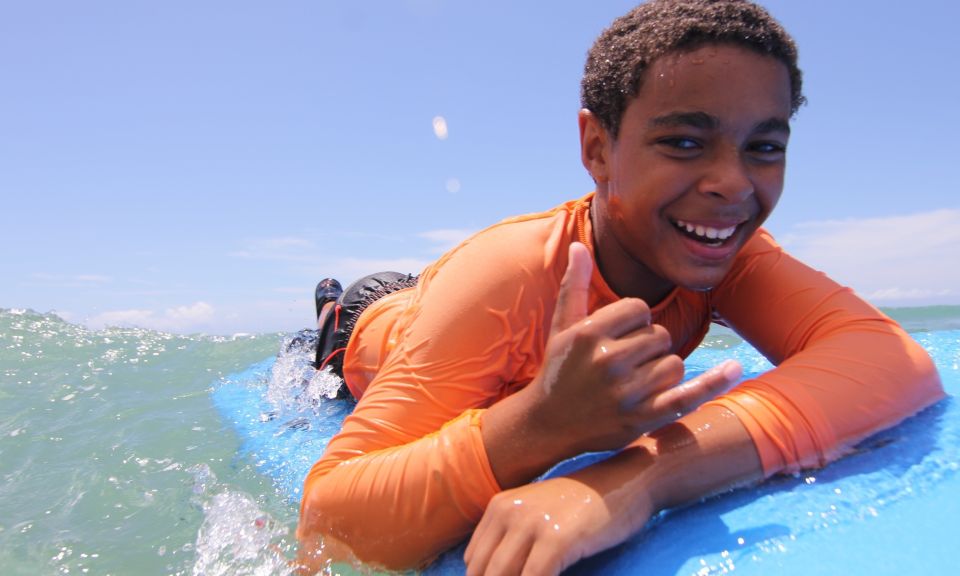
Before you get wet, you’ll do a quick land lesson (about 20 minutes). This is one of the smartest parts of the schedule because surf has a lot of moving pieces, and beginners waste energy trying to figure them out in the water.
On land, you’ll cover:
- wave basics and how to read what’s coming
- currents, winds, and tides (the stuff that changes the ride)
- proper positioning so you can stand up safely
- surf etiquette and water safety
This matters because the first time you’re on a board, you’re not just learning balance. You’re learning how water behaves around you. If you go in blind, you’ll spend the session panicking and just surviving.
Also, you’ll get a board briefing focused on using the leash and fins correctly. That part sounds basic, but it’s exactly the difference between a smooth start and a constant reset.
Gear Included: What You Get and Why It Helps
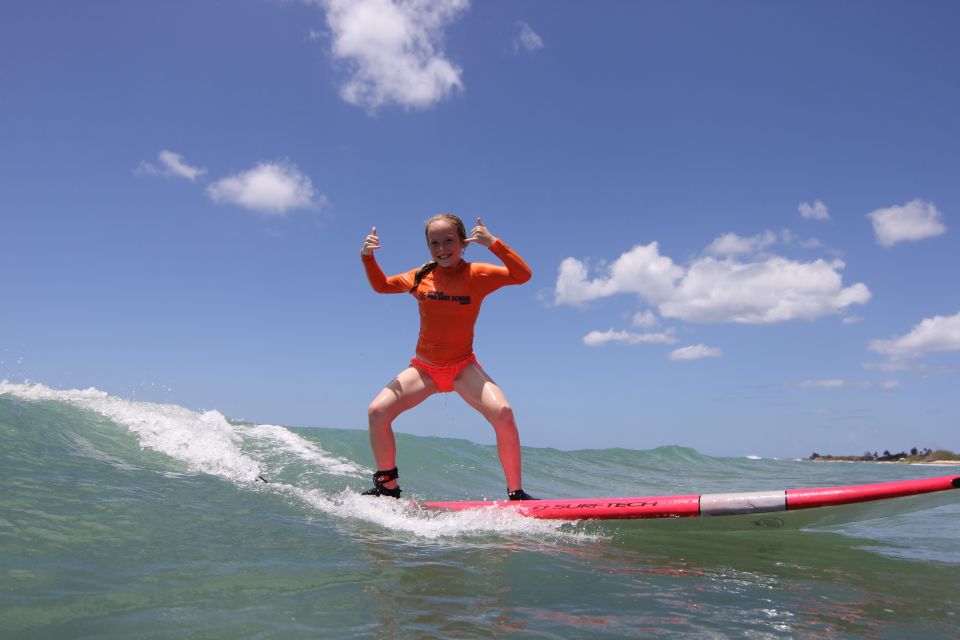
You don’t have to scramble for rentals or show up in street clothes and hope for the best. The lesson includes the full setup:
- surfboard
- leash
- rash-guard
- reef and booties
That combination is practical for Oahu conditions. Booties and reef protection help with contact and traction issues you can run into when water meets board, sand, and surf. Rash-guard also keeps you comfortable while you’re learning, and it makes you less sticky than a typical t-shirt would.
One more smart detail: you select equipment based on your personal skill level. I like this approach because it acknowledges that the “right” board isn’t universal. When your equipment matches your ability, you spend more time riding and less time wrestling.
Getting Into the Water: Paddling, Turning, and Staying in Control
Once you’re in, the coaching shifts from theory to movements you can repeat. The instructor gives you a run-down on how to maneuver over crashing waves, and then you practice the core skills that lead to standing.
You’ll work through the fundamentals in a sequence that usually makes sense:
- proper paddling techniques
- turning and maneuvering
- positioning yourself to transition into standing
This is where the professional instruction pays off. Surf isn’t just one skill—it’s timing plus technique plus reading the next wave. A good coach helps you focus on one thing at a time instead of trying to correct everything when you’re already falling.
The goal is clear: after learning the right moves, you’ll be standing and riding waves. Even if you only get a few rides, you’ll leave with momentum you can build on later.
Learning Local Surf Conditions Without Getting in Over Your Head
One reason I enjoy surf lessons on Oahu is that conditions are real. You’ll feel waves, currents, and wind in a way that makes the lesson stick.
Here, your instructor specifically covers currents, winds, tides, and positioning. That’s not filler. It’s what keeps you from treating every wave like the same wave.
For complete beginners, this helps you avoid common traps like paddling at the wrong moment or choosing a takeoff spot that sets you up to get flipped. For more advanced surfers, it’s a chance to learn how the local water behaves and adjust accordingly.
You’ll also get safety taught as part of the lesson, along with surf etiquette. That’s valuable because the ocean is shared space. You’re not just learning to surf—you’re learning how to act in the lineup.
You can also read our reviews of more tours and experiences in Oahu





The Instructor Factor: Why Coaching Quality Matters Here
The best part of this experience is the instruction itself. People consistently point out that the instructor is really good and gives helpful tips, and that the guidance is attentive when you’re actually struggling.
In a semi-private or small-group setup, you get something you don’t always get with bigger groups: time for corrections. You can’t just copy what someone else is doing and hope it sticks. You need feedback on your paddling, your angle, and your timing.
One practical note: the instruction language is English. If your plan depends on Spanish or another language, make sure you confirm ahead of time. There’s at least one case where a Spanish selection didn’t lead to Spanish instruction, which is the kind of surprise you want to avoid.
Price and Value: Is $156 for 2 Hours Reasonable?
At $156 per person for about two hours, this is not a bargain deal. But it’s also not “pay for nothing” pricing.
Here’s what you’re paying for:
- a professional instructor focused on real fundamentals
- a small, private-group style lesson
- included equipment (board, leash, rash-guard, reef, booties)
If you had to rent a board, leash, and protective gear on your own and also book an instructor separately, costs usually add up quickly. This lesson bundles the essentials so you can show up ready to work, not ready to hunt for gear.
Is it worth it? If you want quick, structured progress and you’d rather learn from a pro than guess your way into wipeouts, yes. If you’re only casually curious and aren’t ready to practice technique, you might feel the cost more than the benefits.
Who Should Book This Waikiki Surf Lesson (and Who Should Skip It)
This lesson makes the most sense if you:
- want a guided start with clear basics
- are a complete beginner who needs a safe plan
- have surf experience and want help reading local conditions
- prefer a more private-feeling beach setting near Waikiki
It’s also a good fit if you like structured teaching. The land session and the step-by-step coaching are built for people who learn best with order and repeatable steps.
Skip it if any of the following apply:
- pregnant women
- people with back problems
- people with mobility impairments
And for children 10 and under, or weak swimmers, a private one-on-one lesson is required for safety.
What to Bring: Simple Stuff That Makes a Difference
The essentials are easy:
- towel
- sunscreen
Bring a towel that you’ll actually want to use after getting changed, and don’t skip sunscreen even if you think you’ll be in the water only briefly. Surf lessons can involve more time in sun and wind than people expect, and you’ll be glad you planned for it.
If you’re prone to getting sandy, I’d also keep an extra plastic bag in your day bag for wet gear. Not required here, just a quality-of-life move.
Final Take: Should You Book This Semi-Private Lesson?
I’d book it if you want real coaching, included gear, and a more secluded Waikiki-area beach that helps you learn without chaos. The combination of a short land lesson (currents, winds, tides, positioning, etiquette, safety) plus hands-on coaching in the water is exactly the structure that helps you progress.
The only strong reason to hesitate is language expectations. Since instruction is English, confirm that before you commit if language matters to you.
If you’re ready to learn, you’ll leave with the basics, a few rides (or at least real practice time toward them), and a better sense of how Hawaiian surf culture and ocean safety fit into surfing—not just the trick of standing up.
FAQ
How long is the Waikiki 2-hour semi-private surfing lesson?
The lesson lasts 2 hours.
Is equipment included in the surfing lesson price?
Yes. You get a surfboard, leash, rash-guard, reef, and booties.
What should I bring with me?
Bring a towel and sunscreen.
What language is the instruction provided in?
The instructor teaches in English.
Is this activity suitable for everyone?
No. It is not suitable for pregnant women, people with back problems, or people with mobility impairments.
What about children and weak swimmers?
Children 10 years of age and under, or weak swimmers, are required to take a private one-on-one lesson for safety reasons.
Can I get a refund if my plans change?
Yes, you can cancel up to 24 hours in advance for a full refund.